The surface you see is not the surface that matters
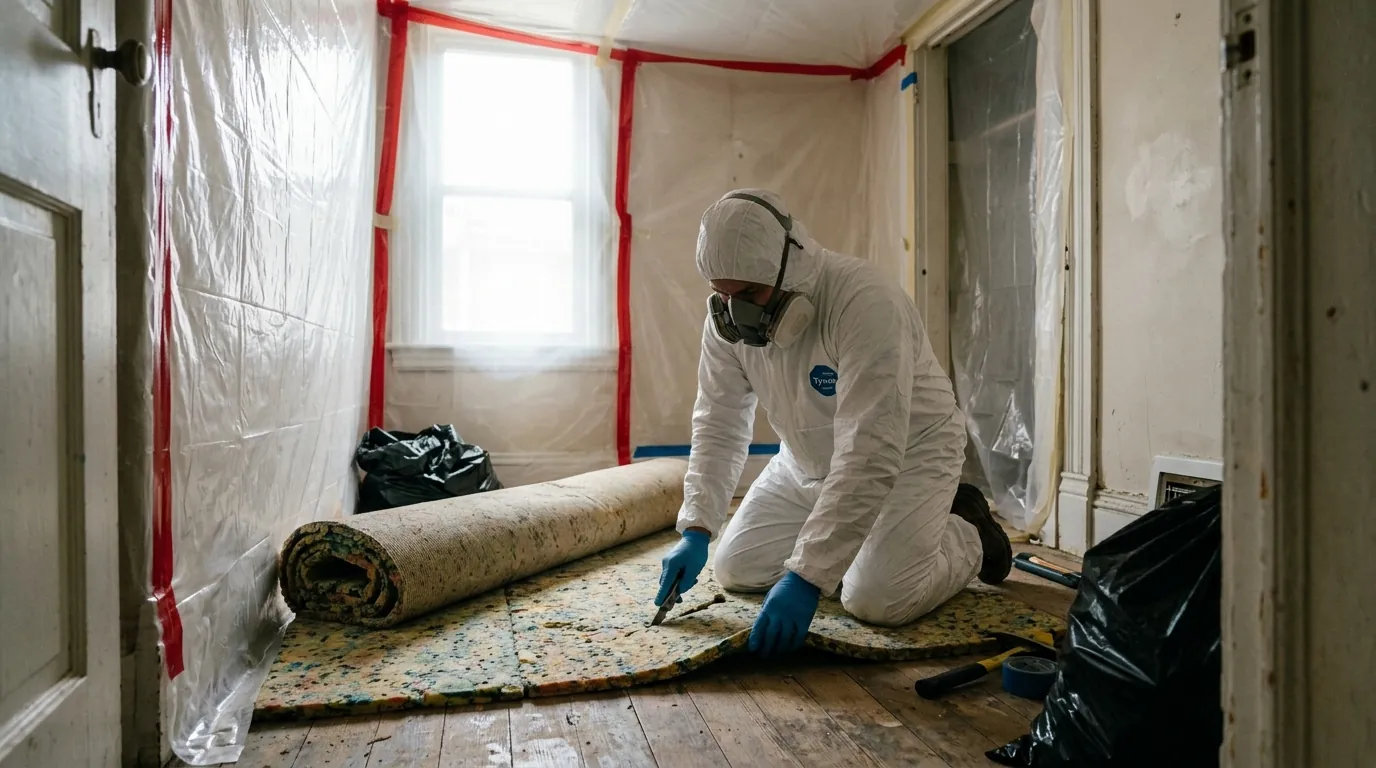
Picture a spill on a carpeted bedroom floor in a Philadelphia rowhome. The fibers on top look like the problem, but liquid travels down. It moves through the carpet backing, spreads wider in the foam pad, and settles into the seams of the plywood or old pine boards underneath. In older homes it can find gaps between floorboards and reach the ceiling of the room below.
Scrubbing the top with bleach lightens the stain you can see and leaves everything beneath it untouched. Weeks later, an odor comes back or a brown ring reappears as moisture wicks upward. That isn't a failure of effort. It's simply how porous materials behave, and no amount of scrubbing changes it.
Organic load uses up bleach before it can work
Chlorine bleach works by reacting with organic material, including the proteins in germs. Blood is full of protein too. When bleach hits a surface that hasn't been cleaned first, much of its strength is spent reacting with the blood itself. What reaches the pathogens is weaker than the bottle suggests.
This is why the CDC and OSHA both describe disinfection as a second step that comes after cleaning. Visible material comes off first with detergent and water. Only then does a disinfectant have a fair chance. Bleach also breaks down over time once it's diluted, so a mix made last week may not be the strength you think it is.
Dwell time is the step almost everyone skips
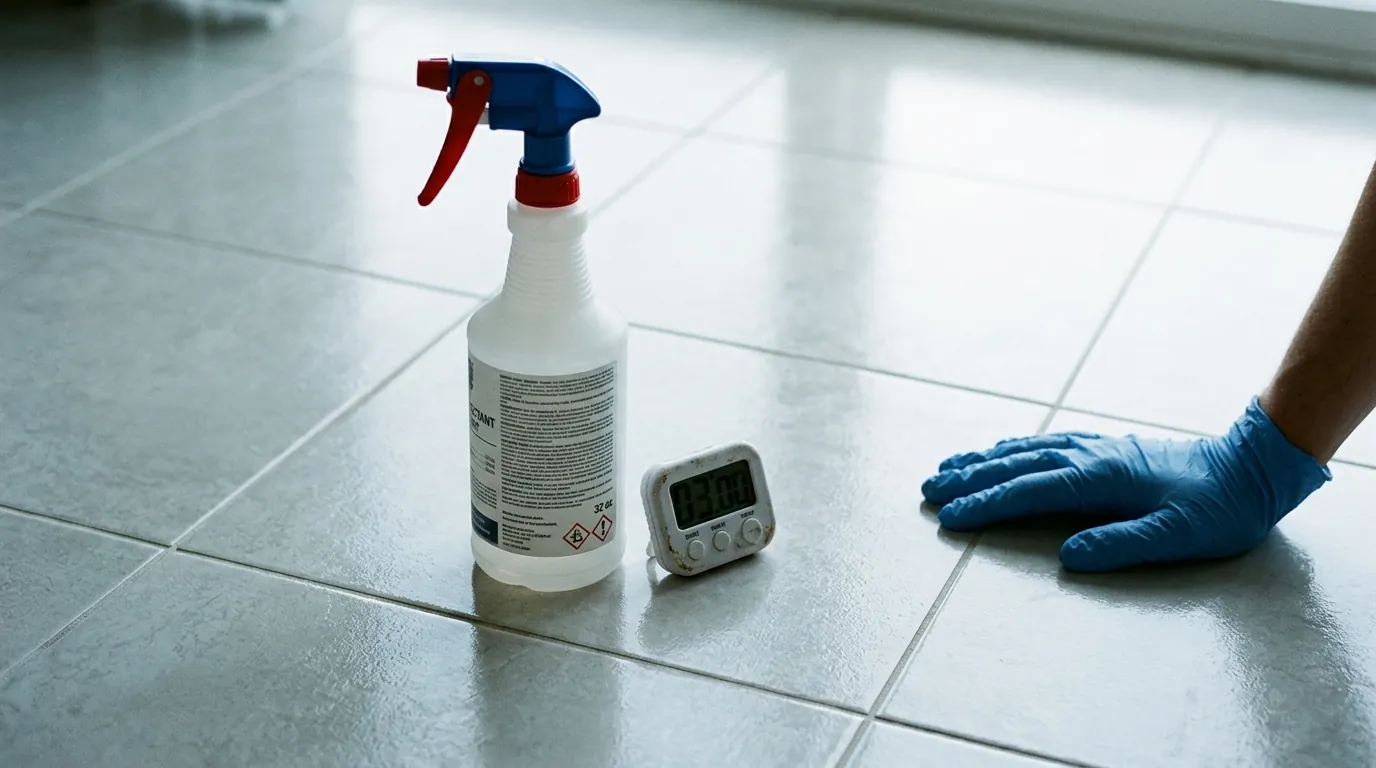
Every disinfectant has a contact time, sometimes called dwell time. It's the number of minutes a surface has to stay visibly wet for the product to do what its label claims. Spray and wipe right away, and you've mostly just moved the liquid around.
Professional crews use EPA-registered hospital-grade disinfectants with label claims against bloodborne pathogens such as hepatitis B, hepatitis C and HIV. They apply enough product to keep the surface wet for the full contact time, which can run several minutes. Then they wipe, rinse where the label calls for it, and verify. A rushed wipe with a household spray rarely meets any of those conditions.
Materials bleach can and cannot handle
The honest answer depends on whether a material lets liquid in. Glass, sealed stone, glazed tile, stainless steel and most hard plastics can be cleaned and then disinfected in place. Almost everything else in a home holds liquid somewhere you can't reach.
Bleach also damages many materials, bleaching fabrics, weakening wood fibers and corroding metal fixtures. On a finished floor or a family heirloom, it can do lasting harm without making the item safe.
- Usually cleanable: glass, glazed ceramic tile, sealed countertops, stainless steel, hard plastic.
- Usually removed: carpet and pad, mattresses, upholstered furniture, ceiling tiles, unsealed drywall.
- Case by case: hardwood floors, grout lines, concrete, baseboards and door casings.
- Hidden layers to check: subfloor, tack strip, wall cavities and the ceiling below.
Bloodborne pathogen precautions are not optional
OSHA's bloodborne pathogens standard applies to workers who can reasonably expect contact with blood. It shapes how our technicians dress, work and dispose of waste. The core idea, often called universal precautions, is simple: treat all human blood as if it were infectious, because you can't tell by looking.
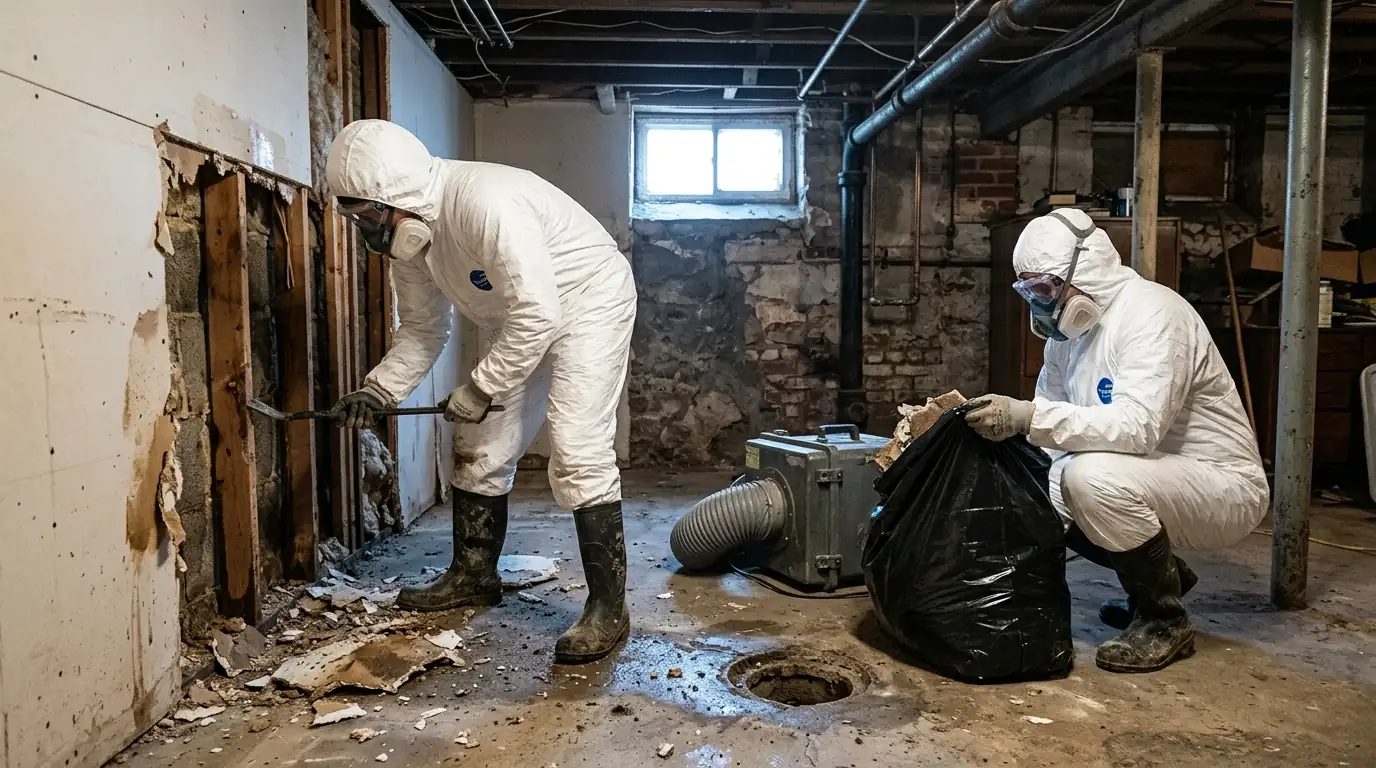
That means nitrile gloves, often doubled, plus eye protection, a fluid-resistant suit and a respirator when aerosols or odors are present. It means no bare-hand contact with sharp debris such as broken glass. It also means contaminated materials go into sealed red bags and rigid containers, then travel as regulated medical waste to a permitted facility under Pennsylvania DEP rules. A family member using a kitchen sponge has none of that protection, and that matters more than the stain.
Mixing bleach with other cleaners can hurt you
When a stain won't lift, people reach for a second product. Bleach mixed with ammonia, found in some glass cleaners, releases toxic chloramine gas. Bleach mixed with acids, including some toilet bowl and tile cleaners, releases chlorine gas. Both can cause serious breathing problems, especially in a small, closed bathroom.
Strong bleach fumes also irritate the eyes and lungs on their own, and many rowhome bathrooms have little ventilation. If anyone feels short of breath or dizzy after mixing cleaners, get them to fresh air and call 911.
What you can safely do while you wait for help
If you've decided a spill is too large or too deep to handle, there are still a few useful things you can do. Close the door to the room and keep children and pets out. Turn off fans or forced air vents that blow across the area, since drying blood can flake into dust. Don't move furniture, pull up carpet or throw anything away yet, because that spreads contamination into hallways and stairwells.
If someone was injured, their care comes first, and that may mean the scene was already disturbed by paramedics. That's normal. If police are involved, wait until they release the home before anything is touched. Take a few photos from the doorway for your insurer. Then set the bleach aside. A short wait for a trained crew does far less harm than an hour of scrubbing that pushes blood deeper into the floor.
What a professional crew does instead
Our work starts with assessment rather than chemicals. Technicians trace how far blood traveled using visual inspection and, where helpful, moisture readings. They set up containment with poly sheeting so nothing spreads to clean rooms. Then they remove what can't be saved, cutting out carpet, pad, drywall or subfloor sections well past the visible edge.
Cleaning comes next, followed by disinfection with proper dwell time. Exposed wood may be sealed afterward to lock in any staining and odor. ATP testing can confirm that surfaces are clean before we leave. If you're facing a spill in Philadelphia and aren't sure what you're dealing with, call (267) 699-2329. We answer 24/7, and it's fine to call just to ask questions.
Ellsworth Bristow, Family Resources Editor, writes and updates our family guides from the questions callers ask our technicians every week. Last updated October 16, 2026.