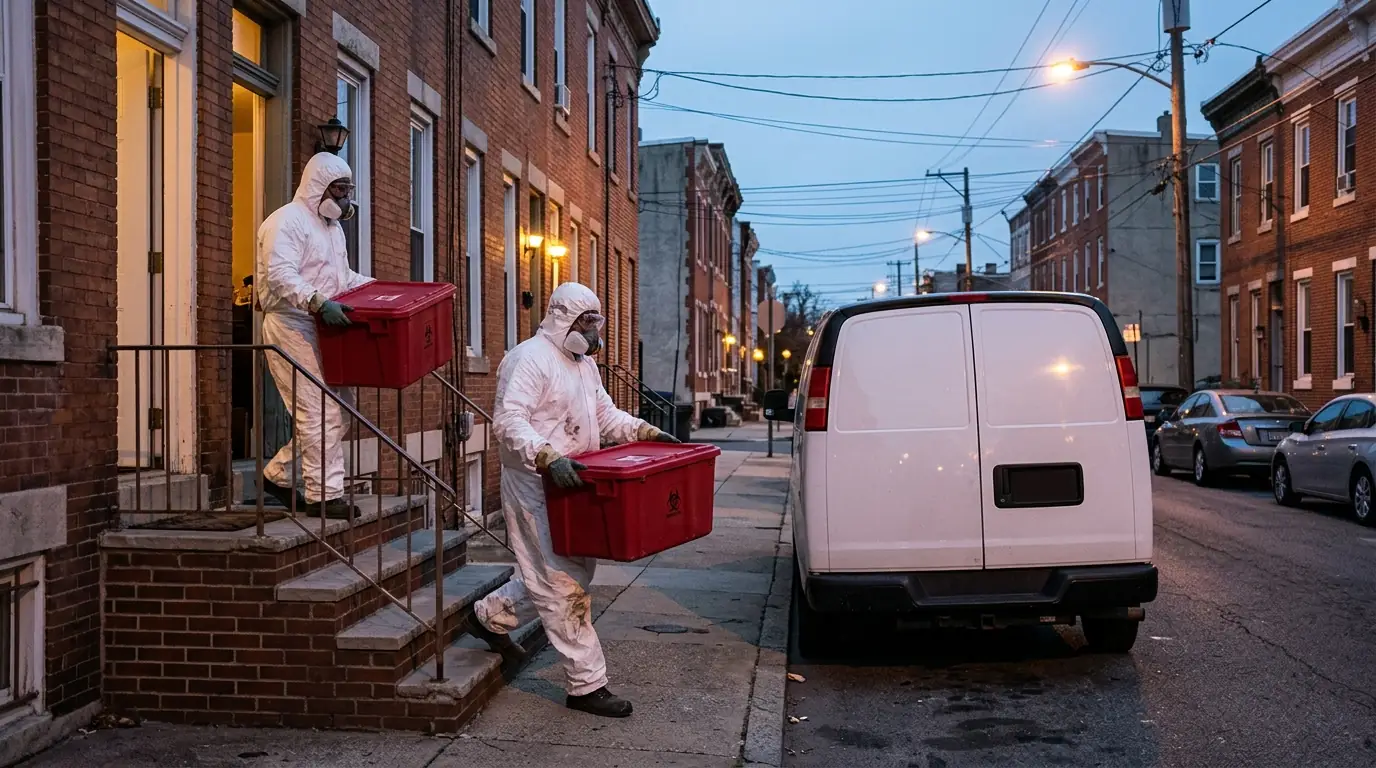
Finding a needle in your yard or stairwell is unsettling, and it happens more often in parts of Philadelphia than many people outside the city realize. Business owners near Kensington Avenue, landlords with rear alleys, churches with side lots, and families whose backyards back onto a vacant parcel all call us for the same reason. One needle usually means there are more, and the ones you can see are not always the ones that hurt someone. Caps come off, needles slip into leaf litter, and syringes get pushed into planters, fence gaps and storm grates.
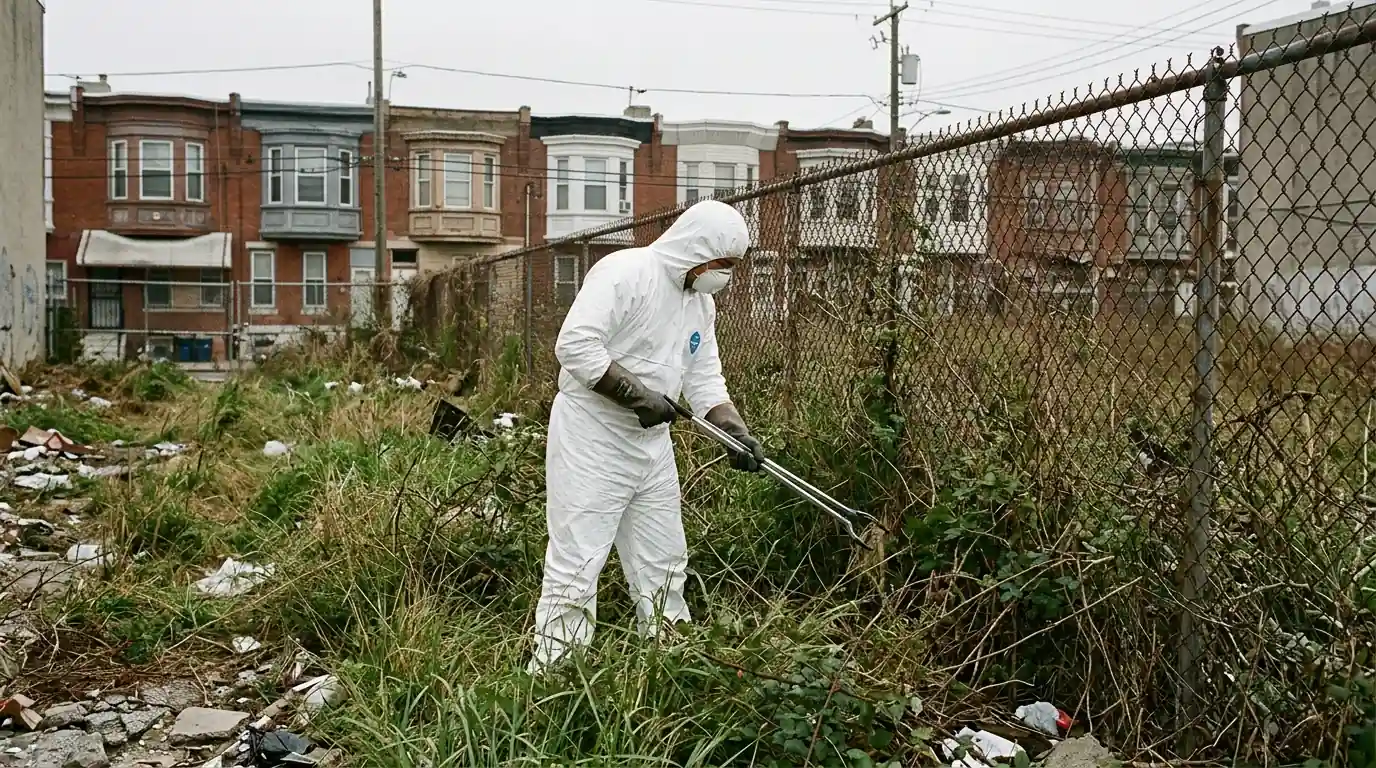
We search private property methodically and remove every sharp we find. Our technicians wear puncture-resistant gloves and boots, use tongs and grabbers rather than hands, and drop each needle straight into a rigid sharps container. We look in the places people miss, then disinfect surfaces where needles and other drug-related waste were found. For owners who face this problem week after week, we can return on a regular schedule so the lot, alley or stairwell stays clear.
When to call us for needle and sharps removal
Needles found in a yard or lot
Where there is one, there are usually more. A full sweep finds the ones hidden in grass and debris.
Sharps in a stairwell or vestibule
Entryways and stairs in apartment buildings and storefronts need clearing before tenants or staff walk through.
A rear alley behind your property
Shared private alleys collect needles near trash cans, fences and garage doors.
A vacant lot or building you own
Unsecured lots and empty buildings often hold many sharps and other waste.
A business restroom with needles
Tank lids, trash bins and ceiling tiles in restrooms are common hiding spots that need careful searching.
Repeat problems every week
If needles keep coming back, scheduled visits keep the property clear and give you a record.
Public property or private property: who handles the needles
In Philadelphia, needles on public property, including sidewalks, streets and city parks, can be reported to Philly311, and the city arranges pickup. Private property is different. Yards, driveways, private parking lots, building stairwells, rooftops, vacant lots owned by a person or company, and the inside of any business are the owner's responsibility. That often includes the narrow alleys behind rowhomes, many of which are privately shared by the adjoining houses rather than maintained by the city.
When you aren't sure, start with 311 for anything on the sidewalk or street side. For everything behind the property line, we can help. Business owners along commercial corridors often need both: the city for the sidewalk out front, and us for the vestibule, the back lot and the dumpster enclosure. We focus on the property you own or manage, so you aren't paying for work the city already provides.
How we sweep and clear a property of sharps
Call and property review
Call (267) 699-2329. We ask about the size of the property, where needles have been seen, and whether people are still using the space.
Protective gear and tools
Technicians wear puncture-resistant gloves and footwear and bring tongs, grabbers and rigid sharps containers.
Grid search
We search every section of the property in a pattern, moving debris and checking fence lines, drains, planters and fixtures.
Collection and packaging
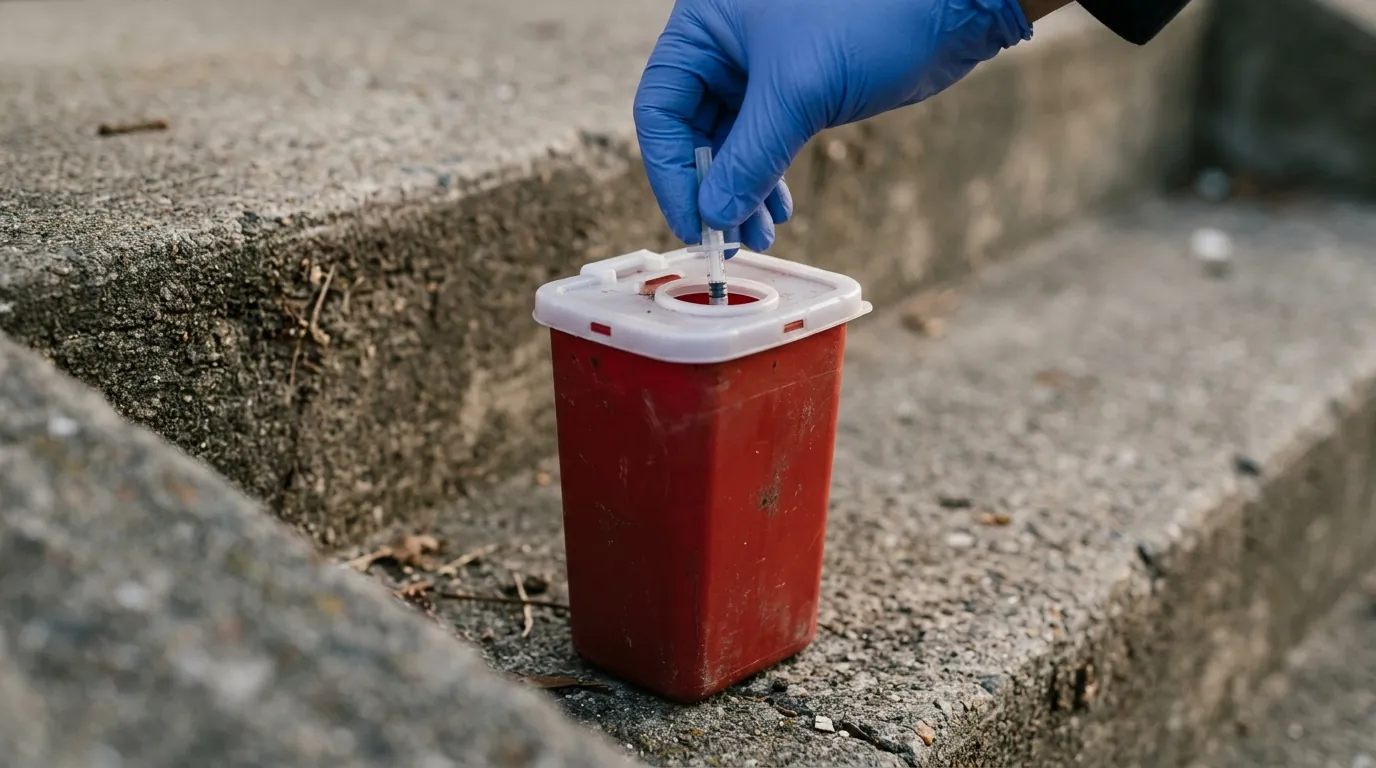
Each sharp goes straight into a puncture-resistant container, which is sealed when full. Related waste goes into red biohazard bags.
Disinfection of surfaces
Steps, railings, doorways and restroom fixtures where sharps were found are cleaned and disinfected.
Disposal and report
Sealed containers go to a permitted medical waste facility. You get a short report of where items were found.
Where needles hide on yards, lots and stairwells
Needles rarely sit neatly in the open. In yards and lots, they settle into tall grass, under leaves, beneath shrubs and along fence lines. In alleys, they collect behind trash cans, in the gap under garage doors, and in drain inlets. In buildings, they show up in stairwells, under radiators, behind toilet tanks in public restrooms, above ceiling tiles and in the soil of planters near entrances.
We search in a grid, so every part of the property is covered at least once, and we move or lift loose items as we go. Overgrown areas may need cutting back before a reliable sweep is possible. Each needle goes directly into a rigid container, never into a bag where it could pierce through. We also collect other drug-related waste found in the same places, such as cookers, tourniquets and wrappers, which can carry blood and residue, and we bag it as biohazard waste.
Help for businesses near Kensington Avenue and other corridors
Shops, restaurants, clinics, churches and landlords along Kensington Avenue, under the Market-Frankford elevated line and on the blocks around it deal with discarded sharps far more often than most of the city. For them, needle removal isn't a one-time job. It's part of opening each day without putting staff, customers or children at risk.
We set up recurring visits on a daily, weekly or other schedule that fits the property, sweeping the same areas each time and noting what we found. That running record helps when you ask the city or your district council office for more lighting or support. Many owners pair those visits with disinfection of entryways and restrooms and removal of other waste from rear lots. We keep visits low-key and respectful, and we don't confront people who may be on or near the property. If someone appears to be in medical trouble, our crew calls 911 first.
What to do if you find a needle or get stuck
If you see a needle and can't wait for us, don't pick it up with bare hands and don't try to recap it. Keep children and pets away, mark the spot, and call us. If you must move it, use tongs or pliers and drop it point-down into a hard plastic bottle with a screw cap, such as an empty laundry detergent bottle, then keep it out of reach.
A needlestick injury needs medical attention right away. Wash the area with soap and water, then go to an emergency department or urgent care the same day. A doctor can assess the risk of hepatitis B, hepatitis C and HIV and may start preventive treatment, which works best when started quickly. Workers stuck on the job should also report it to their employer, since OSHA's bloodborne pathogens standard calls for a follow-up medical evaluation after an exposure.
What affects the cost of needle and sharps removal
Needle removal is priced by the time and care a property needs. These factors make the biggest difference.
Size of the property
A small backyard is a short visit. A large lot or multi-story building takes much longer to search.
Ground cover and debris
Tall grass, trash piles and overgrowth slow the search and may need clearing first.
Quantity of sharps
More needles mean more containers and more disposal.
Other waste on site
Drug-related waste, human waste or encampment debris adds labor and materials.
One visit or a schedule
Recurring visits are planned as an ongoing service, which is usually easier to budget than repeated urgent calls.
Most needle removal is billed directly to the property owner, business or manager, and commercial clients on a schedule can be billed monthly. Homeowner's insurance usually doesn't cover routine needle pickup, though it may help when sharps are part of a larger cleanup after a sudden event.