Old stone and plaster: why Germantown homes hold onto odor
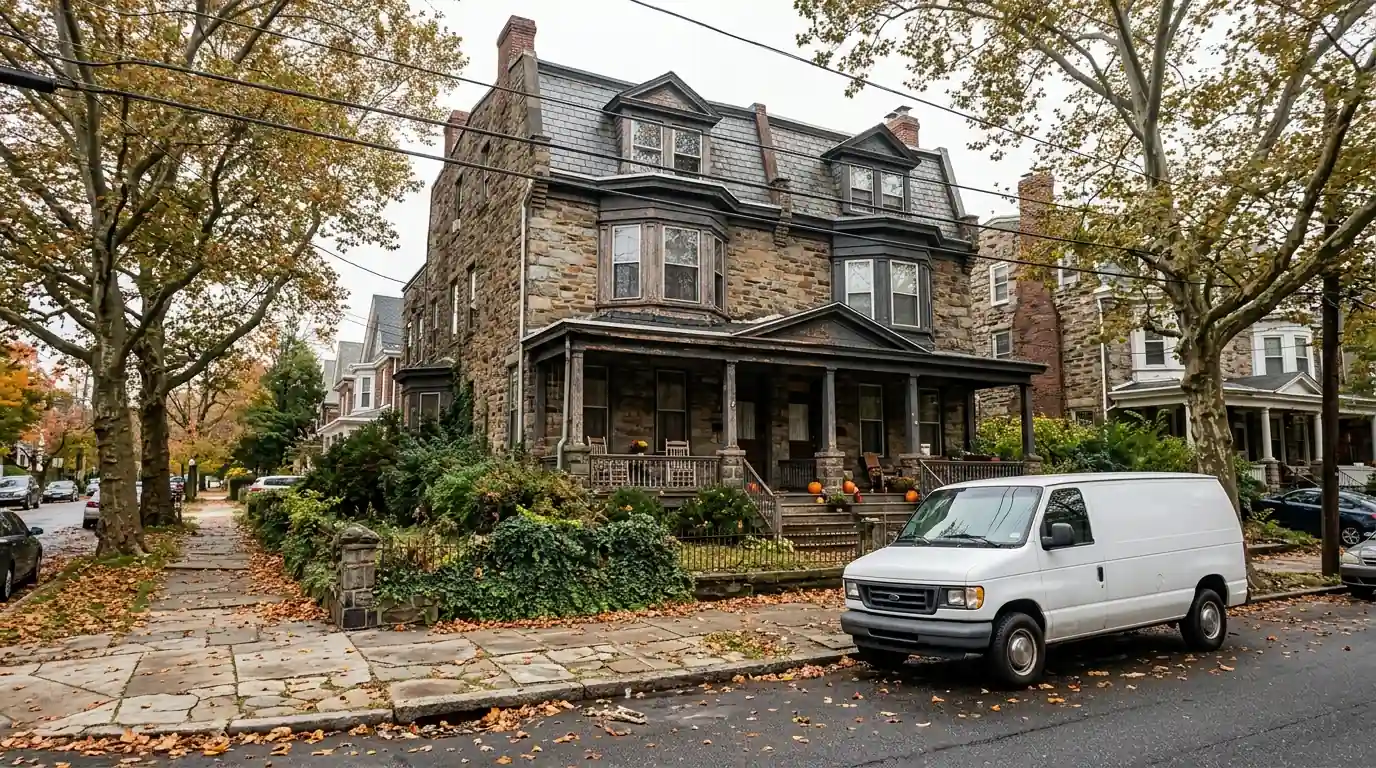
Germantown has some of Philadelphia's oldest houses still lived in. Along and off Germantown Avenue you find eighteenth-century stone houses, large twins built from local Wissahickon schist, and Victorian twins with wide porches and carved wood trim. Inside are thick plaster walls, oak or wide-plank floors, and in older rooms, plaster mixed with animal hair the way builders made it generations ago.
These materials are beautiful and porous. Plaster and old wood take in fluids and odor far more readily than modern drywall and sealed floors. After an unattended death, the work has to go beyond the surface. We remove the affected flooring and subfloor, clean plaster and trim with enzyme cleaners, and seal wood that stays in place with an odor-blocking primer. Treatment of the air comes last. Throughout, we protect original features wherever we can, because families often want to keep them. Old radiators and their covers also trap odor and get a thorough cleaning of their own.
Cleanup calls we answer most in Germantown
Supporting families after an older relative dies alone
Many Germantown homes have been in the same family for a long time, and the person who died may have been a parent or grandparent who wanted to stay independent. Relatives often arrive from out of town, unsure who to call or what is safe to touch. We start by explaining the order of things: police and the Medical Examiner's Office first, then a release, then cleanup.
Once we begin, we keep the family informed but out of the hardest work. We set aside items that may matter, such as photos, letters, jewelry and papers, and ask before discarding anything personal. Bedding and clothing in the affected room usually go as biohazard waste. When the room is clear, we test surfaces with ATP readings and walk through with you. Homeowner's insurance often covers sudden events at home, and we provide the documentation an adjuster typically asks for. Nobody has to make every decision on the first day.
Attics, third floors and the rest of a big old house
Germantown's larger houses have attics, third floors and outbuildings that may not have been opened in years. Squirrels, raccoons, bats and pigeons can move into those spaces, leaving droppings in the insulation and on the floorboards. Rodents may be in the basement or the old coal room. We clean those areas with wet methods, remove soiled insulation, and disinfect before anyone works up there.
In a large house, rooms can fill up quietly as an owner ages and uses less of the space, so we look for that on every walkthrough. A home near Vernon Park or along Wayne Avenue may have bedrooms that were closed off for years. We clear them carefully, keeping valuables and keepsakes, and clean any biohazards we find. Families new to the area often find it easiest to give directions by the nearest Regional Rail stop, such as Germantown on the Chestnut Hill East line or Queen Lane on Chestnut Hill West.