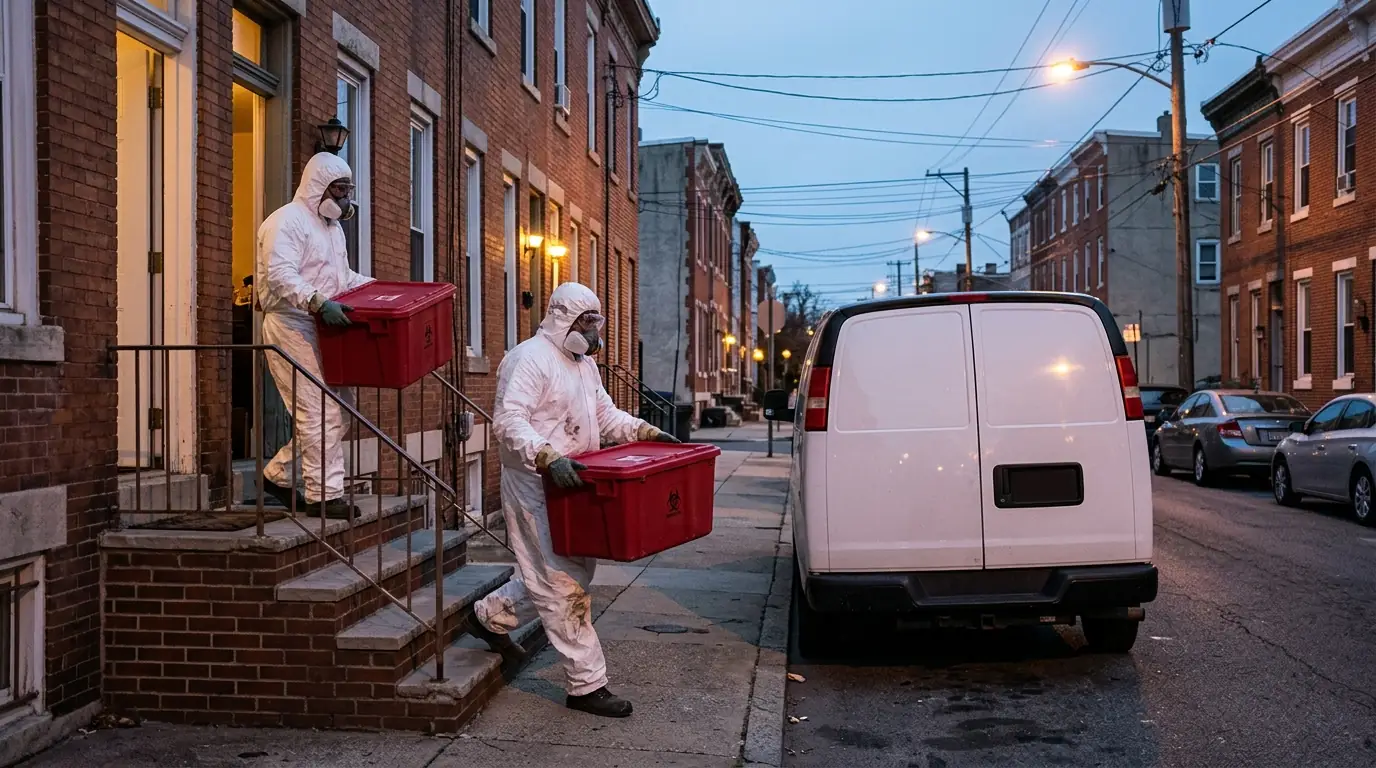
Picture a summer thunderstorm rolling across the city at night. By morning, the floor drain in the basement has bubbled up gray water that smells like a sewer, because that is what it is. Much of older Philadelphia runs on a combined sewer system, where stormwater and household waste share the same pipes. When a heavy storm overwhelms those pipes, water looks for the lowest way out, and a basement floor drain is often it.
Other backups have nothing to do with weather. Tree roots grow into an old clay lateral, grease builds up over years, or something gets flushed that should not have been. Either way, the water is classed as Category 3 under the industry's water damage standard, which means it can carry bacteria, viruses and parasites. We treat it the same way we treat any biohazard: protective gear, containment, removal, disinfection and drying, with nothing left behind that could keep making you sick.
When a basement backup needs sewage cleanup, not a mop
Water came up through a floor drain
Water rising from a drain almost always came from the sewer side, so treat it as contaminated.
Toilets or tubs backed up
Any overflow from a fixture tied to the waste line counts as Category 3 water.
A sewer smell lingers after the water drops
Odor that stays means contaminated material is still in place, often in carpet, drywall or insulation.
Carpet or drywall got wet
Porous materials that touched sewage need removal, and doing it safely calls for protective gear.
The water sat for a day or more
The longer it stays, the deeper it wicks and the more mold risk grows.
Someone in the home is vulnerable
Young children, older adults and anyone with a weak immune system should not be near sewage at all.
Why Philadelphia basements take on sewage after a storm
Philadelphia's older neighborhoods were built with sewers that carry stormwater and sanitary waste together. On an ordinary day, that system works. During an intense downpour, the pipes fill quickly, and pressure in the main can push water back up the lateral that connects your house to the street. Rowhomes in places like South Philadelphia, Kensington and West Philadelphia often have a basement floor drain tied directly into that lateral, which gives the water an easy exit.
The lateral itself is the property owner's responsibility in Philadelphia, from the house out to the city main. Many were laid long ago in clay or cast iron, and they crack, sag or fill with roots over time. A partial blockage might go unnoticed for months, then fail all at once on a busy laundry day.
Some homeowners install a backwater valve to stop water from flowing back into the house. The Philadelphia Water Department has offered programs over the years to help with that. Our job begins after the backup, but we are glad to point out where a valve or other fix could prevent the next one when we see it.
How our crew handles a sewage backup from arrival to dry
Confirm the line is clear
We check that your plumber has fixed the blockage so no new water comes in. Then we look for electrical and gas hazards before anyone steps into the water.
Contain the work area
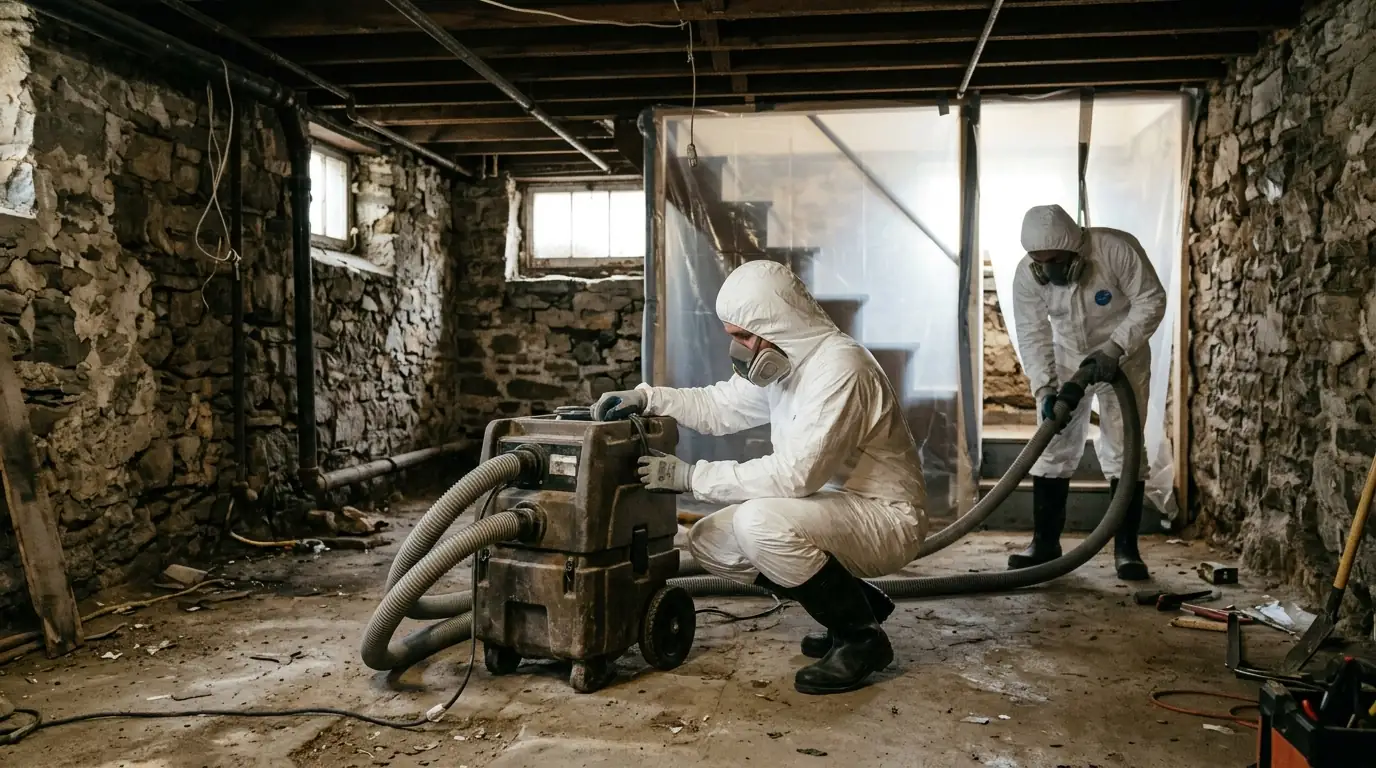
Technicians suit up in protective gear and set poly sheeting at stairways and doorways. Negative air with HEPA filtration keeps odor and airborne particles from moving upstairs.
Pump and extract
We remove standing water with pumps and truck or portable extractors, then pull up remaining sludge and debris from the floor.
Remove soaked materials
Carpet, pad, drywall, insulation and contents that absorbed sewage are cut out, bagged and taken away.
Clean and disinfect
Hard surfaces and framing are scrubbed, then treated with an EPA-registered disinfectant left on for its full labeled contact time.
Dry and monitor
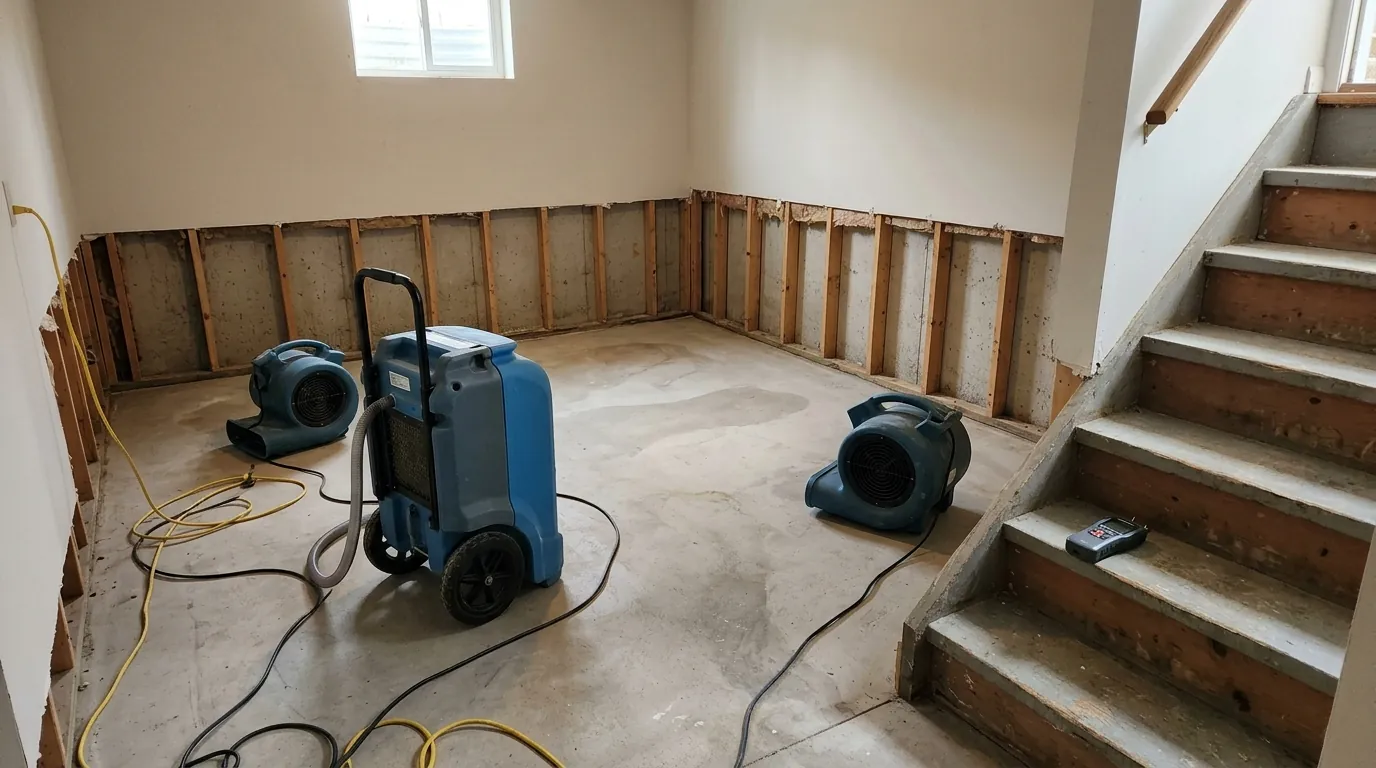
Air movers and dehumidifiers run until moisture readings reach normal levels, checked and logged on each visit.
Your plumber clears the line first, then we start
Cleanup cannot begin while the drain is still backing up. If water is actively rising, the first call should go to your plumber, who can snake or jet the line, find the blockage, and run a camera to see whether the lateral is damaged. If you do not have a plumber, the City's Philly311 line can help you report a problem in the street main.
While you wait, keep everyone, especially children and pets, out of the basement. Avoid running water upstairs, since every flush and shower sends more into the line. If water is near outlets, a furnace or a water heater, stay away and let the utility or an electrician shut power off safely.
You can call us at the same time as your plumber. We answer 24/7, and we can talk through what we will need and when it makes sense to arrive. Often our crew is pulling up as the plumber is packing up, so the water does not sit any longer than it has to. The sooner contaminated water is out, the less it wicks into drywall, framing and the concrete floor.
What we keep, what we remove, and why porous materials go
Sewage does not stay on the surface. Anything soft or absorbent pulls contaminated water deep inside, where cleaning cannot reach it. That is why the guidance for Category 3 water calls for removing most porous materials rather than trying to save them.
In a typical Philadelphia basement, that means wall to wall carpet and pad, drywall cut a safe distance above the water line, fiberglass insulation in the lower wall cavities, cardboard boxes and upholstered furniture. Hard, nonporous items such as metal shelving, plastic bins, ceramic tile and sealed concrete can usually be cleaned and disinfected. Solid wood framing can often stay, as long as it is cleaned, treated and dried thoroughly.
We photograph everything before it leaves, and we list it for you. That record helps if your policy has sewer backup coverage, and it helps you remember what was down there.
- Removed: carpet, pad, soaked drywall, insulation, cardboard
- Usually cleaned: metal, plastic, glass, tile, sealed concrete
- Case by case: solid wood framing, stairs, some furniture
- Always photographed and listed before disposal
Drying a basement properly so odor and mold do not follow
A basement that looks dry on top can still hold water in the concrete, the bottom plate of the walls and the stair stringers. Basements in Philadelphia rowhomes often have stone or brick foundation walls that soak up moisture and release it slowly. If drying stops too early, the space keeps a sour smell and can grow mold within days.
After disinfection, we set up air movers to push air across wet surfaces and low grain dehumidifiers to pull moisture out of the air. We take moisture readings on walls, framing and floors at the start and check them each visit. Equipment stays until those readings reach normal levels for that material, not just until the room feels dry.
Once everything is dry, we do a final cleaning pass and can treat lingering odor in the space. Then the area is ready for whoever handles rebuilding, whether that is you, your contractor or your landlord.
What shapes the cost of sewage backup cleanup
Every basement is different, and the cost depends on how much water came in and what it reached.
Size of the affected area
A small corner near the drain takes less time than a fully finished basement.
Depth and duration
Deeper water, or water that sat for days, reaches higher up walls and into more materials.
Finished or unfinished space
Carpet, drywall and built-ins add removal and disposal work that bare concrete does not.
Contents in the space
Boxes, furniture and stored items take time to sort, document and either clean or remove.
Drying time
Stone foundations and thick framing can need more days of equipment before readings reach normal.
Many standard homeowner's policies exclude sewer backup unless you added a specific endorsement, so check your declarations page. If you have that coverage, we document the damage with photos, moisture logs and an item list your adjuster can use. Renters should call the landlord too, since the building owner usually handles structural repairs.