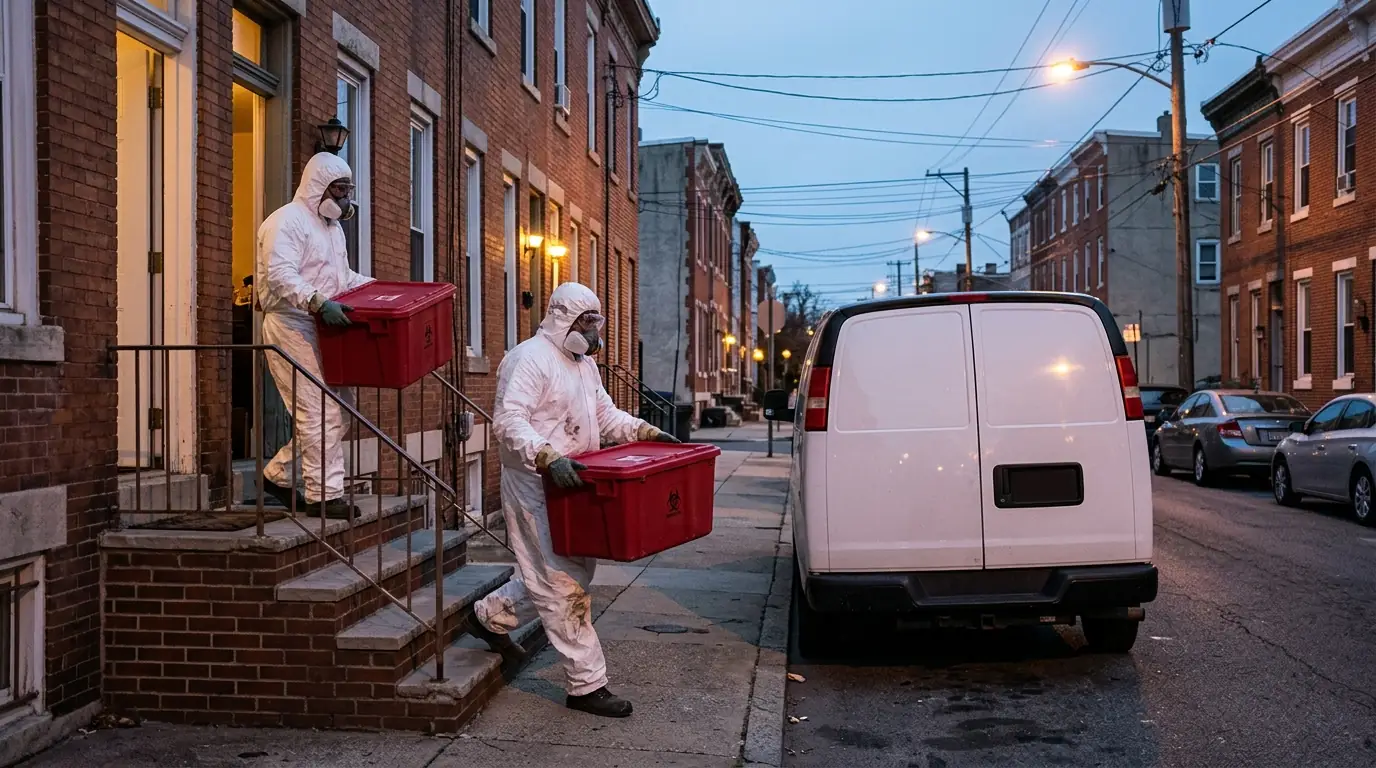
Some rooms can't be cleaned until they're emptied. A mattress that absorbed fluids, a sofa where a pet lived for years, carpet soaked with sewage, a bedroom full of boxes chewed by mice. Before surfaces can be disinfected or walls dried, those things have to come out, and how they come out matters. Thrown into a dumpster in a hurry, they leave a family without the papers, photographs and heirlooms they would have wanted, and an insurance claim without the proof it needs.
Pack-out is the step between the event and the cleanup. It's often part of a larger job, such as a death in the home, a hoarding cleanup or a basement after a backup, but it's its own kind of work with its own decisions. What is contaminated and what isn't? What can be cleaned and returned? What will your adjuster need to see? Which items belong in regulated waste and which can go to a landfill or a donation center? We work through those questions with you, one room at a time.
Deciding what leaves the home and what can be saved
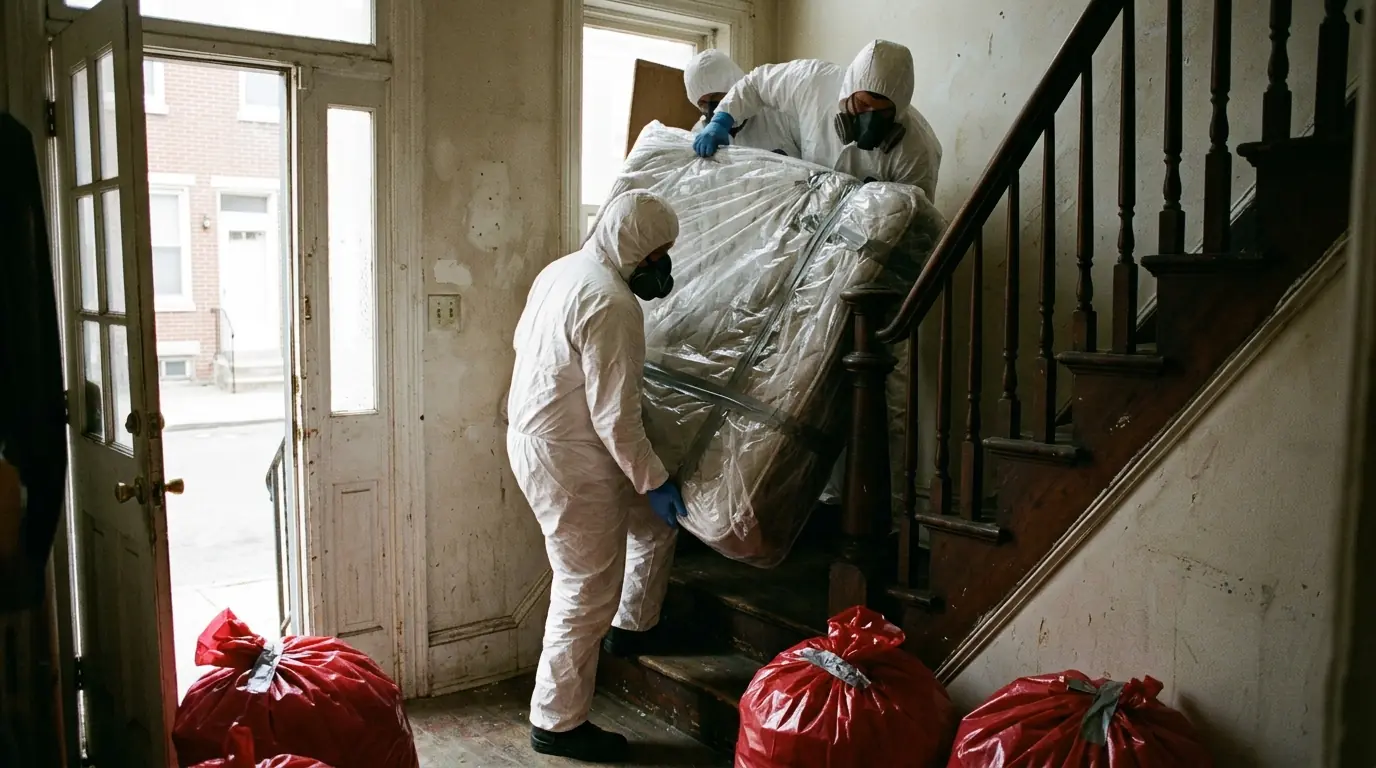
The first question for every item is whether contamination reached it, and if so, whether it can be cleaned. Porous belongings that absorbed bodily fluids, sewage or heavy urine usually can't be restored reliably. That includes mattresses, box springs, upholstered chairs and sofas, carpet and pad, pillows, stuffed toys and particleboard furniture that wicked liquid up from the floor.
Hard, nonporous items are a different story. Dishes, glassware, metal tools, solid wood furniture with an intact finish, plastic storage bins, jewelry and many electronics can often be cleaned and disinfected. Clothing and linens depend on what touched them. Lightly affected fabrics may come back after laundering or professional textile cleaning, while anything soaked through is usually discarded.
We explain each call as we make it, and nothing irreplaceable goes out without you knowing. If you're unsure about a piece, we can bag it separately and hold it while you think, or clean a sample to see how it responds. Some families want to make every decision themselves. Others ask us to use our judgment and only stop for photographs and papers. Either approach works, and you can change your mind as we go.
Inventory and photos your insurance adjuster can actually use
If the event may be covered, such as a sudden pipe burst or a sewer backup on a policy with that endorsement, your adjuster will want to know what was lost. Once items are gone, that's hard to rebuild from memory. So before anything leaves, we photograph each room as we found it, then photograph items or groups of items as they come out.
We keep a written inventory alongside the photos. Each entry notes what the item is, roughly where it was, its condition and why it was removed or kept. For larger pieces like furniture and appliances, we note brands and model details when they're visible. Smaller items of a similar type, such as a shelf of paperback books or a closet of clothing, are grouped so the list stays readable.
You get the photos and the inventory at the end of the job. Adjusters work with this kind of record regularly, and having it ready often shortens the back and forth. We can also walk the adjuster through the home or talk with them by phone if that helps. We don't decide what a policy covers and can't promise a claim outcome, but we make sure the record is complete.
How a contents pack-out runs, room by room
Talk through priorities
On the first call and at the walkthrough, we ask what you're hoping to keep or find, who makes decisions, and whether an insurance claim is involved.
Photograph each room as found
Before anything moves, we document the condition of each room and the belongings in it.
Sort item by item
Technicians in protective gear separate contaminated items, cleanable items, keepsakes and papers, and items headed for donation, recycling or disposal.
Package by waste stream
Regulated waste goes into sealed red bags and rigid containers. Other debris is bagged or wrapped and loaded separately.
Clean what can be saved
Salvageable belongings are cleaned and disinfected, then boxed and stored in a clean area for you.
Hand over the record
You receive the photos, the written inventory, and the keepsakes and documents we set aside.
Setting aside documents, photographs and keepsakes
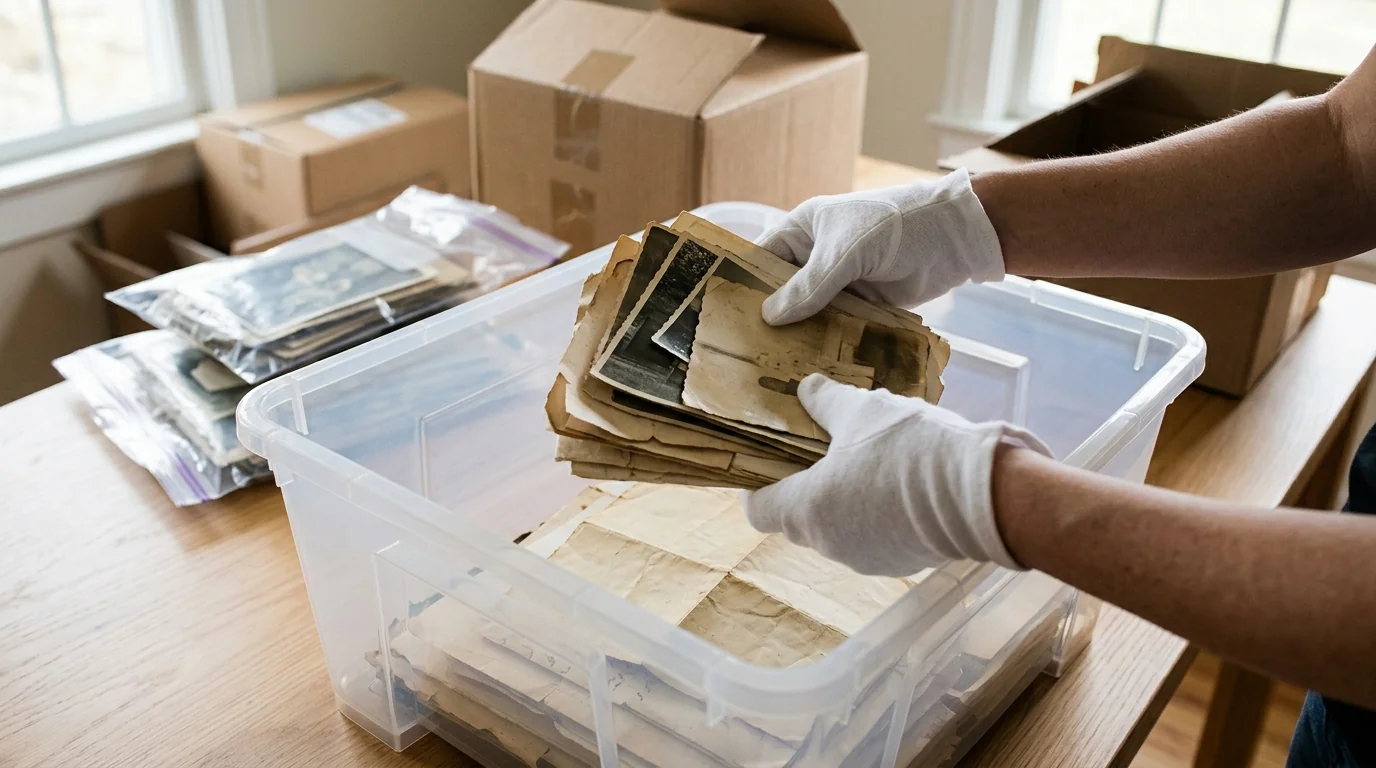
In homes after a death or years of hoarding, the most important things are often the smallest. Wills, deeds, car titles, bank statements, birth certificates, Social Security cards, passports, tax records and insurance policies get tucked into drawers, books and old purses. Family photographs, letters, military papers, jewelry, cash and spare keys turn up in coat pockets and coffee cans.
Our technicians watch for them on every job. Before we bag anything from a drawer, box or pile, we look through it. Papers and small valuables go into a separate sealed container, marked by room, and they stay with us until we hand them to you or the person you name. If a document was contaminated, we photograph it before it is cleaned or discarded, since the image may be what you need later.
Tell us on the first call about anything specific you're hoping to find, such as a ring, a folder of papers or a particular photo album, and we'll keep an eye out for it from the first room onward.
- Legal and financial papers, IDs and keys
- Photographs, letters, recipe cards and family records
- Jewelry, watches, coins and cash
- Military medals, religious items and heirlooms
- Anything you name before we start
When a home needs a contents pack-out before cleaning
A mattress or sofa absorbed fluids
Bedding and upholstered furniture involved in an unattended death or a long illness usually have to come out before the room can be disinfected.
Sewage reached stored belongings
Boxes, rugs and furniture in a basement after a backup need sorting before drying and disinfection can begin.
Hoarded rooms can't be reached
When belongings fill rooms so floors and walls are hidden, they have to come out before any cleaning starts.
Rodents or insects got into contents
Droppings, nesting material or bed bugs in belongings call for careful bagging so the problem doesn't travel with them.
An insurance claim is likely
Your adjuster will want a record of what was lost, made before anything goes to the curb.
Family members live far away
Executors and relatives out of state can have us sort, document and hold keepsakes until they're able to visit.
Where everything goes: regulated waste, landfill, recycling or donation
Not everything that leaves a contaminated home is biohazard waste, and treating it all the same way would be wasteful and costly. We separate items into streams as they come out of each room.
Materials saturated with blood or other potentially infectious materials are packaged as regulated medical waste, in sealed red bags inside rigid containers, and transported to a permitted facility in line with Pennsylvania DEP rules for infectious waste. Sewage-soaked carpet, rodent-fouled boxes and ruined furniture are bagged or wrapped and hauled as ordinary solid waste. Clean metal, cardboard and some electronics can go to recycling. Paint, household chemicals, old medications and batteries need their own handling and never go into a regular load.
Clean items your family doesn't want to keep, such as furniture, kitchenware, clothing and books that were never contaminated, can go to donation if you'd like. We set them aside, keep them apart from anything affected, and arrange drop-off with local charities that accept them. Nothing that was contaminated goes to donation, even after cleaning, unless you want it kept within the family.
What shapes the cost of contents pack-out and disposal
Pack-out costs depend on how much is in the home, how it was affected and where it all has to go.
Volume of belongings
A single bedroom is very different from a full rowhome with a packed basement and attic.
Type of contamination
Items with bodily fluids need regulated waste packaging, which takes more time and costs more to dispose of than ordinary debris.
Level of documentation
Item by item photos and inventory for a large claim take longer than a room level record.
Searching for keepsakes
Going through drawers, boxes and piles for papers and valuables is careful work that adds time.
Access and carrying distance
Narrow rowhome stairs, upper floors and tight street parking slow loading.
Cleaning salvageable items
The more belongings you want cleaned and returned, the more labor goes into that part of the job.
When a pack-out follows a sudden event covered by homeowner's insurance, contents removal and documentation are often part of the claim, so check with your adjuster before work starts. For crime scenes, Pennsylvania's Victims Compensation Assistance Program may help eligible families with some cleanup costs. Pack-outs tied to an estate are often paid by the estate, and your attorney or executor can confirm.