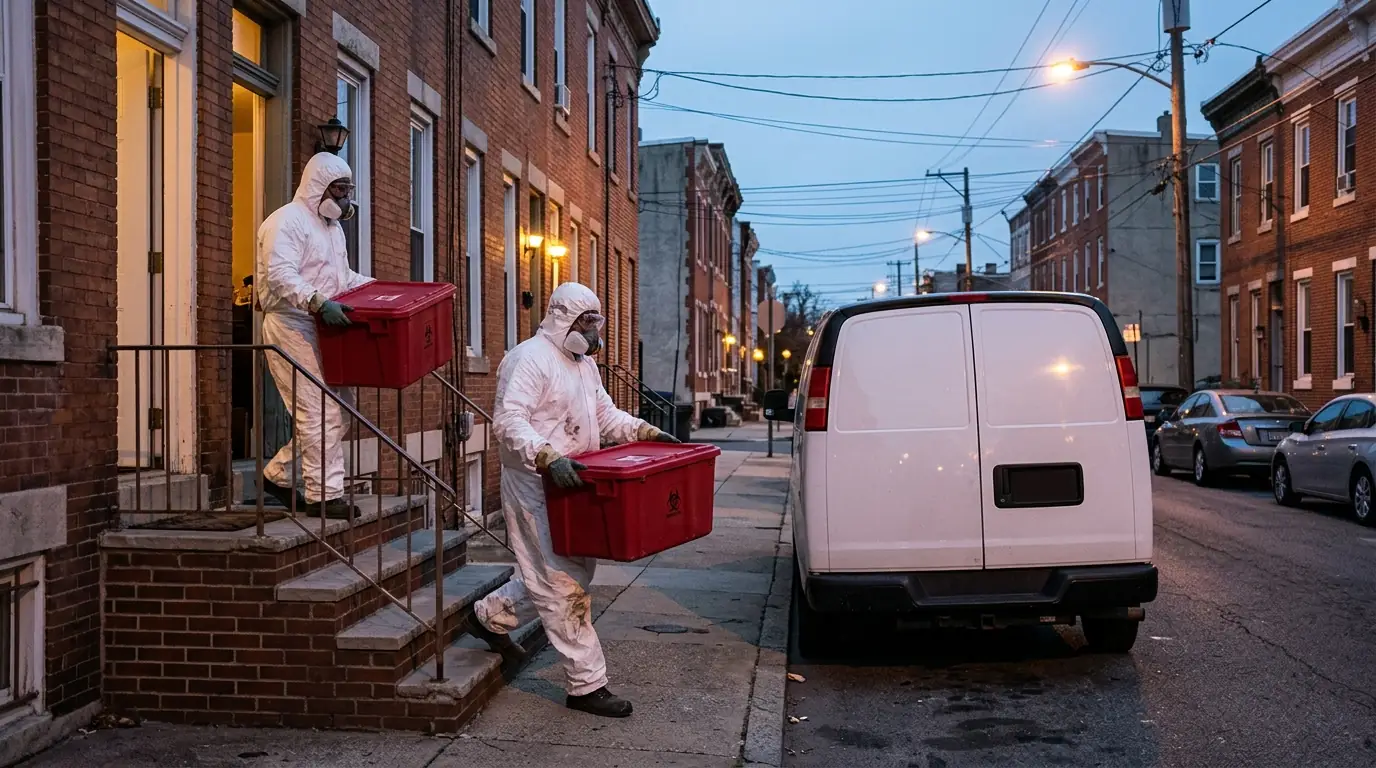
Vomit on a classroom floor, an accident on a bus seat, a restroom that has been badly misused in an office building: these are everyday problems, but they carry real risk. Bodily fluids can hold norovirus, hepatitis A, C. diff, salmonella and other pathogens that spread easily from a single contaminated surface. Norovirus in particular is hard to kill. It survives on hard surfaces for days, resists many ordinary cleaners, and alcohol hand sanitizers don't work well against it. A janitor with a mop and a general-purpose spray can end up moving the germs around rather than removing them.
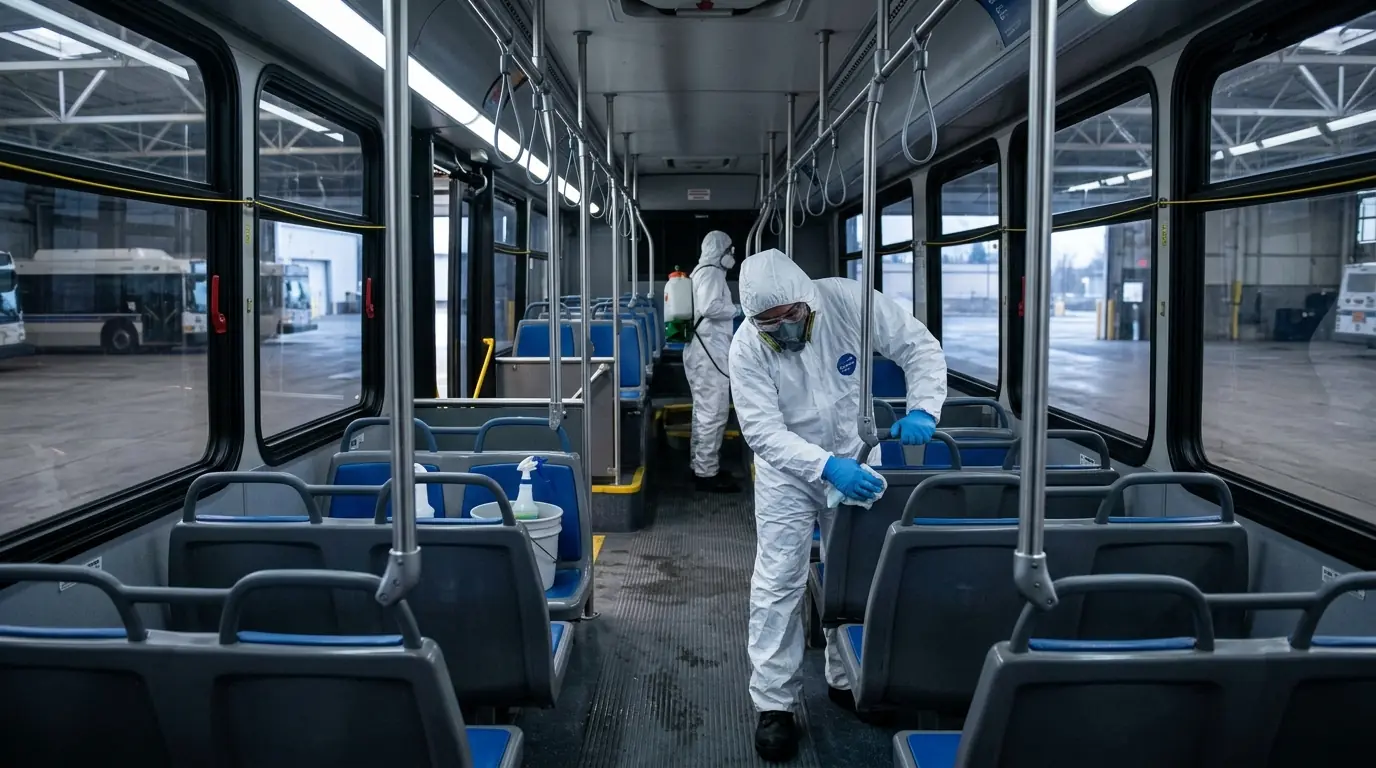
We respond to these calls across Philadelphia at any hour, for families, schools, bus and transit operators, offices, gyms, stores and property managers. Our technicians wear disposable suits, gloves, eye protection and respirators, and they treat the spill and its surroundings as infectious. We work quickly and quietly, so a school can open its doors on time or an office floor can return to normal before the next shift. For a one-time incident, the visit is often short. For a building with an active outbreak, we can come back on a schedule until it passes.
When bodily fluid cleanup needs a professional crew
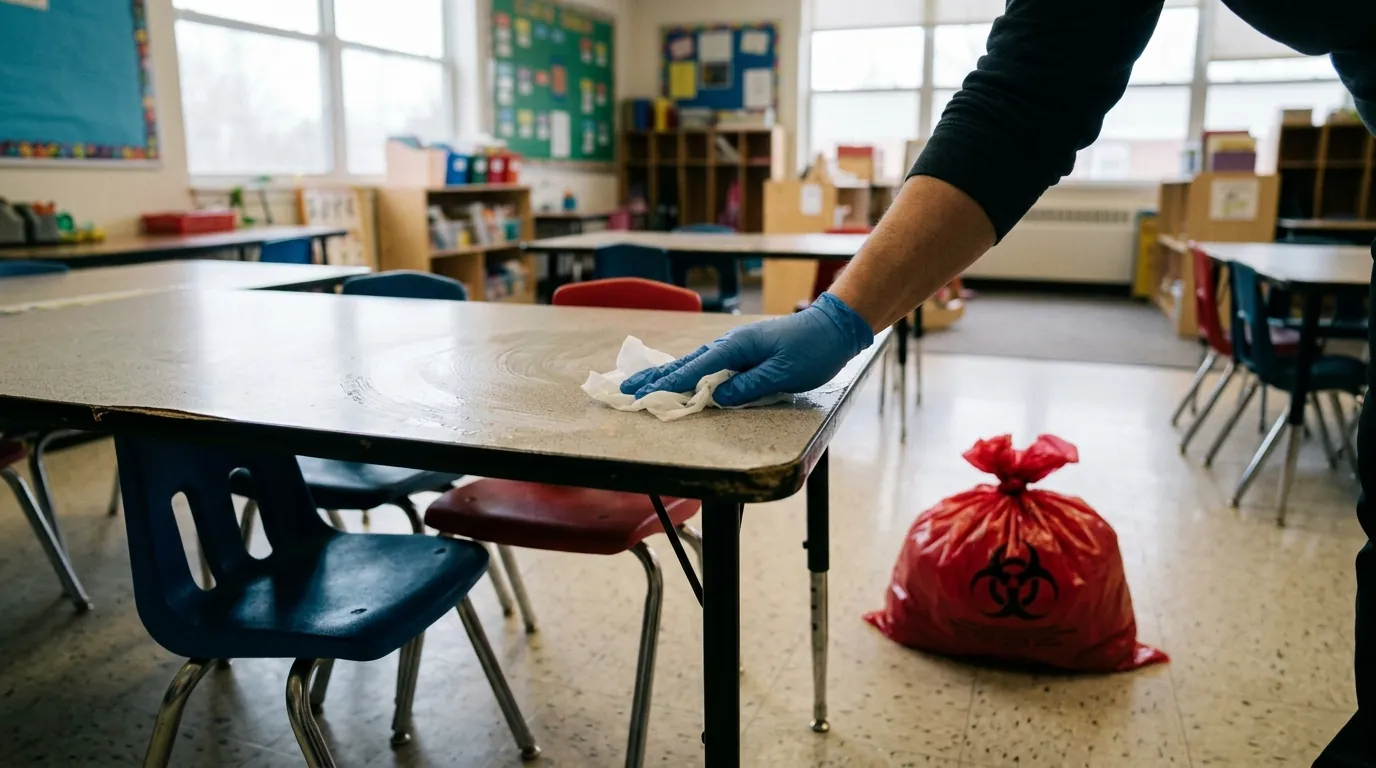
Vomit in a classroom or daycare
Young children touch everything. A fast, wide cleanup helps keep one sick child from turning into a classroom outbreak.
A soiled seat on a bus or van
Upholstered transit seats hold fluid in the foam and need extraction or removal plus disinfection before the vehicle runs again.
Restroom contamination at work
Smeared walls, flooded fixtures or repeated misuse in an office or store restroom call for full disinfection, not a quick mop.
Illness moving through a building
When several people get sick within a few days, treating high-touch surfaces across the space can help slow the spread.
Fluids on carpet or upholstery
Soft furnishings absorb fluid and germs. They often need extraction, removal or sealed laundering.
A tenant or relative left a mess
Urine and feces left for weeks call for protective equipment and stronger products than household cleaners.
Why vomit spreads farther than it seems
When someone vomits, small droplets travel well beyond the visible puddle. Public health guidance on norovirus recommends cleaning a wide area around the spot, not just the spot itself, because those droplets land on chair legs, walls, desks and floors several feet away. Dried material can also become airborne again when it is swept or vacuumed. That is how one sick child can lead to a classroom full of absent students a couple of days later.
We start by covering the spill with an absorbent material so it can be lifted without splashing. Then we clean outward in a widening circle, working from the cleanest edge toward the center. Soft items like rugs, cushions and stuffed toys either get bagged for disposal or, where they can be laundered, are sealed in a bag for hot washing. Hard surfaces get a disinfectant the EPA lists as effective against norovirus, left wet for its full contact time. We never vacuum fresh material, since that can spray particles back into the room.
Step by step: how we contain and disinfect a fluid spill
Call and triage
Call (267) 699-2329 at any hour. We ask what kind of fluid it is, where it is, and how many people were exposed, then dispatch a crew.
Isolate the area
Technicians block off the space, set out clean and dirty zones, and put on suits, gloves, eye protection and respirators.
Lift the material
Absorbent powder or pads solidify liquids so we can scoop them up without splashing. Everything goes into sealed biohazard bags.
Clean a wide margin
We clean the spot and the surrounding area, working from the outside in so we don't drag contamination across the floor.
Disinfect at full dwell time
An EPA-registered product chosen for the likely pathogen, such as norovirus or C. diff, stays wet on each surface for the time on its label.
Treat touch points and document
Door handles, rails, switches and seats nearby get disinfected too. You get a short record of what was treated and with what.
How schools, offices and transit operators keep running
Business and school calls usually come with a deadline. A principal needs a classroom ready by the morning bell. A bus depot needs a vehicle back in rotation. An office manager wants a restroom open before staff arrive. We plan the job around that deadline, bring enough people to finish on time, and tell you honestly if a space should stay closed longer.
For larger incidents, or when a stomach bug is moving through a building, we can treat whole floors or vehicle fleets, focusing on the surfaces people touch most. We leave a short written record of what we treated, the products used and their contact times. Facility managers often keep that record on file or share it with a school nurse or the Philadelphia Department of Public Health when an outbreak is being tracked. It also helps your cleaning staff see which products and contact times worked.
What you can do before our crew arrives
A few steps in the first minutes make a difference. Keep people, especially children and pets, away from the area, and close the door if you can. Turn off fans that could blow particles around. If someone must step in, they should wear disposable gloves and wash their hands with soap and water afterward, since hand sanitizer is weak against norovirus.
When we arrive, tell us who has been sick and when symptoms started. That helps us decide how wide to work and whether nearby rooms need treatment as well.
- Don't vacuum or sweep fresh vomit or feces
- Set soiled clothing aside in a closed plastic bag
- Keep the sick person in one bathroom if possible
- Avoid wiping anything with a shared towel or sponge
- Note when the incident happened for our technicians
What affects the price of bodily fluid cleanup
Most bodily fluid jobs are smaller than a trauma scene, but the price still depends on the details. These are the main ones.
Type of fluid and likely pathogen
Norovirus and C. diff call for specific products and longer contact times than a simple urine cleanup.
Size of the affected area
One spot in a hallway is quick. A spill spread across a vehicle or several rooms takes more time and material.
Soft materials involved
Carpet, upholstery and mattresses may need extraction or removal and disposal.
Timing and deadlines
Overnight or early morning work to reopen a school or business on schedule affects staffing.
Repeat or outbreak visits
Ongoing disinfection during an outbreak is priced as a series of visits rather than a single job.
Businesses, schools and transit operators are usually billed directly, and we can work within your purchase order process. Homeowner's insurance sometimes covers fluid damage from a sudden event, depending on your policy, and we provide photos and a written scope to support a claim.