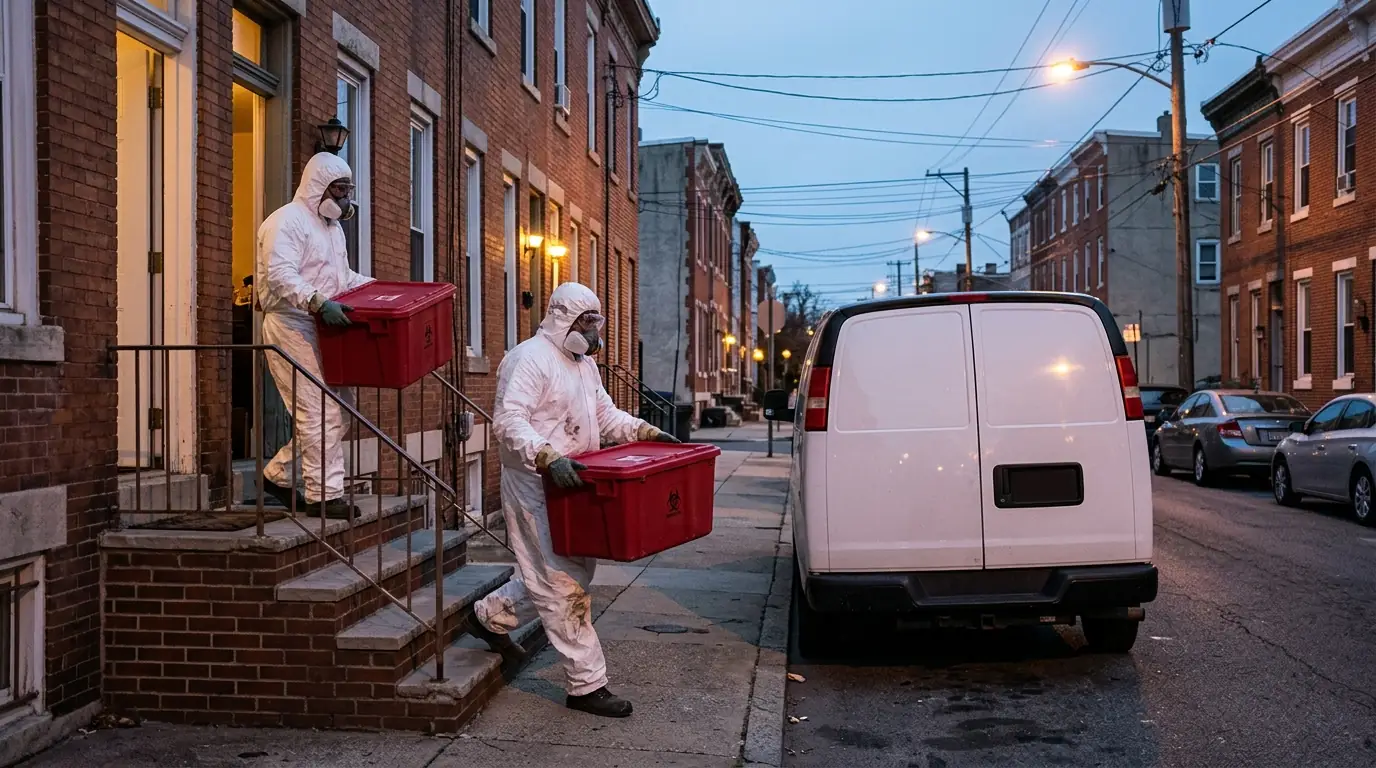
Fentanyl dominates Philadelphia's illicit opioid supply, often mixed with xylazine, and it leaves traces wherever it's handled. Powder settles on tables, counters and floors. It works into carpet, upholstery and car seats. It can collect in heating and air conditioning returns. Nothing about a room tells you whether those traces are there, and a regular cleaning company has no way to find out. That uncertainty is the real problem for a family moving into a unit, a landlord between tenants, or a buyer about to close on a house.
We approach fentanyl as a testing job first and a cleaning job second. We sample, so you know what is there. We remove it with methods that keep powder from going airborne. Then we sample again, so you know it's gone. Our technicians wear respirators, double gloves and disposable suits, and they carry naloxone on every job. It's worth knowing that medical toxicology groups consider brief skin contact with residue very unlikely to cause an overdose. Inhaling or swallowing powder is the real risk, which is why we never dry sweep or shake out fabrics.
Signs a property needs fentanyl testing
Paraphernalia left behind
Foil, straws, small baggies, scales or spoons in a unit or vehicle suggest drugs were used or handled there.
An overdose happened on site
Where someone overdosed, residue is often present on nearby surfaces and belongings.
A tenant was evicted for drug activity
Before a unit goes back on the market, testing tells you whether cleaning is needed at all.
You're buying a house with a history
If neighbors, police or the seller mention drug activity, sampling before closing avoids surprises.
A used car with unknown history
Vehicles bought at auction or recovered after theft can carry residue in seats and vents.
Staff found powder in a restroom
Businesses that find residue in restrooms or back rooms need the area closed and tested before it reopens.
Why sampling comes before and after the cleaning
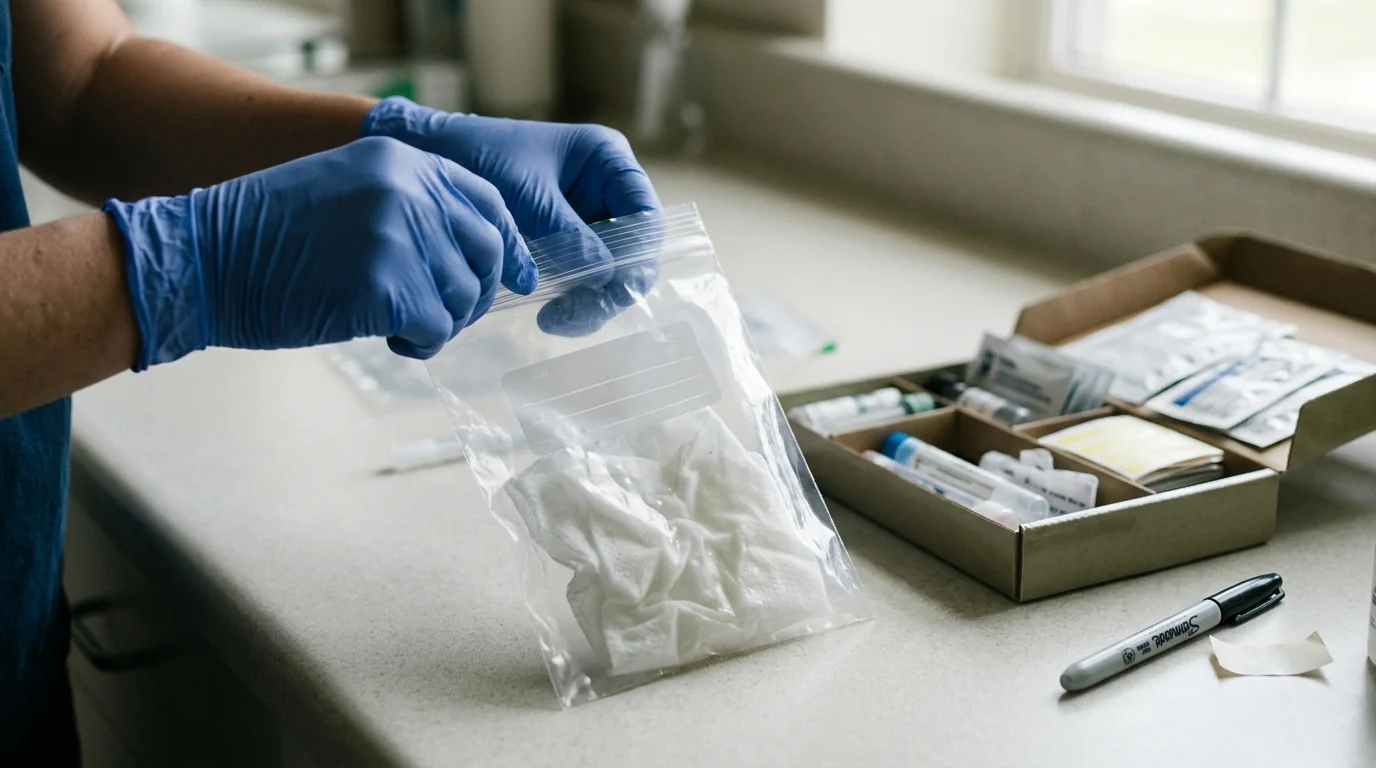
Without numbers, a fentanyl cleanup is just a promise. We take surface wipe samples from places where residue is likely: kitchen counters, tables, bathroom surfaces, door handles, bedside areas and HVAC returns. Each sample is a measured area wiped with a prepared pad, sealed, recorded and sent under chain of custody to an independent laboratory, which reports how much fentanyl and related compounds it found.
Those first results guide the work. A unit with low readings in one room needs a different plan than a house with residue on every surface. After we clean, we sample the same locations again. The clearance results show whether residue has come down to the target we agreed with you before starting. Field test strips have a place, especially for a quick check on a single item, but they don't replace lab numbers when a tenant, a buyer or an insurer needs proof.
Our fentanyl testing and removal process
Call and sampling plan
You call (267) 699-2329 and tell us about the property. We agree on sample locations and a clearance target before any work begins.
Baseline sampling
Technicians in protective gear take wipe samples and send them under chain of custody to an independent lab.
Containment and removal
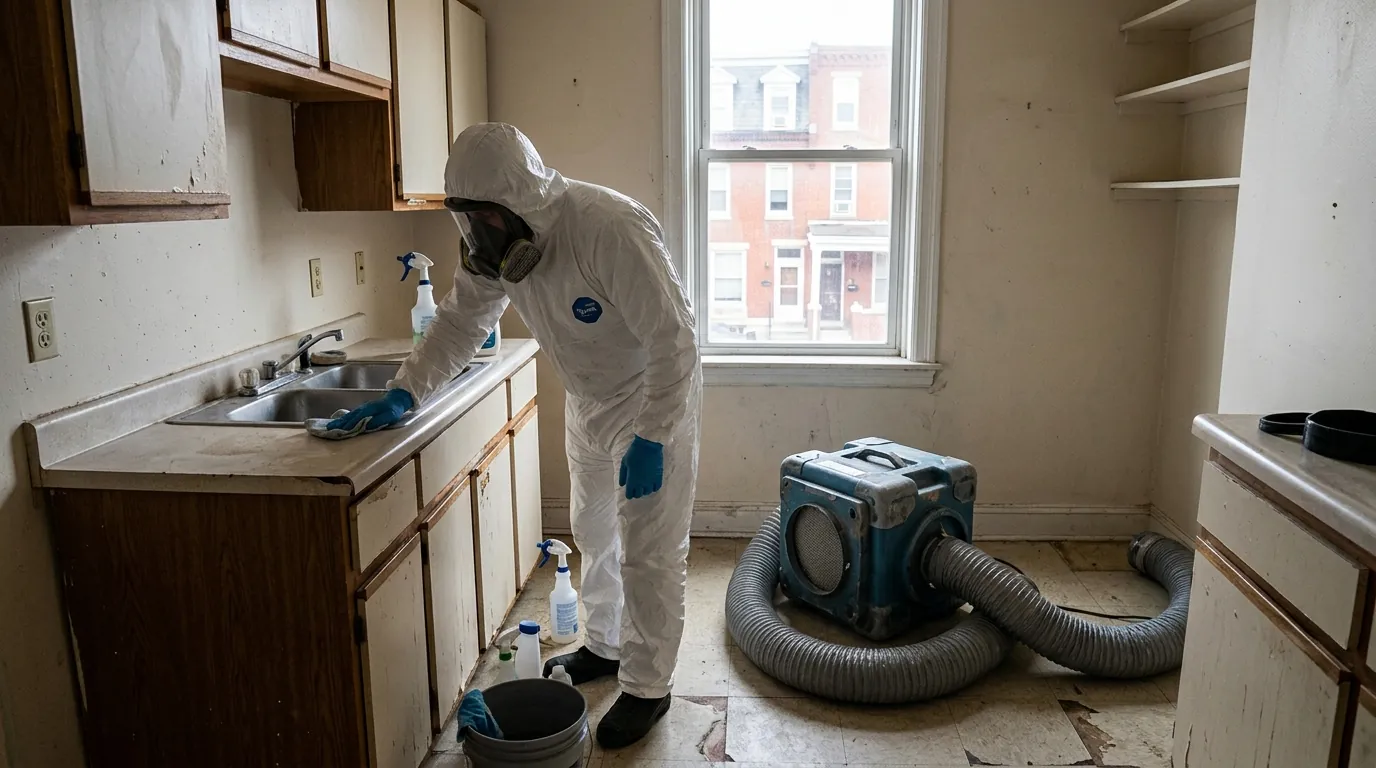
We seal work areas, run HEPA air scrubbers, remove heavily contaminated items, and HEPA vacuum soft surfaces.
Wet cleaning of hard surfaces
Counters, floors, walls, fixtures and HVAC registers are washed several times using wet methods that keep powder out of the air.
Clearance sampling
We sample the same locations again. Any area that misses the target is cleaned again and re-tested.
Report and disposal records
You receive lab results, photos, a scope of work and disposal paperwork in one report you can share.
How we remove fentanyl residue without spreading it
Fentanyl is a fine powder, so the first rule is to keep it on the surface and out of the air. We set up poly sheeting containment, run HEPA air scrubbers, and use wet methods rather than dry wiping or sweeping. Carpets and upholstery are HEPA vacuumed slowly, and items that hold residue deeply, like mattresses and stained couches, are bagged and removed.
Hard surfaces get several rounds of washing with detergent solutions that lift residue, followed by rinsing. Oxidizing cleaners such as bleach or peroxide products help break down opioid compounds on surfaces, but the choice depends on the material. Heating and air conditioning systems get attention too, since forced air can move powder from one room to every room. We clean registers and returns, change filters, and recommend duct cleaning when sampling shows residue inside the system. Our crew washes with soap and water rather than alcohol-based sanitizer, which can make it easier for fentanyl to pass through skin.
Homes, rentals, cars and businesses each need a different plan
Rental units are the most common call. A landlord recovers a unit after a tenant leaves or is evicted, finds paraphernalia, and needs to know whether the next tenant will be safe. Sale properties come next, when a buyer's inspector or attorney asks for clearance results. Families call when a relative who used drugs has died or moved out and they want the home checked before children visit. In rowhomes split into apartments, we also check shared hallways and stairs if residue may have traveled.
Vehicles are tight, enclosed spaces where residue gathers in seats, carpets, seat tracks and the ventilation system, so we sample and clean the cabin and its air path. Businesses such as convenience stores, bars, hotels and offices call after finding residue in restrooms or stock rooms. Each setting has its own concerns, but the method stays the same: sample, remove, re-sample, and report.
What landlords and buyers should ask for in writing
If you own or are buying a property where fentanyl was used or handled, the paperwork is what protects you later. Ask for a report that lists each sample location, the lab results before and after cleaning, the clearance target used, and photos of the work. Ask how contaminated items were disposed of. A report like that lets you show a tenant, lender or future buyer exactly what was done.
We provide every item on that list. If a separate consultant is handling sampling, we can work to their plan and their clearance target instead.
- A sampling plan with locations marked on a floor plan
- Laboratory results from before and after cleaning
- The clearance target agreed at the start
- Photos and a written scope of work
- Disposal records for removed materials
What shapes the cost of fentanyl decontamination
Fentanyl jobs are priced on the testing and the cleaning together. These factors make the biggest difference.
Number of samples
More rooms and more sample locations mean more laboratory work, before and after.
Level of contamination
Light, scattered residue cleans faster than heavy residue across many surfaces.
Property size and type
A single bedroom, a full rowhome, a vehicle and a commercial space each take different amounts of time.
Items to remove
Mattresses, carpets and furniture that cannot be cleaned add disposal costs.
HVAC involvement
Residue inside ductwork can mean extra cleaning and extra samples.
Repeat cleaning
If clearance samples miss the target, another round of cleaning and testing is needed.
Some landlord and homeowner policies cover drug residue cleanup while others exclude it, so check your policy or ask your agent. We give you an itemized scope and lab reports that make a claim easier to evaluate. Laboratory charges are shown separately so you can see exactly what the testing involved.