Why this work needs a specialist crew
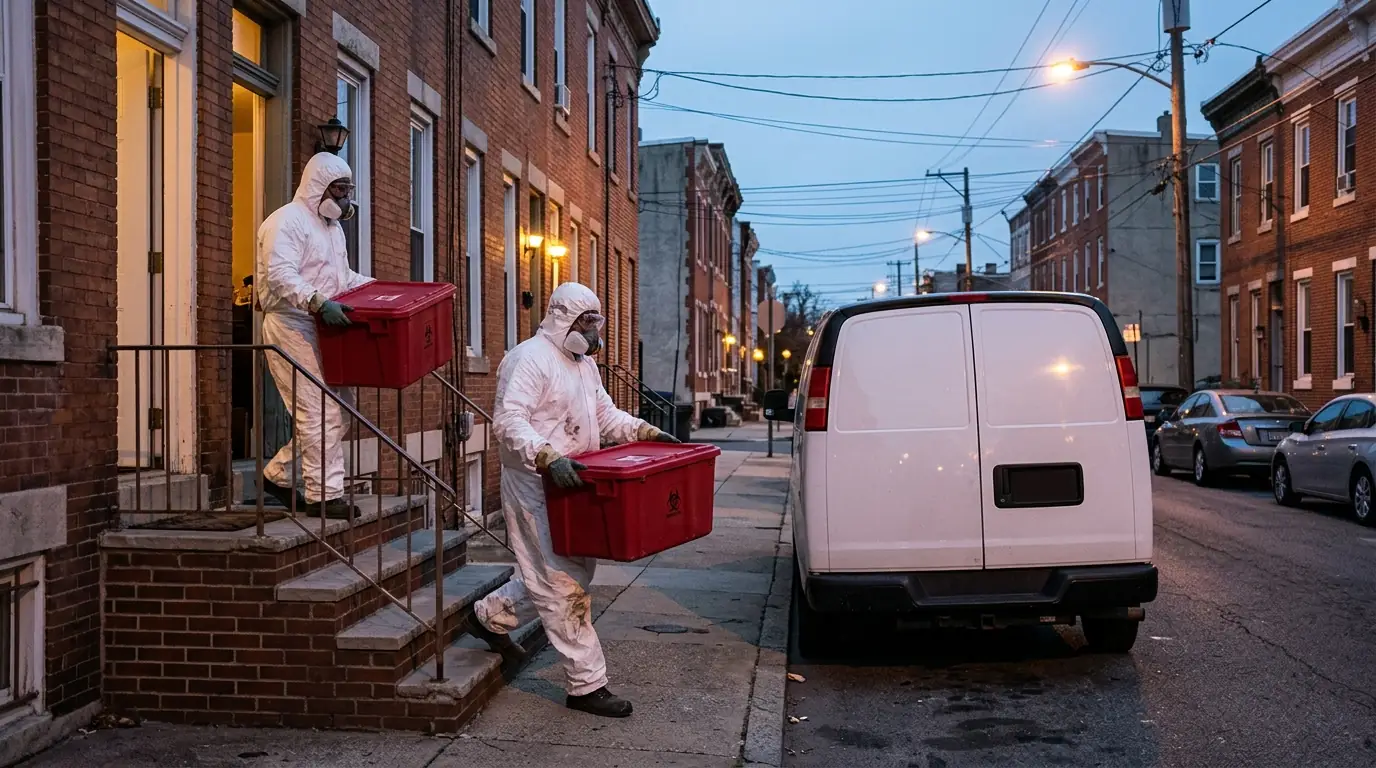
Biohazard cleanup sits in an odd gap. Police, paramedics and the Medical Examiner leave once their part is done, and a regular cleaning company is not equipped for blood, sharps or decomposition. Families are left holding a key to a room they cannot face. Our technicians step into that gap every day across Philadelphia and the Lehigh Valley.
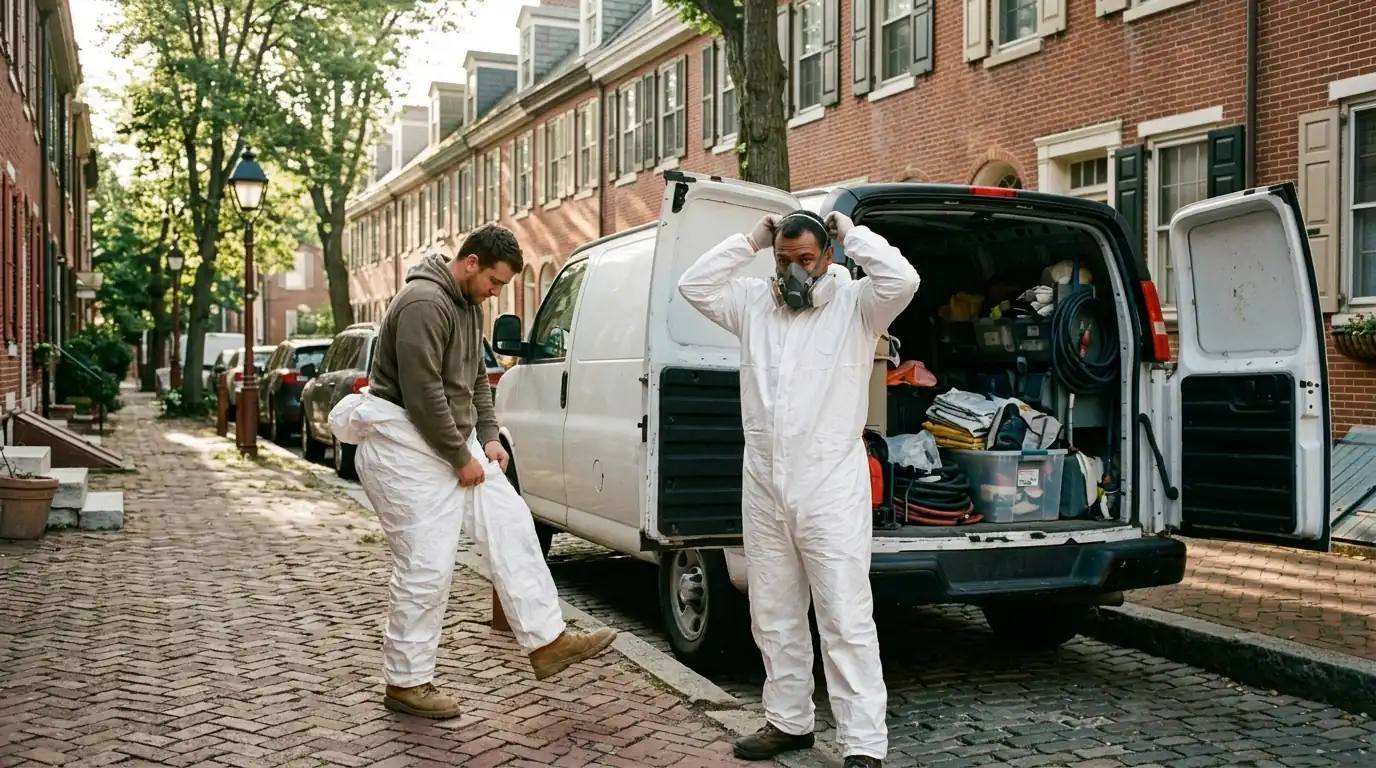
The job takes specific gear, training and habits: respirators fitted to each person, nitrile gloves in layers, Tyvek suits, containment sheeting, negative air machines, ATP meters and the right disinfectants used the right way. It also takes patience with people, because the person on the phone has often had the worst week of their life.
How we work once we are inside
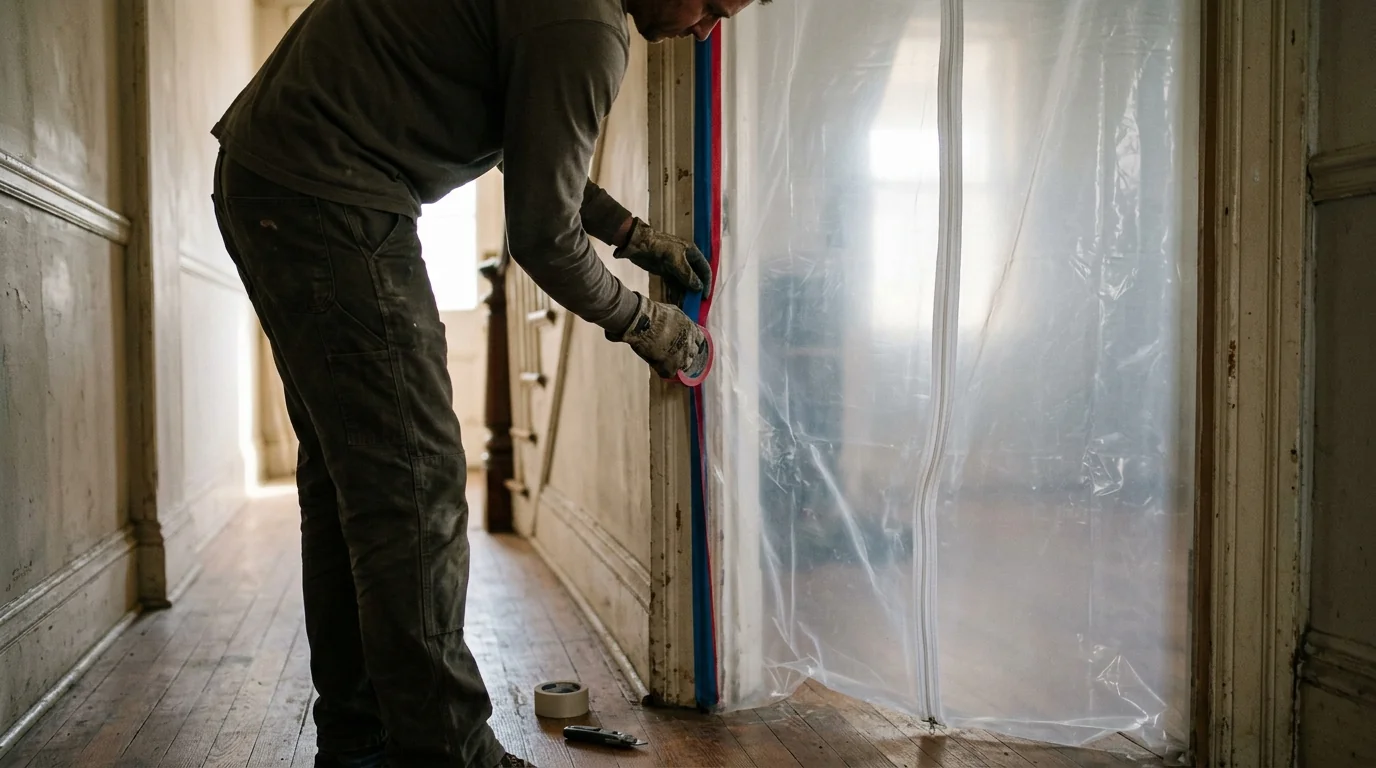
Every job starts with a walkthrough. We look at each affected area, decide what has to be removed and what can be saved, and write it down for you before we start. Then we seal the space so nothing travels into the rest of the house, remove contaminated material, clean and disinfect what remains, and treat odor once the source is gone.
Waste leaves in sealed red bags inside rigid, labeled containers, and it goes to a permitted facility, never into household trash. Before we hand the space back, we check surfaces with ATP swabs and walk the rooms with you or your representative. We keep photos and a written record for insurers, landlords and estate attorneys.
Two offices and one line
Our Philadelphia office sits on St James Place in Society Hill, a short drive from every neighborhood in the city and a quick run over the bridges to South Jersey. It covers Philadelphia, the four suburban Pennsylvania counties, Camden, Burlington and Gloucester counties, Trenton and Wilmington.
Our head office is on East Fairmont Street in Allentown and covers Lehigh and Northampton counties, including Allentown, Bethlehem and Easton. Both offices share one phone number, (267) 699-2329, and it is answered 24 hours a day, every day of the year.
Who writes our family guides
Ellsworth Bristow edits the Family Resources section. His job is to take the questions callers ask us every week, about insurance, landlords, victim compensation, fentanyl residue and what to do in the first hours after a death, and answer them in plain language. The guides are written to be useful even to people who never call us.