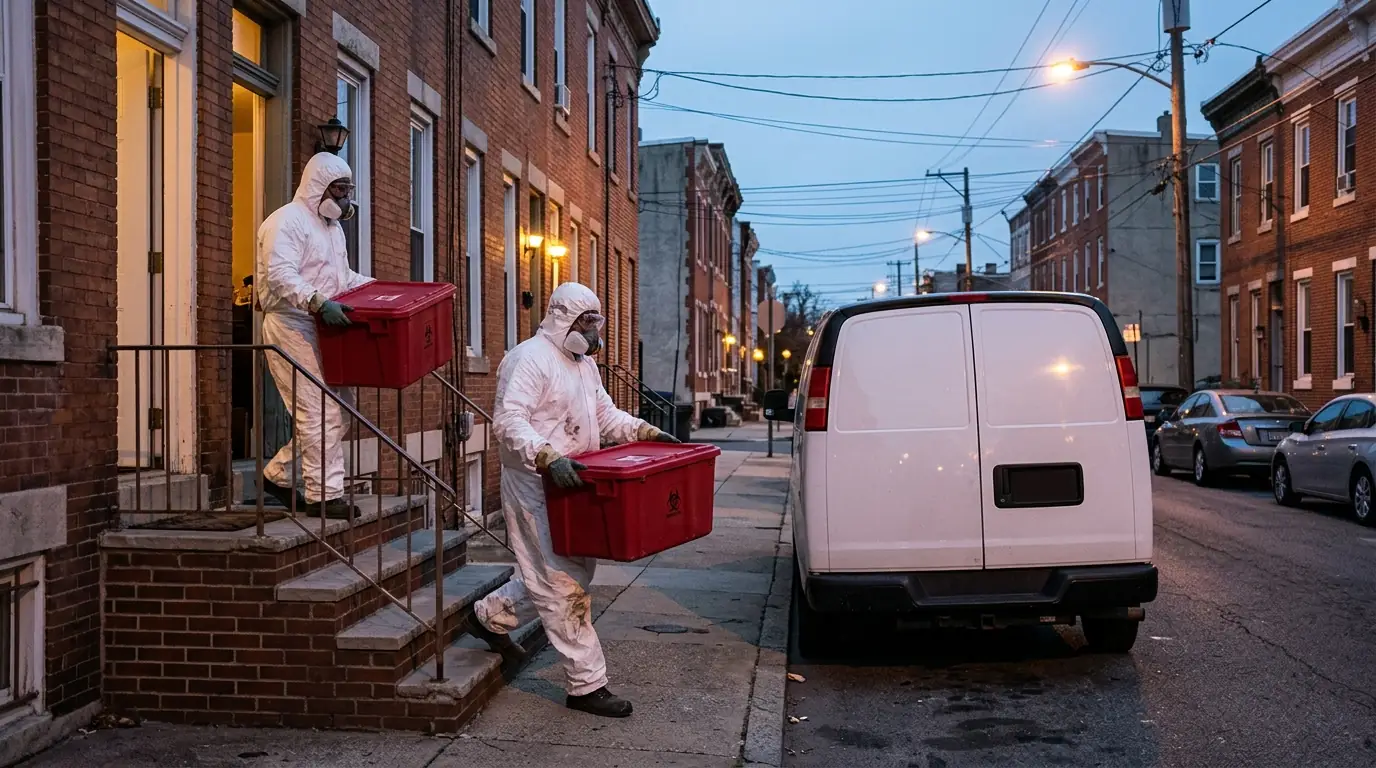
An overdose call doesn't always end in the worst news. Often a family member, roommate or bystander gives naloxone, the person wakes up, and paramedics take them to the hospital. Other times it ends in a loss. Either way, the room afterward tends to look similar: fluids on the floor or bedding, needles or pipes nearby, small baggies or powder on a table, and a family that isn't sure what is safe to touch.
We work these scenes throughout Philadelphia, from Kensington and Fairhill to the Northeast, South Philly and the suburban counties. Our approach is practical and free of judgment. Addiction touches every kind of household and block in this region. What matters to us is that the space gets cleaned properly, nobody gets stuck by a needle, and any drug residue is removed rather than spread around the house, the car or the stairwell.
When to call us for overdose scene cleanup
Someone overdosed at home
Paramedics have taken the person to the hospital, and fluids or paraphernalia remain in the room.
Needles are in the space
Used syringes are in bedding, furniture, trash or on the floor and need safe collection.
You see unknown powder
Residue on tables, floors or bathroom surfaces should be treated as hazardous until removed.
A tenant's unit needs clearing
Landlords need a unit cleaned of fluids, sharps and residue before repairs or a new tenant.
A business restroom was used
Stores, restaurants and offices need restrooms cleaned and checked for sharps quickly.
A fatal overdose scene was released
The Medical Examiner's Office and police have finished, and the home is back with the family.
Bodily fluids, sharps and drug residue in the same room
Most biohazard scenes involve one main hazard. Overdose scenes usually involve three. Bodily fluids such as vomit, urine and sometimes blood need the same handling as any biohazard: removal of soaked materials, then cleaning and disinfection. Sharps add the risk of a needlestick injury, which can transmit hepatitis B, hepatitis C or HIV. Drug residue adds a chemical hazard on top of the biological one.
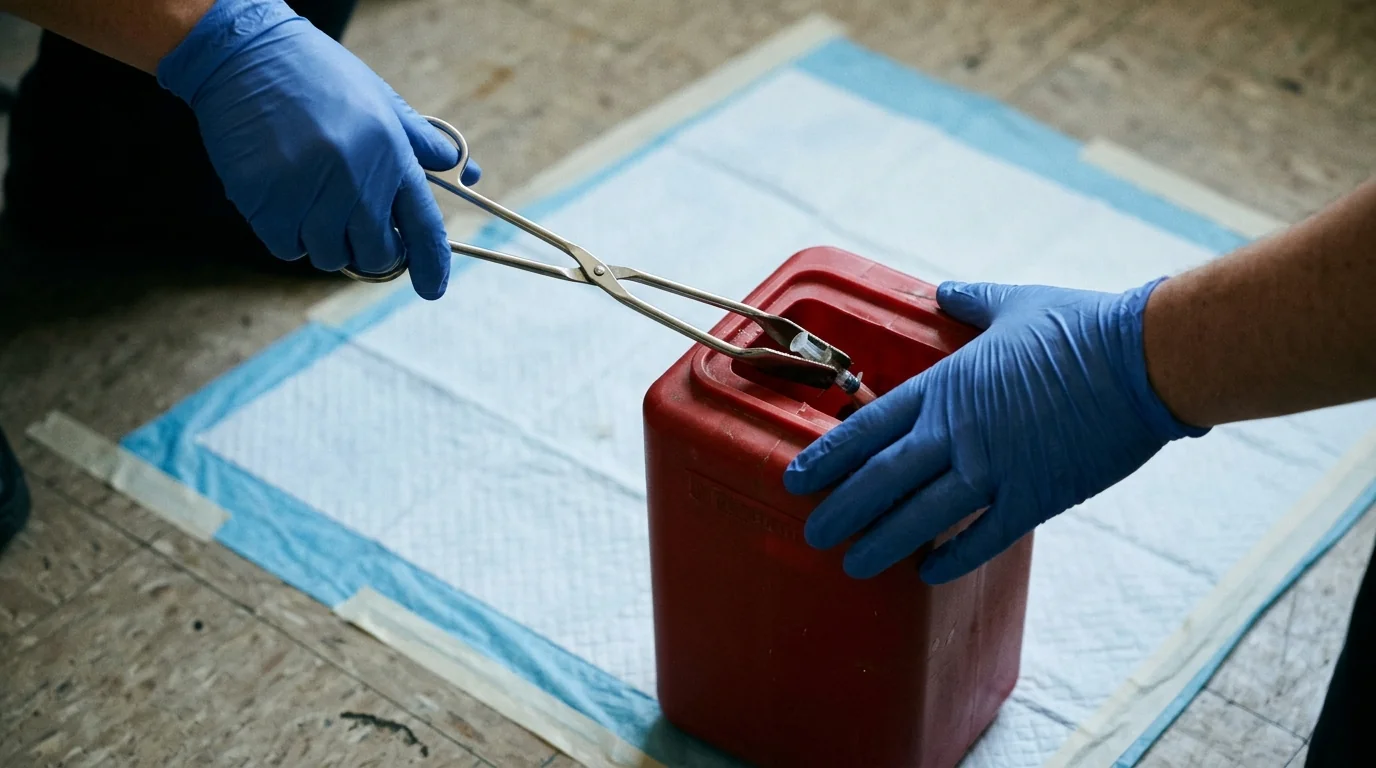
Those hazards set the order of our work. We don't start by scrubbing. Technicians first search the area by sight for needles, including under cushions, in bedding, inside drawers and between mattress and frame. Sharps go straight into rigid, puncture-resistant containers. Visible powder and paraphernalia are collected next. Only then do we deal with fluids and begin cleaning. Working in that order keeps hands away from hidden points and keeps powder from being smeared or kicked into the air. It also means a mattress or couch gets checked before anyone lifts it.
Our steps for an overdose scene cleanup
Call and quick questions
We ask whether the overdose was survived or fatal, whether police released the scene, and whether needles or powder are present.
Set up and protect
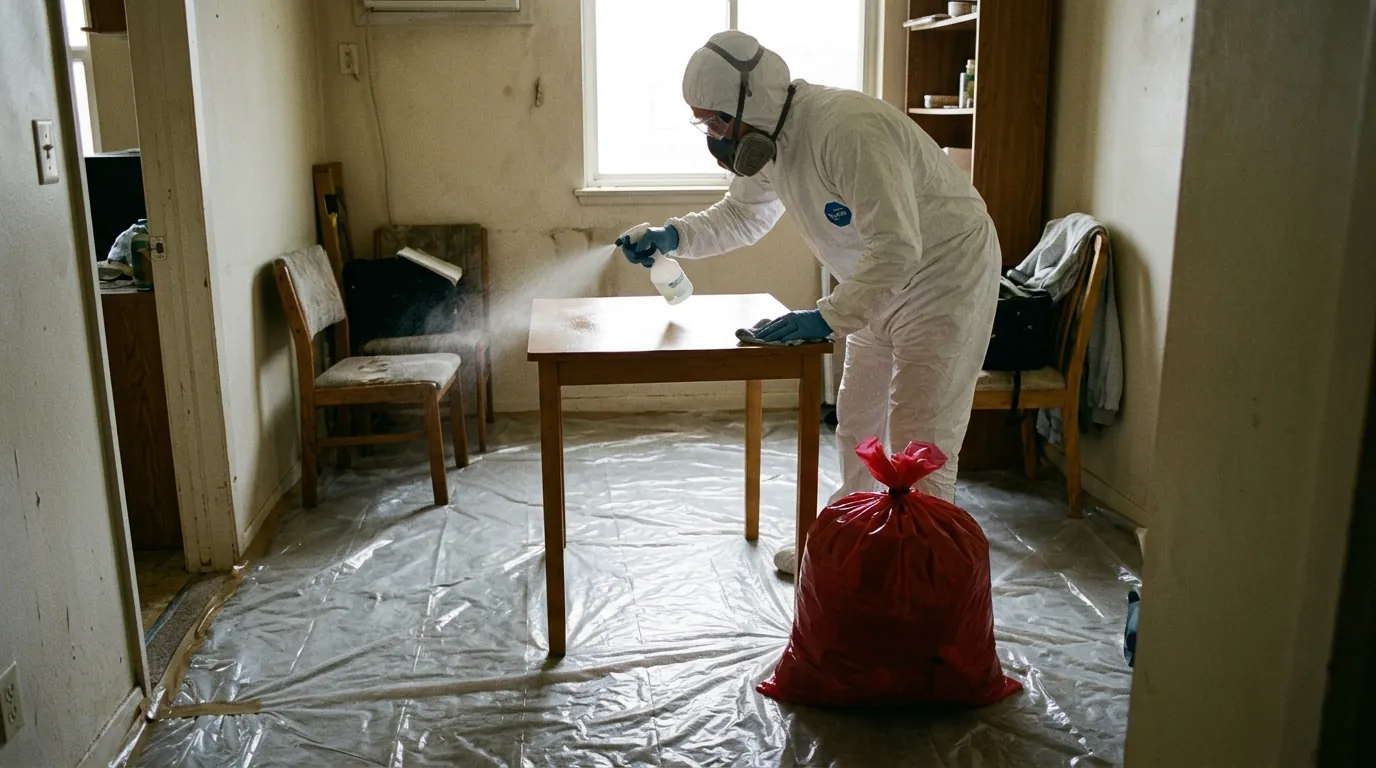
Technicians suit up with respirators, eye protection and heavy gloves where sharps are likely, then seal off the area.
Sweep for sharps first
A careful visual search finds needles in bedding, furniture and debris. Every one goes into a rigid sharps container.
Collect residue and paraphernalia
Powder is misted and wet-wiped or HEPA-vacuumed, never dry swept. Paraphernalia is bagged and sealed separately.
Remove fluids and disinfect
Soaked materials leave in red biohazard bags, and remaining surfaces get hospital-grade disinfectant for the full dwell time.
Verify and dispose
ATP testing checks key surfaces, and all waste goes to a permitted treatment facility under Pennsylvania DEP rules.
What we know about fentanyl residue, and how we treat it
Fentanyl is a far stronger opioid than heroin, and Philadelphia's street supply is often mixed with xylazine, an animal sedative. Medical toxicology groups have said that brief skin contact with fentanyl is very unlikely to cause an overdose. The bigger concerns are breathing in powder that becomes airborne and getting residue on hands that then touch the mouth, nose or eyes.
We treat any unknown powder as hazardous. Technicians wear nitrile gloves, eye protection and respirators with particulate filters. We never dry sweep or use ordinary vacuums, which can launch fine particles. Instead, we mist, wet-wipe and HEPA-vacuum, working from cleaner areas toward dirtier ones. For homes where heavy or repeated use occurred, our fentanyl decontamination service adds surface sampling and deeper cleaning. Pills, powders and paraphernalia are sealed separately from ordinary waste so none of it ends up in household trash. Family members should wash their hands well after being in the room and keep pets out until we're finished.
Overdose cleanup in Kensington and nearby neighborhoods
Kensington, Fairhill, Harrowgate and the blocks under the Market-Frankford Line's elevated tracks have been at the center of Philadelphia's opioid crisis for years. Calls from this part of the city come from families in rowhomes, landlords with rooming houses, small business owners with restrooms people use without asking, and church or community groups whose doorways and lots see overnight use.
Those settings shape the work. A shared restroom in a corner store may need a fast clean and sharps sweep before opening time. A vacant unit in a rowhome may have weeks of accumulated debris along with fluids and drug residue. Outdoor areas like steps, alleys and side yards can hold needles hidden in leaves or trash. We plan for these situations, bring sharps containers sized for the job, and leave the space safe for the people who live and work there. Philly311 is the right number for needles on public sidewalks and city property. Private homes, yards and businesses are where we come in.
Survived or fatal: how the circumstances change the job
When the person survived, the scene is usually smaller and cleanup can start right away. There's typically no police release to wait for, and families often want the room cleaned before their loved one comes home or before younger siblings see it. We can work quickly and quietly, and we recover personal items and household medications so nothing important is thrown away.
When an overdose is fatal, the Medical Examiner's Office investigates, and police may be present depending on the circumstances. Cleanup waits until the home is released. If some time passed before the person was found, the job can also involve decomposition, which means flooring and subfloor removal and odor treatment like an unattended death cleanup. Either way, we look at the full picture during the walkthrough and explain which parts of the work apply to your situation. If you're grieving, you don't need to sort out these details yourself. Give us the address and we'll handle the rest.
What shapes the cost of overdose scene cleanup
Two overdose scenes can look alike from the doorway and differ a lot once we see how far fluids, sharps and residue reach.
Number of sharps
A few needles in one spot is quicker than a full search of furniture, bedding and debris.
Extent of drug residue
Residue on many surfaces needs more wet cleaning and HEPA work, and may call for added decontamination.
Bodily fluid spread
Fluids that reached mattresses, carpet or upholstery mean removal and disposal of those items.
Survived or fatal
A fatal overdose found after some time can involve decomposition cleanup and odor treatment.
Clutter and debris
Heavy clutter slows the sharps search and adds waste volume.
Type of property
Homes, rentals, vehicles and business restrooms each have different access and timing needs.
Homeowner's or renter's insurance may cover parts of an overdose cleanup, and landlords may be able to claim under their property policy. Coverage varies, so we provide detailed records and talk with adjusters when you ask. We explain our billing before work begins, and we never comment on the circumstances of the overdose.