Insulation is soft, warm and quiet, which is exactly why animals pick it. Mice and rats tunnel through blown cellulose, raccoons flatten fiberglass batts into latrines, and bats or pigeons leave guano piled along the eaves. Over months the insulation stops insulating. It packs down, holds urine, and starts to smell on humid days. Blowing new insulation on top only traps the old waste against your ceiling drywall, so the odor and the contamination stay right where they were.
Our technicians take on the dirty half of the job. Once your pest control or wildlife company has removed the animals and closed the entry points, we strip the attic to bare wood, clean every surface the waste touched, and haul the bags away. We work in shallow rowhome cocklofts in South Philadelphia, full attics in Northeast Philadelphia twins, and the larger attics common across Bucks and Montgomery counties. Your insulation contractor then arrives to a space that is clean, dry and free of odor.
Why soiled insulation has to come out instead of being covered
Fiberglass and cellulose are made of fibers with a lot of air space between them. That is what makes them good insulators, and it is also what makes them good at holding urine, droppings, nesting debris and the oils animals leave on everything they rub against. Cleaning insulation in place is not realistic. A disinfectant cannot reach every fiber, and soaking cellulose ruins it anyway.
Leaving it causes real problems. Rodent urine keeps releasing ammonia odor when summer heat builds under a Philadelphia roof, and that smell drifts down through ceiling light fixtures and around attic hatches. Raccoon latrines can carry roundworm eggs, which are hardy and can survive for years. Heavy bat guano and bird droppings can support the fungus behind histoplasmosis, and disturbing dry droppings can put spores into the air. Compacted, soiled insulation also slows heat loss far less than clean fill, so heating and cooling bills creep up. Removal deals with all of it at once.
How we keep attic dust out of the rooms below
Most of the risk in an attic job comes from moving dirty material, so containment matters more than speed. Before anything is disturbed, we cover the path from your front door to the attic access with floor protection and poly sheeting, and we build a zippered poly enclosure around the hatch or pull-down stairs. A HEPA air scrubber keeps the attic under slight negative pressure, which means air flows into the work area rather than out into your hallways.
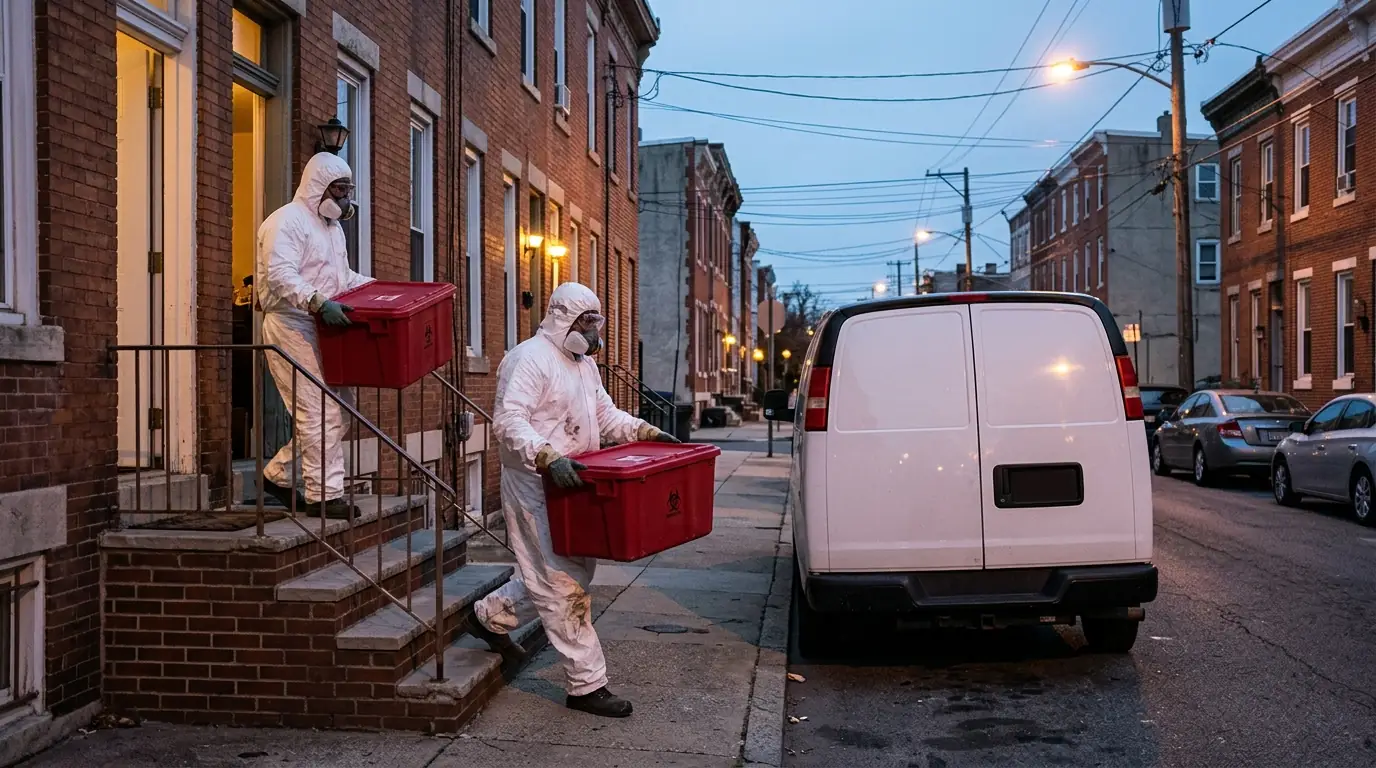
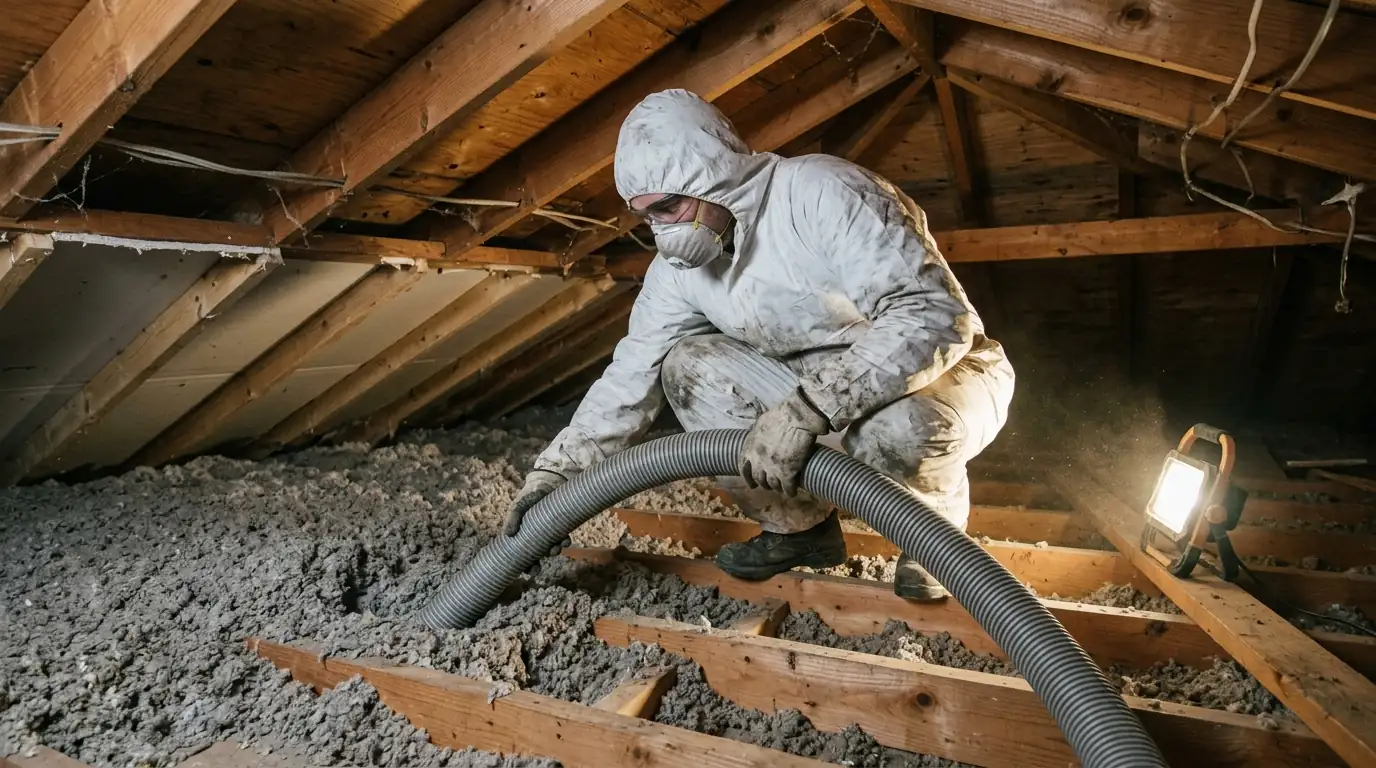
We mist droppings with disinfectant before touching them, following CDC advice not to sweep or dry vacuum rodent waste. Loose insulation then travels through a long hose to a high-powered removal vacuum parked outside, which drops it straight into large sealed bags. On a rowhome block that usually means the vacuum sits at the curb or in the back alley. Batts are bagged by hand inside the attic, sealed, and carried out through the containment. Technicians wear Tyvek suits, nitrile gloves and respirators the whole time.
What happens on attic decontamination day
Confirm the animals are gone
We check that your wildlife or pest company has finished exclusion and sealed entry points. Cleaning before the animals are out only invites them back into fresh insulation.
Inspect and document
A technician checks the attic access, insulation type and depth, latrine areas, and any sign of vermiculite. We photograph conditions before work begins.
Set up containment and air control
Poly sheeting protects the route through your home, and a HEPA air scrubber keeps the attic under negative pressure while we work.
Remove the insulation
Waste is misted with disinfectant first. Loose fill goes through the removal vacuum into sealed bags outside, and batts are bagged by hand.
Clean and disinfect bare surfaces
We HEPA-vacuum framing and sheathing, scrape heavy deposits, and apply an EPA-registered disinfectant for its full label dwell time, then seal stained areas.
Deodorize, photograph and hand off
Remaining odor is treated, the attic is photographed bare, the bags leave the property, and you have a clean space ready for new insulation.
Cleaning joists, sheathing and top plates once the attic is bare
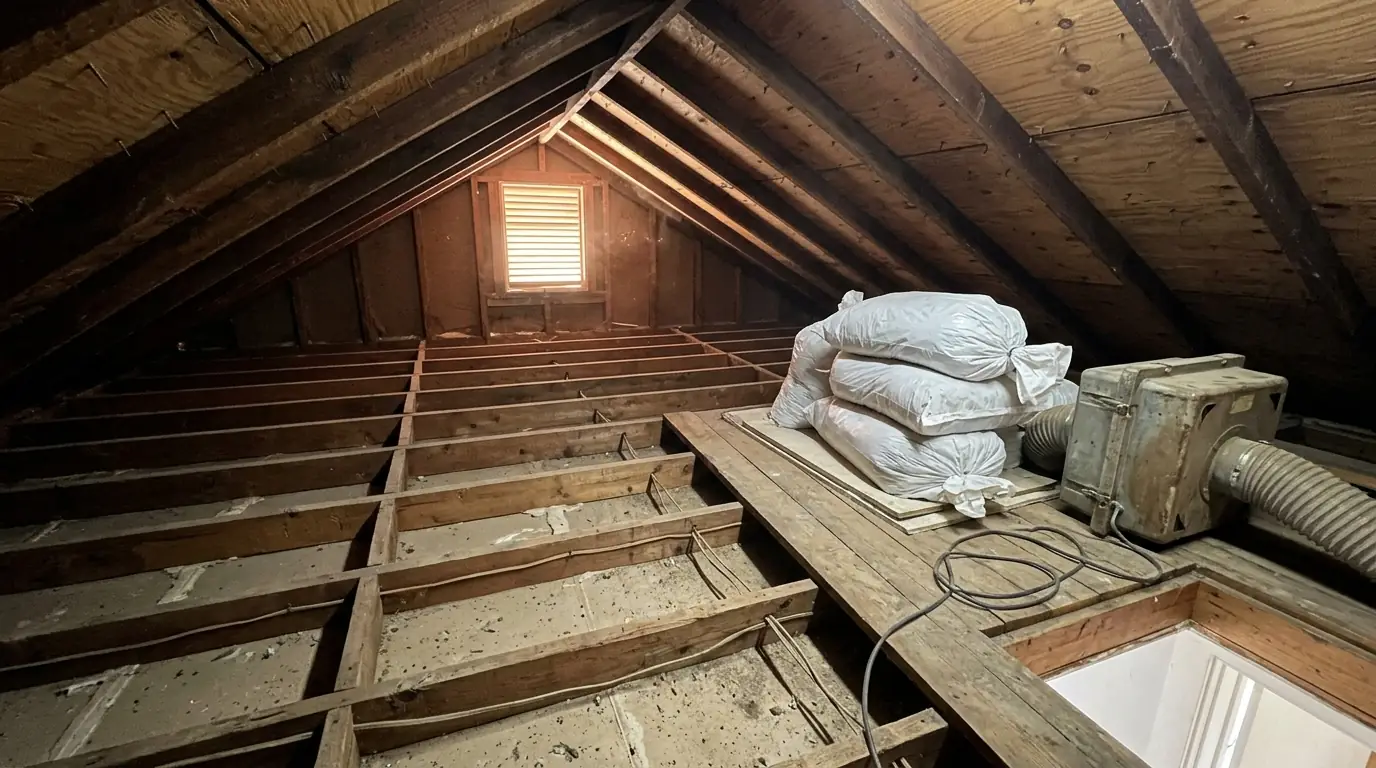
Bare wood tells the rest of the story. With the insulation gone, we can see urine staining on the back of the ceiling drywall, droppings wedged against the top plates, and nesting material packed into the eaves. We HEPA-vacuum every joist, rafter and section of roof sheathing, then hand-scrape heavy deposits from latrine areas.
Next comes an EPA-registered disinfectant, applied wet and left for the dwell time printed on its label. Raccoon latrine spots get extra attention because roundworm eggs resist many common disinfectants, so heavily soiled wood may be scraped, cleaned more than once, and coated with an encapsulant. Where urine has stained ceiling drywall from above, we treat and seal those patches with an odor-blocking primer so they stop releasing smell. If an animal died up there, we remove the remains and treat that spot as its own small odor job before finishing the rest of the attic.
When attic insulation needs decontamination
Scratching above the ceiling
Noises at night or dawn usually mean animals are nesting in the insulation itself. Once they are excluded, what they left behind still has to come out.
A sharp ammonia smell upstairs
Rodent and raccoon urine gives off an ammonia odor that gets stronger on hot or humid days, especially in top-floor bedrooms.
Tunnels and flattened areas in the fill
Runways through cellulose or batts pressed flat near the eaves show where animals traveled and where waste is concentrated.
Guano piles near vents or gable ends
Bats and pigeons roost near openings and leave droppings in heaps. Disturbing dry piles can release fungal spores, so please don't sweep them.
Stains on top-floor ceilings
Yellow or brown spots on the ceilings below the attic can mean urine has soaked through the insulation into the drywall.
A dead animal smell from above
A raccoon, squirrel or rat that died in the attic contaminates the insulation around it even after the carcass is gone.
Getting the attic ready for your insulation installer
We don't blow in new insulation. That work belongs to the insulation contractor you choose, and keeping it separate lets you compare their prices and materials freely. Our part ends when the attic is ready for them, and we try to make their day easy.
Before we leave, we walk the attic for anything that would slow the next contractor down: exposed nails, gaps where animals entered that still need closing, crushed vent baffles, and wiring that was buried in the old fill. We photograph the bare attic from several angles, which helps your installer quote accurately and gives you a record for an insurer or a future sale.
One caution matters. If we find shiny, pebble-like vermiculite, we stop and recommend asbestos testing before anything is disturbed, because some vermiculite sold decades ago contained asbestos. It still turns up in older homes around the region, and it changes how the material has to be removed.
- Bare joists and sheathing, HEPA-vacuumed and disinfected
- Urine-stained drywall patches sealed with odor-blocking primer
- Photos of the empty attic for your installer
- Every bag sealed and removed from the property
What shapes the cost of attic insulation removal and cleaning
Every attic is priced after we see it, because two homes with the same square footage can be very different jobs. These are the factors that move the number.
Attic size and insulation depth
More square feet and deeper fill mean more vacuum hours and more bags to seal and haul.
Access and headroom
A tight rowhome cockloft or a small hatch in a closet ceiling slows every step compared with a walk-up attic you can stand in.
Type of insulation
Loose cellulose and loose fiberglass vacuum out quickly, while batts are bagged by hand. Suspected vermiculite needs testing first.
How heavy the contamination is
Scattered mouse droppings are a different job from a raccoon latrine or years of bat guano that needs scraping and repeated cleaning.
Containment through finished rooms
A long route through finished living space needs more protection than an attic reached from a garage.
Odor and sealing work
Urine-stained drywall, a dead animal site, or lingering smell can add sealing and deodorizing time.
Many homeowner policies exclude damage caused by rodents, birds and insects, though some carriers treat damage from larger animals such as raccoons differently. It is worth reading your policy or asking your agent. Either way, we give you photos and a written scope to share with your adjuster, and we explain the price before work starts.