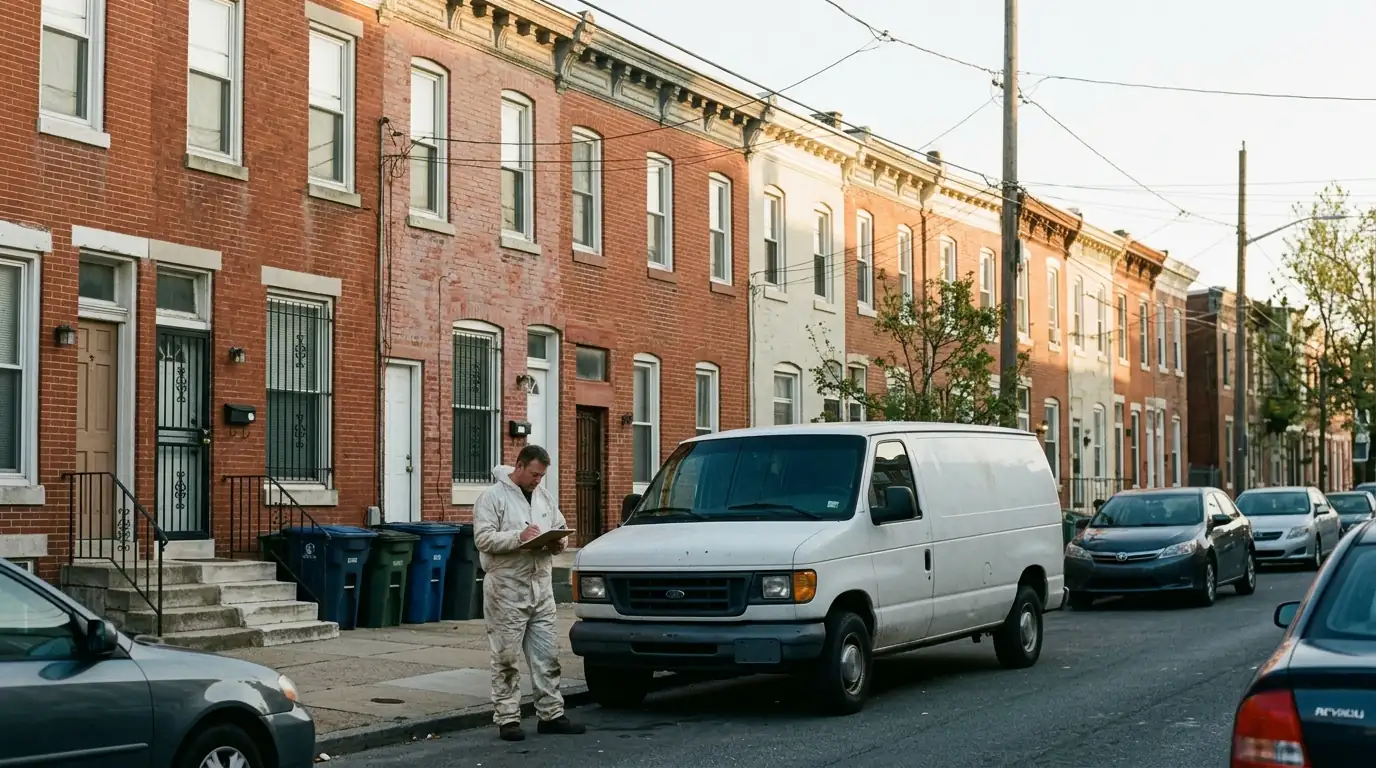
Why odor lingers in Willingboro ranches and Mount Laurel townhomes
Burlington County's housing tells you a lot about how odor behaves. Willingboro was built from the late 1950s as one of the Levittown communities, with ranches, Cape Cods and colonials on modest lots. When a death goes unnoticed, odor works into subfloors, insulation and ductwork, and the forced-air system spreads it room to room. Masking it with fragrance never lasts. We find what's holding the odor and remove it, then treat what remains.
Mount Laurel, Marlton, Evesham and Maple Shade have large townhome developments and garden apartment complexes where units share walls, attics and sometimes ventilation. Odor travels between them through gaps around pipes and wiring. We isolate the unit with poly sheeting, run HEPA air scrubbers, pull out affected drywall, carpet and pad, and seal exposed framing with an odor-blocking primer. Hydroxyl generators or thermal fogging come last, after the source is gone, never instead of removing it.
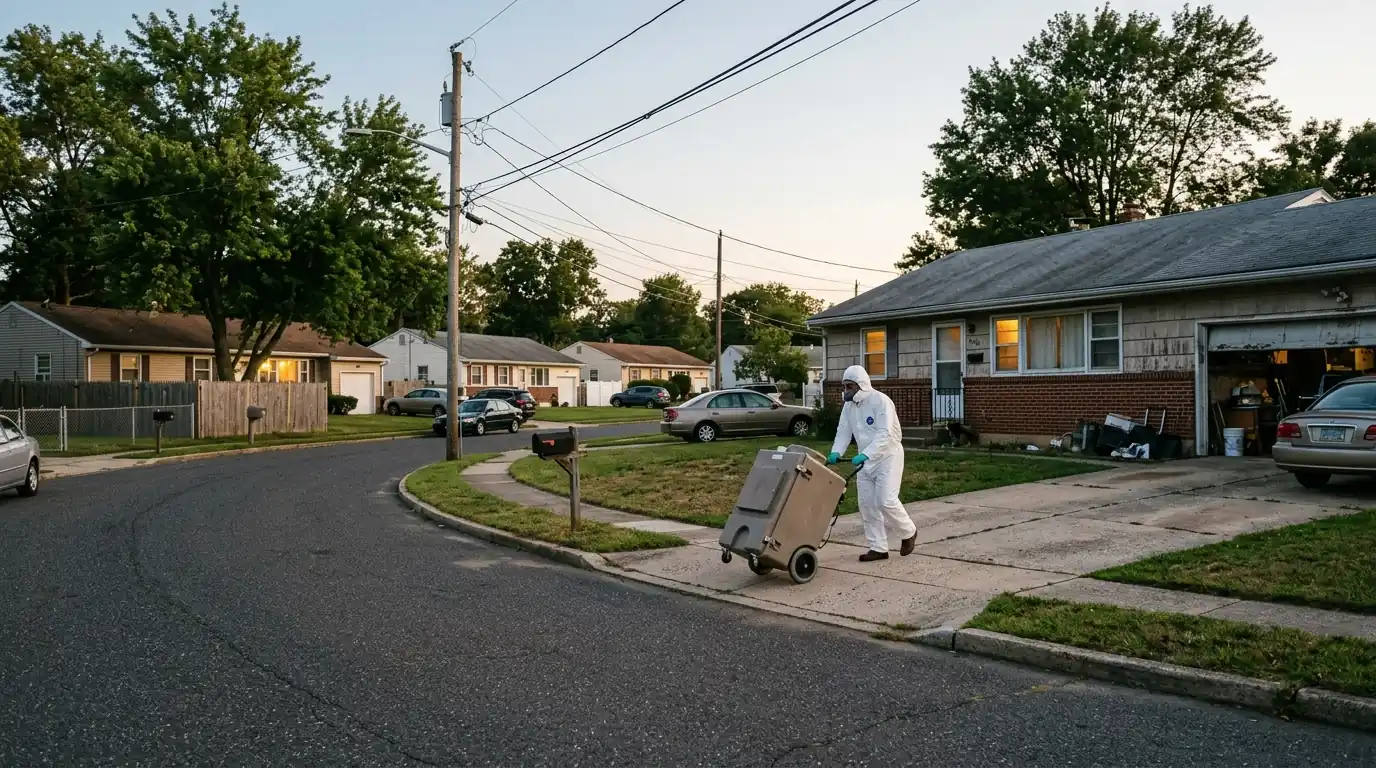
Cleanup calls we answer most in Burlington County
River towns, farm country and the Pinelands
Along the Delaware, Burlington City, Riverside, Palmyra and Beverly are older river towns with brick and frame twins, row streets and homes that have stood for well over a century. Plaster walls and old hardwood floors behave differently from modern drywall, and basements near the river can be damp, which feeds odor and mold. Mount Holly, the county seat, has a historic core with the same kind of older housing and narrow lots.
South and east, the county opens into farmland and the Pinelands around Medford, Tabernacle, Pemberton and Southampton. Homes there may sit on wooded lots with wells and septic systems, and a death can go unnoticed longer than it would on a busy street. We reach these areas by the NJ Turnpike, I-295, Route 38, Route 70 and Route 206, and we arrive with the air handling and containment gear a rural property needs, since a hardware store may be a long drive away.
Medical examiner, police and family steps in Burlington County
When someone dies at home in New Jersey, municipal police or the New Jersey State Police respond, and the regional medical examiner handles deaths that are sudden or unattended. The medical examiner arranges transport of your loved one and decides when the investigation is complete. After that, the home goes back to the family or property owner, and cleaning it is their decision. Neither office does the cleanup.
We can take that weight off you. We'll explain over the phone what usually needs to happen, then assess the home in person. Many homeowner's policies respond to a sudden event, and we photograph and document everything for the adjuster. If the death involved a crime, New Jersey's Victims of Crime Compensation Office may be a resource for eligible victims and families to look into. You decide every step, and nothing is thrown away without your say.