A spot of blood that has been wiped away can still leave a problem behind. Blood can carry pathogens such as hepatitis B, hepatitis C and HIV, and it travels. It runs into the gaps between floorboards, wicks down through carpet into the pad, settles into grout lines and dries inside the seams of a mattress. What you see on the surface is often the smallest part of what is there. That's why household cleaners and a mop rarely finish the job, even when the floor looks spotless afterward.
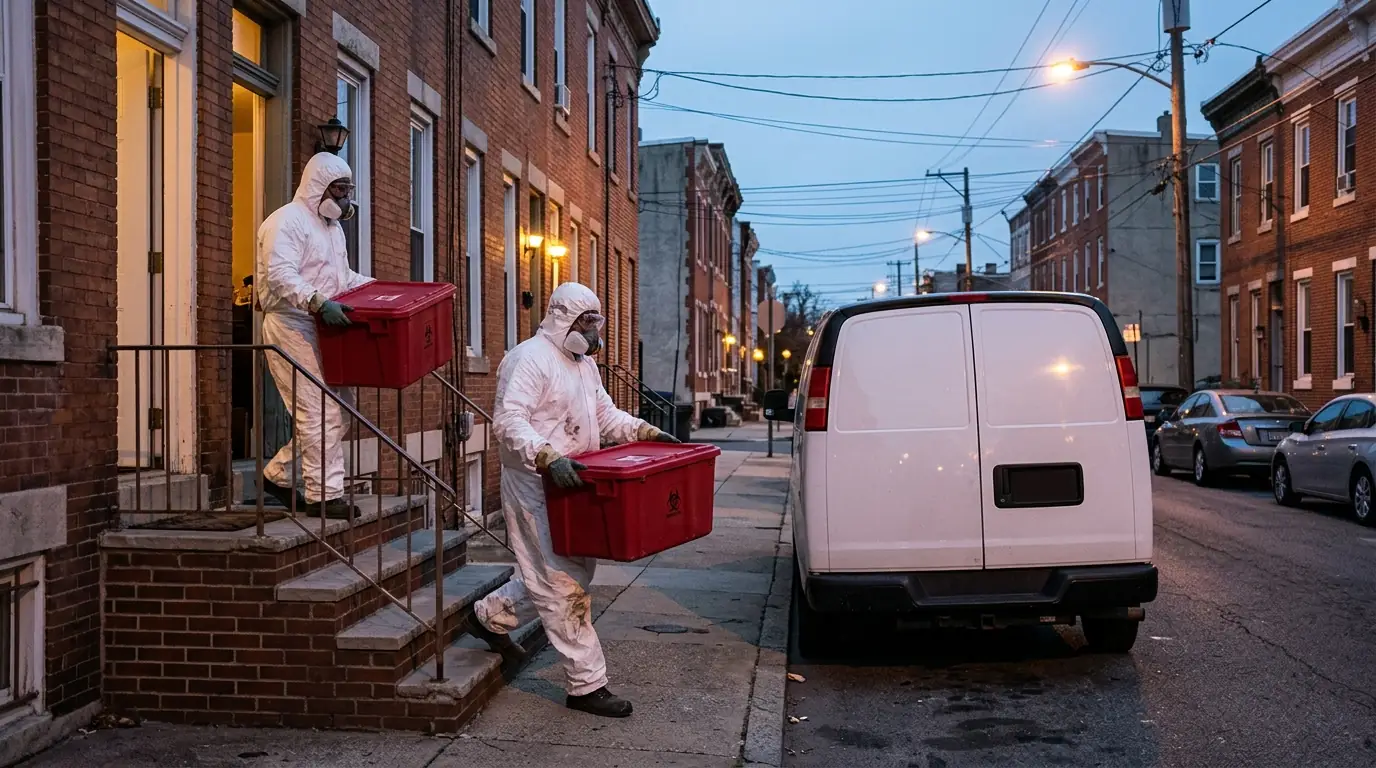
We clean blood from Philadelphia homes, apartments, offices, stores and cars, from a heavy nosebleed on a living room rug to a large spill after an injury or a death. Our technicians work in protective suits, gloves and respirators, follow OSHA's bloodborne pathogens standard, and treat every surface as potentially infectious until testing says otherwise. We answer 24/7. If the blood is connected to a crime or a death, police or the Medical Examiner's Office must release the scene first, and we can start as soon as they do.
When to call us for blood cleanup
Blood on carpet or rugs
Once it reaches the pad, surface cleaning won't remove it. We check how far it went and cut out only what is needed.
Dark lines between floorboards
Stains along hardwood seams mean blood has gone below the finish and may have reached the subfloor.
A mattress or upholstered chair
Foam and batting hold fluid deep inside. These items usually need safe removal and disposal.
Blood in a business or common area
Lobbies, stairwells, restrooms and shop floors need fast, documented cleanup before staff or customers return.
An odor that won't go away
A lingering smell after cleaning usually means organic material is still present somewhere you can't see.
A scene released by police
After an assault, a shooting or an unattended death, call once the scene is released and we'll take it from there.
Why a clean-looking floor can still hold blood
Visible removal and decontamination are two different things. Wiping takes away the color you can see. Decontamination means every surface the blood touched has been cleaned of residue and then treated with a disinfectant registered by the EPA to kill bloodborne pathogens, left wet for the full contact time printed on the label. Most people skip that last part. A spray that dries in thirty seconds hasn't had the chance to work.
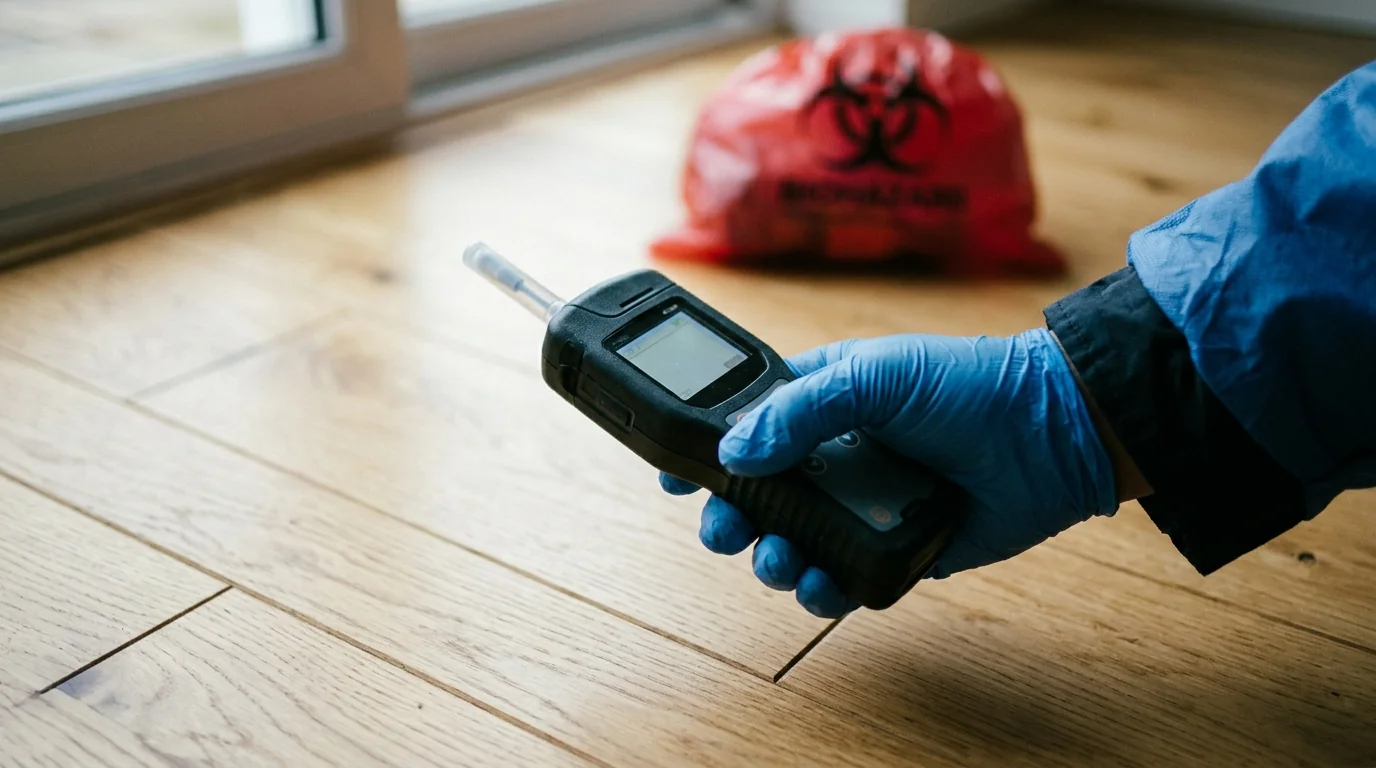
Blood also hides in places nobody thinks to check. In older Philadelphia rowhomes, oak strip flooring often sits on plank subfloor with gaps between the boards, so a spill can reach the joists or even the ceiling of the room below. Baseboards pull a little away from plaster walls over the decades, and fluid slips behind them. Upholstered furniture holds blood in foam well below the fabric. We lift, probe and look before we call anything finished, and we use ATP testing to measure leftover organic residue on surfaces that already look clean.
How we clean and clear a blood spill
Call and quick assessment
You call (267) 699-2329 and tell us what happened and which surfaces are involved. We ask a few questions, explain what to avoid touching, and send a crew.
Containment and protection
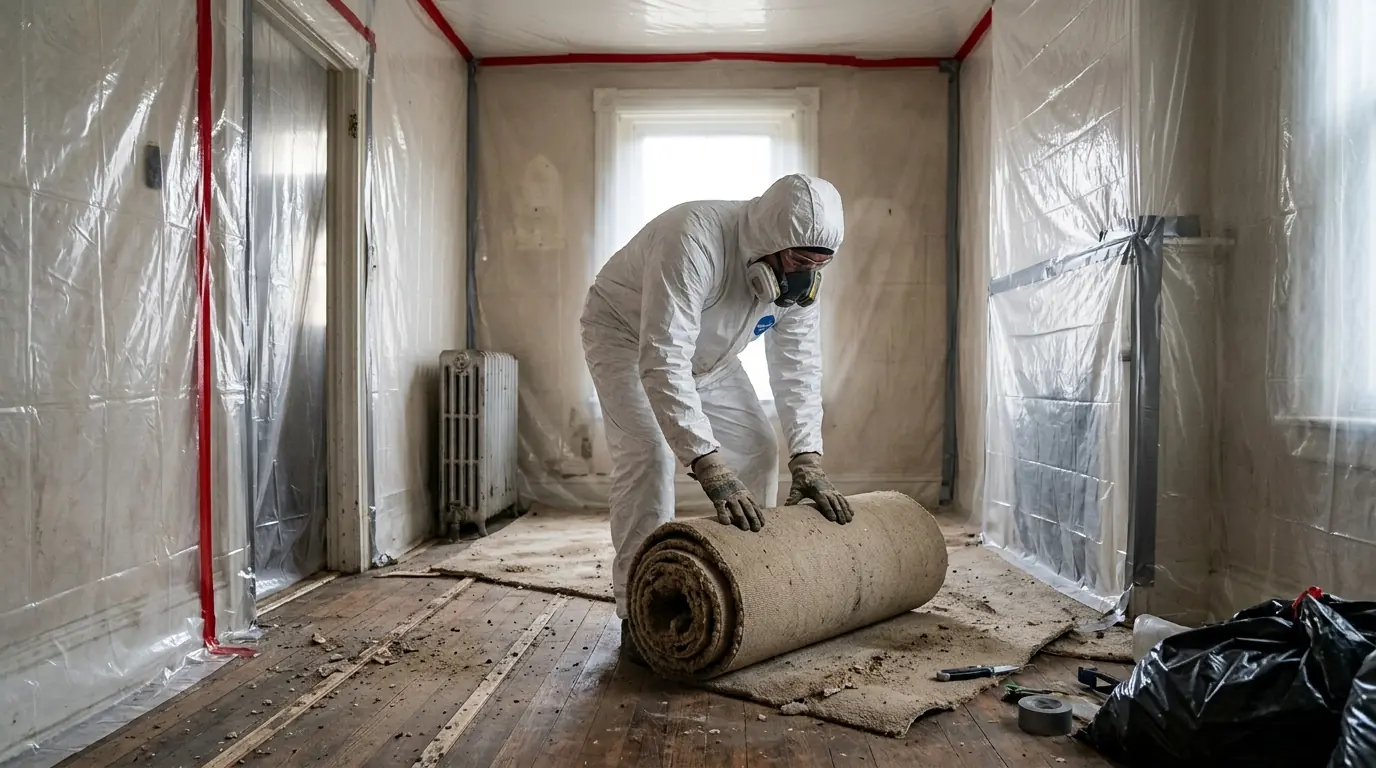
Technicians suit up, seal the area with poly sheeting, and set up a HEPA air scrubber. Clean and dirty zones keep contamination from moving through the rest of the property.
Removal of soaked materials
We cut out carpet, pad, drywall or boards that blood has penetrated. Each piece goes straight into a red biohazard bag.
Cleaning and disinfection
Remaining surfaces are cleaned of residue first, then treated with an EPA-registered hospital-grade disinfectant left wet for its full dwell time.
ATP testing and walkthrough
We swab treated surfaces and read them with an ATP meter. Anything that reads high is cleaned again before we show you the finished space.
Waste transport and records
Sealed waste boxes leave with us for a permitted treatment facility. You receive photos and disposal paperwork for your files.
How porous and non-porous surfaces change the plan
The material decides most of what happens next. Non-porous surfaces like sealed tile, glazed porcelain, stainless steel, glass and finished countertops can usually be cleaned and disinfected in place. Porous materials absorb fluid into their structure, and once blood is inside, no surface treatment can reach it reliably.
Semi-porous materials sit in between, and they're where judgment matters most. Here is how we usually approach the surfaces we see most often in Philadelphia homes:
We explain each removal before we make it, and we photograph the area for your insurer. Nothing leaves the property that doesn't need to.
- Carpet and pad: cut out the affected section and treat the subfloor underneath
- Hardwood: clean the seams, test, and lift boards when fluid has gone between them
- Tile grout: deep clean and disinfect, and regrout only if staining stays after treatment
- Mattresses and box springs: bagged and removed, since inner layers cannot be decontaminated
- Drywall and plaster: clean painted faces, cut out sections that have soaked through
- Concrete: scrub, disinfect and seal when it has absorbed fluid
From a nosebleed to a large spill, what changes in the work
Small incidents still deserve care. A child's nosebleed on a bedroom carpet, a cut hand in a restaurant kitchen, or a fall in a nursing home hallway usually means a few hours of work: containment of the spot, removal of soaked fibers if needed, disinfection, and a test. Many people handle a few drops themselves with gloves and a bleach solution, and that's reasonable on a clean, hard surface. When blood has reached carpet, fabric or wood, it usually needs more than that.
Larger spills, the kind that follow a serious injury, an assault or an unattended death, change the scale. We set up poly sheeting containment, run a HEPA air scrubber, mark clean and dirty zones so nothing tracks through the house, and work room by room. Some jobs need flooring removed down to the joists. Others need walls opened. Either way, the goal is the same: a space you can walk into without wondering what is left.
What happens to the materials we remove
Blood-soaked carpet, padding, drywall and bedding are regulated medical waste once they leave a scene in quantity. We pack them in sealed red biohazard bags placed inside rigid, lined waste boxes, mark each box, and transport them for disposal at a permitted treatment facility, following Pennsylvania DEP rules for infectious waste. You don't carry anything to the curb, and nothing goes into a household trash can or a dumpster behind the building.
We keep the paperwork from that chain, including the manifest from the disposal facility. Property managers and insurers sometimes ask for it, and it helps if you sell the property later. Personal items that can be cleaned, like a framed photo with a few drops on the glass, we clean and set aside for you rather than throw away. For jobs in New Jersey or Delaware, we follow the waste rules that apply there.
What shapes the cost of blood cleanup
Every job is priced after we see the scene or get a clear description of it. These are the things that move the number.
Amount and spread
A few drops on tile is a short visit. Blood that has run across several rooms or down a stairwell takes far longer.
Surface types
Hard surfaces clean faster. Carpet, hardwood and drywall often need removal, which adds labor and waste.
Time since the event
Fresh blood is easier to remove. Dried blood that has soaked in for days may mean more material comes out.
Waste volume
Disposal is charged by the box, so the amount of contaminated material removed affects the total.
Access and setting
A third-floor walk-up, a vehicle, or a store that must stay partly open each change how we stage the work.
Homeowner's and renter's insurance often covers blood cleanup after a sudden event, and we can bill your insurer directly once you've opened a claim. If the blood came from a crime, Pennsylvania's Victims Compensation Assistance Program (VCAP) may help eligible families with cleanup costs. We'll walk you through the paperwork we provide.