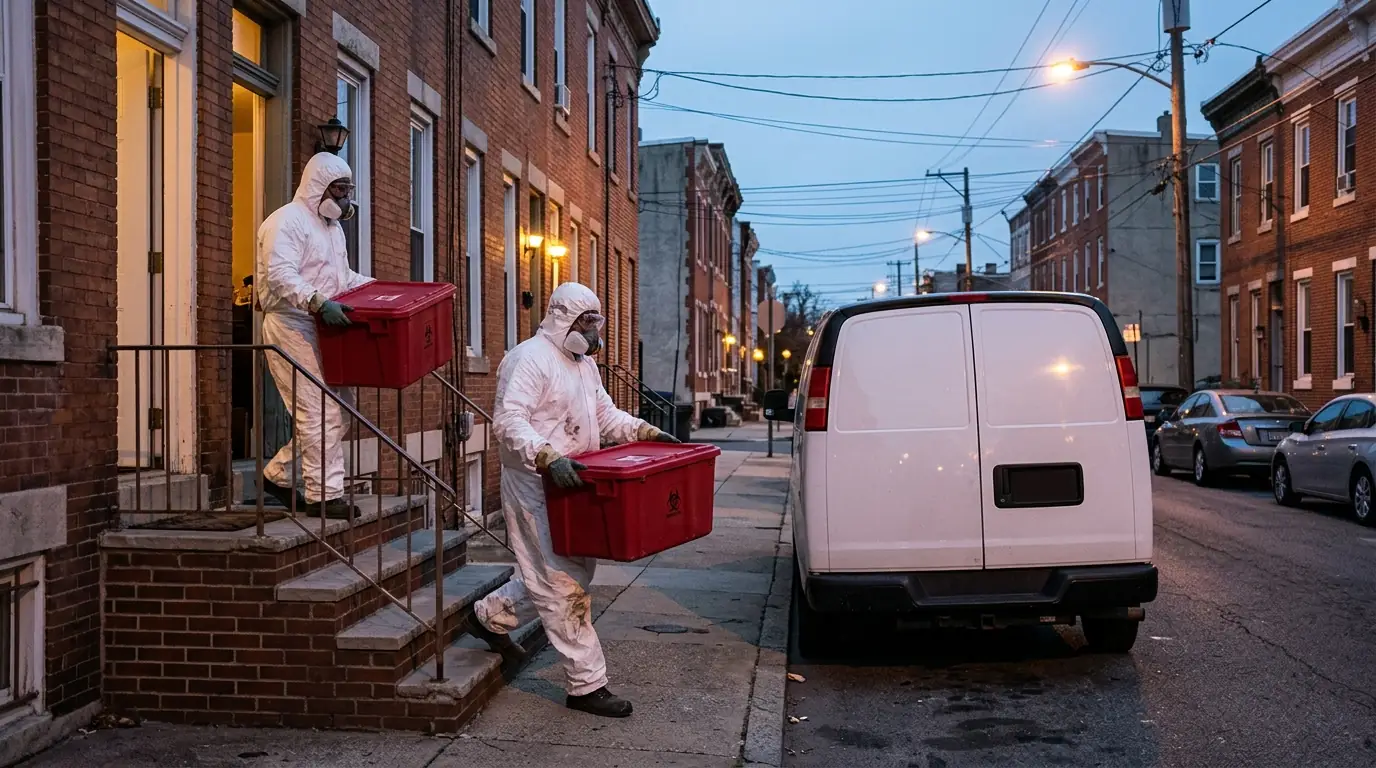
A room can look clean and still smell like urine every time the heat comes on. That happens because urine doesn't stay on the surface. It wicks down through carpet into the pad, spreads across the subfloor, and climbs into baseboards and drywall. When it dries, it leaves salts and crystals behind. Those crystals pull moisture from humid air and release odor again, which is why a smell can fade in a dry winter and come back on the first muggy Philadelphia day in June.
Our calls usually come from landlords after a tenant with several pets moves out, from families clearing a parent's home after years of incontinence, and from nursing homes and personal care homes turning over a room. Steam cleaning and scented sprays have usually been tried already. What works is finding where the urine actually went, removing the materials that are past saving, and treating or sealing everything that stays.
Why urine smell survives carpet shampooing
Fresh urine is mildly acidic. As it sits, bacteria break down its urea and release ammonia, which gives old accidents their sharp smell. The uric acid salts left behind don't dissolve well in plain water, so a carpet extractor can rinse the top of the fibers while the deposits in the pad stay where they were. Some shampoos even rewet the old salts, and the room smells worse for a few days.
Scent products only cover the problem. A fragrance can win for a few hours, then the ammonia comes through again, now mixed with perfume. Ozone machines used on their own often disappoint for the same reason: they can treat odor in the air and on surfaces, but they don't reach urine sealed under a pad or soaked into the end grain of a plank subfloor.
The only lasting fix is to deal with the source. That means taking the soaked material out, or breaking down the uric acid with enzyme products and then locking any remaining odor under a sealer.
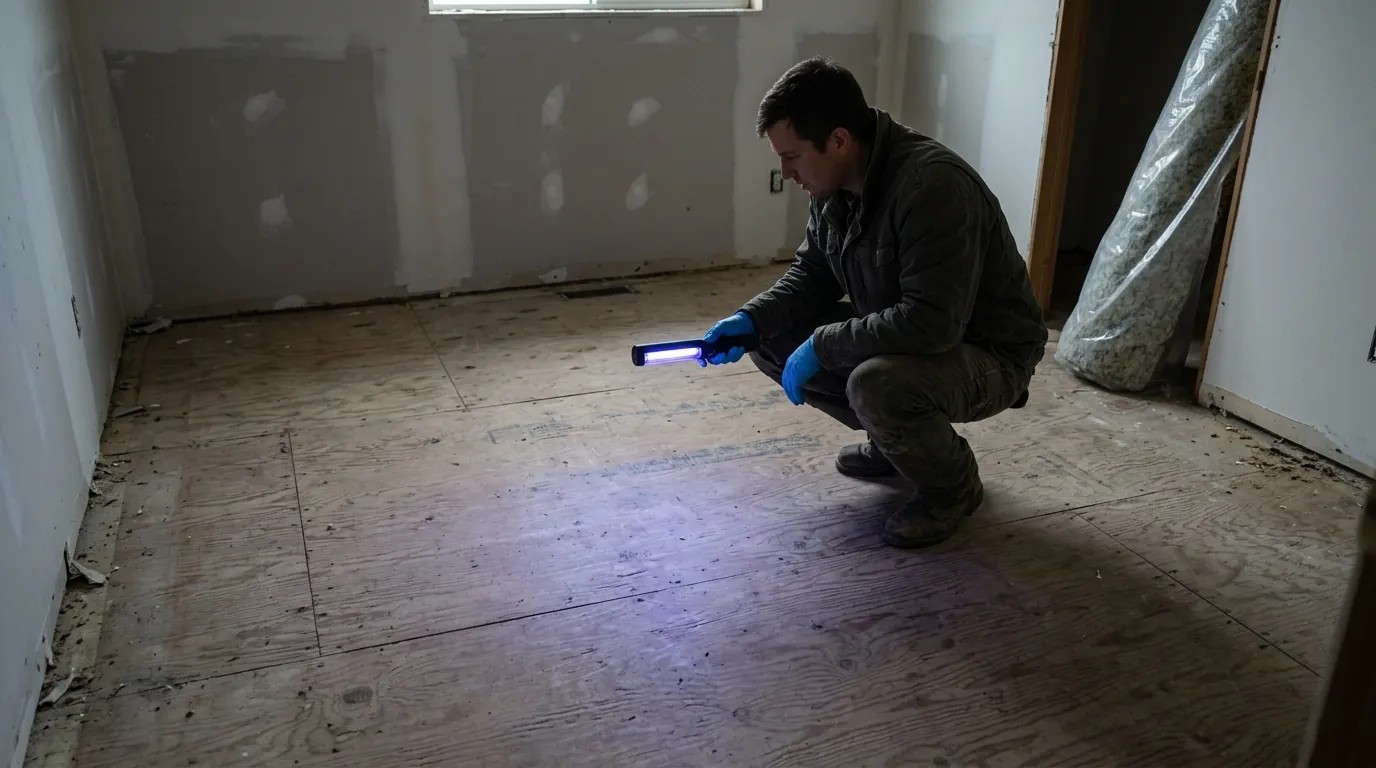
Finding every spot with UV light and moisture readings
Dried urine glows under ultraviolet light, which turns guesswork into a map. We darken the room and scan floors, baseboards, the bottoms of doors and the lower few feet of walls, marking each area with tape. In a pet home, we often find spots behind furniture, inside closets, and along a favorite wall that nobody suspected.
UV only shows surfaces, so we add moisture meters and probes to tell how deep the contamination runs. A spot that reads wet at the subfloor means the pad and possibly the wood below are saturated. In many older Philadelphia rowhomes, wall-to-wall carpet sits over original pine or oak plank floors, and urine can run into the gaps between boards and soak into their edges.
Once the map is done, we walk you through what can be cleaned, what has to come out, and what can be sealed. That walkthrough is when you decide how far to go, room by room.
How we take urine odor out of a room
UV and moisture inspection
We map every spot with ultraviolet light, then check depth with moisture meters. You see what we found before any work begins.
Protect the rest of the home
Clean rooms and walkways get floor protection, and work areas are separated with poly sheeting where dust or odor could spread.
Remove saturated materials
Pad, tack strip, ruined carpet, affected drywall bottoms and trim are cut out, wrapped and hauled away.
Enzyme treatment of the subfloor
We saturate stained areas with an enzyme product that breaks down uric acid, and give it the time and moisture it needs to work.
Dry, then seal
After the subfloor is dry, we coat it with an odor-blocking primer so any traces left in the wood stay locked in.
Final odor check
We recheck the rooms with UV light and by smell, then confirm the space is ready for new flooring and drywall.
What we remove and what we can save
Carpet pad is almost never worth saving once it's soaked, and the tack strip around the room edges usually holds urine too. Carpet itself sometimes survives light, recent contamination, but carpet that has absorbed months of urine is usually cheaper to replace than to fight. We roll it, wrap it in plastic and remove it without dragging it through clean rooms.
Drywall wicks liquid upward, so we cut contaminated walls a few inches above the highest reading and remove baseboards and trim that soaked up urine. Vinyl plank or laminate floors can trap urine underneath the locking seams, so we lift sections to check the surface below.
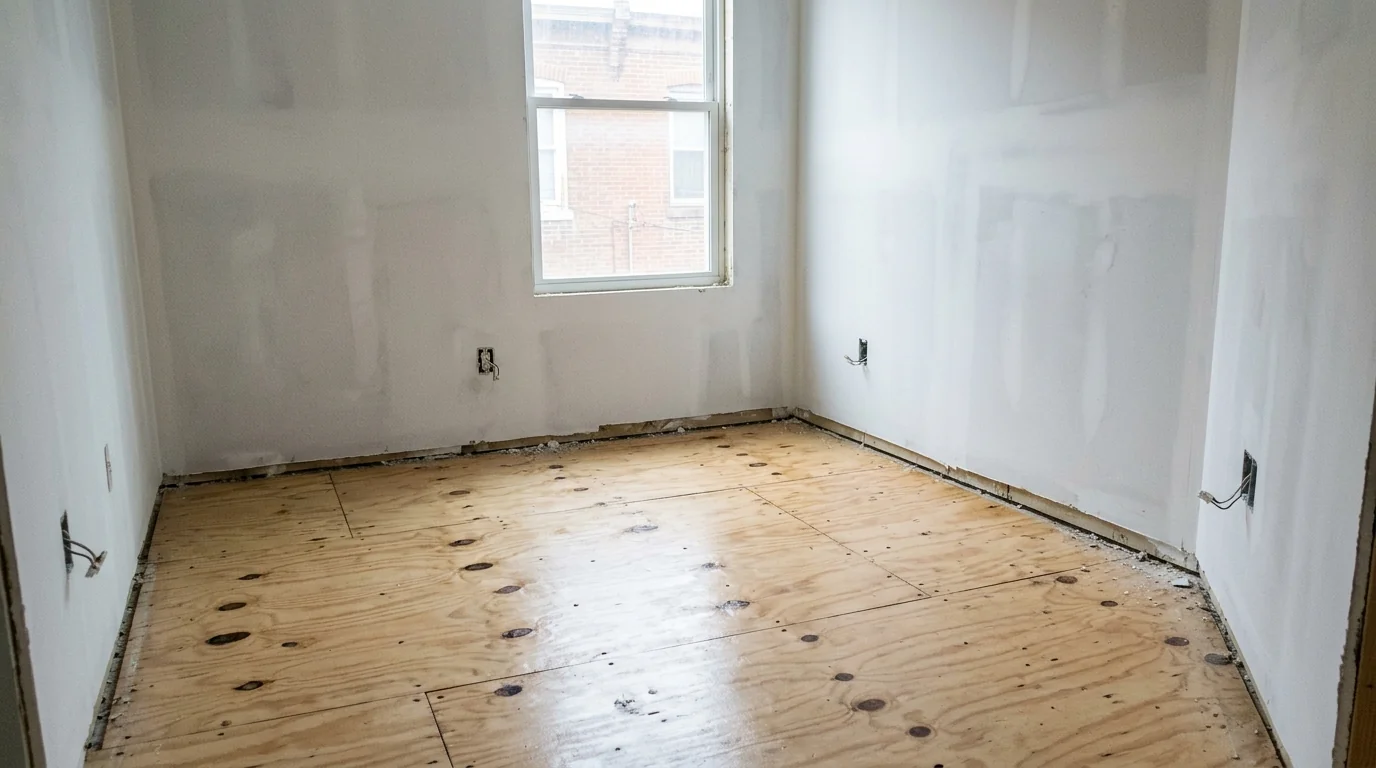
Subfloors are where the decision gets real. Plywood with surface staining can usually be cleaned, treated with an enzyme product, dried and sealed. Particleboard or OSB that has swelled or delaminated generally has to be cut out and replaced. Old hardwood planks with deep staining may be sanded and refinished, or covered by sealing them and installing new flooring over them.
- Carpet pad and tack strip: usually removed
- Drywall bottoms and baseboards: cut out above the wet line
- Plywood subfloor: enzyme treated, dried and sealed
- Swollen particleboard: cut out and replaced
When to call us for urine odor that won't go away
The smell returns on humid days
Odor that fades in dry weather and comes back in summer points to urine salts in the pad or subfloor.
Carpet cleaning made it worse
A stronger smell after shampooing often means the cleaning rewetted old deposits below the surface.
Stains or curling at baseboards
Yellow marks, swollen trim or peeling paint low on the wall show where urine wicked upward.
A tenant with several pets moved out
Even if the unit looks clean, multiple cats or dogs usually leave spots you can only see with UV light.
A loved one had long-term incontinence
Years of accidents around a bed, recliner or bathroom often reach the subfloor under the carpet.
New flooring still smells
If odor came through a recent flooring job, the subfloor was likely never treated or sealed.
Rental move-outs, nursing homes and care settings
For landlords and property managers, speed between tenants matters. We document conditions with photos and UV images at the start, which can help you support a security deposit claim, and we coordinate our finish date with your flooring installer so the unit isn't sitting empty longer than it has to. Rowhome apartments and duplex units around Philadelphia often have several layers of old flooring, so we check what lies below before quoting replacement.
In nursing homes, personal care homes and assisted living rooms, urine is often only part of the picture. We treat the work under OSHA bloodborne pathogens practices, wear protective gear, and handle any waste that includes other bodily fluids as potentially infectious. We work around residents' schedules and keep containment tight so neighboring rooms stay in use.
In a family home after a long illness, we go gently. We keep belongings you want separate from materials headed out, and we explain each step before we start it.
What shapes the cost of urine odor removal
We price after the UV inspection, because the visible stains rarely match what's underneath. These are the main factors.
How many rooms are affected
One bedroom closet is a different job from a whole rental floor where several pets lived.
Depth of the contamination
Urine that stayed in the carpet costs less to fix than urine that reached and soaked the subfloor.
Subfloor material
Plywood can usually be treated and sealed, while swollen particleboard or OSB needs cutting out and replacing.
Drywall and trim removal
Wicking into walls adds cutting, bagging and disposal time, and leaves openings your drywall contractor will close.
Occupied or vacant property
Working around residents or tenants takes more containment and scheduling than an empty unit.
Waste volume
Rolls of carpet and pad take up space, and larger loads add hauling time.
Most homeowner policies treat pet urine damage as gradual wear rather than a sudden event, so it is often not covered. Landlords may be able to apply a tenant's security deposit toward documented damage, and our photos and written scope support that. We explain the price and the scope before we begin.