A room can look spotless and still hold residue in the places eyes skip: the seam where a baseboard meets the floor, the underside of a light switch, the grout line beside a tub. ATP testing puts a number on that question. Adenosine triphosphate is the energy molecule found in every living cell, and in material that came from living things, such as bodily fluids and food. When a swab picks it up, a reagent inside the test device gives off light, and the meter reads it.
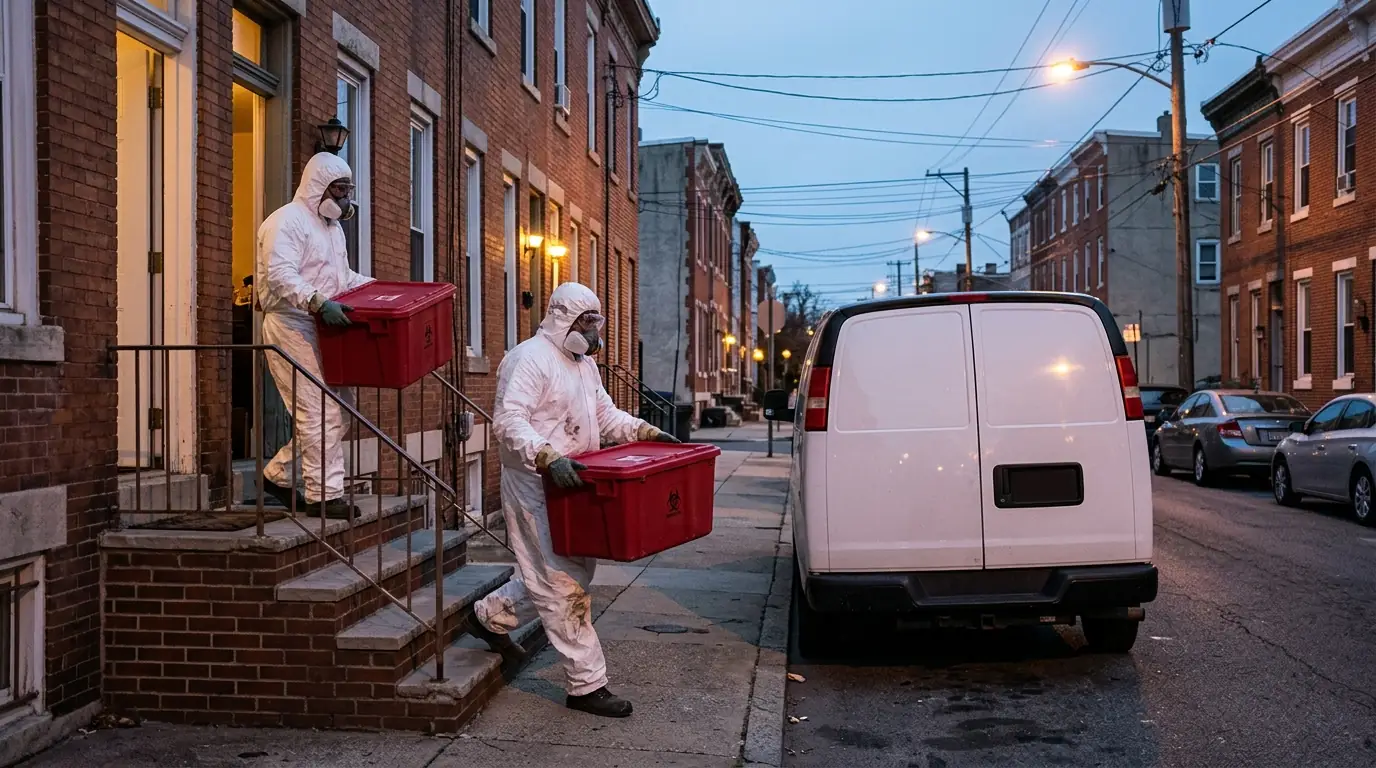
We run ATP readings at the end of trauma, death, sewage and infection control jobs across Philadelphia because they turn an inspection into a recorded result. You get a page listing each test spot, the reading before we cleaned, the reading after, and the range the meter maker considers acceptable for that kind of surface. That record matters to whoever comes next: a landlord re-leasing a unit, a buyer's agent, a restaurant manager getting ready to reopen, or an adjuster closing out a claim.
How an ATP swab turns invisible residue into a number
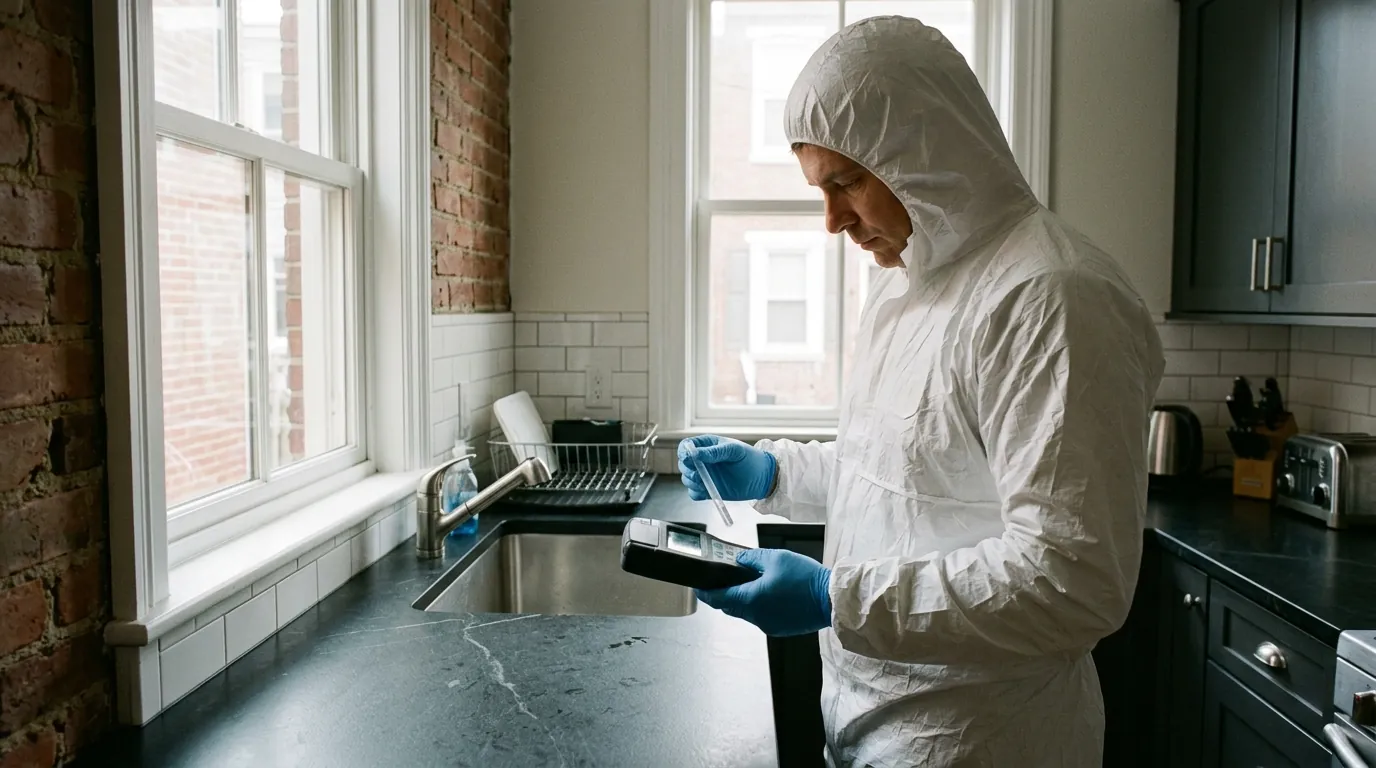
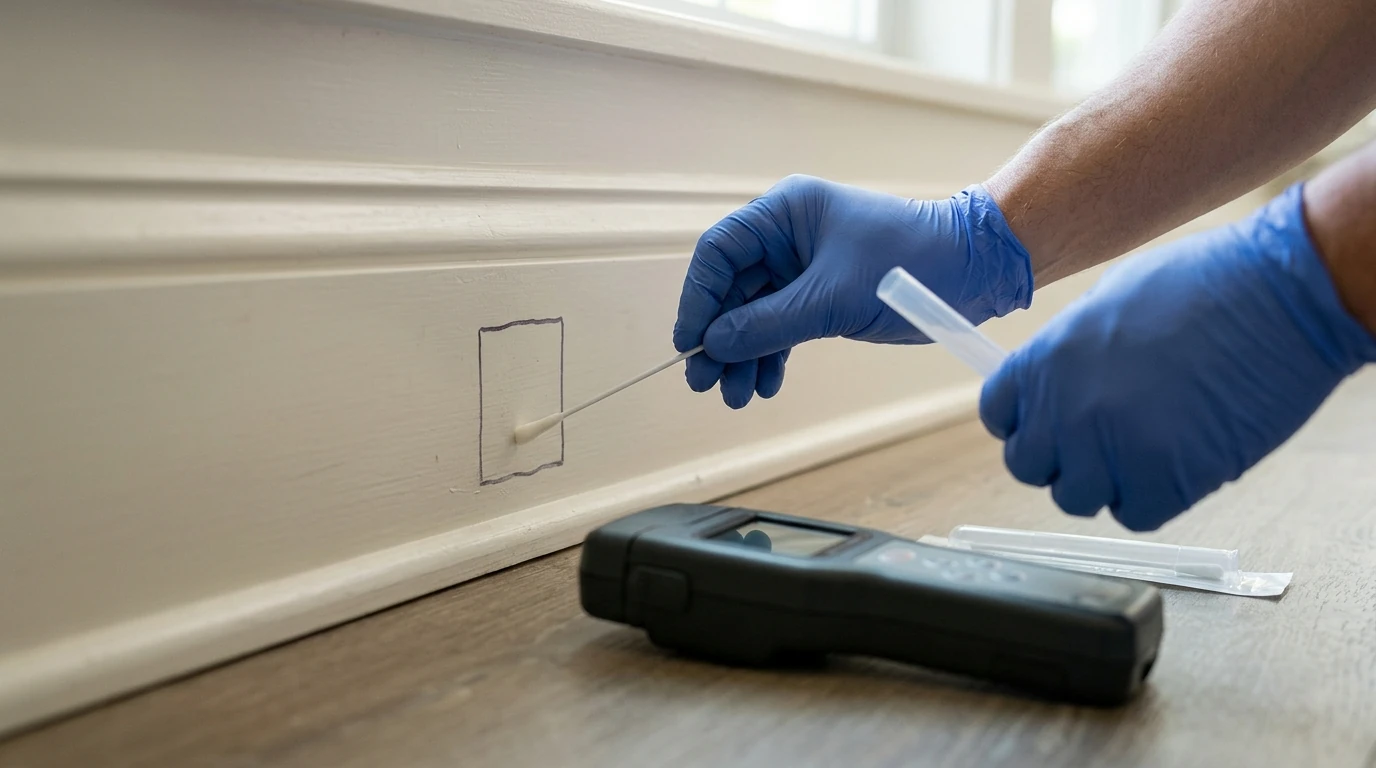
Each test uses a sealed, single-use swab that comes pre-moistened. Our technician rubs it across a measured area, usually a square about the size of a playing card, turning the swab as they go so the whole tip makes contact. The swab then goes back into its tube, where it meets a reagent containing luciferase, the same enzyme that makes a firefly glow. If ATP is present, the reaction produces light. The handheld luminometer measures that light in seconds and reports it as relative light units, or RLU.
The word relative matters. Each meter brand uses its own scale, so a reading on one device cannot be compared with a reading on another. That is why we never quote a single universal pass number. Instead, we compare readings taken with the same device on the same spots before and after the work, and we check the after results against the meter maker's published guidance for that type of surface. A stainless steel counter and a painted wall do not behave the same way, and the guidance reflects that.
Swabbing the same marked spots twice is what gives the numbers meaning. A high reading before cleaning confirms contamination was there. A low reading afterward, taken in the same place, shows the work removed it.
When ATP testing is worth adding to your cleanup
A unit is going back on the market
Tenants and buyers ask direct questions after a death or trauma event, and readings give you a factual answer.
You are closing an insurance claim
Adjusters often want documentation that work was completed, and test results add weight to the photo record.
Staff are uneasy about returning
Sharing results with employees can ease worry after a bodily fluid incident at work.
The event sat for days before discovery
Longer exposure means more chance of residue in seams and joints, which testing helps confirm is gone.
Food or care areas were affected
Kitchens, daycares and treatment rooms benefit from a measured check before people use them again.
You simply want a second check
Some families just want to know, with something more than our word, that the room is clean.
Why landlords, buyers and businesses ask for ATP results
After a death or serious injury in a rental, the next tenant often asks a simple question: how do you know the unit is really clean? A landlord who can hand over a dated sheet of before and after readings has a better answer than a promise. Property managers in Philadelphia also keep these results with the unit file, which helps if a question comes up months later during a lease dispute or an inspection.
Home sales raise the same concern. Pennsylvania sellers complete a disclosure statement about known material defects, and buyers who learn a cleanup took place often want proof that it was done properly. ATP results do not replace an inspection, but they give a buyer's agent something concrete to review.
For businesses, the value is speed and documentation. A restaurant, gym, office or clinic that had a bodily fluid incident wants to reopen the affected area with a clear record that it was cleaned and checked. Managers can attach the readings to an incident report, share them with staff who are nervous about returning, and include them in what goes to the insurer.
What shapes the cost of ATP clearance testing
Testing is usually priced as part of a larger cleanup. A few things change how much time it takes.
Number of test spots
A single bathroom needs fewer swabs than a full floor of a rowhome or an open office.
Retests needed
Spots that come back above guidance are cleaned again and swabbed again, which adds time and supplies.
Surface types
Mixed materials may call for more spots so each kind of surface is represented.
Standalone or bundled
Testing added to our own cleanup is simpler than testing work another party already finished.
Documentation needs
A short summary takes less time than a detailed report prepared for a property manager, lender or insurer.
When ATP testing is part of a covered cleanup, homeowner's or commercial insurance often treats it as part of the same claim, though every policy differs. We explain on the phone how we bill, and we can send records straight to your adjuster if you ask. You do not pay for testing you did not agree to.
Where we swab in a Philadelphia rowhome, apartment or storefront
Test spots are chosen around the event, not at random. We start where contamination was known, then add the surfaces most likely to carry residue that cleaning could miss. In Philadelphia rowhomes, that often means the gap where old plank flooring meets the plaster wall, stair treads and risers, cast iron radiator covers, window sills, and the trim around doors that were opened and closed during the incident.
Apartments add their own list: kitchen cabinet pulls, the refrigerator door gasket, bathroom fixtures, and the thresholds between rooms where traffic carried material from one space to another. In a commercial space, we look at shared touch points such as door push plates, counters, restroom partitions and elevator buttons.
We also take a control swab from a clean area outside the work zone. That gives a baseline for what normal looks like in that building, which helps everyone read the results with some sense of proportion.
How a clearance test visit runs from first swab to written results
Talk through the scene
You call (267) 699-2329 and tell us what happened and which rooms were affected. We plan test spots around that account and anything we see on arrival.
Mark and photograph spots
Our technician marks each test location and photographs it so the same spot can be found again. A control spot outside the work zone is added.
Take baseline readings
Before cleaning starts, we swab each marked spot and log the reading. These numbers show what contamination looked like at the start.
Clean and disinfect
The crew removes affected materials, cleans surfaces, applies an EPA-registered disinfectant, and lets it sit for its full labeled contact time.
Swab again after the work
Once surfaces are wiped and dry, we swab the same marked spots with the same device. Any spot outside the maker's guidance is cleaned again and retested.
Deliver the results page
You receive a dated record listing every spot, both readings, and the guidance range used, along with the photos.
What ATP testing cannot tell you, and why that matters
ATP testing measures general organic residue. It does not identify bacteria, viruses or any particular germ, and it is not a substitute for a laboratory culture. Viruses do not carry their own ATP, so a low reading says nothing direct about whether a virus is present. What it does show is that the biological material viruses and bacteria travel in has been removed from the tested surface.
Readings can also be affected by things that have nothing to do with contamination. Some disinfectant residues can dull the light reaction, which is why we swab after surfaces have been rinsed or wiped down following the required dwell time. Rough, porous materials such as unsealed wood, raw concrete or drywall paper are hard to swab evenly, so we focus testing on hard, nonporous surfaces where the method works well.
If a situation calls for confirming that a specific organism is gone, such as after certain infectious disease events, we explain that a lab test is the right tool and talk through what that involves. Knowing these limits keeps the results honest.