Why the cause of the damage shapes how a policy responds
Most property policies are written around events that happen suddenly and accidentally. A death in the home, a violent crime, a burst pipe or a sewer line that backs up overnight can all fall into that category, depending on how the policy is worded and what endorsements you carry. Damage that builds slowly, such as years of hoarding, long-term rodent activity or a leak nobody noticed, is often treated differently.
That distinction is why adjusters ask so many questions about timing. When did the event happen? When was it discovered? Was anyone living in the home? We can't tell you whether your claim will be paid, and nobody should promise that before an adjuster has reviewed it. What we can do is record what we found in the order we found it, so the facts are clear and consistent when your insurer looks at them.
Homeowner's, renter's, landlord and commercial policies in plain terms
A homeowner's policy generally covers the structure and the owner's belongings. A renter's policy covers the tenant's own belongings and sometimes extra living costs, but not the building itself. A landlord or dwelling policy covers the owner's building and may treat a tenant's death, a crime or a sewage event in its own way. Commercial policies for stores, offices and warehouses vary even more, and some carry separate coverage for biohazard or contamination events.
In a Philadelphia rowhome split into apartments, two or three policies can touch the same incident. The owner's policy may respond to the subfloor and drywall, while a tenant's renter's policy may respond to furniture and clothing. Sewer backup coverage is frequently a separate endorsement, so read that page of your policy or ask your agent. When a death happens in a rental, the landlord, the estate and the tenant's insurer may all have a part to play.
- Homeowner's: usually the structure and the owner's contents
- Renter's: the tenant's belongings, not the building
- Landlord or dwelling: the owner's building, terms vary by policy
- Commercial: wide variation, sometimes a contamination endorsement
What adjusters usually ask for after a biohazard loss
Adjusters want to see what happened, what had to be removed, and why. They usually ask for photos of the affected rooms before any work began, a list of damaged materials with locations and sizes, an explanation of why cleaning wasn't enough for certain items, and an itemized invoice. If police or the Medical Examiner's Office were involved, the adjuster may also ask for an incident or report number.
Some insurers send their own adjuster to the property, and others work from photos and documents alone. Either way, a well-organized file saves time. Keep a simple log of every conversation with the insurer, including the date, the name of the person you spoke with and what they told you. That habit helps far more than people expect when a claim stretches over several weeks.
How our photos, written scope and waste records support your claim
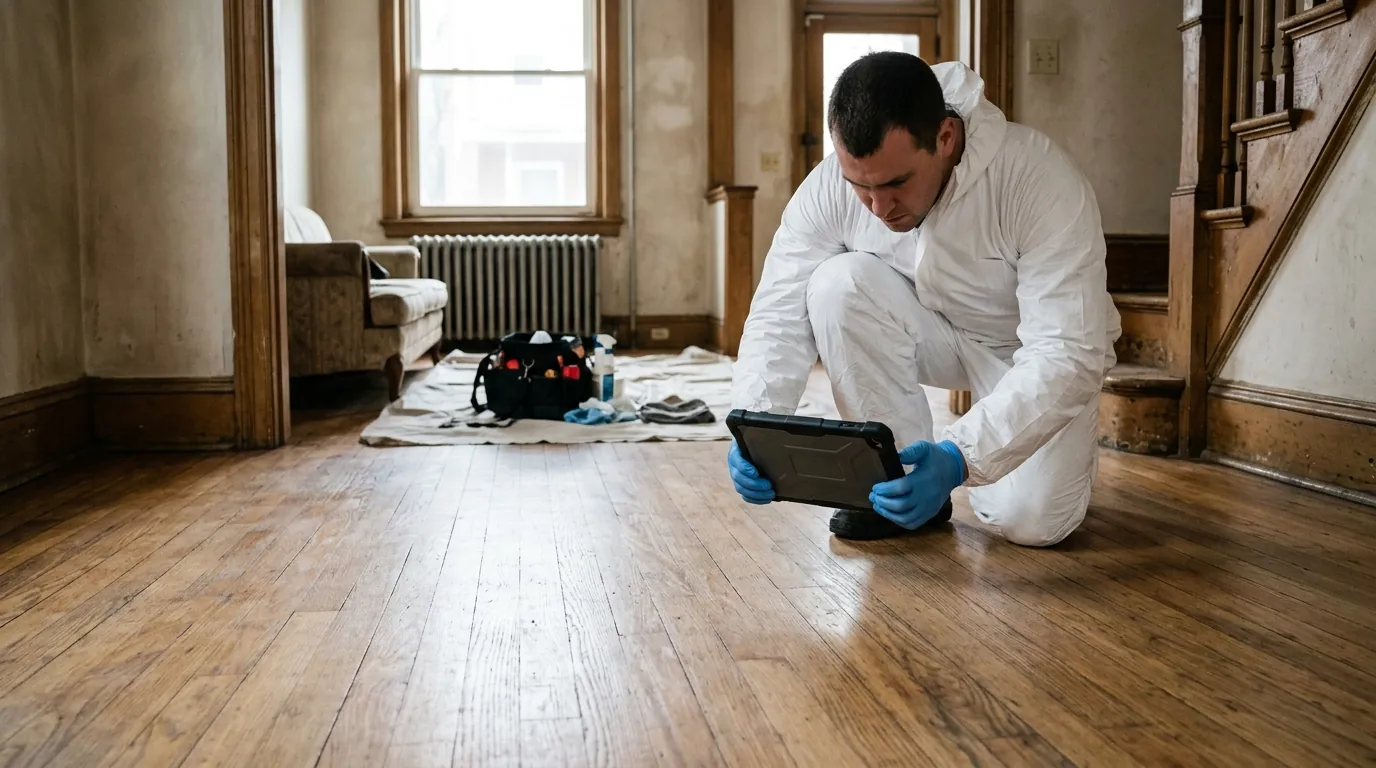
From the first walkthrough, our technicians photograph each affected area with wide shots for context and close shots for detail. As we remove carpet, pad, drywall or subfloor, we photograph what was underneath, because that is often where the real contamination sits and where an adjuster has questions. The written scope lists each material, the room it came from, the measurements and the reason it was removed rather than cleaned.
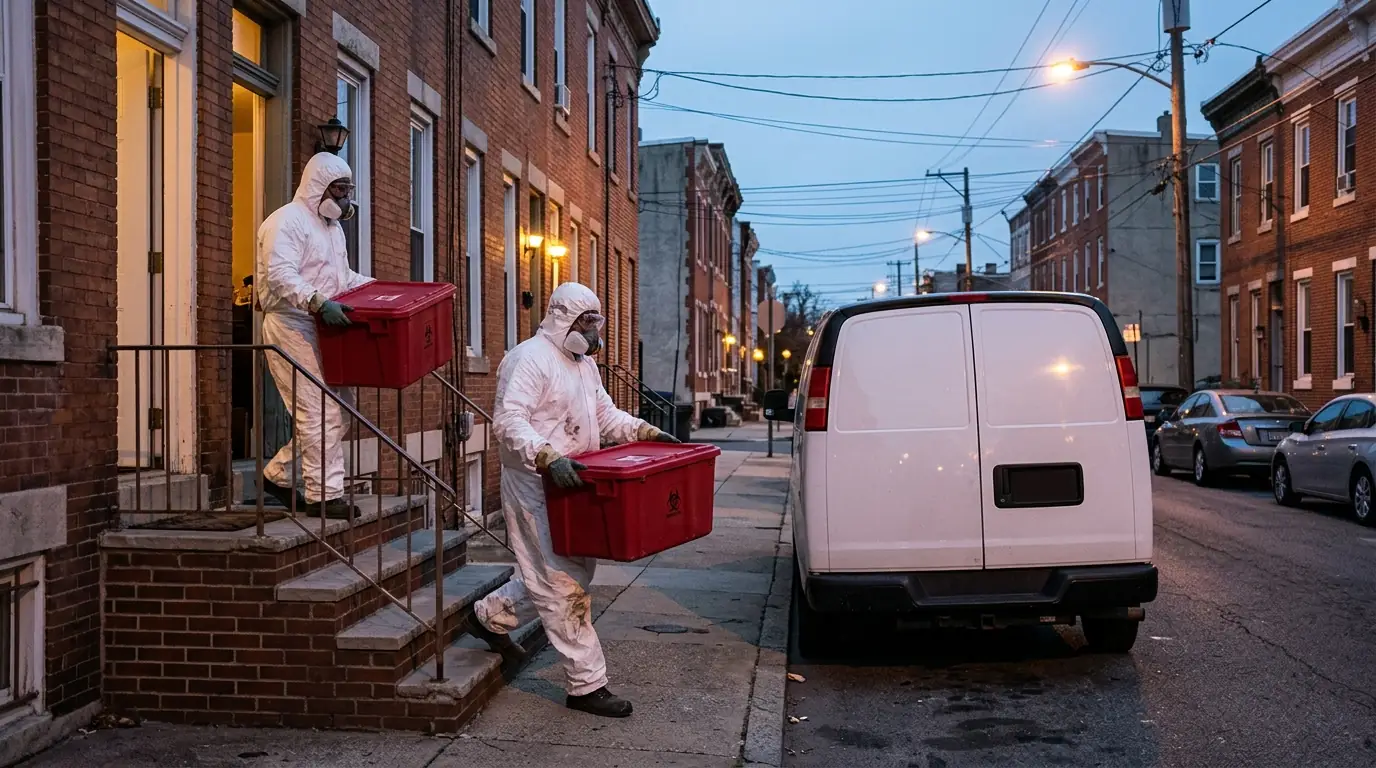
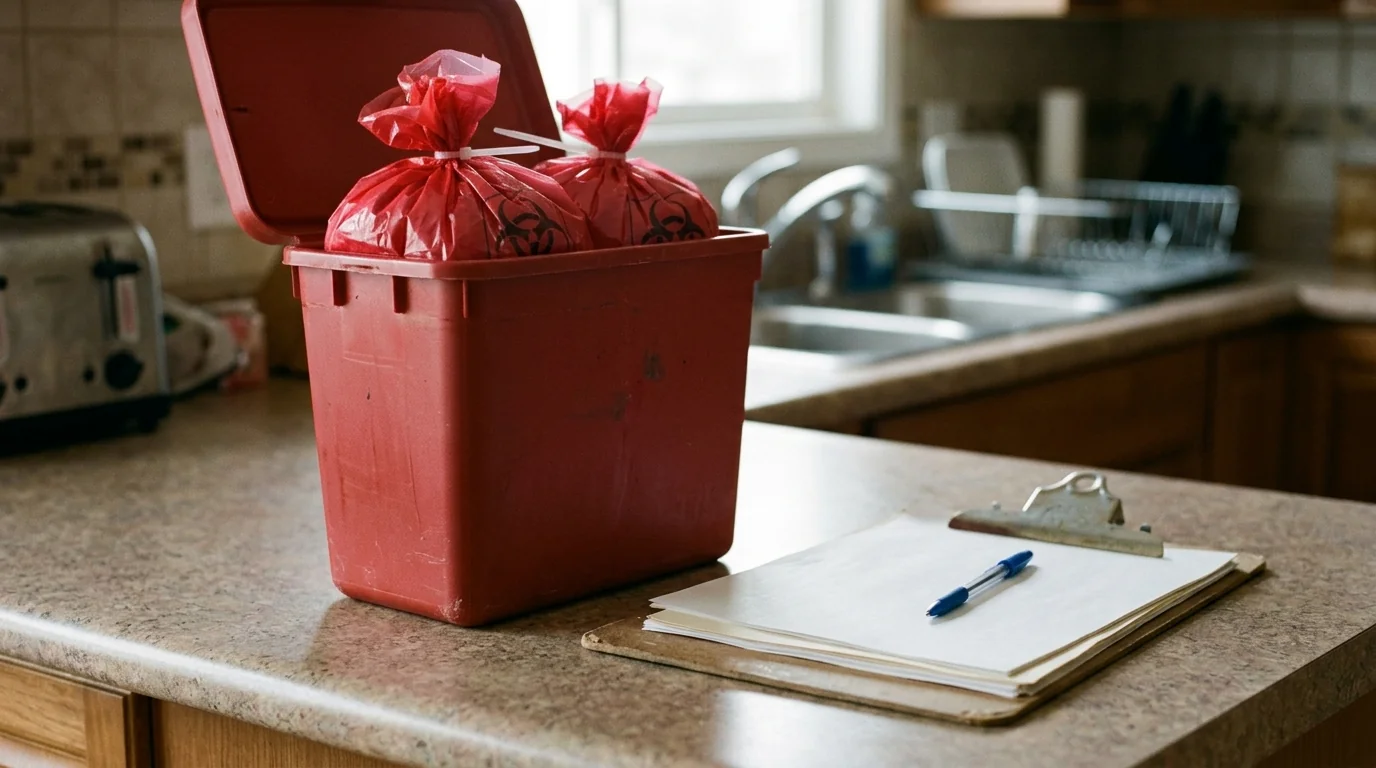
Regulated medical waste leaves the property in sealed red bags inside rigid containers and goes to a permitted facility under Pennsylvania DEP rules for infectious waste. You receive the disposal records, which show the material was handled properly and give the insurer a paper trail. When we finish, ATP surface test readings go into the file as well, so the record shows the space was verified clean, not just declared clean.
Talking with your adjuster when you authorize us
Plenty of families don't have the energy to explain moisture readings or why a subfloor had to come out. If you give us written permission, we will speak with your adjuster directly about the scope of work, answer technical questions and send the documents they request. You stay in charge of the claim, and every decision about it remains yours.
We are not public adjusters and we do not negotiate your settlement or interpret your policy for you. Our role is to describe the work accurately and promptly. If you have questions about what your policy covers, ask your agent or adjuster. If a claim is denied and you disagree, talk to your attorney or a public adjuster of your own choosing. We'll provide whatever records they need from our side.
Victim compensation for families after a crime in Pennsylvania, New Jersey and Delaware
When a home becomes a crime scene, insurance isn't the only possible source of help. Pennsylvania's Victims Compensation Assistance Program, known as VCAP, may help eligible victims and their families with certain costs that follow a crime, and crime scene cleanup can be among them. Eligibility depends on factors such as reporting the crime to police and applying within the program's time limits. Local victim services offices, including those connected to the District Attorney's Office, can help families with the application.
We also serve parts of New Jersey and Delaware. In Camden, Burlington and Gloucester counties and in Trenton, the New Jersey Victims of Crime Compensation Office (VCCO) handles similar claims. In Wilmington, Delaware's Victims' Compensation Assistance Program does the same. Each program sets its own rules, and these programs generally pay after other sources, such as insurance, have been considered. We provide the itemized invoice, photos and scope that these programs typically request.
When coverage is unclear or the claim is still open
Cleanup usually can't wait for a claim decision. Odor spreads, fluids keep soaking into materials, and a home or business has to be safe to enter again. Most policies also expect you to take reasonable steps to prevent further damage. We'll explain how billing works on your job before we start, including what happens if the insurer pays part, all or none of the cost.
If you're unsure where to begin, call us at (267) 699-2329 at any hour. We'll talk through what happened, what records you'll want to keep, and which questions to bring to your agent, your adjuster or a victim services advocate. You don't need to have the answers figured out before you call.