Hoarding disorder is a recognized mental health condition, not a character flaw, and the people living with it often feel deep shame about their homes. Many have been pressured, lectured or surprised by a cleanout that threw everything away at once. That approach tends to break trust and the clutter usually comes back. We work differently. The person stays involved, decisions are theirs wherever safety allows, and the pace is set together.
Families usually call when something forces the issue: a fall, a hospital discharge that cannot happen until the home is safe, a landlord notice, or a city inspection. Philadelphia's housing stock adds its own pressures. Narrow rowhome stairs can become impassable, rear doors get blocked, and second floors carry loads they were never built for. Our first job is making the home safe to move through. Our second is helping the person keep what truly matters.
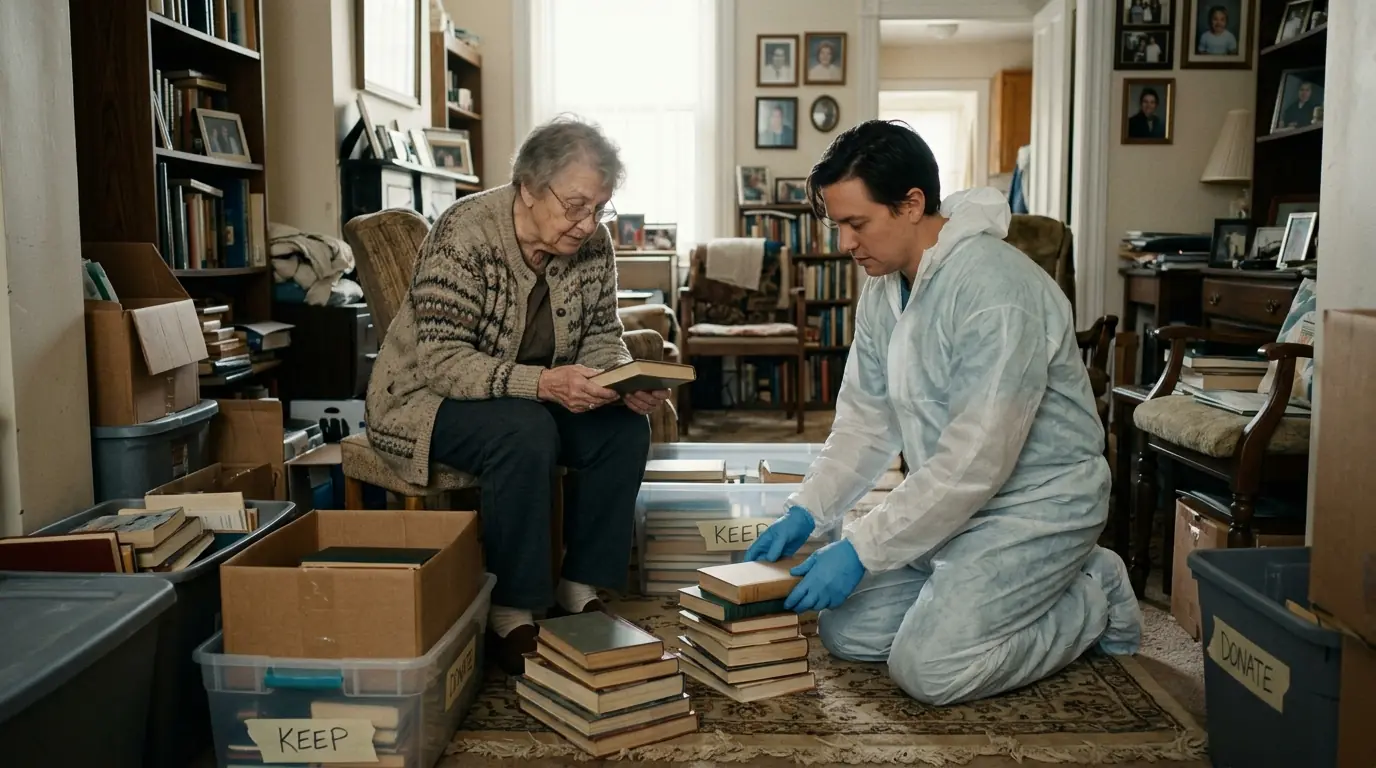
Working with the person present, not around them
Before we touch anything, we sit down with the resident and any family members who will be involved. We ask what they want to keep, what they are worried about losing, and which rooms matter most. Many people have categories that are important to them, such as letters, photos, tools or books, and naming those early keeps sorting calm.
Our technicians hand items to the resident for decisions rather than deciding for them. When there are thousands of items, we group similar things so choices go faster. We stop when someone needs a break. Where a therapist or case worker is already involved, we're glad to follow their guidance on pace and approach.
There are limits. Rotted food, soiled materials, dead pests and anything contaminated with waste is removed for health reasons. We explain why before we bag it, so nothing disappears without the person knowing, and we never rush a decision about something that is simply old or worn.
Rowhome stairs, floor loads and fire risk
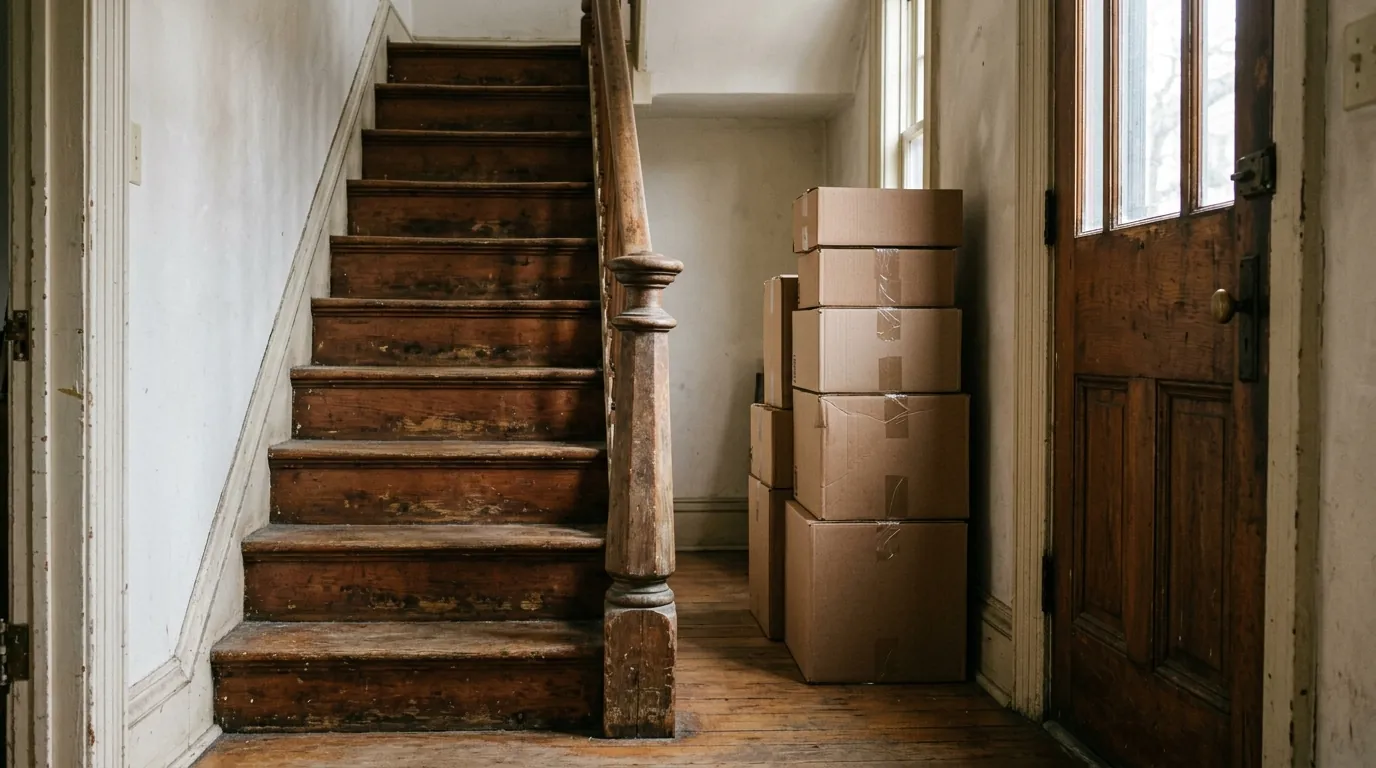
Philadelphia rowhomes often have steep, narrow staircases with a turn near the top, and many have only one stairway. When belongings stack on the treads, the stairs become both a fall hazard and the only way out during a fire. We clear stairways and exits first, even before sorting begins in other rooms, so there is always a safe path.
Heavy accumulations of paper, books and stored goods add weight to old joists. Signs of strain include sagging floors, cracked plaster below, and doors that no longer close. We watch for these as we work, remove weight evenly rather than all from one spot, and let you know if a contractor should look at framing once the room is clear.
Fire is a constant concern. Stacked paper near space heaters, blocked electrical outlets and buried stoves are common. Clearing around heat sources and the electrical panel is part of our early work.
What a hoarding cleanup with us looks like
Talk first
We meet the resident and family, walk the home, and agree on priorities, keep categories and pace.
Make the home safe to move through
Stairs, exits, halls and the area around heat sources and the electrical panel are cleared first.
Sort room by room
Items are grouped and handed to the resident for keep, donate or discard decisions, with breaks as needed.
Remove waste and contaminated material
Trash, rotted food and soiled items leave the same day, with biohazard waste packaged separately.
Clean and disinfect
Once surfaces are reachable, we clean and disinfect kitchens, bathrooms, floors and walls.
Plan for what comes next
We review the finished rooms and talk through follow-up visits or support that may help.
Keep, donate, discard: how sorting actually works
We bring clearly marked bins and set up a sorting area near the room being cleared. Items the resident keeps are cleaned if needed and placed in a spot they choose. Donations go into separate boxes that we deliver to local charities that accept them. Trash and recycling leave the house the same day, so the decision feels final and the space opens up right away.
We also keep an eye out for valuables and paperwork. Cash, jewelry, deeds, tax papers, bank statements and medications often turn up deep in piles. Everything like that is set aside and handed directly to the resident or the person they designate.
Photos, keepsakes and family papers are never thrown out by mistake. If we are unsure about an item, we ask.
Sorting also gets faster as it goes. The first room often takes the longest, because each decision feels heavy. By the third or fourth room, most people have a rhythm, and they start setting aside things on their own before we even hand them over.
When it is time to call about hoarding cleanup
Stairs or exits are blocked
Belongings on stairways, in halls or against doors make it hard to get out quickly.
A hospital discharge depends on it
Discharge planners need the home safe before your loved one can return.
Kitchen or bathroom is unusable
The stove, sink, tub or toilet cannot be used because of clutter or contamination.
Pests or odor reach neighbors
Rodents, insects or smells are spreading to attached rowhomes next door.
Floors show strain
Sagging floors, cracked ceilings below or doors that stick suggest heavy loads.
A notice has arrived
A landlord, inspector or court has set a deadline for the home to be cleared.
Family dynamics and keeping the peace
Hoarding cleanups bring family tensions to the surface. An adult child may want everything gone. A sibling may feel blamed. The resident may feel ambushed. We try to keep the focus on safety and on the resident's wishes, and we avoid taking sides. Sometimes the kindest step is agreeing that only the kitchen, bathroom and stairs get done this week.
We also suggest a follow-up plan. Many people do better with periodic visits from a family member, counselor or organizer after the main cleanup. A home that stays safe matters more than a home that looks empty for a week. Small, steady steps work.
If adult protective services, a court or a landlord is involved, we keep our records factual and limited to the condition of the home. Our job is to make the house safe, not to judge the person who lives there, and families tell us that matters to them.
What shapes the cost of hoarding cleanup
Hoarding jobs vary widely, so we walk the home or review photos before giving you a price.
Volume of belongings
The number of rooms and how high items are stacked drive labor and hauling.
Level of contamination
Waste, rotted food, pests and fluids require biohazard handling and disposal.
Pace of sorting
Sorting with the resident takes longer than a straight cleanout, and that time is worth it.
Access and stairs
Narrow rowhome stairs and no rear access slow the carry-out.
Donation and disposal
Dumpsters, permits for street placement and trips to donation sites add cost.
Follow-up visits
Some families choose return visits to keep the home safe over time.
Homeowner's insurance generally does not cover clutter that built up gradually, though sudden damage found during the cleanup may be covered separately. Some families split the work into phases to spread out the cost. We give you itemized estimates so you can plan.