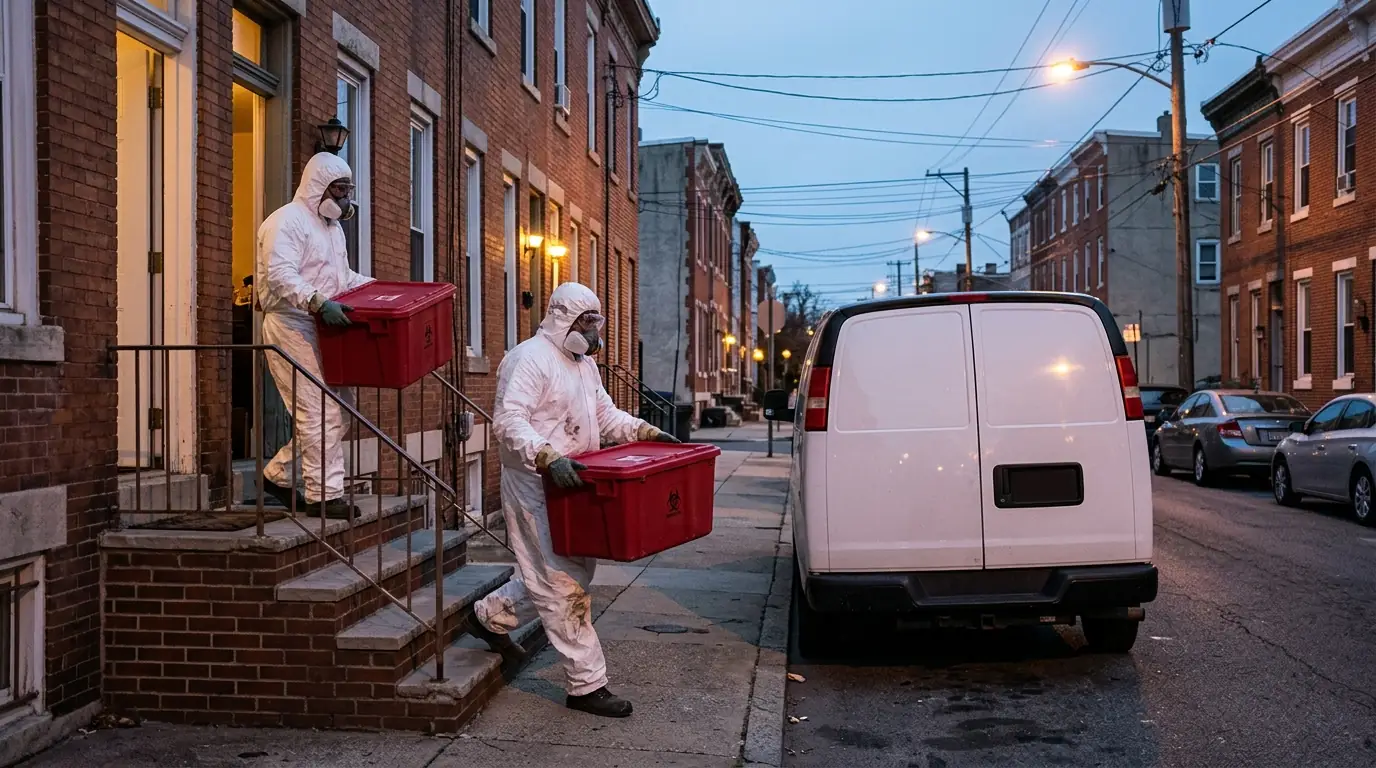
Rodents and Philadelphia rowhomes have a long history together. Shared party walls, old stone foundations, gaps around pipes and alleys lined with trash cans give mice and rats easy ways in and plenty to eat. Once your exterminator has trapped or baited the animals and sealed the entry points, what's left behind is the part nobody wants to touch: droppings along baseboards, nests in the back of cabinets, urine trails across basement shelving and staining on drop ceiling tiles.
That leftover mess isn't just unpleasant. Mouse and rat droppings and urine can carry hantavirus, leptospirosis and salmonella. The risk climbs when dried droppings are swept or vacuumed, because the particles go airborne and get breathed in. We approach every job with that in mind. Our technicians wet the area first, work slowly, and use HEPA filtration where needed. After your exterminator finishes, we make the space safe to store food, unpack boxes or reopen a kitchen.
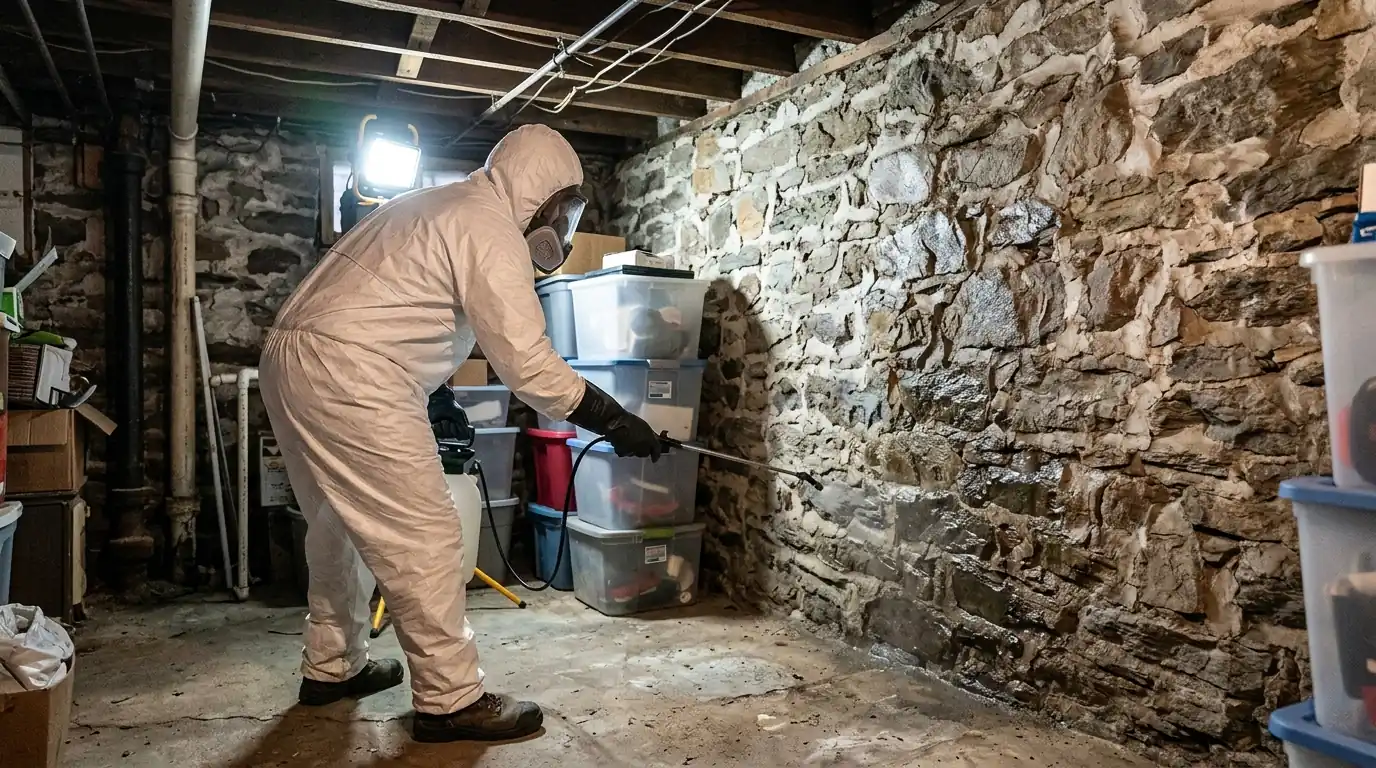
Why sweeping or vacuuming mouse droppings is the wrong first move
When droppings dry out, they crumble easily. A broom or an ordinary household vacuum breaks them into fine dust and blows it around the room, along with dried urine residue. That dust is how people are most likely to be exposed to hantavirus, which is rare but serious. The CDC's guidance for cleaning up after rodents is clear on this point: don't sweep and don't vacuum dry droppings.
Instead, our technicians spray the droppings, nests and surrounding surfaces with a disinfectant and let it soak in for the time on the label. Once everything is thoroughly wet, the material is wiped up with disposable towels and placed in sealed bags. The surfaces are then cleaned and disinfected a second time. Only after everything is wet and bagged do we use HEPA-filtered vacuums to collect fine debris. Our technicians wear respirators, gloves and disposable coveralls throughout, and the area is ventilated before and during work. It's slower than sweeping, but it keeps the problem from becoming airborne.
When to call us for rodent droppings cleanup
Droppings along baseboards or shelves
Small dark pellets in corners, drawers or along walls mean rodents have been active there for some time.
Nests in boxes or insulation
Shredded paper, fabric or insulation bunched in a hidden spot usually marks a nest.
A musty, ammonia-like smell
Rodent urine builds up in enclosed spaces and gives off a sharp, stale odor.
Stained drop ceiling tiles
Yellow or brown spots on ceiling tiles can mean droppings and urine above.
A failed health inspection
Restaurants need a documented, thorough cleanup before reinspection.
The exterminator has finished
Once the animals are gone and entry points are sealed, it's time to clean up what they left.
Basements, kitchens and drop ceilings in Philadelphia buildings
Rodent activity tends to follow the same paths in local buildings. In rowhome basements, mice travel along the base of fieldstone walls and nest in boxes, old insulation and behind the water heater. In kitchens, they hide under the stove, in the toe kick space below cabinets and behind the dishwasher. In offices, stores and older apartment buildings, drop ceilings make a perfect highway, and droppings collect on the tops of ceiling tiles where nobody looks.
Each spot needs a slightly different approach. Cabinets are emptied and their contents sorted, with any food or packaging that rodents reached thrown away. Ceiling tiles with heavy droppings or urine stains are usually replaced rather than cleaned. Basement storage boxes made of cardboard often have to go, while plastic bins can be wiped and disinfected. We look for nests in wall cavities near pipe penetrations and remove what we can reach.
- Under stoves, dishwashers and cabinet toe kicks
- Tops of drop ceiling tiles and light fixtures
- Basement shelving and stored cardboard boxes
- Along fieldstone foundation walls and pipe gaps
- Behind water heaters and furnaces
What shapes the cost of rodent droppings cleanup
Each job is scoped after we see the space. These are the factors that matter most.
Extent of droppings
A few cabinets cost less to clean than an entire basement or warehouse floor.
How long the infestation lasted
Long-term problems leave deeper urine staining and more nesting material.
Materials to remove
Ceiling tiles, insulation and stored boxes add removal time and disposal.
Access
Crawlspaces, tight cabinets and spaces above drop ceilings take longer to reach.
Business hours
Restaurants that need overnight or before-opening work may need special scheduling.
Homeowner's insurance policies often exclude damage from rodents and other pests, though coverage varies by policy. Businesses may have different terms worth checking with their agent. We give you a written scope and photos of the affected areas, which can help if you do file a claim.
Restaurants and food businesses after a rodent problem
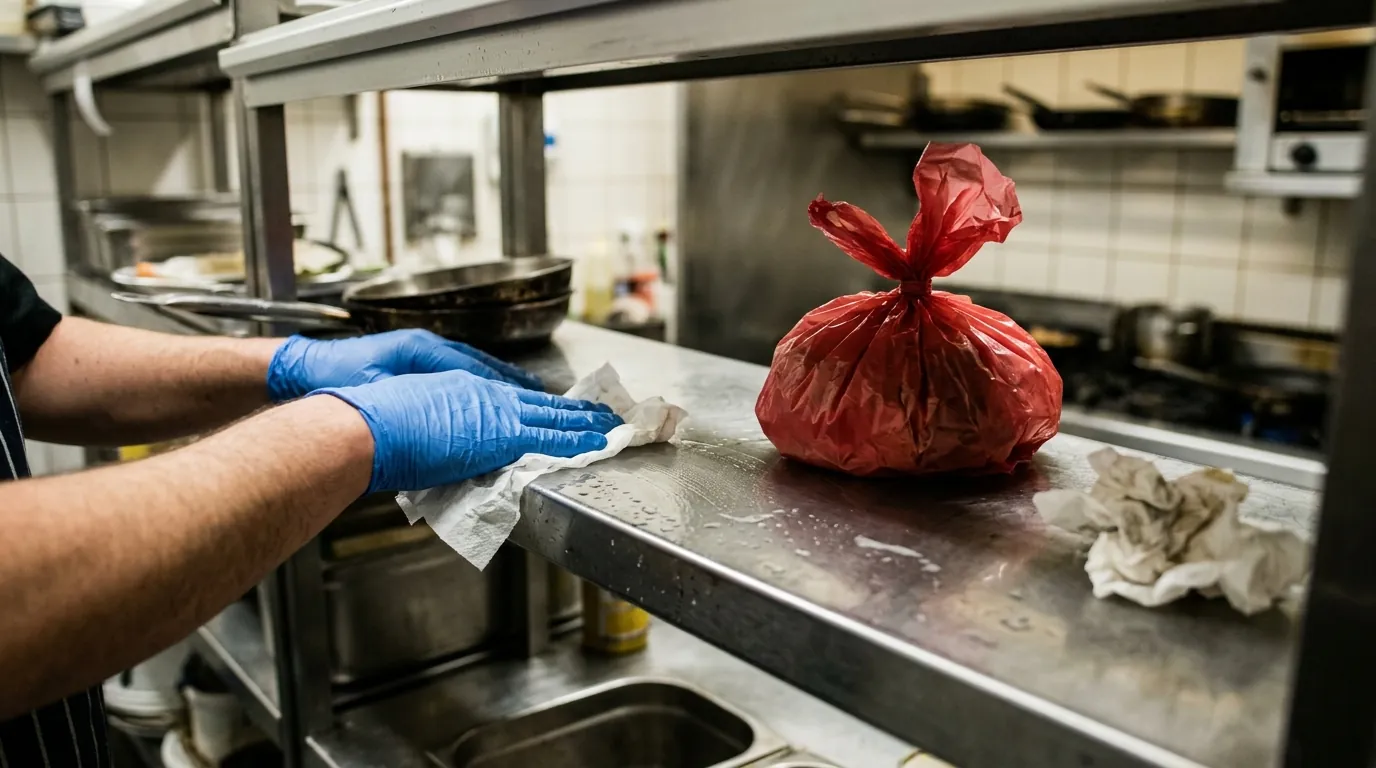
For a restaurant, bakery or corner store, rodent droppings can stop business. Health inspectors look for droppings in food prep areas, dry storage and behind equipment, and a clean kitchen is part of getting back to normal operations. Our crew works around your schedule, often overnight or before opening, so prep can start on time.
We pull equipment away from walls where it's movable, clean the floor and wall junctions underneath, and disinfect shelving and prep surfaces. Dry storage gets special attention because rodents gnaw into flour, rice and paper packaging. Anything they reached is discarded. We note where we found the heaviest activity so your pest control company can focus its traps and sealing there. Our work doesn't replace your inspection process, but it gives you a clean kitchen to show. Walk-in coolers, grease traps and the spaces under bar counters get the same treatment, since rodents follow warmth and food smells into those corners.
How we clean up after mice and rats
Confirm pest control is done
We check that your exterminator has finished trapping and sealing so we're not cleaning around active rodents.
Ventilate and suit up
The area is aired out where possible, and technicians put on respirators, gloves and disposable coveralls.
Wet everything first
Droppings, nests and urine stains are sprayed with disinfectant and left to soak for the full contact time.
Remove and bag
Wet material is wiped up with disposable towels and sealed in bags, with nothing swept or vacuumed dry.
Clean and disinfect again
Floors, shelves and counters are cleaned and treated a second time, then HEPA vacuums pick up fine debris.
Remove what can't be saved
Contaminated ceiling tiles, cardboard and insulation are removed, and we note entry points for your pest control company.
Working alongside your exterminator, not instead of them
Cleaning up droppings while live rodents are still active just means cleaning the same spots again next week. That's why we schedule this work after your exterminator has trapped or baited the animals and sealed the gaps they used to get in. If you're not sure the problem is fully under control, ask your pest control company before booking the cleanup.
Once the pests are handled, we take over the cleanup they don't usually do. Pest control companies are focused on removing the animals and stopping them from returning. Removing pounds of droppings, nesting material and contaminated insulation is a separate job. If dead rodents are found during cleanup, we remove them too. Where droppings have reached attic insulation, our attic insulation decontamination service handles the full removal and replacement. When we're done, we leave a short note of where activity was heaviest, which helps your exterminator decide where to keep monitoring traps in the weeks ahead.