Property owners usually call us after weeks or months of watching a camp grow along a fence line or under a dock. By then the ground may hold tents, mattresses, food waste, buckets of urine, scattered needles and piles of trash. You want the space back, but you also don't want to treat people or their belongings carelessly. Our work begins only after the area has been vacated, and we plan it around your timing and any notice you have given.
Across Philadelphia, these sites show up in predictable places: unfenced lots in Kensington and Port Richmond, the undersides of loading docks in older industrial blocks, gaps between warehouses and rail embankments, and boarded rowhomes whose rear doors were forced open. Each setting changes how we stage the job. A loading dock needs waste carried out without blocking deliveries. A vacant building needs floors checked for soft spots before anyone hauls a heavy load across them.
How we handle sharps and human waste at a camp site
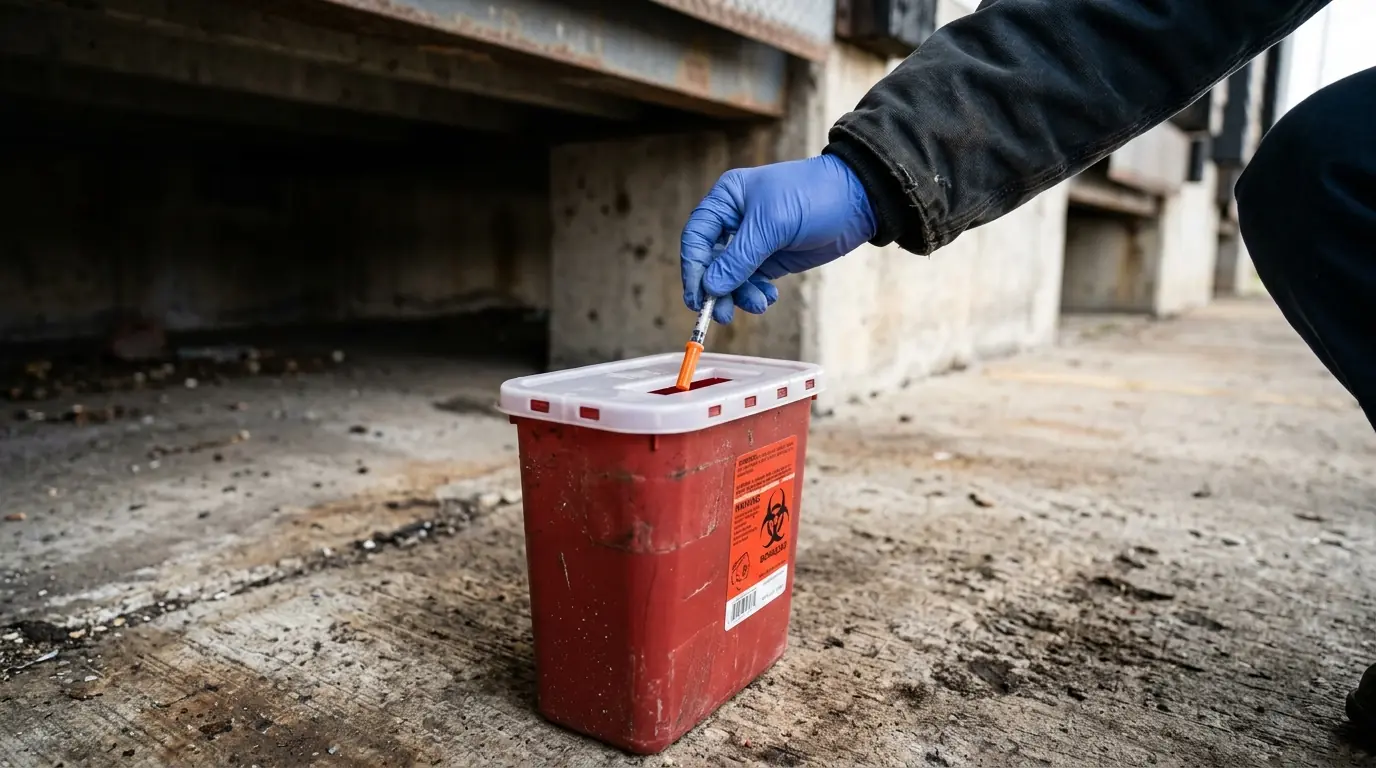
Needles are the first concern on almost every encampment job. They hide in grass, under tarps, inside clothing pockets and in the folds of sleeping bags. Our technicians wear puncture-resistant gloves over nitrile gloves, use tongs and grabbers rather than hands, and drop every sharp into a rigid, sealed sharps container. We sweep the ground in a grid so nothing gets skipped, then sweep it again after the bulk debris is gone.
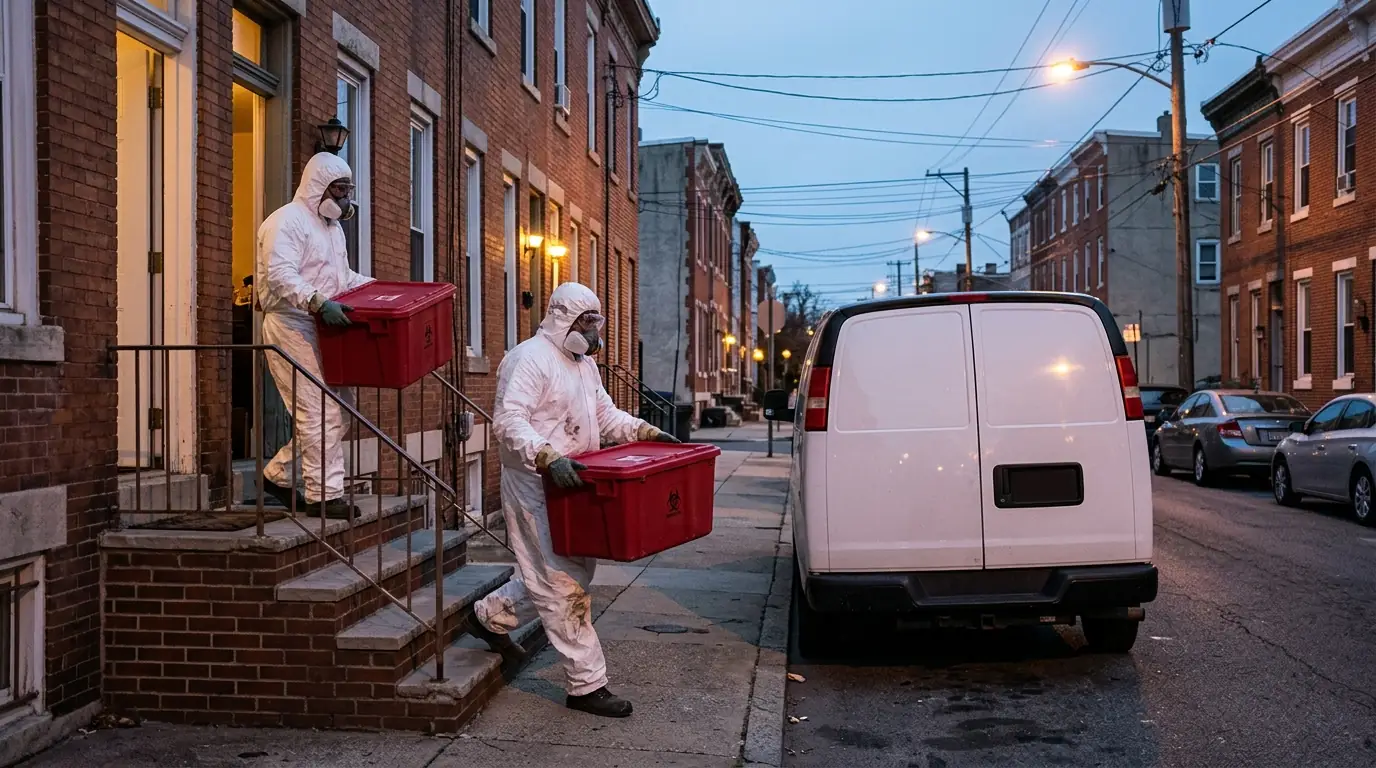
Human waste is the second concern. Buckets, bags and soiled ground are common where no restroom is available. We package feces, urine-soaked bedding and contaminated clothing in red biohazard bags inside rigid boxes, following OSHA's bloodborne pathogens standard. Hard surfaces such as concrete pads, dock walls and stair treads get an EPA-registered hospital-grade disinfectant left wet for its full dwell time. Soil that has been heavily fouled is scraped and bagged rather than simply sprayed.
Treating belongings and timing with respect
Owners often ask what happens to the things people leave behind. We follow your direction, and we suggest a simple approach. Identification cards, birth certificates, medications, phones and photographs are bagged separately, labeled with the date and location, and handed to you rather than thrown out. Many owners pass these along to city outreach staff, who sometimes know who the items belong to.
Timing matters just as much. If people are still staying on the property, that is a conversation for you, your attorney and city outreach, not for a cleanup crew. Where it fits, we encourage owners to reach the city through Philly311 so outreach workers can visit before any cleanup happens. Once you tell us the site is clear, we can usually schedule quickly and finish in one visit for smaller camps.
On our end, we keep the work quiet and plain. We do not take photos of personal items beyond what you need for your records, and we do not make the cleanup a spectacle on the block.
From the first walk-through to a clear lot
Confirm the site is clear
You tell us the area has been vacated and share any notice dates or outreach contacts. We agree on a start time that suits your operation.
Walk the property
A technician checks for sharps, structural hazards, propane or fuel canisters, and access points. We decide where waste will be staged for loading.
Set aside personal items
Documents, medications, phones and photos are bagged, labeled and kept for you. Everything else is sorted into waste streams.
Remove sharps and biohazards
Needles go into rigid sharps containers. Human waste and soiled bedding are packaged in red bags inside sealed boxes for a permitted disposal facility.
Clear debris and disinfect
Bulk trash is hauled away, fouled soil is scraped and bagged, and hard surfaces are disinfected with full dwell time.
Final sweep and report
We grid-sweep the area for any missed sharps and give you a written summary of the work completed.
Different sites, different plans: lots, docks, rail edges and vacant buildings
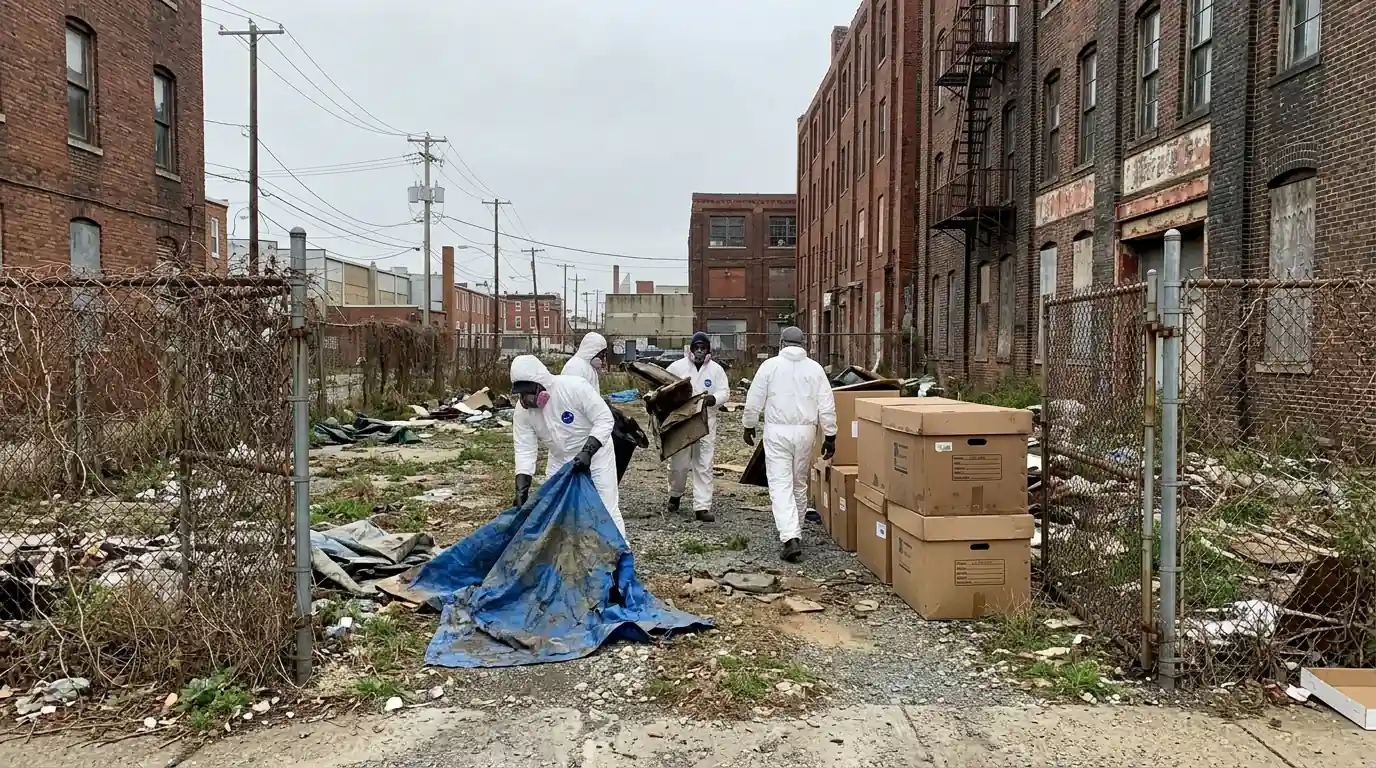
An open lot is mostly a debris and sharps job. We clear tents and furniture, rake the surface, bag contaminated soil and leave the ground ready for fencing, gravel or whatever you plan next. A loading dock is tighter. Waste collects in the pit under the leveler and along the back wall, so we pull it out by hand and disinfect the concrete before your trucks return.
Land beside a rail line brings access limits. We work only on ground you own or control, and we stay off the railroad right of way. Vacant buildings are the most involved. Floors may be weakened by leaks, stairs may be missing treads, and rooms may hold heavy loads of wet trash. We walk the structure first, open windows or set up air movement, and work from the back of the building toward the exit so the path stays clear.
Each setting also changes what we leave behind. On a lot, the ground is raked level and free of loose litter. Under a dock, the concrete is washed and disinfected so your staff can walk it without worry.
When an encampment site is ready for our crew
The area has been vacated
Everyone has moved on and you can confirm nobody is staying on the property today.
Needles are visible
You or your staff have spotted syringes on the ground, in bags or near entrances.
Human waste is present
Buckets, bags or soiled patches of ground make the space unsafe for maintenance workers.
Large debris has built up
Tents, mattresses, carts and furniture are too much for a regular trash pickup.
A vacant building was entered
A boarded property was opened and used for shelter, and the interior needs clearing.
A sale or inspection is coming
You need the site safe for an appraiser, buyer, contractor or insurance adjuster to walk.
What owners can do after the site is clean
Once the debris, waste and sharps are gone, you have a short window to change how the space looks and feels. Owners who add lighting, close gaps in fencing, secure rear doors or keep a dock door down after hours tend to see fewer return visits. A lot that looks maintained also draws less dumping from passersby.
We give you a written summary of what we removed, the number of sharps containers filled, and the condition of the surfaces we disinfected. That record helps if your insurer, a tenant or a buyer asks about the site. If needles turn up again later, a single call brings a technician back for a targeted sweep.
You know your property and your neighbors best. We focus on the cleanup itself and leave the space safe to walk, inspect, fence or rebuild, with nothing hazardous left in the grass, the corners or the drains.
What shapes the cost of encampment cleanup
Every camp is different, so we price after seeing the site in person or from clear photos you share during the call.
Size of the area
A strip along a fence takes far less time than a full lot or a multi-story building.
Volume of debris
Tents, mattresses and furniture add hauling and disposal weight.
Amount of biohazard waste
Sharps containers and red-bag waste go to a permitted facility and are handled separately from ordinary trash.
Access and staging
Narrow alleys, dock pits and upper floors with no elevator slow the carry-out.
Building condition
Weak floors or missing stairs in a vacant structure add safety steps before work can start.
Commercial owners sometimes have coverage for vandalism or debris removal, so it is worth checking your policy. We give you itemized paperwork that an adjuster can follow. For repeat sites, we can talk through a plan for periodic sharps sweeps.