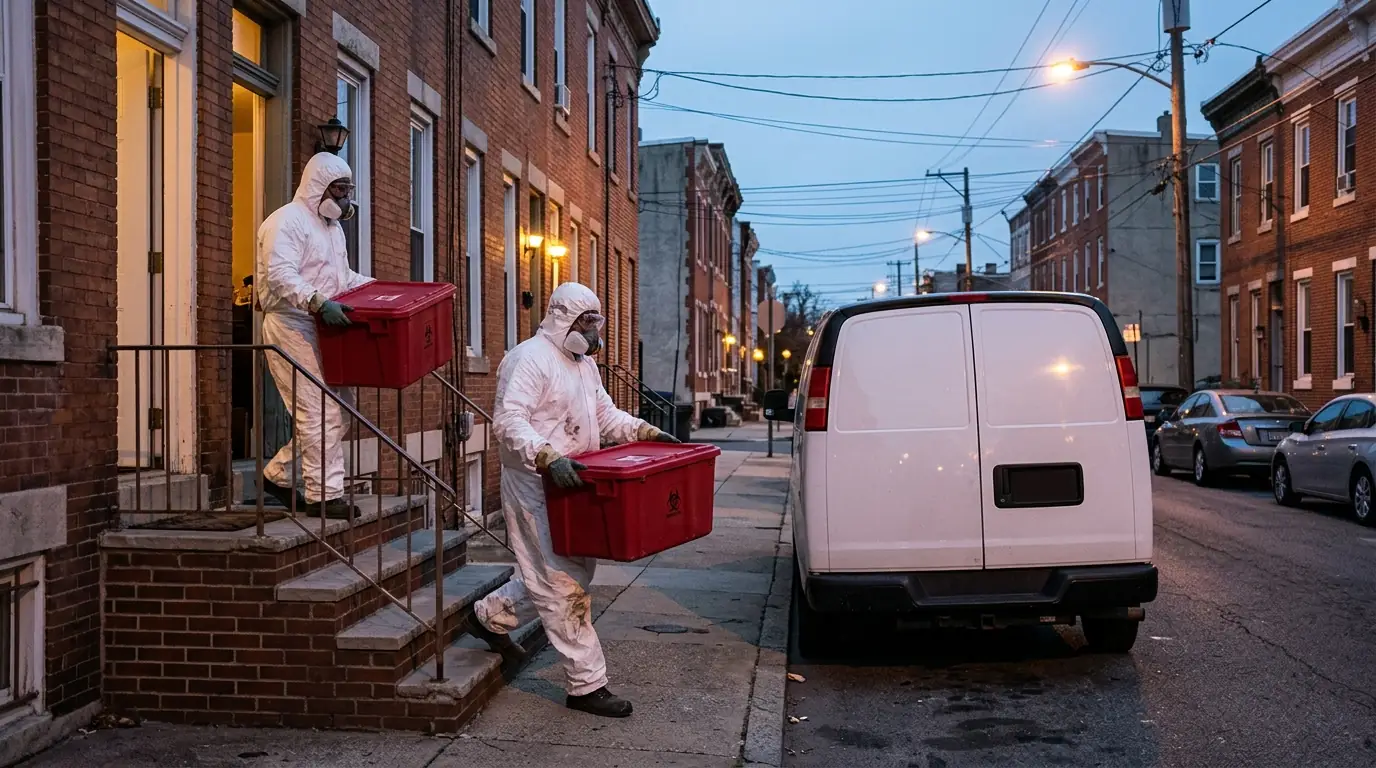
Every shift, officers and deputies put people in the back of cars and in cells who may be bleeding, sick, intoxicated or combative. Spitting, vomiting and urinating happen. A single transport can leave a rear compartment that no officer should be asked to wipe out with a roll of paper towels and a spray bottle before the next call. The same goes for a cell after a long night, when the next arrival is already in the booking line.
We clean those spaces for agencies across the Philadelphia region: municipal police departments in the suburbs, county sheriff's offices, transport and prisoner movement units, courthouse holding areas, and county and local jails. The goal is simple. Get the vehicle or cell back in service fast, keep personnel out of bloodborne pathogen exposure, and give supervisors a record they can file without chasing anyone for details.
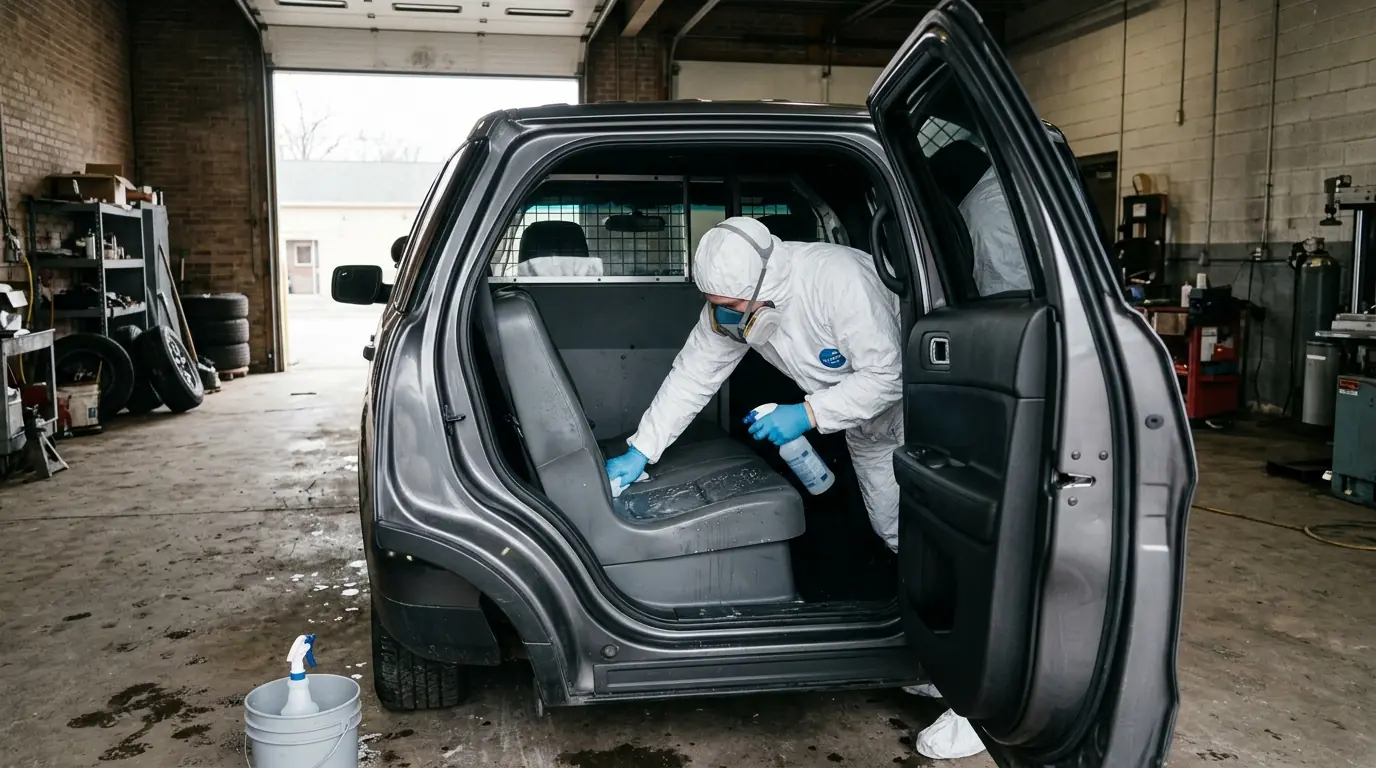
Rear seats, cages and partitions in patrol and transport vehicles
The back of a patrol car is built to be cleaned, but only up to a point. Molded plastic rear seats and polycarbonate partitions are hard and nonporous, so they respond well to proper cleaning and disinfection. The trouble spots are the seams, seat belt receivers, door seals, floor mats and the gap where the seat meets the cage. Fluids work into those places and stay there.
Our technicians pull floor mats and, where the vehicle allows, lift the rear seat to reach the pan beneath it. We clean the partition on both sides, the window glass, door panels and handles, and the seat belt hardware. Where fluids reached carpet or fabric, those pieces are removed or cleaned according to how far they soaked in.
Transport vans and wagons get the same attention, with extra care around bench seats, restraint points and the floor channels that collect runoff. We can work at your station lot, an impound yard or a fleet garage, and we bring everything needed to do the job without tying up your maintenance staff.
- Rear seat, seat pan and seat belt hardware
- Cage partition, glass and door panels
- Floor mats, carpet and floor channels
- Transport van benches and restraint points
Holding cells, booking rooms and sally ports
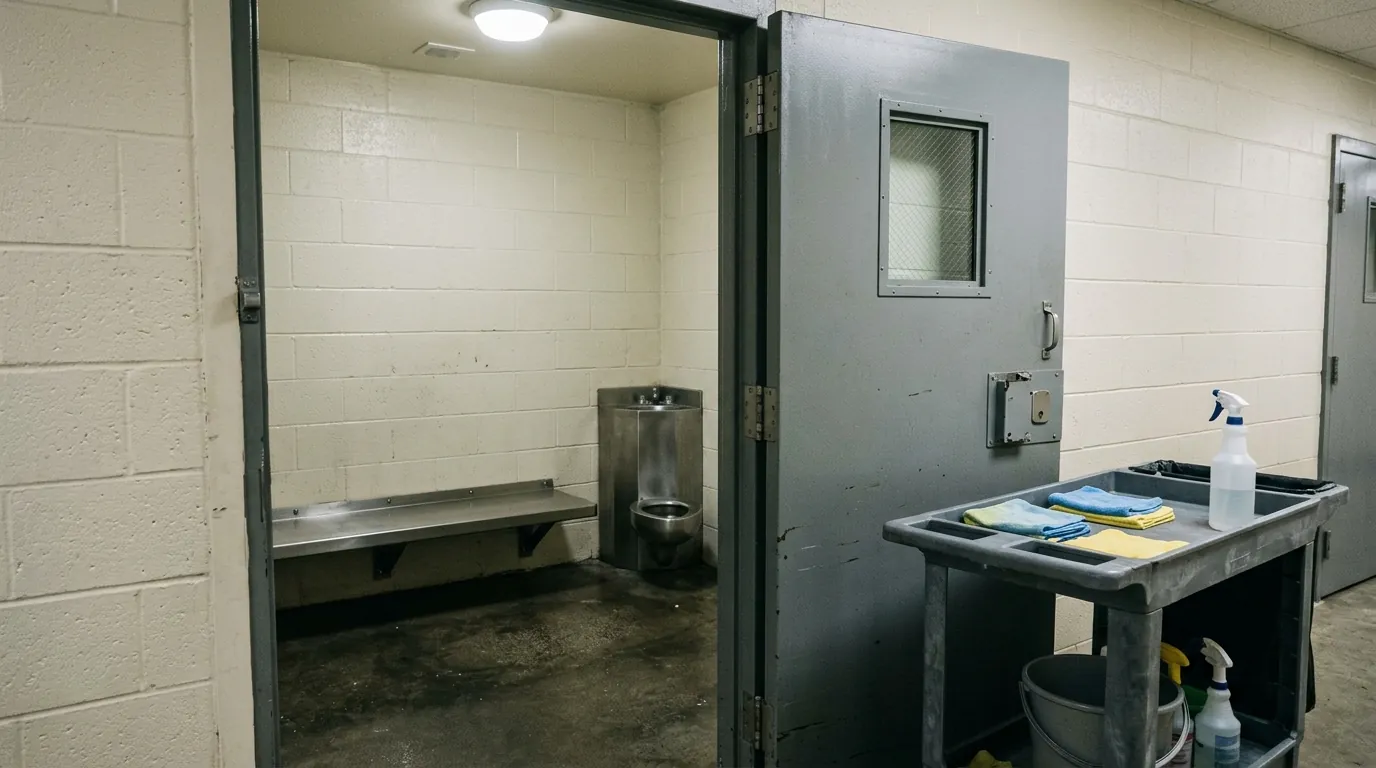
Cells and booking areas see a steady flow of people, and bodily fluids are part of that reality. Concrete floors, block walls, steel benches, toilets and door slots each hold residue differently. Painted block can be cleaned well. Bare or worn concrete is more porous and needs longer contact and more agitation to clean properly.
We clean holding cells from top to bottom: walls, benches, fixtures, door frames, food slots and floor drains. In booking rooms, we pay attention to fingerprint stations, counters, chairs and the hard surfaces people touch while being processed. Sally ports, where vehicles unload, often need attention on the floor, the walls by the door and any spots where someone was held before entering.
Because these areas rarely close, we work in coordination with the officer in charge. One cell can be taken out of use while others stay open, and our crew follows your facility's escort, search and tool control rules.
How a vehicle or cell cleanup runs from call to return to service
Supervisor calls
A supervisor or fleet manager calls (267) 699-2329 with the unit number or cell location and what happened. We confirm where the vehicle or space is and who will meet us.
Confirm release and access
If investigators or internal affairs need the space, we wait until it is released. We follow your escort and tool control rules on site.
Protect and remove
Technicians in full protective gear remove mats, debris and any soaked fabric or carpet into sealed bags.
Clean seams and hardware
We clean seats, partitions, benches, fixtures, seat belt hardware and floor channels, working into seams and joints.
Disinfect for full contact time
Surfaces are treated with an EPA-registered disinfectant and left wet for the product's labeled contact time, then wiped and dried.
Return and document
The vehicle or cell is handed back to the supervisor, and the dated record is sent to whoever you name.
Getting units and cells back into service quickly
A patrol car parked for decontamination is one less car on the street. A closed cell can mean crowding in the others. Speed matters, and we plan for it. We answer 24/7, so a supervisor can call at the start of an overnight shift and often have the vehicle cleaned before the next roll call.
Most patrol car jobs are completed in a single visit. Cells and booking rooms depend on how much material is involved and how much of the floor and walls it reached. We tell you up front how long the space will be out of use and update the shift supervisor if anything changes.
For agencies with regular needs, we can set up a standing arrangement so officers know exactly who to call and the process stays the same each time. That consistency helps fleet managers track vehicle downtime and keeps cleanup from becoming an ad hoc task handed to whoever is free. It also means the same handover steps and paperwork arrive every time, which makes life easier for supervisors.
When an agency should call for cell or vehicle decontamination
Blood in a patrol car
Any blood left in a rear compartment after transporting an injured person.
Spitting or vomiting during transport
Saliva and vomit on partitions, seats and floors carry real exposure risk.
Urine or feces in a cell or vehicle
Human waste soaks into seams and floor channels and needs proper cleaning.
An overdose or medical event in custody
Drug residue, needles and fluids left after an emergency in a cell or booking area.
Use of force with injury
Scenes in sally ports or booking rooms after a struggle that caused bleeding.
A death in custody
Once investigators release the scene, the area needs full trauma cleanup.
Records that support exposure control and fleet tracking
Law enforcement agencies fall under exposure control requirements for bloodborne pathogens, whether through OSHA or the state rules that apply to public employers in Pennsylvania and New Jersey. Part of that work is limiting how often officers and staff come in contact with blood and other potentially infectious material, including during cleanup.
After each job, we provide a short, dated record: the vehicle number or cell location, the type of contamination, the areas cleaned, the disinfectant used and its contact time, and how waste was packaged and sent for disposal. Before and after photos are included unless your policy says otherwise.
Those records go to whoever needs them, whether that is a shift supervisor, a fleet manager, a safety officer or a risk management office. If you ask, we add ATP surface readings to show residue levels before and after cleaning. That gives a measured answer when an officer asks whether a car is really clean.
What shapes the cost of holding cell and patrol car cleanup
Costs depend on the space, the contamination and how the work fits your schedule.
Vehicle or space type
A patrol car rear seat is smaller than a transport van or a multi-cell block.
Amount of contamination
Light spitting is less work than heavy blood or human waste spread across a floor.
Fabric and carpet
Soft materials that absorbed fluids may need removal or extra treatment.
Access and security rules
Escorts, searches and limited access windows affect crew time.
Frequency
Standing arrangements for regular calls are often simpler to bill than one-off emergencies.
Most agencies pay through their own operating or fleet budget, and some jurisdictions route claims through a municipal risk pool. We can bill the department, the county or the risk management office directly, and we can match your purchase order or invoicing process. We explain our billing approach before any work starts.