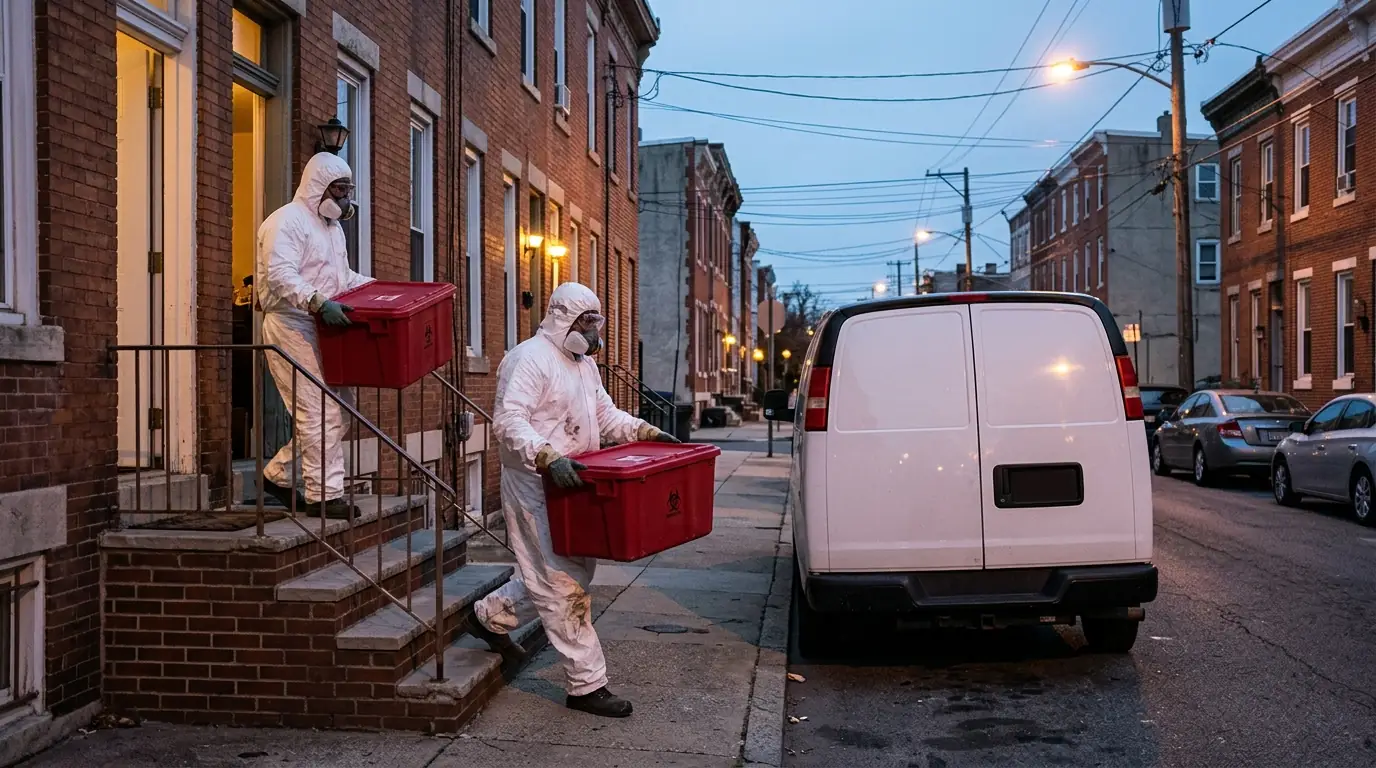
Feces turn up in places nobody plans to clean. A tenant moves out and leaves soiled carpet and smeared walls behind. A toilet overflows on the second floor and drains through a rowhome ceiling into the kitchen. Someone shelters in a vestibule or basement stairwell and uses a corner as a bathroom. An aging parent has accidents that go unnoticed for days. Each situation looks different, but the risk underneath is the same: waste can carry hepatitis A, norovirus, E. coli and other germs that spread from hands to mouths.
A mop and a bottle of household cleaner usually spread the problem around instead of ending it. Waste dries into grout lines, works under baseboards and soaks into subfloor, plaster and drywall. We treat it as a biohazard from the first minute. Our crew contains the area, removes the bulk by hand, cleans before disinfecting, and pulls out anything porous that can't be made safe. Whether it's a trinity in Queen Village or a warehouse stairwell in Port Richmond, the goal is a room you can walk into without thinking twice.
When to call us for feces cleanup
Smearing on walls or furniture
Waste spread across walls, doors or upholstery usually reaches more surfaces than you can see at first glance.
Overflow through a ceiling
A toilet or soil stack backup that drips into the room below needs the ceiling cavity checked, not just the floor.
A vacant or foreclosed unit
Aged waste mixed with trash and debris is a job for protective gear and sealed packaging.
A shared stairwell or vestibule
Common areas in multi-unit buildings need fast, careful cleaning so residents can pass safely.
Pet waste built up in a rental
Layers of dog or cat waste usually soak through carpet into the subfloor below.
Accidents in an older relative's home
When incontinence went unnoticed for a while, fabrics, mattresses and floors may all need attention.
Why feces on a hard floor still needs more than a mop
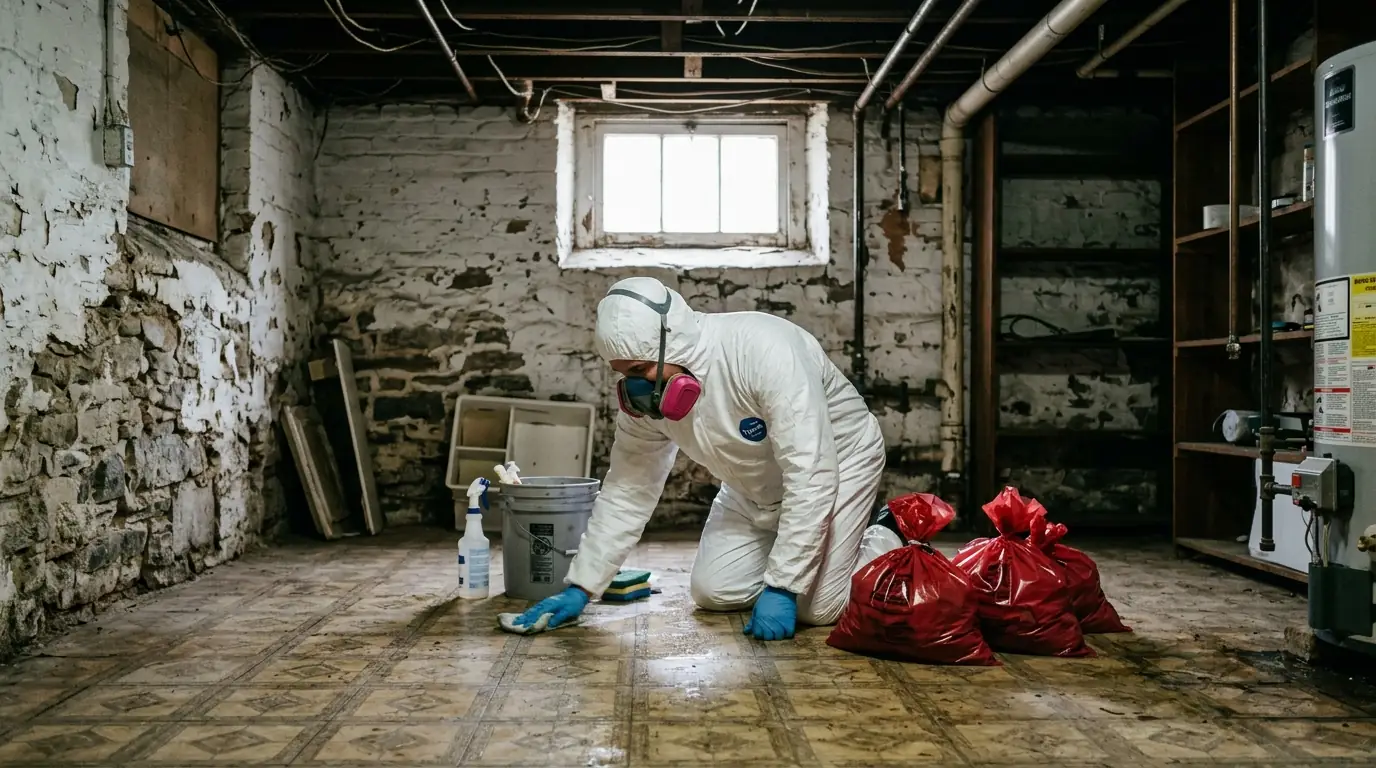
Germs in human waste are tougher than most people expect. Hepatitis A can survive outside the body for a long time, and norovirus spreads from tiny amounts that nobody can see. When feces dry on tile, concrete or vinyl, they leave a film that ordinary cleaners don't fully break down. Wiping it once with a damp rag mostly moves that film from one spot to the next.
Disinfectants also have a weak point: they can't kill what they can't touch. Any leftover organic soil shields the germs underneath. That's why our technicians clean first with a detergent, rinse, and only then apply an EPA-registered hospital-grade disinfectant. Every product label lists a contact time, often several minutes, and the surface has to stay wet for that whole period to do its job. We keep it wet, wait it out, and then wipe. Skipping that wait is the most common reason home cleanups fail. We also replace mop heads, rags and brushes rather than reuse them, because tools carry contamination from room to room just as easily as shoes do.
How a feces cleanup unfolds from your call to the final wipe
Talk it through on the phone
You describe what you're seeing and where. We ask about access, other residents and anything else in the space, then set a time to arrive.
Contain and protect
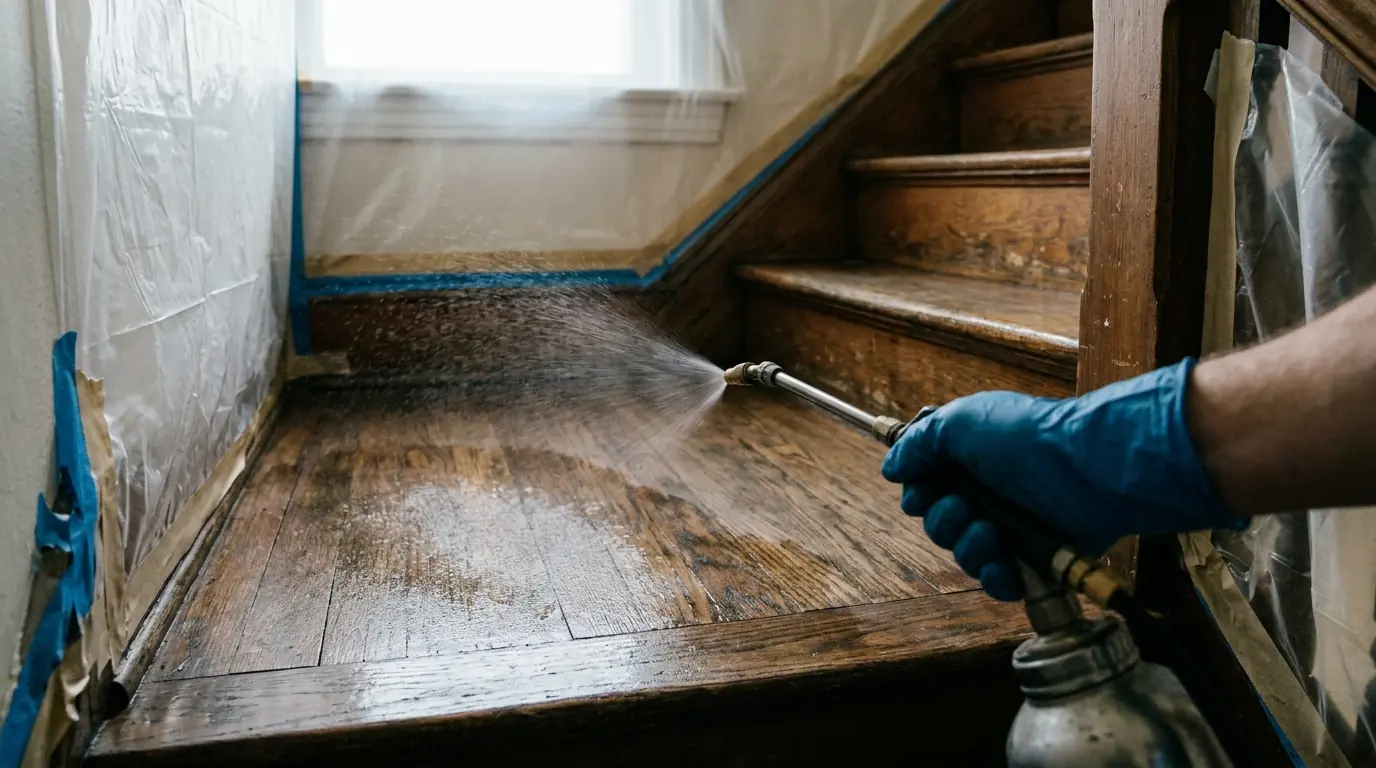
Technicians suit up, seal the area with poly sheeting and protect the path in and out so nothing tracks into clean rooms.
Remove the bulk waste
Visible waste is lifted by hand with absorbent material and placed in sealed, heavy liners. Nothing is swept or dry-brushed.
Clean, then disinfect
Surfaces are washed with detergent and rinsed, then treated with a hospital-grade disinfectant kept wet for its full contact time.
Remove what can't be saved
Carpet, pad, drywall or trim that absorbed waste is cut out, bagged and taken for proper disposal.
Deodorize and walk through
We treat any lingering odor, check the work with you and point out anything that will need replacing.
Smearing, overflow and vacant units: how each job differs
Smearing on walls, doors and furniture happens most often in units left by a tenant in crisis, in homes where someone has dementia, or in buildings where a person sheltered without access to a toilet. It usually covers more surface area than people first notice, including light switches, door edges and window sills that hands touch.
Overflow from a toilet or soil stack is different. The waste is wet, it travels, and it finds every gap in an older Philadelphia floor. Vacant properties bring their own set of problems: waste that sat for weeks, mixed with trash, sometimes alongside needles. We plan each type of job separately because the tools, the containment and the materials we remove are not the same.
- Smearing: wide spread across touch points, walls and fabrics
- Toilet or stack overflow: liquid that seeps through floors and ceilings
- Vacant or abandoned units: aged waste mixed with debris
- Stairwells and vestibules: shared spaces that need quick turnaround
- Pet waste buildup: layered contamination in carpet and subfloor
What happens to plaster, carpet and subfloor that absorbed waste
Hard, sealed surfaces like glazed tile, sealed concrete and metal can be cleaned and disinfected in place. Porous materials are another story. Carpet and pad act like a sponge, and liquid waste often passes straight through into the wood underneath. Unsealed grout, raw drywall paper and the old plaster common in Philadelphia rowhomes can hold contamination below the surface where a wipe never reaches.
We test the edges of each stain, then cut out what can't be restored and bag it in sealed, heavy liners. That might mean a section of carpet, a few lengths of baseboard or a square of drywall around a stained corner. Older plank subfloors with gaps between boards sometimes need a section lifted to reach the joist below. Once the area is clean and disinfected, exposed wood can be coated with an encapsulating primer that locks in residual odor before new flooring goes down. We show you what we plan to remove before we remove it, so there are no surprises when you walk back in.
Protecting your household, tenants and neighbors during the work
Our technicians wear disposable coveralls, nitrile gloves, eye protection and respirators, and they change gear when they leave the work zone. We follow the same protective habits that OSHA's bloodborne pathogens standard sets for contaminated material, because feces often carry other bodily fluids and nobody can tell by looking.
In a shared building, a contaminated stairwell affects everyone who uses it. We seal off the work area with poly sheeting, cover the path in and out, and run a HEPA air scrubber when dried waste could become dust. Neighbors in a twin or a triplex can usually keep using their own units while we work. Waste leaves the property in sealed bags, packaged so nothing can leak on the way to the truck, and goes for proper disposal rather than into a curbside trash can. When we finish, the stairs, railings and doors are clean enough for the next person to use without hesitation.
What shapes the cost of feces cleanup
Every job is priced on its own scope after we've seen what's there. These are the factors that move it the most.
Area affected
One bathroom floor is a very different job from smearing across several rooms and a stairwell.
How long it sat
Fresh contamination stays on the surface, while waste left for weeks soaks deeper into materials.
Surface types
Sealed tile cleans in place; carpet, plaster and raw wood often need removal.
Material removal and disposal
Cutting out flooring or drywall adds labor and more sealed waste to transport.
Access and building layout
Third-floor walk-ups, narrow rowhome stairs and occupied buildings take extra planning and time.
Homeowner's insurance often responds to sudden events such as a toilet or sewer overflow, while gradual buildup is usually treated differently. Landlords dealing with damage left by a tenant may have options through their own policy. We document the work with photos and a written scope you can share with your adjuster, and we walk you through the plan before any work starts.