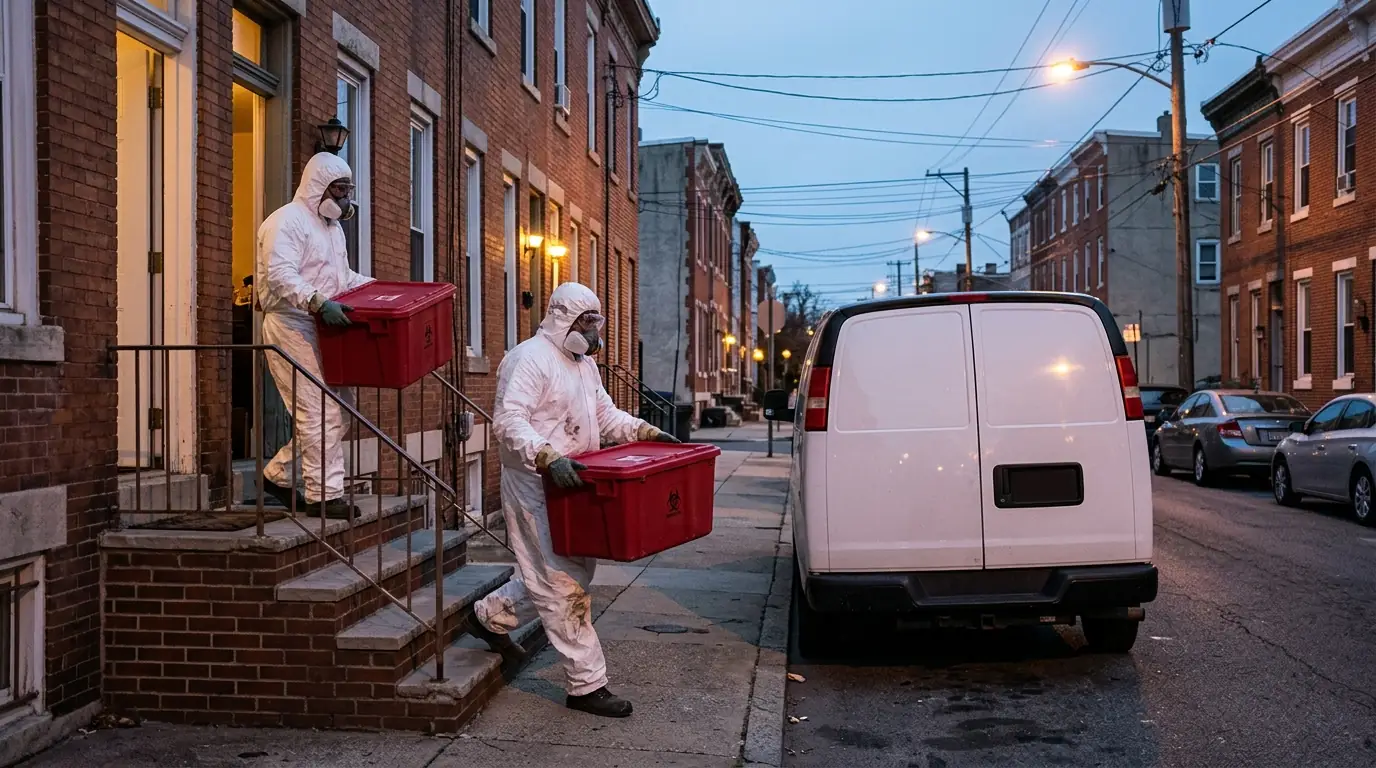
A break-in that turned violent, a fight that spilled into a kitchen, a shooting on a porch, a stabbing in a stairwell. The circumstances differ, but the morning after usually looks the same: the officers have gone, the tape is down, and you are standing in a room nobody has told you how to clean. That gap between the police leaving and normal life resuming is the work we do across Philadelphia, day or night.
Families are often surprised that the police don't clean anything. Investigators collect what they need as evidence and then release the property back to the owner, contamination and all. In most cases the responsibility, and the cost, shifts to the homeowner, landlord or business. We step in at that point. Our crew takes over the scene, protects the rest of the house from cross-contamination, and gives you a plain account of what needs to come out and what can be saved.
When to call us for crime scene cleanup
Police have released the property
Detectives have told you the investigation at the address is finished and the space is back in your hands.
Blood reached floors or furniture
Visible blood on carpet, wood, upholstery or a mattress usually means more has soaked in below the surface.
Glass, powder and debris remain
Broken glass, fingerprint powder and cut-out evidence areas are left behind and need careful removal.
A tenant or guest was hurt
Landlords and property managers need the unit cleaned and documented before anyone moves back in.
A business was the scene
Stores, bars and offices need a fast turnaround that still respects bloodborne pathogen rules for staff.
You're unsure what is safe to touch
If you can't tell where contamination ends, it's safer to let us trace and test it.
What happens between police release and your first cleanup call
When Philadelphia Police finish processing a scene, detectives release it, usually by telling the owner or next of kin directly. From that moment it is private property again. Nobody from the city returns to clean, and the Medical Examiner's Office, if it was involved, removes only the person who died. Whatever remains on floors, walls, furniture and fixtures is left in place.
Before you call anyone, make sure the release is final. If detectives say they may need to return, wait for a clear answer, because cleaning too early can disturb something they still need. Once you have that answer, you can call us at any hour. We'll ask who has authority over the property, whether anyone is still living there, and which rooms were affected, so the crew arrives with the right containment and equipment.
In the meantime, keep pets and children out of the area and don't try to wipe anything down. Household cleaners can set stains and push contamination deeper into grout, seams and wood grain.
How a crime scene cleanup unfolds, step by step
Call and confirm release
You call (267) 699-2329 and we confirm the police have released the scene. We ask a few questions about the space and who can authorize the work.
Walkthrough and containment
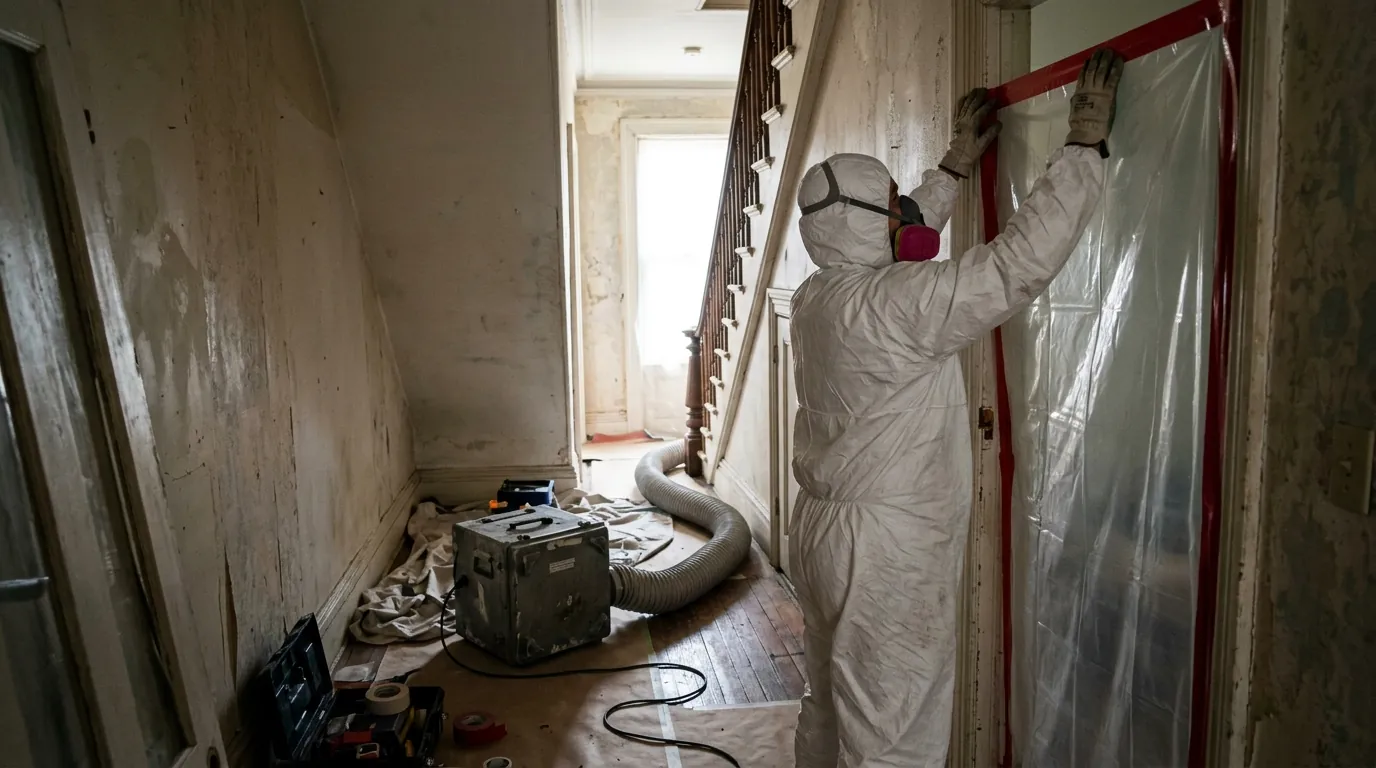
A technician walks the scene with you or your representative. Then we seal the affected area with poly sheeting and set up negative air with a HEPA scrubber.
Remove gross contamination
We lift visible material, bag it in sealed red biohazard bags, and place glass and sharps in rigid containers. Porous items that held fluids are cut out or removed whole.
Trace hidden paths
We pull baseboards, lift flooring and open plaster where fluids traveled. Every stained section of subfloor or framing is cleaned or removed.
Disinfect and verify
Surfaces get an EPA-registered hospital-grade disinfectant left wet for its full labeled dwell time. ATP swabs on key surfaces confirm organic residue is gone.
Remove waste and hand back
Sealed waste goes to a permitted treatment facility under Pennsylvania DEP rules. We walk you through the finished room and give you the paperwork.
Evidence collection and cleanup are two different jobs
Investigators and cleanup technicians look at the same room with different goals. A crime scene unit photographs, measures, swabs and collects. They may cut a section of carpet, lift prints with powder, or take a piece of drywall to the lab. When they leave, those holes, powder smudges and opened surfaces stay behind, alongside every trace of blood they had no reason to remove.
Our goal is the opposite. We want every contaminated material out of the house and every remaining surface proven clean. That means following fluids where they travel, not just where they show. In a Philadelphia rowhome, blood that reached a hardwood floor can run along the board seams, soak into the subfloor and stain the plaster ceiling of the room below. A baseboard may hide residue behind it. Upholstery can look fine on top and be saturated underneath. We trace each path, remove what can't be decontaminated, and document what we took so you have a record for insurance or VCAP.
How VCAP can help Pennsylvania crime victims' families with cleanup
Pennsylvania's Victims Compensation Assistance Program, run through the Pennsylvania Commission on Crime and Delinquency, can reimburse certain out-of-pocket losses for eligible victims and their families. Crime scene cleanup is one of the expenses the program may consider. Eligibility depends on factors such as whether the crime was reported to police and whether the victim's own conduct contributed, and claims have filing deadlines.
Victim services staff at the Philadelphia District Attorney's Office, along with community victim service agencies in the city, help families file. We support that process with an itemized description of the work, photographs taken before and after, and waste disposal records. Homeowner's insurance can also respond to vandalism or sudden damage, and VCAP generally looks at other coverage first, so it helps to check both.
We can't promise that any program will pay, and we won't pretend otherwise. What we can do is keep the paperwork clean and specific, so whoever reviews the claim sees exactly what was done.
What families usually face first, and what can wait
The first hours after a violent crime at home are crowded with decisions: where to sleep tonight, who to tell, whether the locks need changing, how to talk to the kids. Cleanup tends to feel like one more impossible task. We try to shrink it to a single phone call and a few clear choices.
Some things need attention right away. A broken door or window should be secured so the home is safe overnight, and we can cover it temporarily while we work. Food left out, a running appliance, or a pet that was in the house may need someone to step in. Other things can wait. Personal items in the affected room don't have to be sorted today. We can set aside photographs, documents, jewelry and keepsakes, clean what can be cleaned, and hold anything you aren't ready to decide about.
If you rent, let your landlord know the police have released the unit. Many Philadelphia landlords would rather we start promptly, and we can arrange access with them directly so you aren't stuck in the middle.
What shapes the cost of crime scene cleanup
Every scene is priced after a walkthrough, because two calls that sound alike can involve very different amounts of material and labor.
How far fluids spread
One room on hard flooring is a different job from fluids that crossed carpet, seeped through the subfloor and reached a ceiling below.
Materials that must come out
Carpet, padding, drywall, plaster, mattresses and upholstered furniture add removal and disposal time.
Investigation residue
Fingerprint powder and chemical residue across several rooms takes extra HEPA vacuuming and detailed wiping.
Waste volume
The number of sealed bags and rigid boxes sent for treatment affects disposal charges.
Access and building type
Narrow rowhome stairs, upper-floor apartments and shared hallways can slow the carry-out of waste.
Cleanup versus repair
Rebuilding is not part of decontamination, so we tell you clearly which items are cleanup and which are repair.
Homeowner's and renter's policies often cover cleanup after a sudden violent event, subject to your deductible and policy terms. We can speak with your adjuster and send the documentation they ask for. For eligible victims' families, VCAP may reimburse cleanup costs that insurance doesn't cover. We explain our billing before work starts, so nothing on the invoice comes as a surprise.