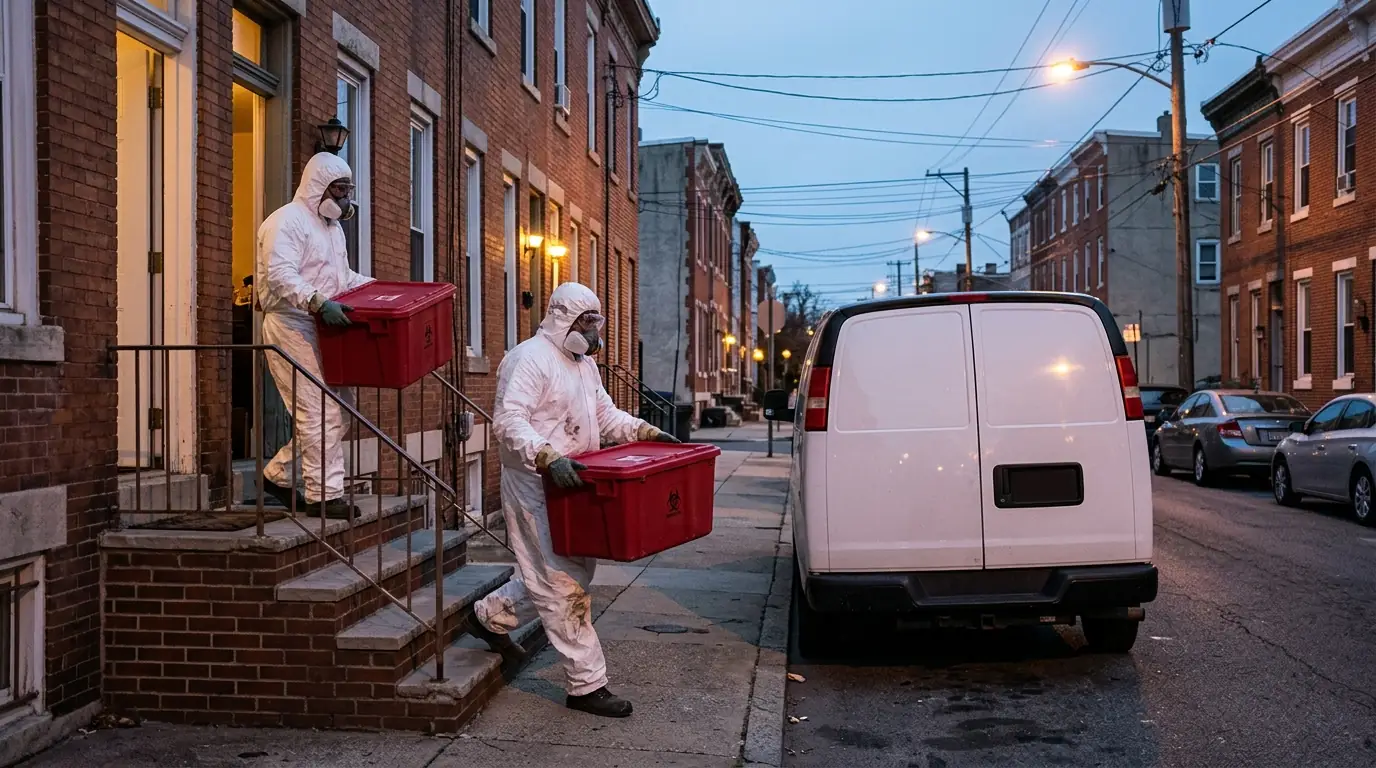
Mice, rats, squirrels, raccoons, opossums and birds all find their way into Philadelphia homes. Older rowhomes have gaps where porch roofs meet the main wall, open chimney flues, loose soffits and stone foundations with plenty of cracks. Sometimes an animal gets trapped. Sometimes it eats bait from a pest control treatment and crawls into a wall to die. Either way, you usually find out a few days later, when an odor starts building in one room and won't go away.
Air fresheners and open windows don't fix it. The source has to come out, and whatever it soaked into has to come out too. Our technicians track down the location, often by following the strongest odor, staining, or insect activity. We open only what's needed to reach the animal, remove it with any affected insulation or debris, disinfect the cavity and treat the remaining odor. Most people never have to see what we remove, and the room goes back to normal.
When to call us about a dead animal
An odor that keeps getting stronger
A sweet, heavy smell that worsens over several days usually means something died nearby.
Flies gathering at one window
Clusters of flies in one room often point to a source in the wall or ceiling.
A stain on a ceiling or wall
Discoloration that appears suddenly can mean fluids are soaking through from above.
Scratching that stopped
If you heard an animal in the wall or attic and then it went quiet, it may have died there.
Recent pest control baiting
Rodents that eat bait often die inside walls rather than out in the open.
A smell from the chimney or under the porch
These spaces often trap birds, squirrels and larger animals.
Finding the source when the smell is everywhere
Odor travels. In a rowhome, a squirrel that died above a second-floor ceiling can make the whole stairwell smell, and air moving through wall cavities can carry the odor a long way from where the animal actually is. So we start by narrowing it down. We walk the house with you and note where the smell is strongest, where it changes with the weather, and whether it's worse on one side of a party wall.
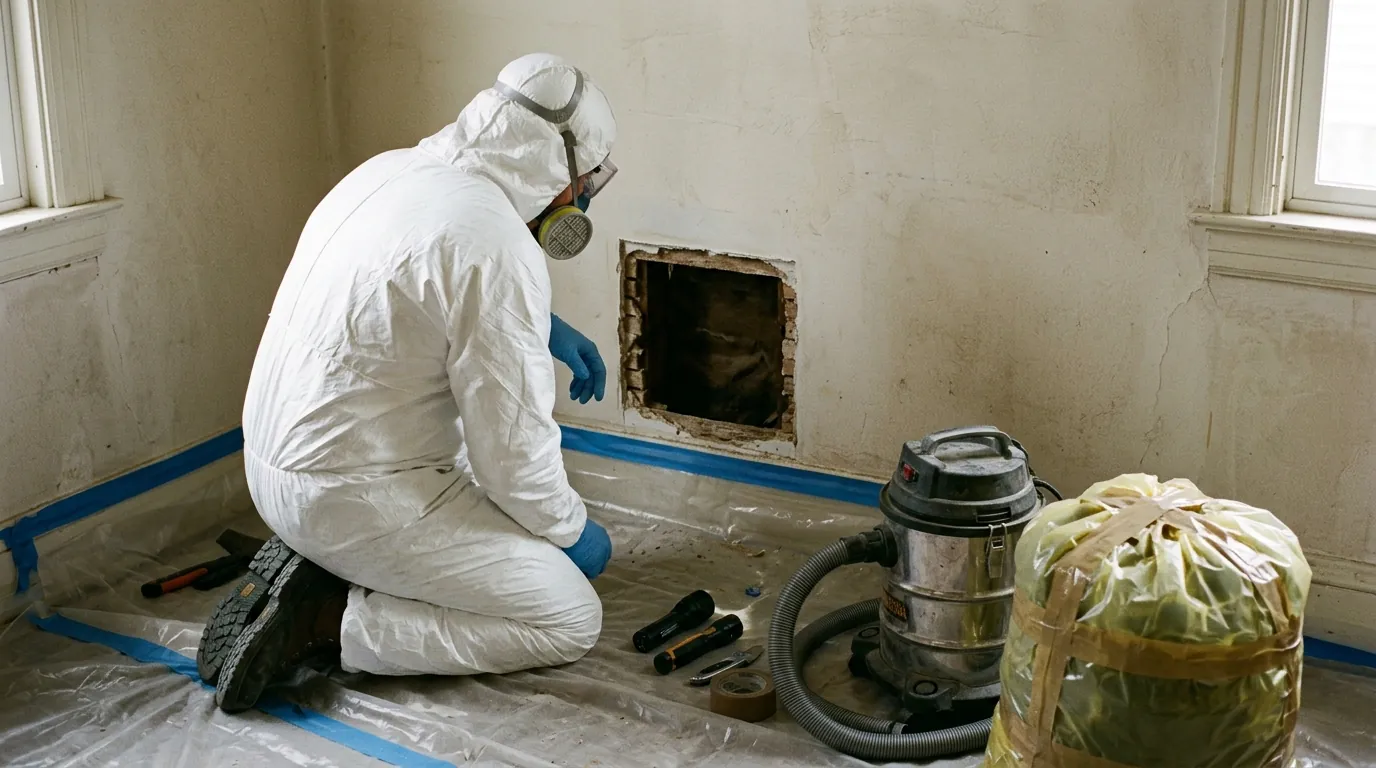
Physical clues help. A spot of discoloration on a ceiling, flies clustered at one window, a darkening patch on drywall or insects appearing along a baseboard often point to the source. We check likely entry points outside, such as gaps at porch roofs, soffits, dryer vents and chimney caps. Inside, we look at the obvious hiding places: behind appliances, in basement corners, behind the access panel for the tub. Where an animal is inside a wall or ceiling, a small inspection opening confirms the location before we cut a larger access. That way the repair afterward stays as small as possible.
How we remove a dead animal and clear the odor
Talk through the clues
On the phone, we ask where the smell is strongest, how long it's been there and whether you've had pest control or noises in the walls.
Locate the source
We follow the odor, staining and insect activity and check likely entry points inside and out.
Open the smallest access
If the animal is in a wall or ceiling, we make a small inspection hole first, then the opening needed to remove it.
Remove the animal and debris
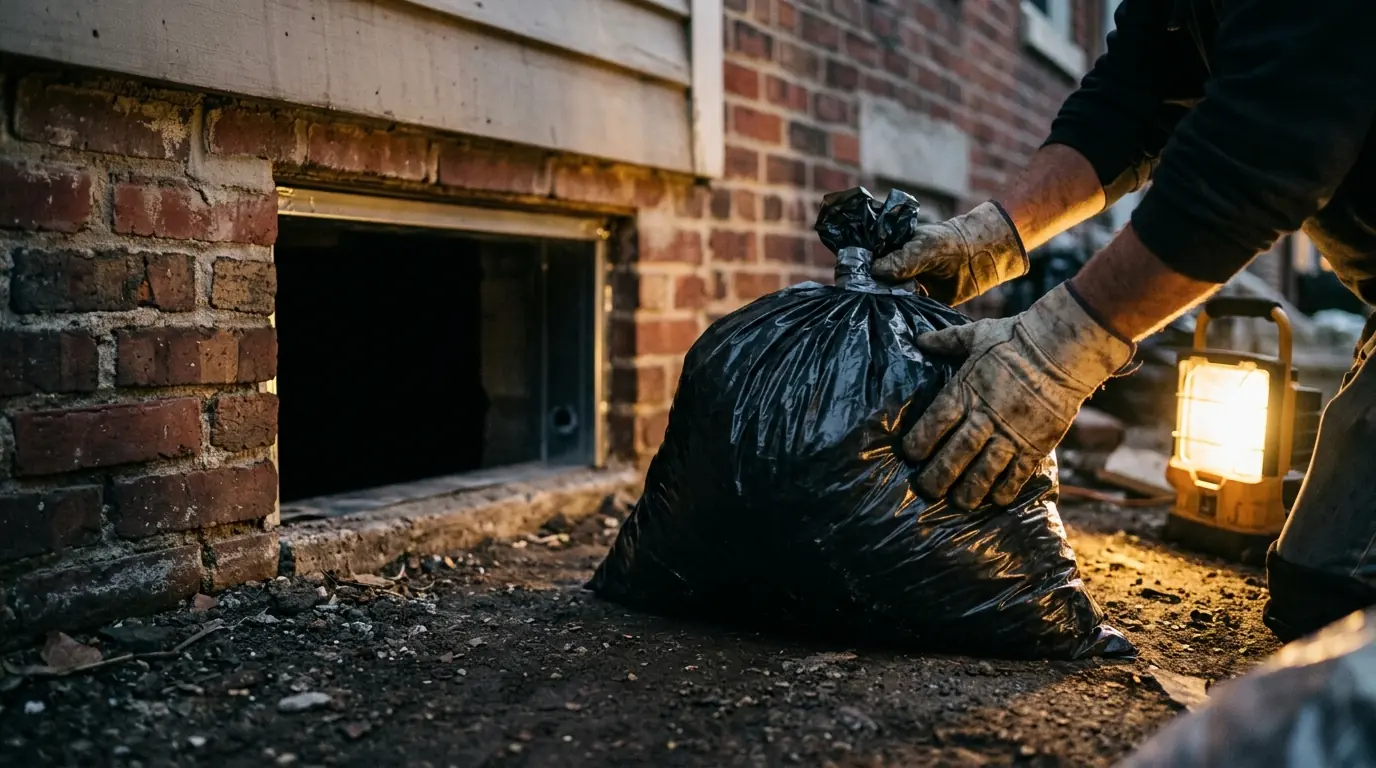
The animal and any soiled insulation or nesting material are bagged and sealed for proper disposal.
Clean, disinfect and deodorize
The cavity is cleaned and disinfected, and odor treatment goes on surfaces and into the room.
Close up or hand off
We cover the opening or leave it ready for your contractor, and note any entry points worth sealing.
Walls, crawlspaces, chimneys and the spaces under porches
Each part of a Philadelphia house brings different access problems. Plaster walls on older homes are harder to open neatly than drywall, so we choose cut lines carefully. Chimneys may hold birds or squirrels that fell in from the top and couldn't climb out. Crawlspaces under additions and enclosed porches are tight, dirty and sometimes damp, and they often hold more than one animal over time.
Front porches and back decks are common spots for larger animals like raccoons and opossums to shelter and, sometimes, to die. Those jobs may mean removing a lattice panel or a section of decking to reach underneath. In attics and the shallow spaces under flat rowhome roofs, the animal is often found in or under insulation, which brings us to the next part of the job.
- Wall cavities between floors and behind kitchen cabinets
- Chimney flues and fireplace smoke chambers
- Crawlspaces under rear additions
- Attics and the low spaces under flat roofs
- Under front porches, back decks and steps
Why the insulation around the animal usually has to go
When an animal decomposes, fluids soak into whatever is beneath it. Fiberglass batts, loose cellulose and the paper facing on insulation hold those fluids and the odor that comes with them. Spraying deodorizer on top doesn't reach it. The affected insulation has to be cut or vacuumed out, bagged and removed.
We remove insulation in a margin around the stain, not just the visible spot, so the odor source is fully gone. The framing and drywall underneath are cleaned and disinfected, and wood that absorbed fluids can be sealed with an odor-blocking primer. If the animal was in an attic that also has heavy droppings from a long-term infestation, our attic insulation decontamination service handles the broader removal and replacement. Sometimes the stain reaches the ceiling below, and we'll show you how far it went so your contractor can plan the patch. In a few cases, a joist or plank needs cleaning on both sides, which we handle while the cavity is open.
Flies, insects and the odor that lingers after removal
A few days after an animal dies, flies often show up, sometimes in large numbers at one window. Small larvae and beetles may appear along floors or ceilings near the source. It's unsettling, but it also helps locate the problem. Once the animal and contaminated materials are out, the insects lose their food source and die off quickly. We vacuum up what's left and clean the surrounding surfaces. Most people find the insect part harder to live with than the smell, so we treat it as a priority.
Odor can linger for a while even after removal, especially in fabrics and porous building materials. We treat the cavity and room with deodorizers that neutralize odor rather than covering it up, and in stubborn cases we use equipment like hydroxyl generators to break down remaining odor molecules. If a strong smell persists through the house, we'll talk with you about a more involved odor treatment.
What shapes the cost of dead animal removal
Every removal is different, and we explain the plan before we start. These factors matter most.
Location of the animal
An animal under a porch is easier to reach than one between floors or deep in a chimney.
Size and number of animals
A single mouse and a family of raccoons call for very different effort.
Wall and ceiling material
Old plaster takes more care to open than modern drywall.
Insulation removal
The amount of soiled insulation that has to come out affects labor and disposal.
Odor treatment
Stronger or longer-lasting odor may need equipment left running for a period.
Homeowner's insurance usually doesn't cover removal of animals that got in on their own, though resulting damage may be handled differently depending on your policy. Landlords sometimes pass the cost through under their lease terms. We give you a written scope with photos so you know what we did and why.