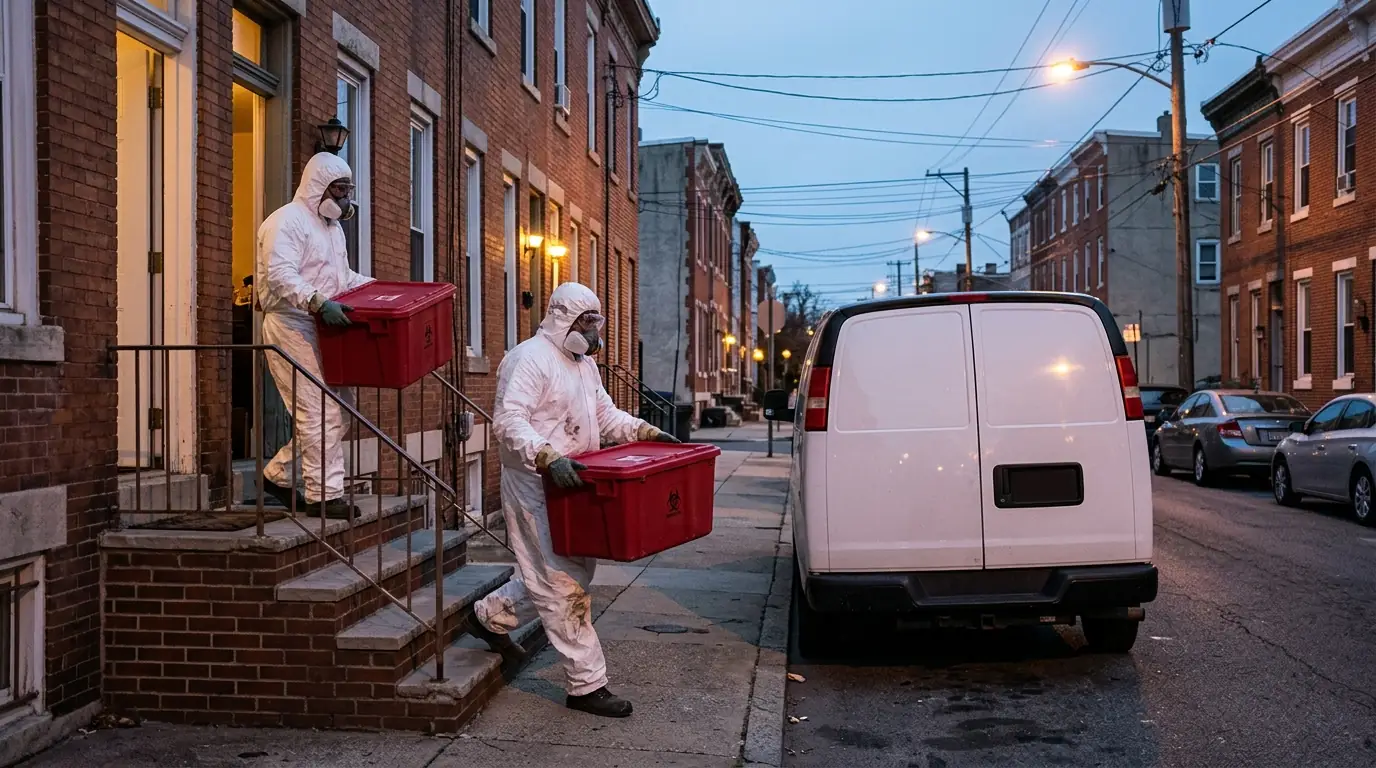
Most of the calls we get about an unattended death start with a wellness check. A neighbor noticed mail piling up, a relative couldn't reach someone for a week, or a landlord smelled something in the hallway. By the time police open the door, natural decomposition has been underway, and the home has changed in ways ordinary cleaning can't undo. The odor alone can travel through a whole rowhome and into the house next door.
None of that is anyone's fault, and none of it should be handled by grieving relatives with a mop and bleach. Fluids from decomposition move downward and outward. They soak into mattresses and carpet, slip between floorboards, and reach places you can't see from the room. Our job is to find every one of those places, take out what can't be saved, and leave the structure clean, sealed and free of odor so the family or owner can decide what comes next.
When to call us for unattended death cleanup
The Medical Examiner has finished
The person who died has been taken into the office's care and police have cleared the home, but the room hasn't been touched.
Odor is spreading
You notice the smell in hallways, the next unit or the house next door, a sign fluids reached structural materials.
Ceilings or floors are stained
Marks on the ceiling below or soft spots in flooring mean contamination went deeper than the surface.
A tenant passed away
Landlords need the unit decontaminated before contents are cleared, repairs start or a new lease is signed.
Family lives far away
Relatives out of state need someone local to manage the cleanup and protect personal items.
Belongings need sorting
Papers, valuables and keepsakes need to be recovered safely from a home that isn't safe to enter yet.
What the Medical Examiner's Office does, and what it leaves behind
In Philadelphia, deaths that happen unattended or without a physician present are reported to the Medical Examiner's Office, part of the city's Department of Public Health. Investigators review the circumstances, and the office transports the person who died for examination when needed. After that, the family works with a funeral home of their choosing to make arrangements.
What the office doesn't do is clean. Once the person has been taken into its care and police have cleared the home, the residence returns to whoever has authority over it: the next of kin, the estate's executor, or the property owner. The bed, chair or floor area where the person was found, and anything that absorbed fluids, stays exactly as it was.
If you need documents from the home for the funeral or the estate, such as a will, insurance papers or a passport, tell us when you call. We can retrieve them during our first visit, cleaned and bagged, so nobody in the family has to enter the affected room before it has been assessed.
Our steps for an unattended death cleanup
Talk through the situation
You call us, and we ask who authorizes the work, when the home was released and which rooms are affected. We set a time that suits the family or owner.
Assess and protect
Technicians in full protective gear inspect the home, photograph conditions, and seal off the affected room with poly sheeting and HEPA air filtration.
Recover personal items
We set aside documents, photographs, valuables and keepsakes, cleaning those that can be cleaned and noting those that can't.
Remove saturated materials
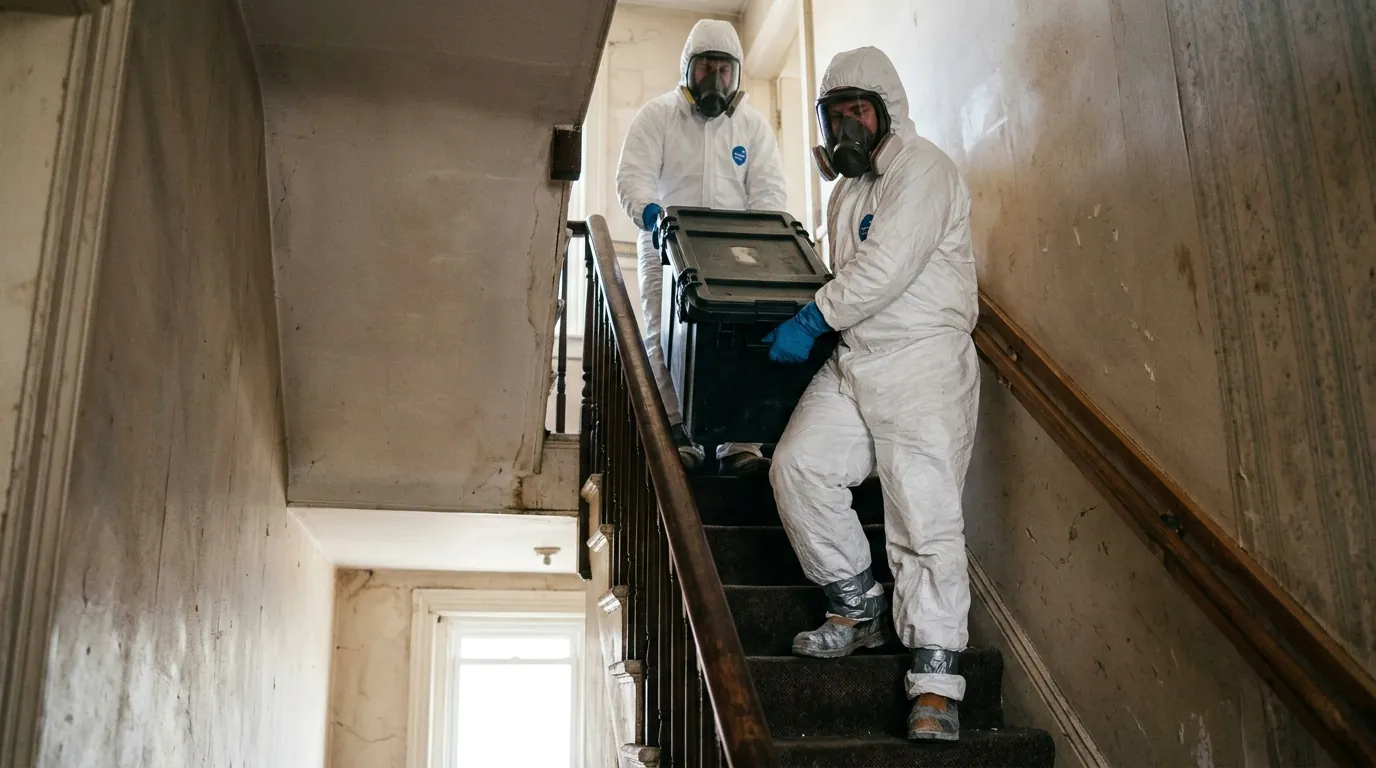
Mattresses, furniture, carpet, pad, flooring layers and subfloor sections that absorbed fluids are packed in red biohazard bags or rigid boxes for disposal.
Disinfect, dry and seal
Exposed framing and remaining surfaces get hospital-grade disinfectant for the full dwell time, then an encapsulating sealer where stains remain. ATP testing checks the result.
Treat odor and hand back
We run the odor treatment suited to the home, take waste to a permitted facility, and walk the finished space with you before we leave.
Why rowhome floors and plaster walls need more than surface cleaning
Much of Philadelphia's housing is brick rowhomes built many decades ago, with wood joists, tongue-and-groove subfloor and plaster on wood or metal lath. These materials are porous. Fluids that reach a finished floor can work through the seams, into the subfloor, and down the side of a joist. In a second-floor bedroom, that can mean a stained ceiling in the living room below. On a ground floor, it can reach the basement.
Walls behave in a similar way. Plaster near the floor can wick moisture upward, and baseboards trap residue behind them. Layers of old linoleum or carpet glued over hardwood, common in older homes, hold contamination between them. We remove each layer until we reach material that tests clean, then disinfect the exposed wood, let it dry, and apply an odor-blocking sealer where staining remains. Skipping those steps is a common reason odors return weeks after a quick job. In attached rows we also check the party wall, since odor can move through gaps around old joist pockets.
Clearing decomposition odor at its source
Odor after an unattended death comes from organic compounds released during decomposition. They cling to fabrics, drywall, plaster and wood, and they spread through ductwork and stairwells. Air fresheners and open windows only mask them for a while. Real odor control starts with removal: when the saturated materials leave the house, most of the smell leaves with them.
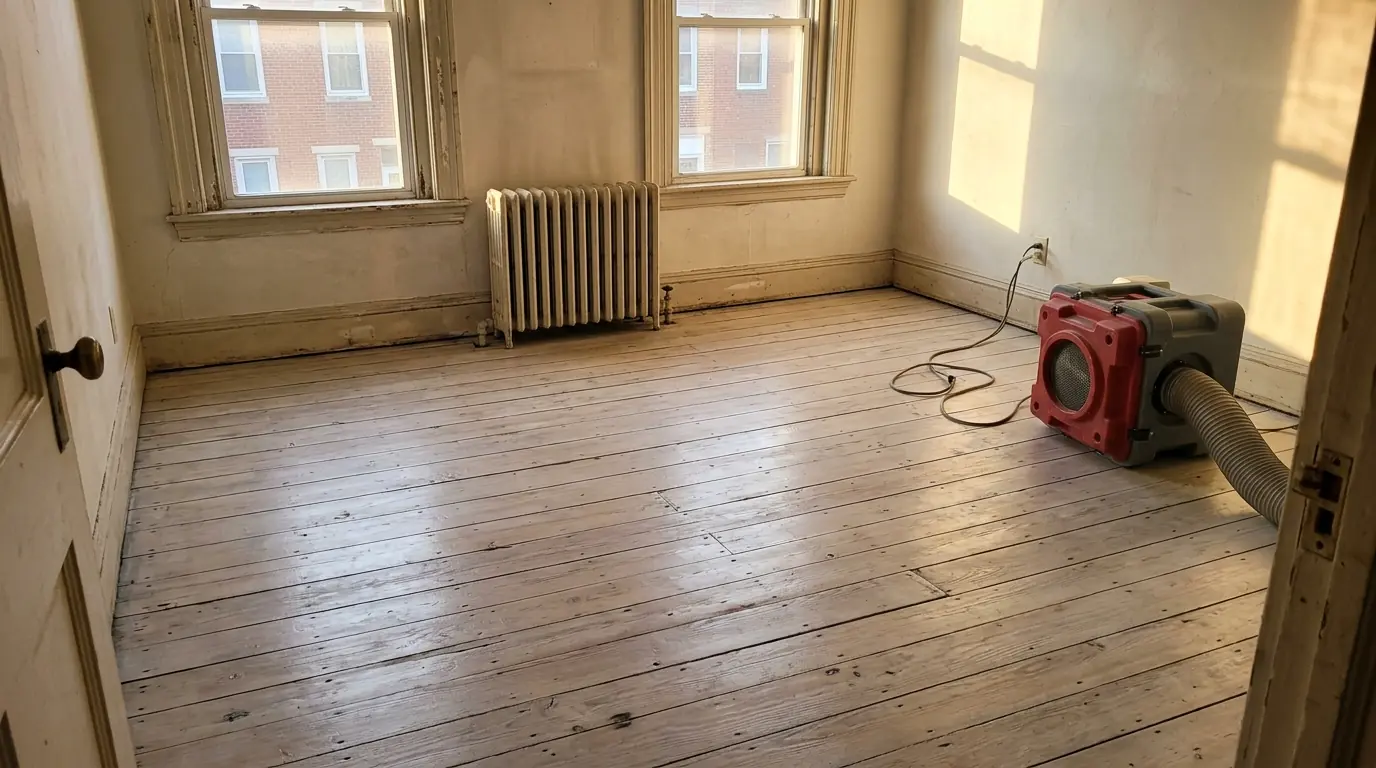
After removal and disinfection, we treat what remains. Depending on the home, that can include HEPA air scrubbing, cleaning or isolating HVAC ducts, thermal fogging, and hydroxyl or ozone treatment when the space can be left empty. Soft items in other rooms, such as curtains, bedding or clothing, may hold odor and need separate cleaning or disposal. For stubborn cases our decomposition odor removal service goes further, but for many homes the work on this page is enough to make the space livable again. We check the result with you in the room, not just with instruments, because your own sense of smell is the final test.
Who arranges the cleanup: family, executor or landlord?
Responsibility usually follows the property. If the person who died owned the home, the estate is responsible, and the executor or next of kin authorizes the work. If they rented, the landlord controls the unit, though the family may still want to recover belongings first. In a condo or apartment building, management may also need to be involved because of shared walls, floors and ventilation.
We often work with more than one of these parties on the same job. A landlord may want the unit cleaned quickly, while a daughter in another state needs time to decide about furniture and keepsakes. We can photograph the contents, set aside personal papers and valuables, and hold sentimental items so nothing is lost while the people involved sort out decisions. Payment arrangements are agreed up front with whoever authorizes the job.
If relatives live out of town, we can work from a key handoff with the landlord or a neighbor and keep you updated by phone at each stage.
What shapes the cost of an unattended death cleanup
The biggest variable is time: how long the person went undiscovered, and how far fluids and odor traveled as a result.
Time before discovery
Longer periods usually mean deeper penetration into flooring, subfloor and walls, and more material to remove.
Type of flooring
Tile over concrete cleans more easily than carpet on old pine subfloor, which often has to be cut out.
Spread to other rooms or units
Damage that reached the ceiling below, a neighboring unit or the ductwork adds rooms to the scope.
Furniture and contents
Beds, recliners and upholstered pieces in the room typically go out as biohazard waste.
Odor treatment needed
A small space may clear with removal and air scrubbing, while a whole house can need several treatment cycles.
Building and access
Third-floor walk-ups, tight rowhome stairways and parking limits on narrow streets add labor.
Homeowner's insurance sometimes covers unattended death cleanup as sudden and accidental damage, though policies vary, so we suggest calling the carrier early. For rentals, the landlord's property policy may respond. We document the work in detail for adjusters and estates, and we agree on who is paying before we start.