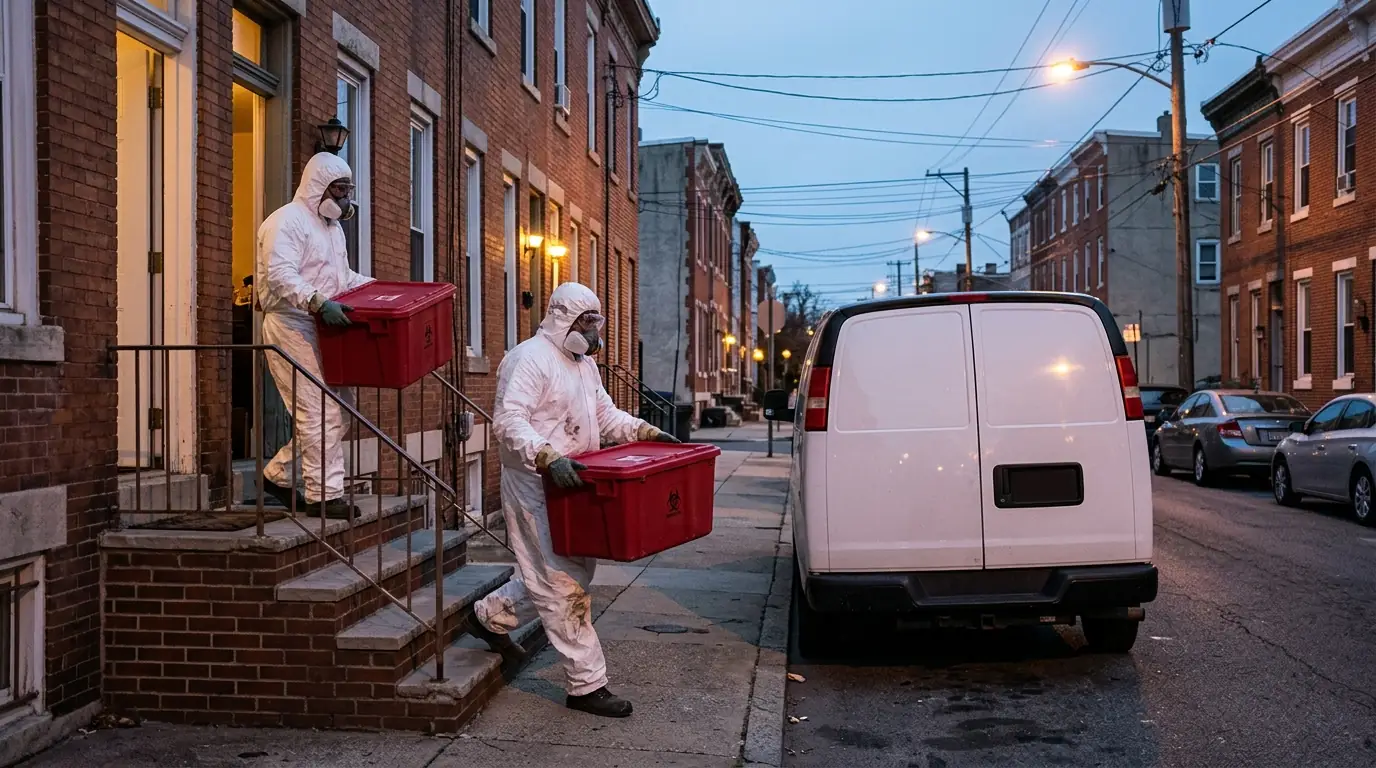
Clandestine drug sites in Philadelphia look different than they do on television. Most aren't meth labs with glassware on the stove. They are rowhomes, apartments, garages or small commercial spaces where fentanyl powder is cut and mixed with xylazine and other additives, bagged for street sale, or pressed into counterfeit pills made to look like prescription tablets. These operations generate a great deal of fine dust. It drifts across rooms, settles in carpet and on high shelves, and gets pulled into heating and cooling systems.
When police or agencies such as the DEA shut a site down, they remove evidence, presses and bulk drugs. They don't decontaminate the building. That job falls to the owner, often a landlord who had no idea what was going on. We work after the property is released, with a plan built around sampling: we find out what is there, remove it, and prove it is gone. Our technicians work in respirators and full protective suits and carry naloxone on every site.
What a pill press or cut house leaves behind
A pill press runs powder through dies at speed, and some of that powder always escapes. Around a press you'll often find dust on floors, tables, walls and window sills, plus spilled binders, dyes and fillers used to make the tablets look real. In a cut house, where powder is mixed and portioned, residue concentrates on work tables, scales, floors and nearby furniture, and it travels on clothing and shoes to the rest of the building.
Other materials show up as well: solvents or acids used in some processing, cleaning products, and piles of packaging. Law enforcement usually removes bulk chemicals and equipment, but leftover containers, stained surfaces and contaminated trash may remain. We treat the whole building as affected until sampling says otherwise, because residue rarely stays in the room where the work happened. Bedrooms, kitchens and basements in the same property can test positive too.
Why the HVAC system matters in drug lab cleanup
Forced air heating and cooling acts like a conveyor belt for fine powder. Return vents pull dust from the work area into the ductwork, and supply vents push it out into every other room. In a rowhome with a single system, that can mean residue in rooms nobody used for processing. In an apartment building, shared systems or chases can carry it between units.
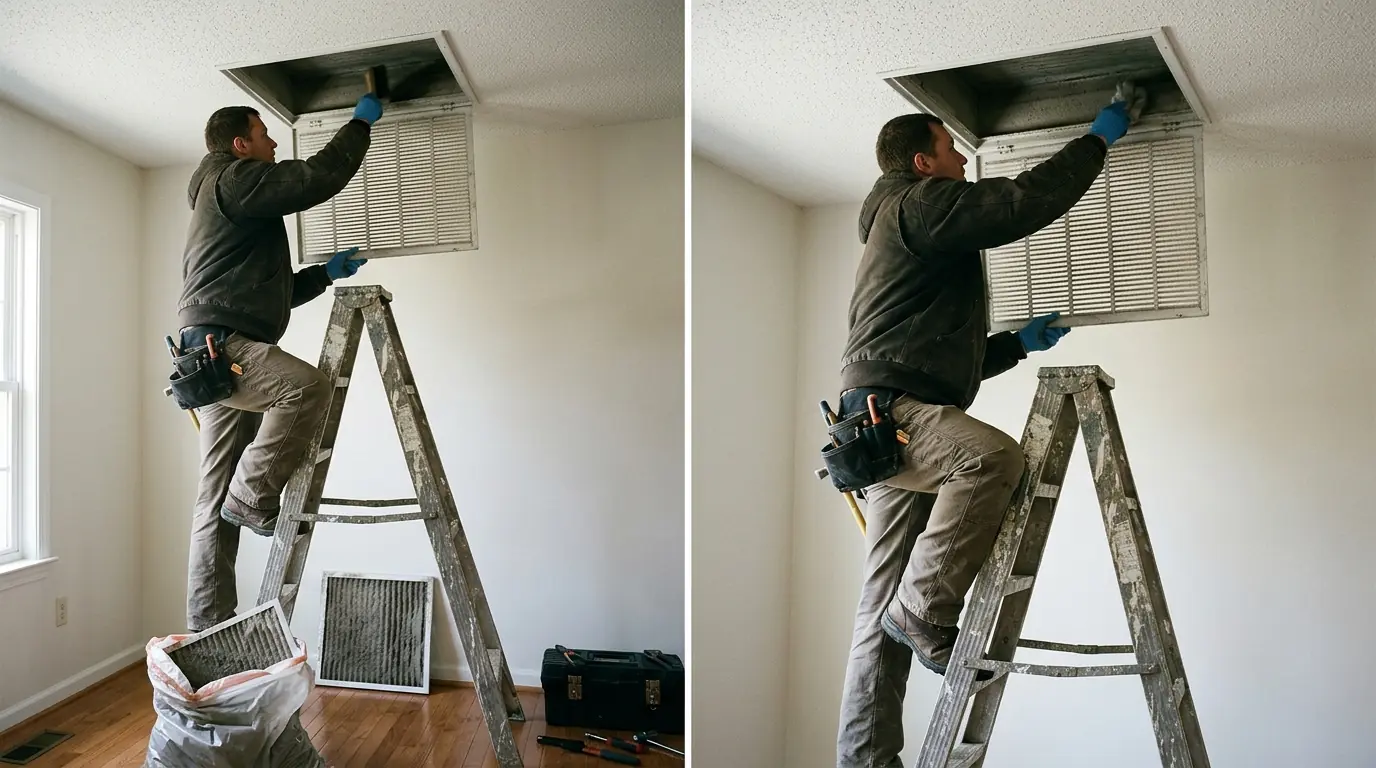
We sample at registers and returns and, where possible, inside the ducts. Depending on the results, we clean ductwork with HEPA-filtered equipment, replace filters, clean the air handler and coil, and replace sections that can't be cleaned. Older Philadelphia homes heated by radiators avoid that particular problem, but window units and box fans still collect dust and are usually discarded. We shut the HVAC system down during the work so it doesn't spread residue while we clean, and it stays off until clearance.
Steps in a drug lab decontamination
Release and site visit
After the agency releases the property, we walk it with you, note what remains, and agree on a sampling plan and clearance target.
Baseline sampling
Wipe samples from work areas, living spaces and HVAC points go to an independent laboratory under chain of custody.
Containment and removal
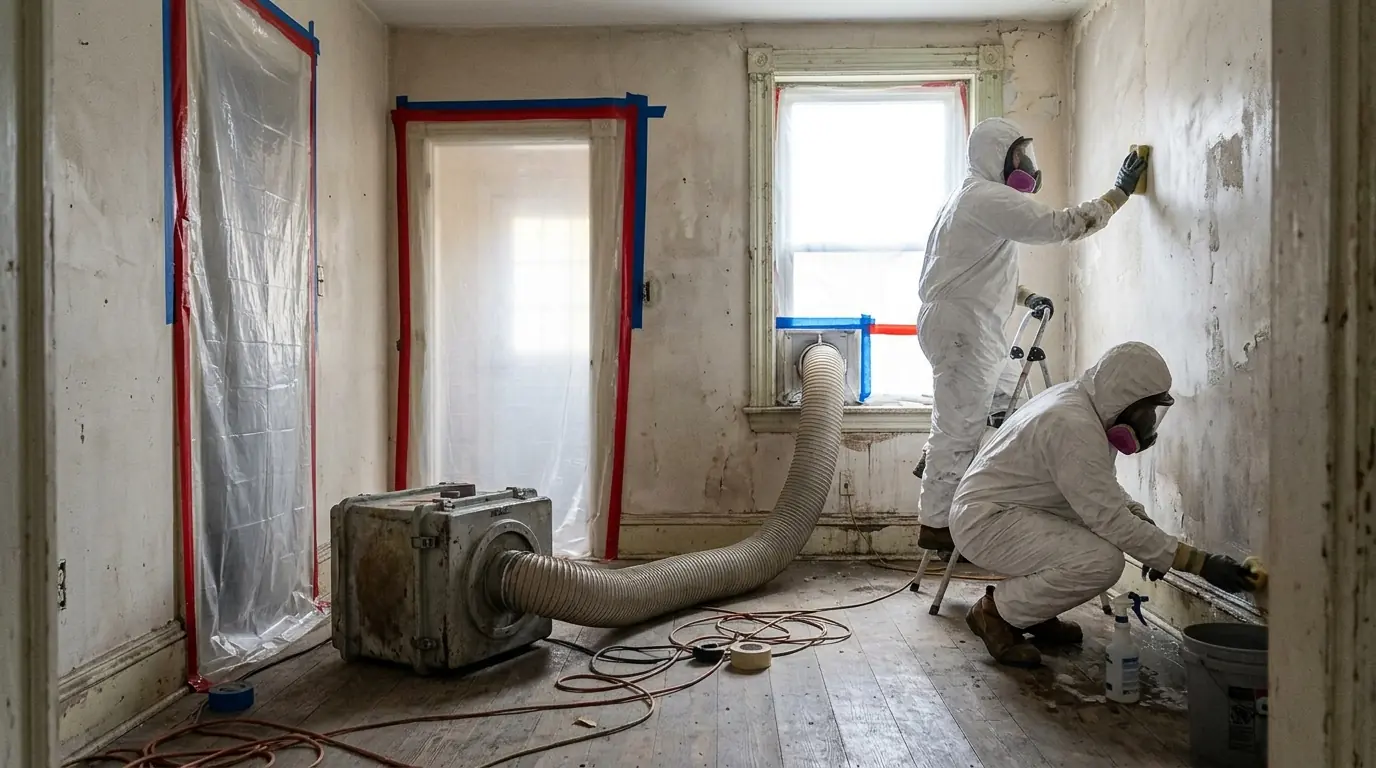
We seal the work zones, set up HEPA air scrubbers, and remove carpet, furniture, drywall or fixtures that cannot be cleaned.
Structural and HVAC cleaning
Hard surfaces get repeated wet cleaning. Ductwork, registers and air handlers are cleaned or replaced based on sample results.
Clearance sampling
We re-sample the baseline locations. Anything over the target is cleaned again and re-tested.
Final report and disposal
You receive lab results, photos, a scope of work and disposal records. Waste leaves in sealed containers for permitted facilities.
How we work after police and agency release
We start only when the property is formally released by Philadelphia Police, the DEA or whichever agency handled the case. Before that, the building is part of an active investigation and nothing should be moved. Once you have the release, we visit with you or your property manager, note what law enforcement left behind, and agree on a sampling plan and a clearance target.
Bulk chemicals and pressing equipment should already be gone. If we find containers of unknown chemicals, we stop and arrange proper hazardous waste handling rather than guessing. Some steps can't wait. If a property has been open to the weather or to people coming and going, we can secure it and start containment the same day while the plan is finalized. We also coordinate with your insurer, your attorney and, if you plan to sell, the buyer's inspector, so everyone works from the same results.
When a property needs drug lab cleanup
Police raided a unit you own
Once the agency releases the property, the remaining residue is the owner's responsibility to address.
You found a pill press or dies
Presses, punches and dies, even after removal, mean powder was handled in quantity in that space.
Powder, dyes or binders on surfaces
Colored dust, scattered white powder or stained tables point to processing activity.
Stacks of scales, bags or sealers
Large quantities of packaging supplies suggest drugs were portioned or packed there.
Unusual chemical containers
Unmarked jugs, solvents or acids left behind need careful handling and sampling.
Neighbors reported heavy traffic
Short visits at all hours sometimes point to a site where drugs were processed, not just sold.
Clearance testing and getting the property back in use
Clearance is what turns a cleaned building into a usable one. After we finish, we take wipe samples from the same locations as the baseline and send them to an independent laboratory. Areas that miss the agreed target are cleaned again and re-tested. Only when every location passes do we give you a final report. If sampling shows a room was never affected, we say so and leave it alone.
That report includes the sampling plan, lab results from before and after, photos, a scope of work, and disposal records for every bag and box we removed. Landlords use it to show the next tenant the unit is safe. Sellers use it to answer questions from buyers and lenders. Some owners also choose to repaint or refinish floors after decontamination, which is cosmetic rather than part of the cleanup, and we'll tell you honestly when it isn't needed.
What drives the cost of drug lab cleanup
Drug lab jobs vary more than most of our work. These are the factors that matter most.
Type of operation
A pill press or cut house with heavy dust takes more work than a small space where drugs were only stored.
Spread through the building
Residue limited to one room is far simpler than residue in every room and the ductwork.
HVAC system
Forced-air systems often need cleaning or partial replacement. Radiator-heated homes usually avoid that cost.
Materials to remove
Carpet, drywall, cabinets and furniture that can't be decontaminated add labor and disposal.
Testing rounds
The number of sample locations, and any repeat clearance rounds, shape the laboratory portion.
Leftover chemicals
Unknown chemicals left on site may need separate hazardous waste handling.
Landlord policies vary on drug lab damage, and many limit or exclude it, so review yours with your agent before work starts. We give you an itemized scope and report that can support a claim or a case against a former tenant. Laboratory charges are listed separately.