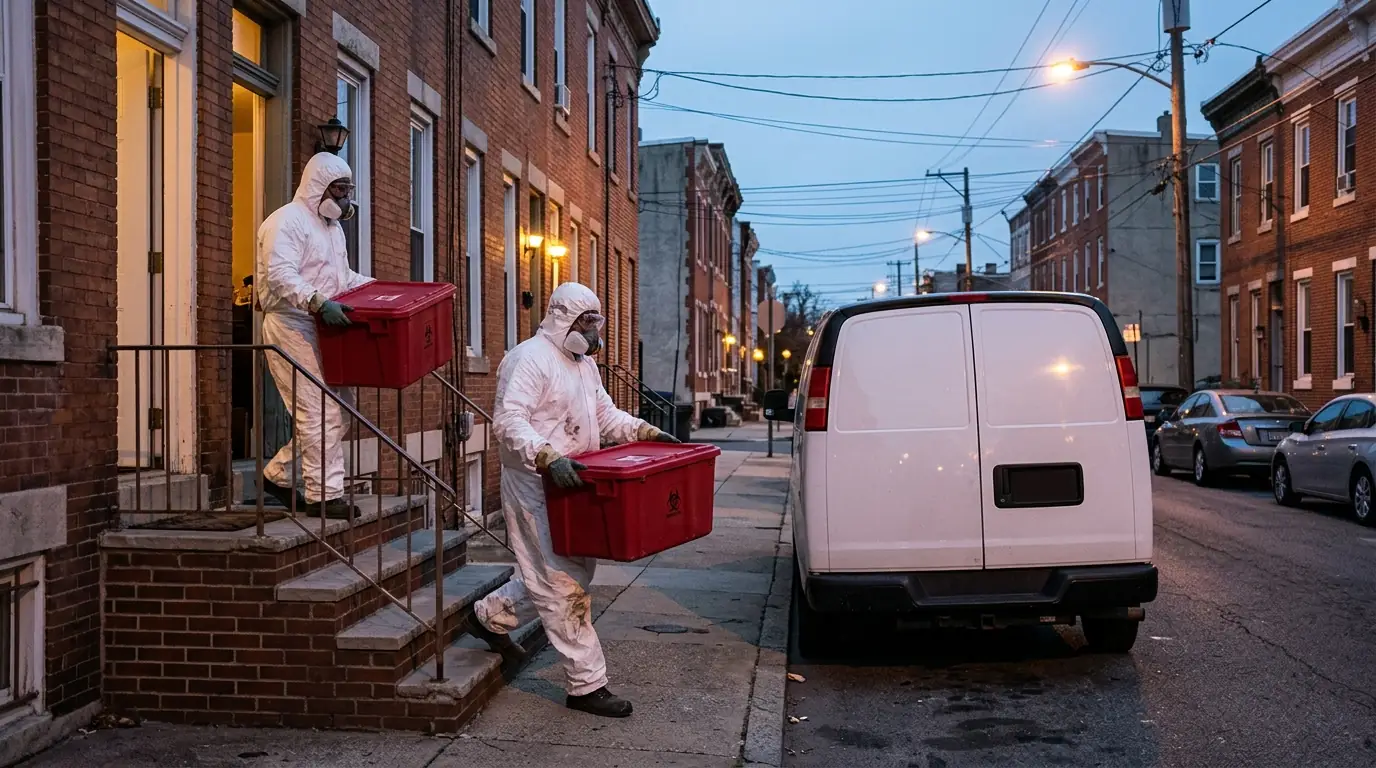
Walk into a rowhome where someone smoked indoors for decades and you know it before the door shuts. The light switch plates are amber. The ceiling over the favorite chair is a shade darker than the rest of the room. Take a picture off the wall and there's a clean rectangle underneath. That yellow brown film is tar and nicotine residue, and it coats everything the smoke touched, including surfaces you can't see, like the inside of the ductwork and the back of the kitchen cabinets.
This is a cleaning and sealing job, not a fire job. Fire damage restoration deals with soot, charring and water from firefighting. Tobacco odor builds slowly, layer by layer, and it is just as stubborn in its own way. We get these calls from landlords turning over a unit after a long-term smoker moves out, from families clearing a parent's house before a sale, and from people who bought a used car that smells like an ashtray the first time the heater comes on.
Why fresh paint alone won't cover smoke odor
The most common thing we hear is that someone already painted and the smell came back. That happens for a reason. Nicotine residue is oily and partly water soluble. Latex paint rolled over it doesn't bond well, and moisture in the new paint can draw the residue up through the film. Within weeks, especially on humid Philadelphia summer days, yellow stains bleed through and the odor returns with them.
Paint also reaches only walls and ceilings. Smoke odor lives in many places a roller never touches: carpet and the pad beneath it, the subfloor where residue has seeped through, curtains, closet shelving, cabinet interiors, window frames, light fixtures, outlet covers and the ductwork that carried smoky air through the house for years.
So the order matters. First, wash the residue off. Second, remove what can't be washed. Third, seal porous surfaces with a shellac or oil based stain and odor blocking primer that locks in anything left behind. Only then does finish paint go on. Skip the washing and the primer is sitting on a greasy film it can't grip. Skip the primer and the paint fails the same way it did before.
Washing tar film off walls, ceilings and fixtures
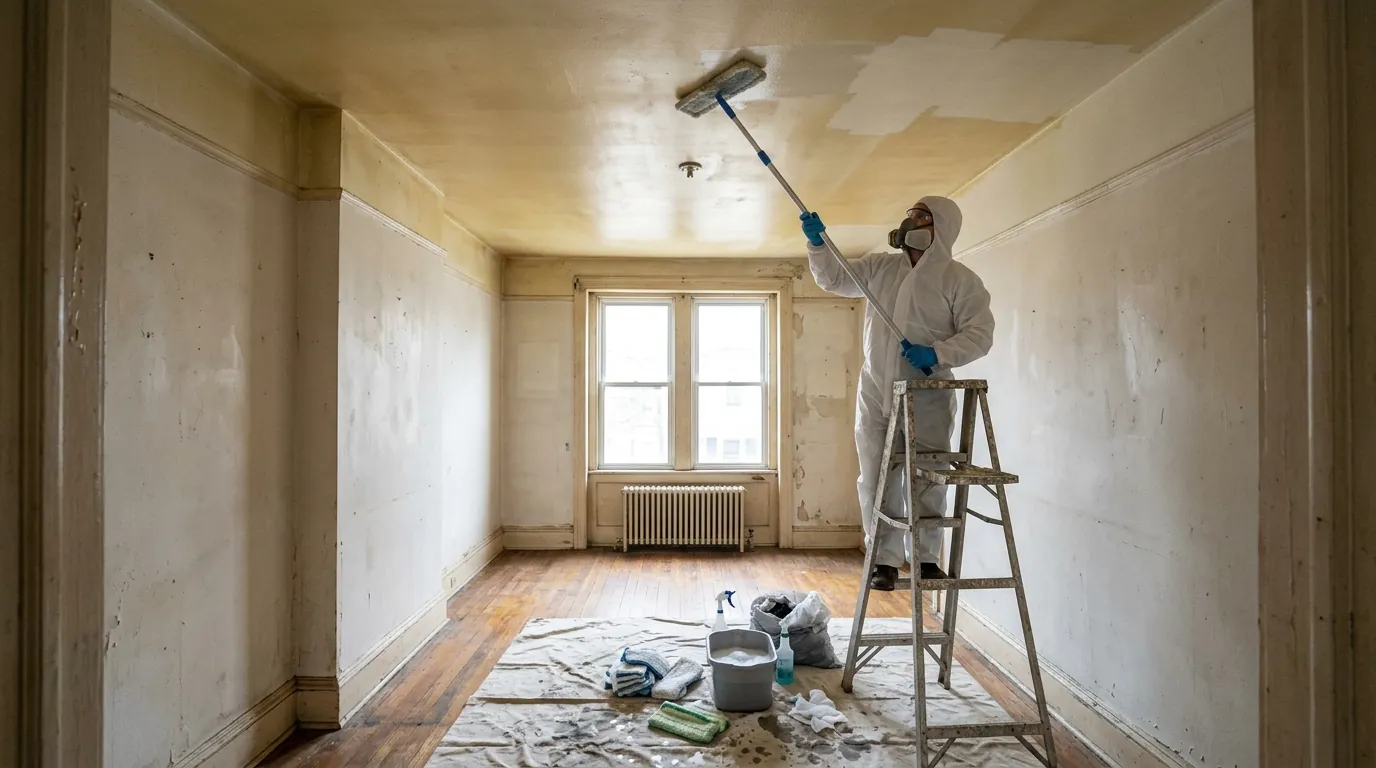
Cleaning comes first because it removes the largest share of the odor source. Our technicians start at the ceiling, where smoke collects most heavily, and work down. We use alkaline detergents made to break down nicotine and tar, applied with sponges and microfiber, then rinsed so no detergent film is left behind. The rinse water often comes off brown, and on heavy jobs the walls need more than one pass.
Hard surfaces get the same treatment: window glass and frames, blinds, doors, trim, baseboards, cabinet faces and interiors, countertops, appliances, light fixtures, ceiling fans and switch plates. Dry chemical sponges help on textured or delicate surfaces where water would do damage.
Some items aren't worth the effort. Old vinyl blinds, cheap light fixtures and heavily stained ceiling tiles often cost less to replace than to clean, and we'll tell you when that's the case. Fabric curtains and some upholstery can go to a textile cleaner, but sofas and mattresses that a heavy smoker used for years usually hold too much odor deep in the foam to recover. Those we bag and remove with your approval.
How we remove smoke and nicotine odor, step by step
Walkthrough and residue check
We look at every room, wipe test walls and ceilings for residue, and check the ductwork and flooring. Then we explain what can be cleaned and what should be removed.
Remove saturated materials
Carpet, pad, ceiling tiles, old blinds and any furnishings you've decided not to keep are bagged and taken out.
Wash every surface
Ceilings, walls, trim, cabinets, windows and fixtures are cleaned with detergents made for nicotine and tar, then rinsed.
Clean the ductwork and registers
Accessible ducts, grilles and registers are cleaned and the filter is replaced, so the system stops carrying old residue.
Seal porous surfaces
Walls, ceilings and subfloors get a stain and odor blocking primer, ready for finish paint and new flooring.
Treat the air
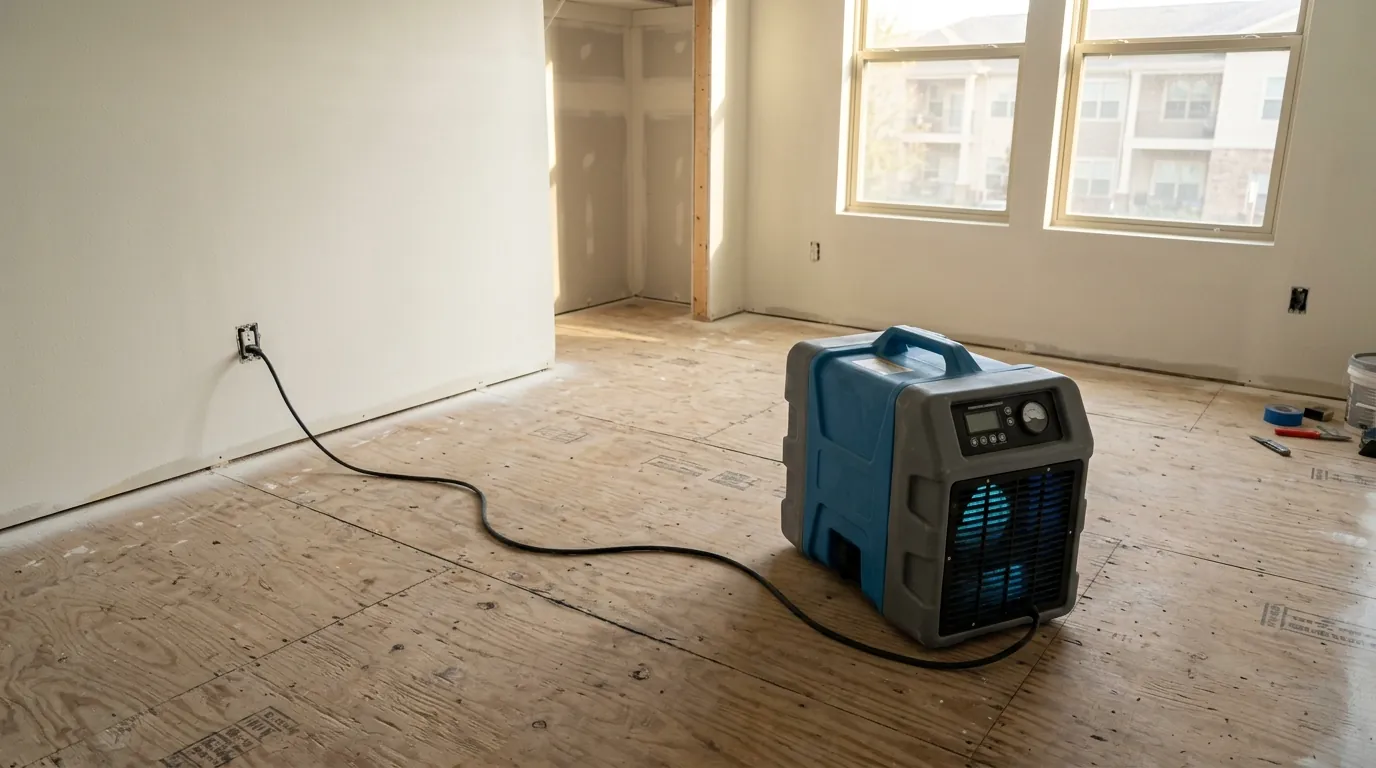
Hydroxyl runs where people are around. Ozone runs only in empty, closed spaces, followed by airing out before anyone returns.
Carpet, pad and ductwork: where the smell hides
Carpet acts like a filter in a smoker's home. Ash, tar and residue settle into the fibers, and the pad underneath soaks up whatever comes through. Steam cleaning can brighten the top of the carpet, but it rarely reaches the pad, and the added warmth and moisture can make the odor stronger for a few days. In most heavy smoker units we recommend pulling carpet and pad, then cleaning and sealing the subfloor before new flooring goes in.
Ductwork is the other hidden source. Every time the system ran, it pulled smoky air through the returns and pushed it back out through the supply vents. Residue builds up inside the ducts, on the blower and on the coil. If the ducts aren't cleaned, the first cold snap sends the old smell through the whole house again.
We clean accessible ductwork, registers and grilles, and the system filter gets replaced. Coil and blower cleaning, or ducts that are damaged or lined with fiberglass, may call for your HVAC contractor, and we'll flag that during the walkthrough so it can happen before the final air treatment.
When smoke odor needs more than airing out
Yellow or brown film on walls
If a damp white cloth comes off a wall tinted yellow, there is enough residue to keep the smell coming back.
Clean outlines behind pictures
Lighter rectangles where frames hung show how much residue covers the rest of the wall.
The smell returns when the heat runs
Odor that rises when the furnace or air conditioning kicks on usually points to residue in the ductwork.
Paint has already failed once
Stains bleeding through new paint mean the residue underneath was never removed or sealed.
A unit needs to turn over
Landlords preparing a long-term smoker's unit for the next tenant need it odor free before showings.
A used car smells like an ashtray
Cars hold smoke in the headliner, seats, carpet and cabin air system, where air fresheners only mask it.
Hydroxyl or ozone: which one fits your situation
After cleaning and sealing, air treatment takes care of odor molecules still lingering in the air and in places we couldn't reach. We use two tools, and choosing between them depends on whether anyone needs to be in the space.
Hydroxyl generators produce hydroxyl radicals, which break down odor compounds in the air and on surfaces. They work more slowly, but they are safe to run with people, pets and plants present. That makes them the right choice for an occupied apartment, a home where family is still sorting belongings, or a rowhome where the neighbors share a wall.
Ozone works faster and reaches deeper into porous materials, but it irritates the lungs and can break down rubber and some fabrics with long exposure. We run ozone only in empty, closed spaces: a vacant unit between tenants, an estate home with nobody living in it, or a car. People, pets and plants stay out while the machine runs, and the space is aired out before anyone goes back in.
Neither tool replaces cleaning. Run ozone in a dirty room and the smell returns as soon as the residue warms up.
What shapes the cost of smoke and nicotine odor removal
Smoke odor jobs vary with how long the smoking went on and how much of the home it reached.
Years and volume of smoking
A unit with decades of heavy indoor smoking needs more washing passes than one with lighter, shorter exposure.
Size of the space
A studio apartment, a three story rowhome and a sedan are very different jobs.
Flooring removal
Pulling carpet and pad and sealing the subfloor adds labor and disposal.
Ductwork
Homes with long duct runs or more than one system take longer to clean.
Sealing and treatment time
Primer coverage and how long hydroxyl or ozone needs to run both affect the schedule.
Contents in the space
Furnished homes take longer, since belongings must be moved, cleaned or removed before walls and floors.
Odor from years of indoor smoking is gradual, so homeowner's insurance typically doesn't cover it. Landlords sometimes apply part of a security deposit toward the work when a lease bans indoor smoking, and estate homes are usually paid for by the estate; check with your attorney or the executor. We agree on scope before work begins so the bill reflects what was actually done.