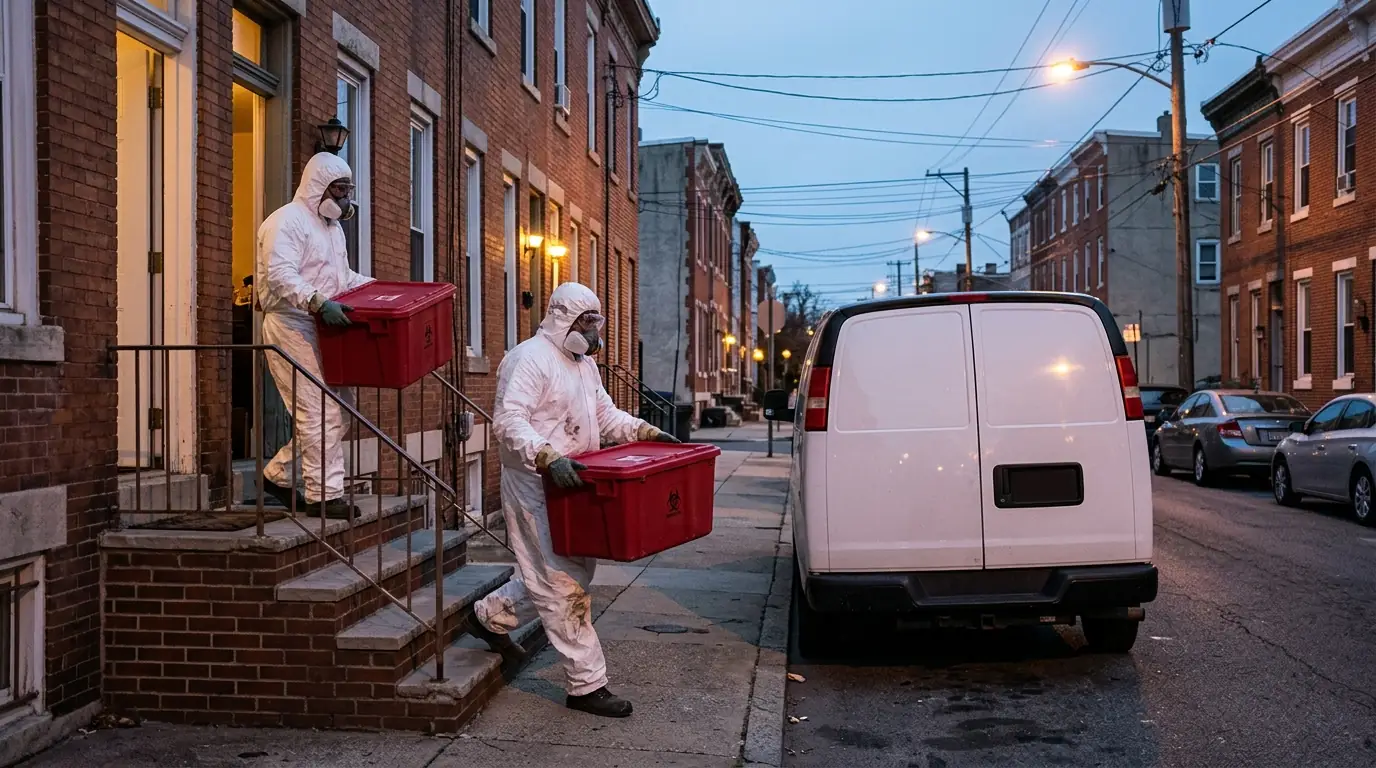
After a serious injury, everyone's attention follows the person in the ambulance. That's exactly how it should be. But someone eventually has to walk back into the kitchen where a grandparent fell, the warehouse aisle where a blade slipped, or the yard where a dog turned on a child. What's left there is usually more than anyone expects: blood on surfaces and fabrics, used gloves and dressings from paramedics, and a strong sense that the space isn't safe to use.
Trauma scenes differ from crime scenes in one useful way. In most cases nobody has to wait for a police release, so the space is yours as soon as emergency crews leave. Cleanup can start quickly, often before the injured person comes home from the hospital. We bring the same protective gear, disinfectants and waste handling we'd use anywhere blood is involved, scaled to the size of the scene in front of us.
When to call us for trauma scene cleanup
A fall left blood behind
Someone was hurt on stairs, in a bathroom or on a hard floor, and blood reached carpet, grout or walls.
An employee was injured at work
A cut, crush or other injury left blood on equipment, floors or workstations.
A dog attack happened at home
Blood is on floors, steps, furniture or outdoor concrete after a bite or attack.
Paramedics worked in the room
Medical packaging, gloves and dressings remain alongside contamination from the injury.
Someone is coming home soon
The injured person will be discharged and the space needs to be ready and safe.
Children or pets live there
Little hands and paws find residue adults miss, so thorough disinfection matters.
Falls and household injuries in older Philadelphia homes
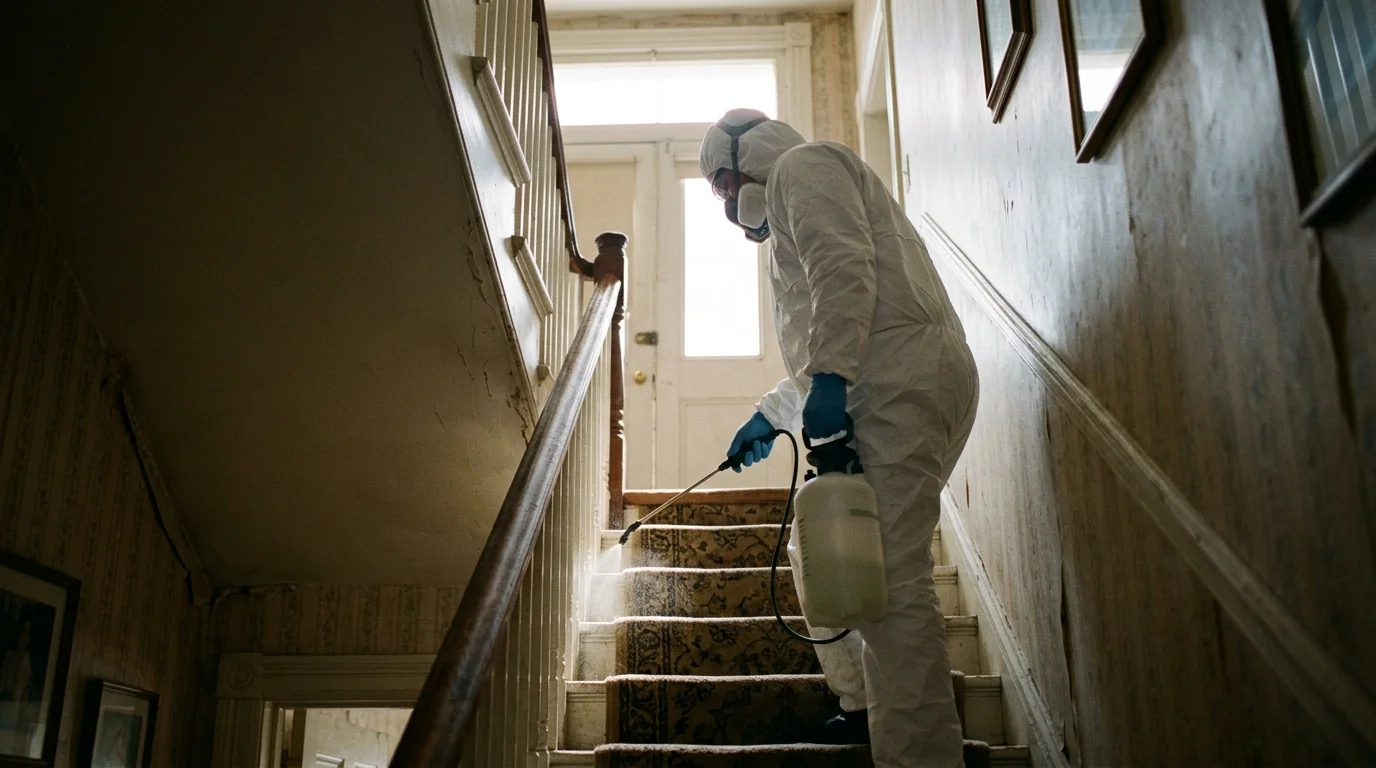
Steep, narrow staircases are a fact of life in Philadelphia rowhomes, and falls on them are a well-known hazard, especially for older residents. A head injury can bleed heavily even when it isn't life-threatening, and the result often spreads across stair treads, carpet runners, the wall beside the banister and the floor at the bottom. Bathrooms are another frequent location, where tile looks easy to clean but grout and caulk can hold residue.
We treat each surface according to what it's made of. Sealed tile and finished hardwood can usually be cleaned and disinfected in place. Carpet runners, the padding beneath them, and fabric furniture that absorbed blood generally have to be removed. Painted plaster walls can be cleaned, but heavily stained areas may need sealing before repainting. When the person comes home, especially if they're still recovering, the stairs and bathroom they'll use should be fully disinfected, not just wiped.
How we handle a trauma scene cleanup
Quick call, quick plan
Tell us what happened, where, and roughly how large the affected area is. We'll set a time and explain what to expect.
Protect and isolate
Technicians in protective gear set boundaries around the affected area so nobody walks contamination into clean rooms.
Collect debris and remove materials
Medical debris goes into red biohazard bags and sharps into rigid containers. Absorbent materials that can't be saved are removed.
Clean and disinfect each surface
We clean first, then apply hospital-grade disinfectant for its full labeled dwell time on every affected surface.
Verify and document
ATP swabs confirm high-touch areas are clean, and we record the work with photographs and notes for insurance or workplace files.
Return the space
Waste travels to a permitted facility, and the area is handed back clean, dry and ready to use.
Workplace injuries and your responsibilities under OSHA
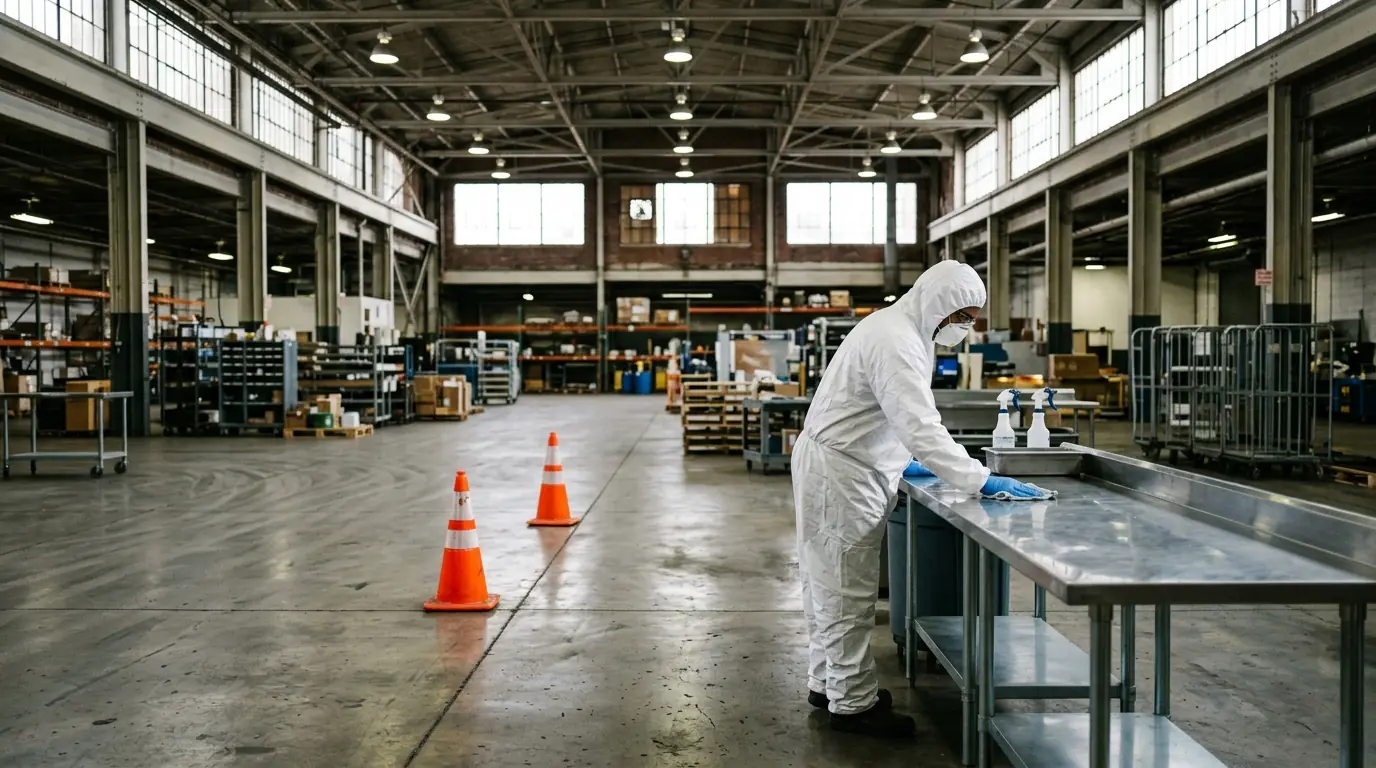
When an employee is injured at work, cleanup is also a compliance question. OSHA's bloodborne pathogens standard sets rules for how employers protect workers who may come into contact with blood, including decontamination, protective equipment and the handling of regulated waste. Asking an untrained worker to mop up after a coworker's injury can expose them to exactly the risk the standard is meant to prevent.
We work in warehouses, restaurants, gyms, shops, offices and job sites across Philadelphia and the suburbs. Before we start, check whether your safety officer, insurer or an OSHA inspector needs the area left as it is for a short time. Serious injuries such as amputations or in-patient hospitalizations have their own reporting rules. Once you're clear to proceed, we isolate the area, clean and disinfect equipment and surfaces, package waste correctly, and give you written records showing what was done. Those records are useful for workers' compensation files and internal incident reports.
Cleaning up safely after a dog attack
Dog bites and attacks happen in kitchens, backyards, front steps and shared hallways. The injuries can bleed significantly, and the scene often includes torn fabric, overturned furniture and outdoor surfaces like concrete or pavers that soak up more than people expect. If animal control or police were involved, follow their instructions about the animal before anyone starts cleaning.
Concrete steps and patios are porous, so we use methods that reach into the surface rather than just rinsing it, and we keep runoff out of storm drains. Indoors, we look for marks on lower walls, cabinet fronts and door bottoms at a dog's height, which are easy to miss. If the dog lives in the home, we also clean its bedding, crate and feeding area where they were affected, so the household can settle back into a routine without lingering traces. Children's play areas get special attention before kids return to them.
Getting the space ready before the injured person comes home
Coming home after an injury is hard enough without seeing reminders of the worst day. Families often ask us to finish before a discharge date, and we plan around that whenever we can. Besides cleaning the scene itself, we gather the medical debris paramedics often leave behind: glove wrappers, gauze packaging, IV caps and similar items. Those go into sealed bags with the rest of the waste.
We also think about the path the person will use. If they'll be on crutches or in a wheelchair, the route from the front door to the bedroom and bathroom should be clean, dry and clear. We put furniture back where it belongs, leave floors bare and dry where a rug had to go, and air the rooms so the house smells like home rather than disinfectant. A short walkthrough at the end lets you confirm everything is ready before they arrive home.
What shapes the cost of trauma scene cleanup
Trauma scenes range from a small area on tile to a large spread across fabric, concrete and equipment, so price follows the scope.
Size of the area
How far blood spread and how many surfaces it touched is the main driver of labor.
Surface types
Sealed tile and metal clean quickly, while carpet, upholstery and bare concrete take more work or removal.
Equipment and machinery
Workplace tools and machines may need careful cleaning around moving parts and controls.
Outdoor areas
Steps, patios and driveways need methods that reach into porous surfaces and control runoff.
Urgency and timing
After-hours work or a deadline before a discharge or shift change can affect scheduling.
Homeowner's insurance often covers sudden accidents at home, and workplace cleanup may fall under a business policy. Dog attack cleanup is sometimes covered by the dog owner's homeowner's or renter's liability coverage. We provide itemized records to whichever carrier is involved and explain our billing before we begin.