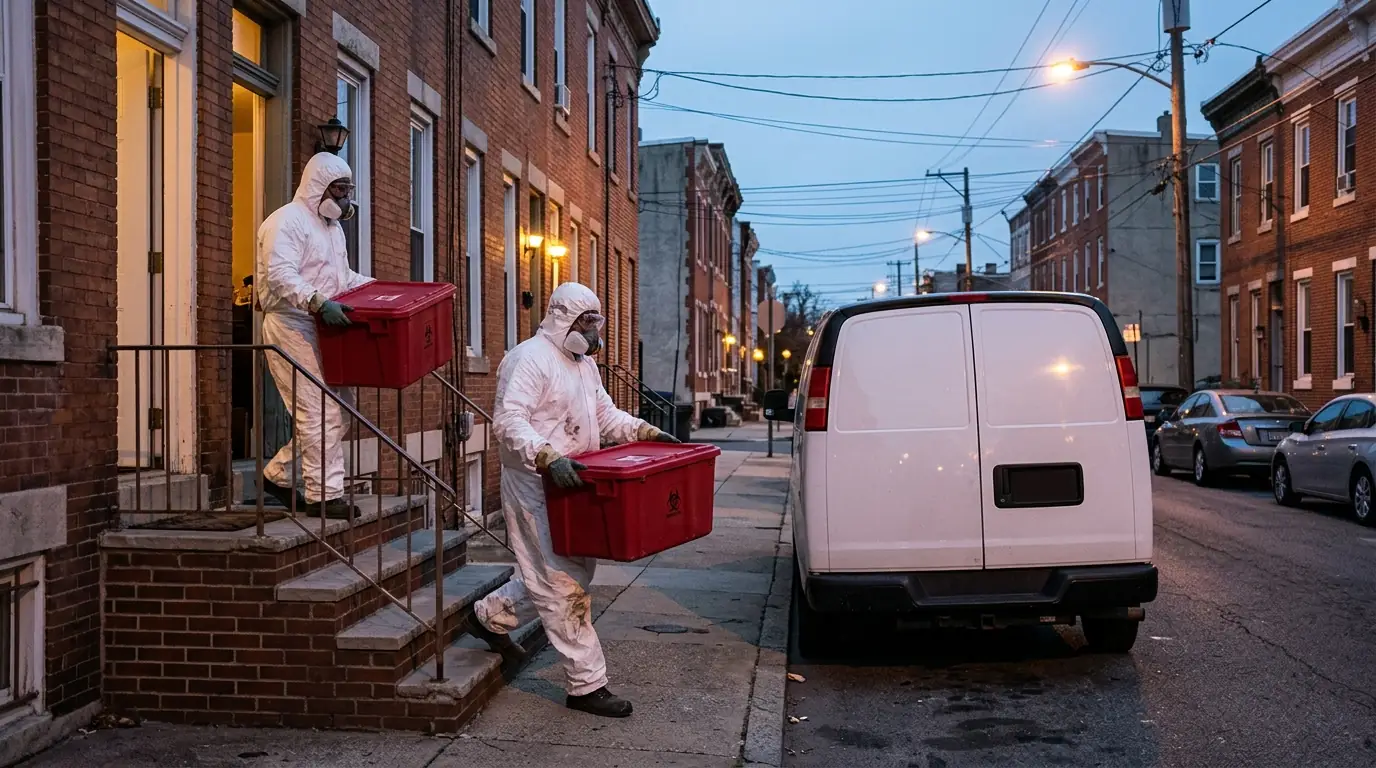
When a stomach bug sweeps a daycare or a gym member reports a MRSA infection, the question is rarely whether to clean. It's how to clean so the work actually matters. A quick wipe with a household spray often removes visible dirt while leaving germs alive, because the product dried too fast or was never rated for that organism. Disinfection depends on matching the right product to the germ and giving it time to work.
Our technicians handle this for families caring for someone recovering at home, for school business managers after a norovirus cluster, for office managers following a confirmed case, and for gym and daycare owners who need rooms back in use. We work around your hours across Philadelphia and the surrounding counties, and we'll be straight with you about what disinfection can and can't do. It reduces germs on surfaces. It doesn't make a building immune, and we won't tell you otherwise.
When to schedule infectious disease disinfection
A cluster of stomach illness
Several children, students or staff with vomiting or diarrhea in a short period suggests norovirus, which spreads easily from surfaces.
A confirmed MRSA case at a gym or team
Skin infections in athletes or members point to shared mats, benches and locker rooms that need focused disinfection.
C. diff in a household member
After a hospital stay or antibiotic course, C. diff at home calls for sporicidal products in the bathroom and sickroom.
Flu or COVID-19 in a workplace
A confirmed case in a shared office often leads managers to disinfect the person's workspace and common areas.
Before reopening after an outbreak
A school, daycare or facility closing to stop spread can reopen on a fresh start after a full disinfection.
A family member coming home from the hospital
Disinfecting the home before or after recovery helps protect others in the household.
Matching the disinfectant to MRSA, C. diff, norovirus and other germs
Germs are not equally easy to kill. Enveloped viruses such as influenza and the virus that causes COVID-19 have a fragile outer layer, and many registered disinfectants work well on them. MRSA is a bacterium that most hospital-grade disinfectants handle when used correctly. Norovirus is tougher, and fewer products carry a label claim against it.
C. diff is the hardest of the common ones. It produces spores that survive many standard disinfectants, so it calls for a product specifically registered as effective against C. diff spores, which often means a bleach-based or other sporicidal product.
The EPA keeps searchable lists of registered disinfectants by organism. List N covered products for the virus behind COVID-19, List K covers C. diff spores, and List G covers norovirus. We check the label of every product we bring for the organism involved. If someone suspects tuberculosis exposure, we'll be direct with you: TB spreads mainly through the air, so surface disinfection is a small part of the response. Ventilation and guidance from the Philadelphia Department of Public Health matter much more.
How our disinfection visits work
Identify the germ and the space
We ask what illness is suspected or confirmed, which rooms were used, and who uses them. That decides the product and the plan.
Choose a label-matched disinfectant
We select an EPA-registered product whose label lists the organism and confirm it's suitable for the surfaces involved.
Clean surfaces first
Technicians in gloves and protective gear clean high-touch and soiled surfaces with detergent to remove anything that could shield germs.
Disinfect for full dwell time
We apply the disinfectant by hand or electrostatic sprayer and keep surfaces wet for the time the label requires.
Handle soft items and waste
Bedding, cloth toys and soiled materials are bagged for laundering or disposal, and used gear leaves in sealed bags.
Document the work
You receive a record of areas treated, products used and contact times, useful for parents, staff or inspectors.
Dwell time: why disinfectant has to stay wet
Every disinfectant label lists a contact time, also called dwell time. That's how long the surface has to stay visibly wet for the product to kill the germs it claims. For some products it's under a minute. For others, especially those rated for norovirus or C. diff spores, it can be several minutes or longer.
Spraying and wiping right away is the most common reason disinfection fails. The product is on the surface for seconds instead of minutes. We apply enough product, use the label's stated method, and reapply if a surface starts drying before time is up.
Cleaning comes first. Dirt, body oils and dried fluids can shield germs from a disinfectant, so we clean surfaces with a detergent before disinfecting. On a bathroom stall or a daycare changing table, that first step matters as much as the disinfectant itself.
- Clean first so dirt can't shield germs
- Use a product whose label lists the organism
- Keep surfaces wet for the full label contact time
- Rinse food-contact and child-contact surfaces when the label says to
Schools, daycares, gyms and offices each need a different plan
A daycare has toys, cribs, changing stations and low surfaces that children mouth and touch constantly. We focus on those, choose products whose labels allow use on child-contact surfaces, and rinse when the label requires it. Soft toys and nap mats get separate handling.
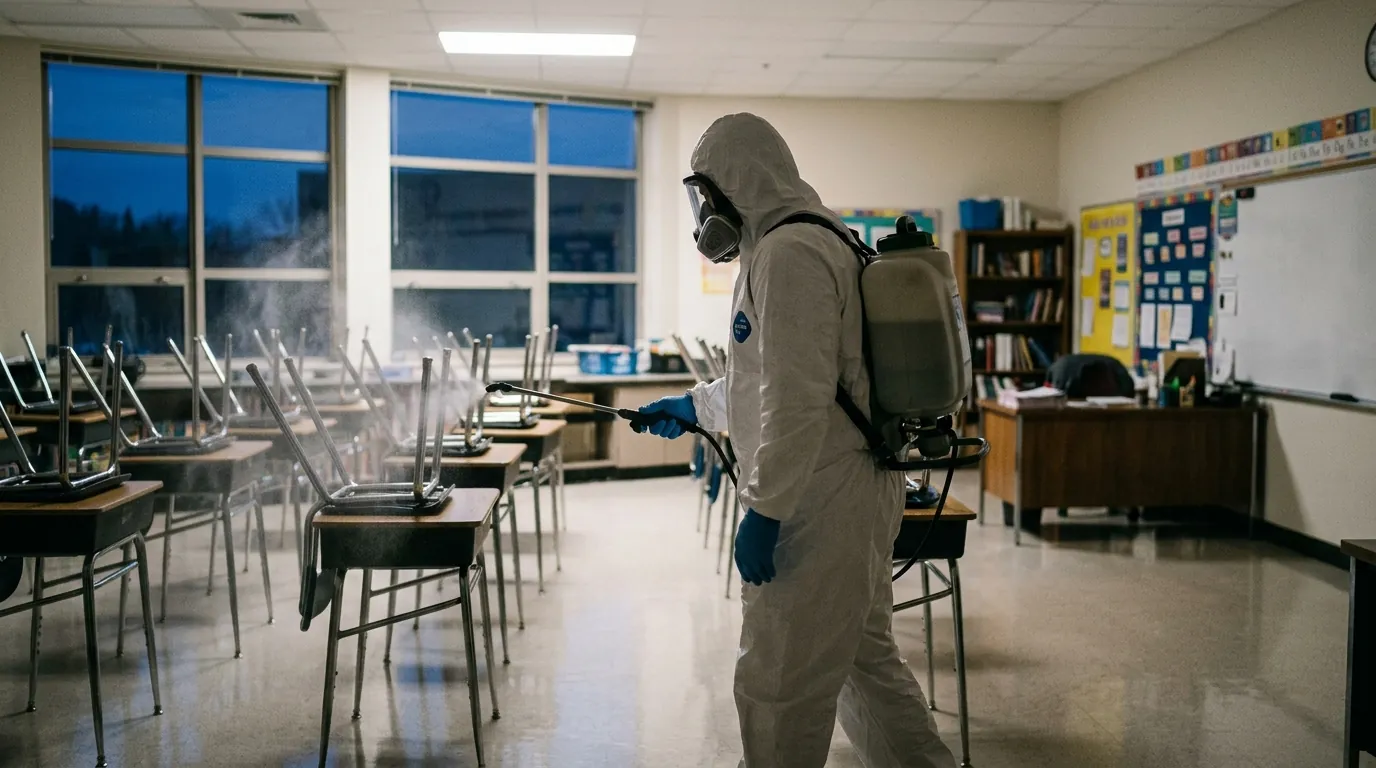
Schools have long rows of desks, shared restrooms, cafeteria tables and gym equipment. After a norovirus cluster, restrooms and cafeteria areas come first, along with door handles, stair rails and water fountains. We usually work evenings or weekends so classes aren't interrupted.
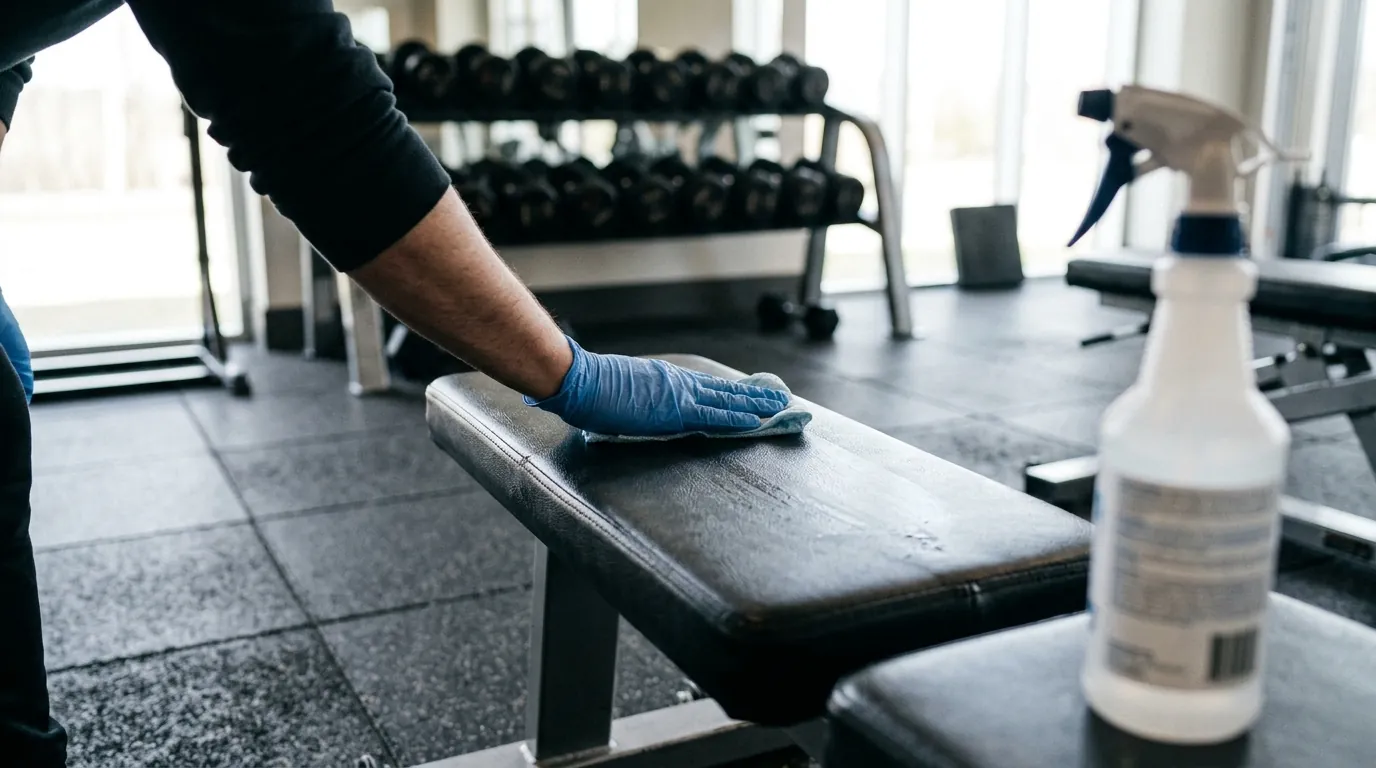
Gyms deal with MRSA and other skin-borne germs on mats, benches, grips and locker rooms. Shower floors and drains get attention too. Offices need keyboards, phones, shared kitchen appliances, conference tables and elevator buttons covered, with care around electronics.
In a private home, we focus on the sick person's room, the bathroom they used, and shared spaces such as the kitchen and living room. We bag bedding and soft items for laundering or disposal with your approval.
Electrostatic spraying, fogging and what we won't promise
Electrostatic sprayers give disinfectant droplets a charge so they wrap around curved and hard-to-reach surfaces, such as chair legs, gym equipment and the backs of keyboards. They help coverage in large rooms, but only when the product's label allows that application method. They never replace wiping down high-touch surfaces by hand.
We are careful with fogging claims. Fogging an entire room is not a substitute for cleaning and correct dwell time, and many disinfectants are not labeled for that use. When we fog, it's with a product approved for it, as one part of the work.
We also won't promise a germ-free building. Any business that does is overselling. Disinfection cuts down the germs on surfaces at the time of treatment, and people can bring new ones in the next morning. What we can give you is a documented treatment: which areas were cleaned, which product was used, and how long it stayed on. If you need proof of results, ATP testing can measure surface cleanliness before and after.
What shapes the cost of infectious disease disinfection
The organism and the size of the space matter most. We quote after a short call about what happened and where.
Square footage and room count
A single sickroom is very different from a full school wing or a gym floor with locker rooms.
The organism involved
Sporicidal work for C. diff and norovirus-rated products usually take longer contact times than products for influenza.
Number of high-touch surfaces
Daycares, gyms and offices packed with equipment and shared items take more hand wiping.
After-hours scheduling
Evening, weekend or overnight work keeps your building open during the day.
Soft goods and visible soiling
Vomit or diarrhea cleanup, bedding and soft toys add cleaning and disposal time.
Recurring visits
Some facilities choose repeat disinfection during an outbreak, which changes how the work is scheduled.
Disinfection after an illness is usually not covered by homeowner or business insurance, though it is worth asking your carrier. Businesses and schools are generally billed directly, and we give you a written scope before work starts so you can approve it.