Trinity houses and small rowhomes: why tight spaces change the cleanup
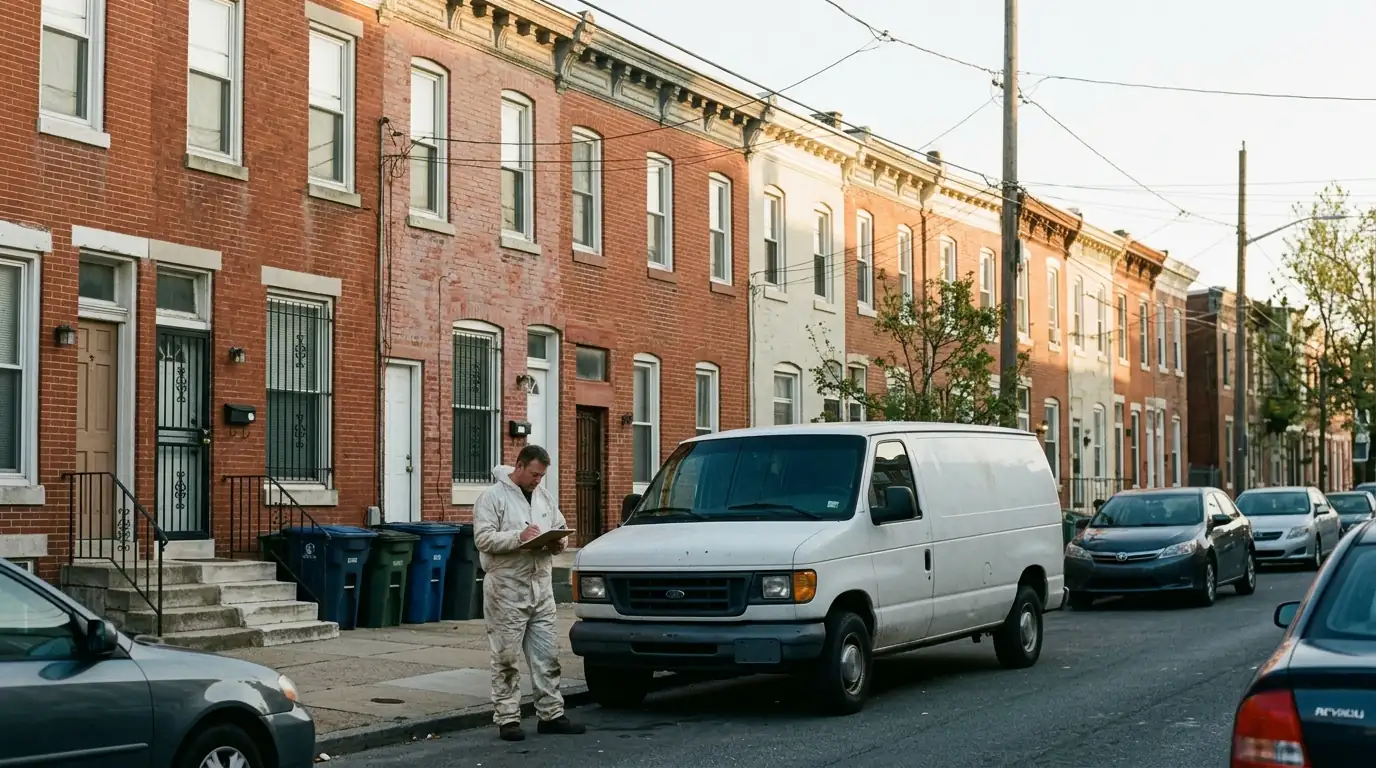
Some of Fishtown's oldest homes are trinity houses, with one room per floor stacked three high and joined by a narrow winding stair. Others are modest two-story rowhomes built for families who worked the river, the mills and the shipyards along the Delaware. Both share walls with the neighbors, and both have steep stairs that make carrying a mattress or a section of flooring a real task.
We plan for that before we arrive. Contaminated furniture is wrapped in poly in the room where it sits, then carried down in sealed packaging so nothing touches the stair walls. Where a stair is too tight, we cut items down inside the containment. Because air moves easily between attached houses, we run HEPA air scrubbers and keep the work zone under negative pressure. That keeps odor and particles on your side of the party wall and gives the people next door one less thing to worry about.
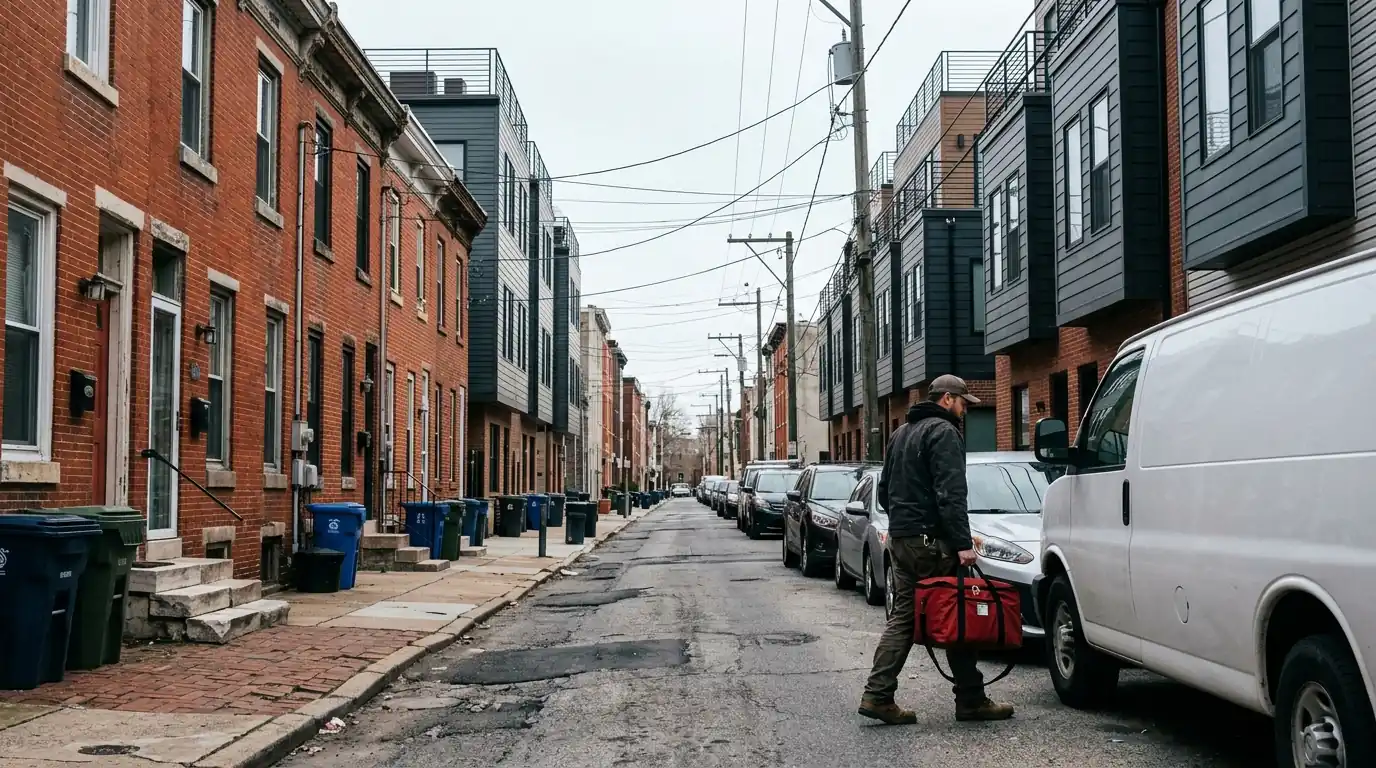
Cleanup calls we answer most in Fishtown
Short-term rentals and bars along Frankford Avenue
The Frankford Avenue corridor north of Girard Avenue draws visitors to restaurants, music venues and bars most nights, and plenty of nearby homes and new-construction units are rented by the night. That brings a familiar kind of call: a guest was sick or hurt overnight and the host needs the unit cleaned before the next check-in, or a bar restroom or patio needs bodily fluid cleanup before opening.
For hosts, we clean the affected room, replace nothing we don't have to, and document what we removed so you can share it with the booking company or your insurer. For restaurants and bars, we work before service or after close, using EPA-registered disinfectants suited to the space and following each label, including the rinse step for food-contact surfaces. Every job ends with ATP readings you can keep on file in case a manager or inspector asks how the area was cleaned.
Old basements near the river and sewage backups
Fishtown sits along the Delaware River, and many of its homes have old basements with original sewer laterals. Philadelphia's older neighborhoods are served largely by combined sewers, which carry stormwater and wastewater in the same pipes. When a lateral cracks or clogs, or a heavy storm overloads the system, sewage can come up through a floor drain. Newer homes built on infill lots near the river can see the same thing if a backwater valve was never installed.
Sewage is a biohazard, not just dirty water. We pump out standing water, remove soaked drywall, insulation and carpet, clean and disinfect the slab and walls, and dry the space with air movers and dehumidifiers. If rodents have used the basement, we clean their droppings with a wet method rather than sweeping, which keeps dust out of the air. When we finish, we explain what a plumber should check so the problem is less likely to come back. Washers, furnaces and water heaters that sat in sewage also need a technician's look before you use them again.