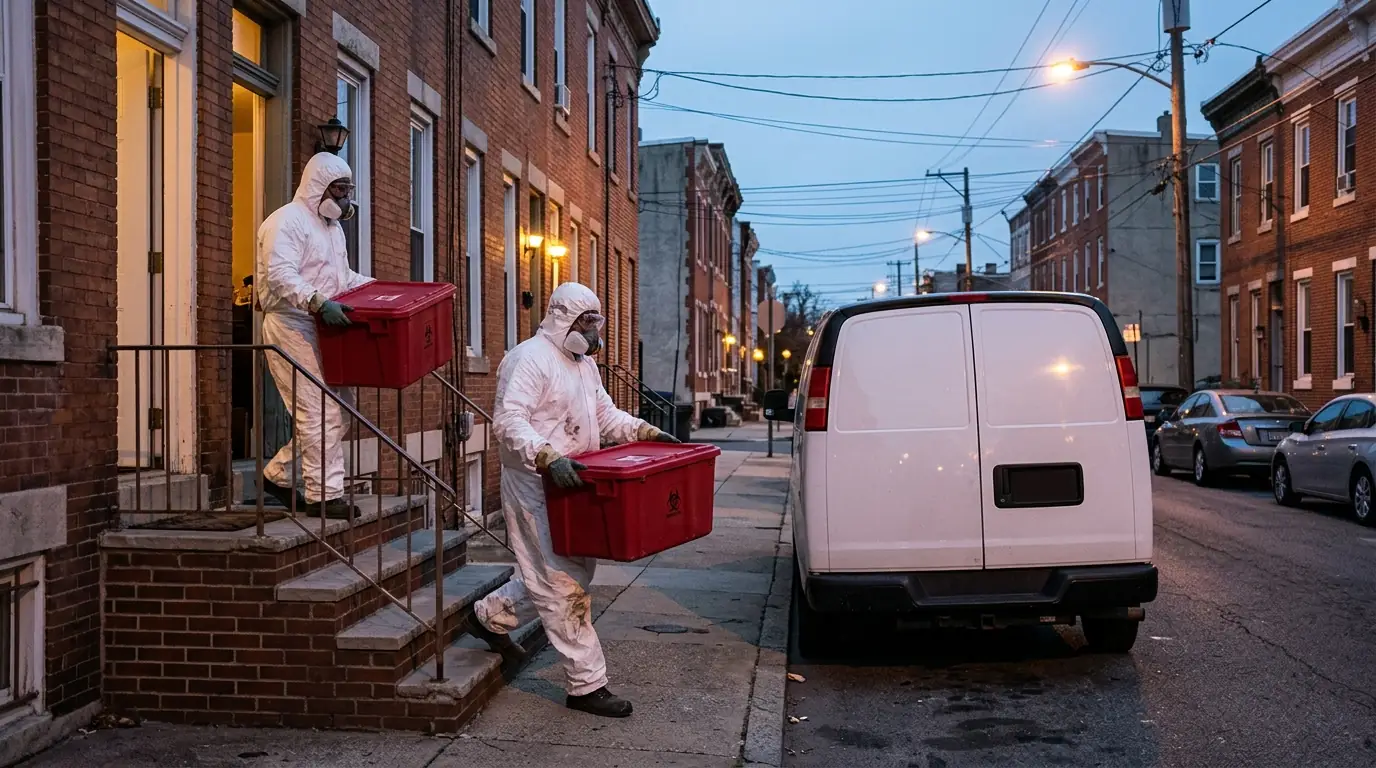
Landlords often describe it the same way: the unit doesn't have much stuff in it, but no one can stand to walk in. A refrigerator unplugged for weeks with food inside. Dishes crusted in the sink. A toilet and tub coated in old waste. Roaches across the counters and fly larvae in the trash. Regular cleaning companies take one look and leave, because the job calls for protective gear, disinfectants and biohazard handling.
We see these conditions after tenant move-outs, after a long hospital stay, after a death that went unnoticed for a while, and in homes where someone simply stopped being able to keep up. Philadelphia's older apartments and rowhome conversions have small kitchens and bathrooms where grime builds in corners, behind appliances and under cabinets. Our work focuses on exactly those spots, so the unit is genuinely clean, not just tidy on the surface.
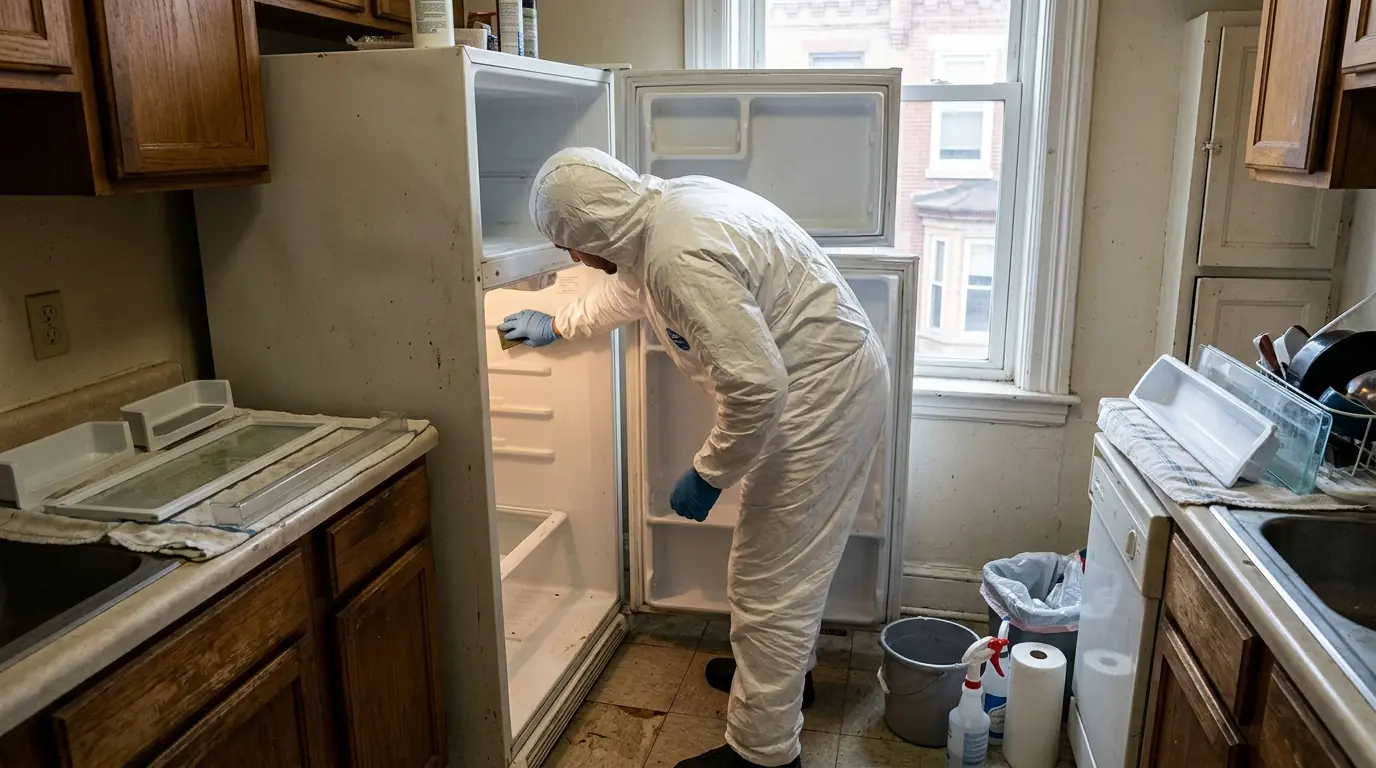
Kitchens: refrigerators, stoves and rotted food
The kitchen is usually the worst room. A refrigerator left closed with spoiled food can leak fluids into the crisper drawers, door seals and floor beneath. We empty it, bag the contents, remove drawers and shelves, and disinfect every surface. If the smell is in the insulation, which happens after long outages, replacing the unit makes more sense than cleaning it, and we will tell you so.
Stoves collect layers of grease under burners, behind knobs and down the sides where they meet the counter. We pull the range out, clean the floor and wall behind it, and degrease every part. Cabinets get emptied, wiped and disinfected, with attention to hinges and the underside of shelves where droppings and egg cases collect.
Fuzzy growth on rotted food is common. We bag it carefully, clean the surfaces it touched, and let you know if we see moisture problems in walls or under the sink that need separate attention.
Bathrooms that are beyond normal cleaning
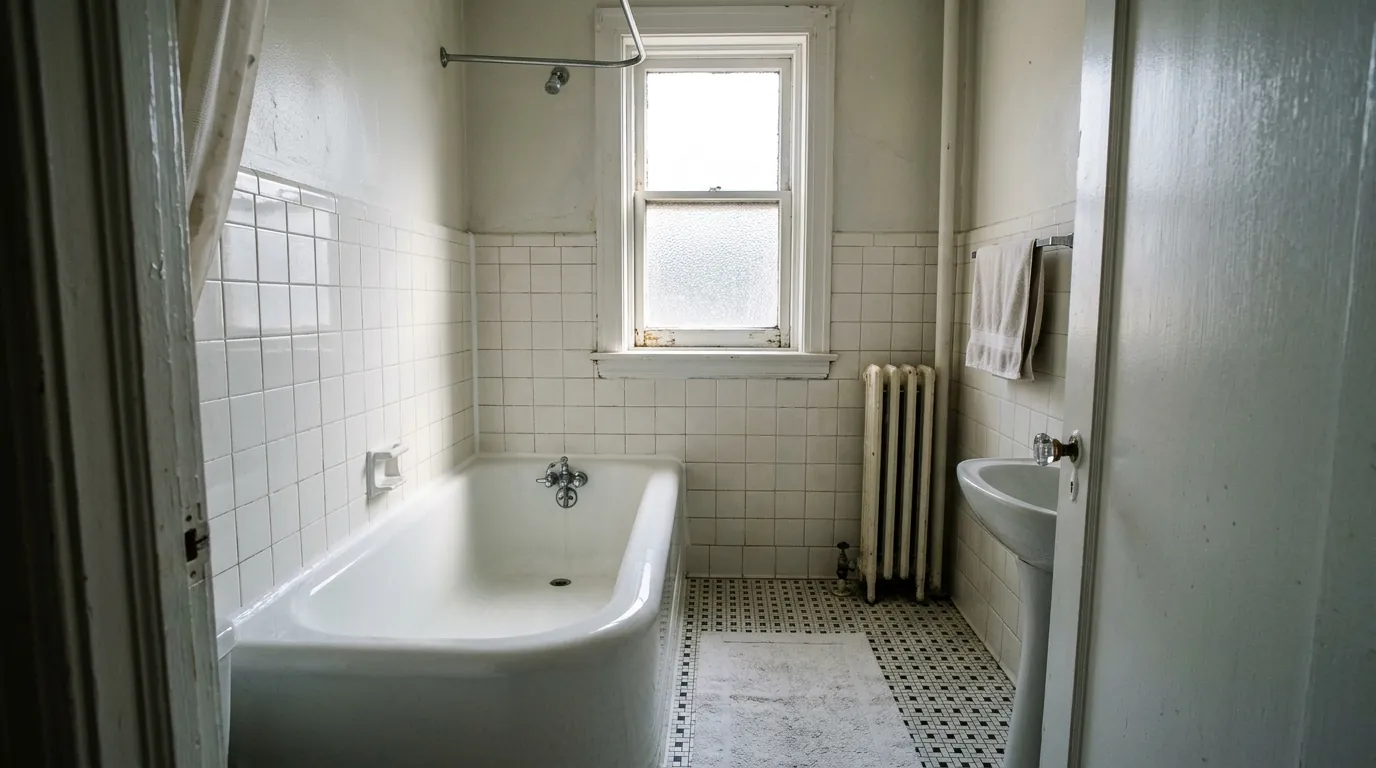
A neglected bathroom may have dried waste on the toilet, rim and floor, a tub ringed with buildup, and a sink clogged with hair and grime. Grout darkens and caulk turns black. Small Philadelphia bathrooms, often tucked under stairs or squeezed into former closets, give little room to work, so we take fixtures in order and keep the space ventilated.
We scrub fixtures, clean behind and around the toilet base, treat grout and remove old caulk where it is too stained to save. Every surface gets an EPA-registered disinfectant left wet for its full dwell time. When waste has soaked into flooring around the toilet, we tell you whether the floor needs replacement before new tile or vinyl goes down.
Exhaust fans in these bathrooms are often packed with dust and grime, so we clean the grille and housing too. A working fan helps keep the room dry, which keeps the new caulk and grout looking clean long after we leave.
How we clean a filthy unit from the door inward
Walk the unit
We assess each room, note pest activity, check for sharps or waste, and agree on scope with you.
Remove trash and spoiled food
Rotted food, trash and contaminated items are bagged and taken out, with biohazard waste packaged separately.
Clear pest debris
Droppings, egg cases and dead insects are HEPA vacuumed and wiped after any extermination treatment.
Deep clean kitchen and bath
Appliances are pulled out, fixtures scrubbed, cabinets emptied and grout treated.
Disinfect every surface
Floors, walls, counters and fixtures receive an EPA-registered disinfectant for its full dwell time.
Document and hand back
We provide before and after photos and a note of any repairs the unit still needs.
Pests, droppings and what they leave behind
Filthy units draw roaches, flies, mice and sometimes bed bugs. Even after an exterminator treats the space, droppings, shed skins, egg cases and dead insects remain inside cabinets, behind appliances and along baseboards. Those residues carry allergens and keep attracting new pests if they stay.
We clear pest debris with HEPA vacuums and wet wiping instead of dry sweeping, which would put particles in the air. Mouse droppings are wetted with disinfectant before removal. We coordinate timing with your pest control company so their treatment happens first and our cleanup follows, which gives both parts of the work the best chance of lasting.
Where we find nesting material or entry holes, we note them in our report so they can be sealed.
Bed bug activity needs special care. We bag soft items before moving them through the unit, so we do not carry insects into hallways or neighboring apartments in a shared building.
When a unit needs gross filth cleanup
Rotted food fills the kitchen
The refrigerator, counters or cabinets hold spoiled food that has been there for weeks.
Bathroom fixtures are caked
The toilet, tub and sink are coated with dried waste or heavy buildup.
Insects are everywhere
Roaches, flies or larvae are visible across counters, floors or trash.
Regular cleaners declined the job
A cleaning company saw the unit and said it was beyond what they handle.
A tenant left it this way
A move-out left the unit unusable and you need it ready for the next renter.
The odor hits at the door
The smell is strong enough that neighbors or building staff have noticed.
Getting a rental unit back on the market
For Philadelphia landlords and property managers, a filthy unit is lost rent every week it sits empty. We work quickly, usually finishing an apartment in one or two days, and we coordinate with your painters, flooring installers and maintenance staff so the unit moves straight into turnover.
Before and after photos document conditions for your records and any security deposit dispute. If belongings were left behind as well, our eviction cleanout service handles those, and we can combine both in one visit. When conditions turn out to be worse than expected, we call you before going further. Keys go back to you or your property manager at the end of each day.
The result is a unit that smells neutral, has clean cabinets, fixtures and floors, and is ready for paint and new flooring. Your next tenant walks into an apartment that feels cared for, and that first impression tends to set the tone for how they treat it.
What shapes the cost of gross filth cleanup
Filth cleanup is priced by condition and size, so we look at the unit or clear photos first.
Size of the unit
A studio takes less time than a three-bedroom rowhome.
Condition of kitchen and bath
Heavily caked appliances and fixtures need more labor than light grime.
Pest activity
Heavy roach or rodent debris adds HEPA vacuuming and wiping in hidden spaces.
Waste and biohazards
Human or animal waste requires biohazard packaging and disposal.
Appliance removal
Refrigerators or stoves that cannot be saved add hauling and disposal.
Landlords sometimes recover cleaning costs from a security deposit, and our documentation helps support that claim. Insurance typically does not cover gradual neglect, but sudden events found during the cleanup may be reviewed separately. We give clear, itemized estimates.