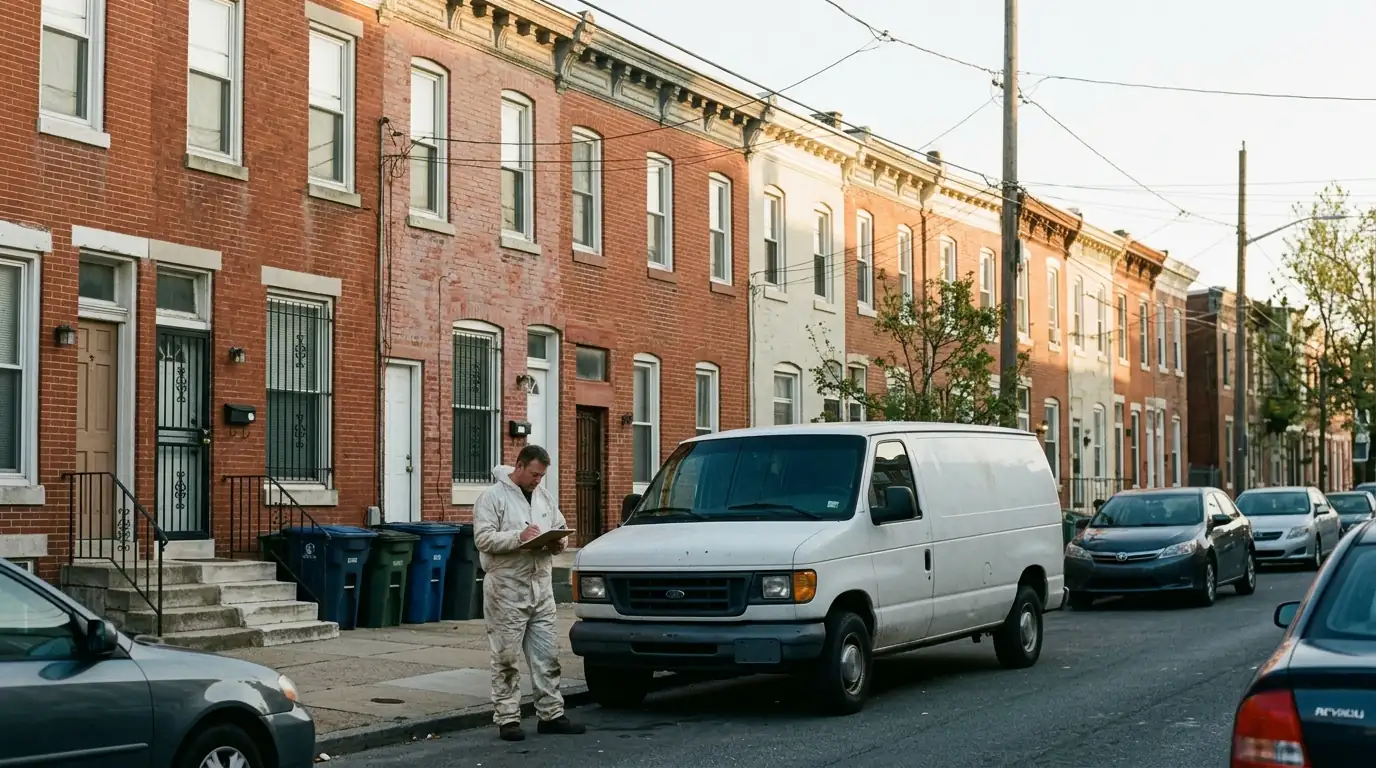
Respecting a close-knit block while we work
Port Richmond is a neighborhood where people notice things. Neighbors sweep the pavement in front of each other's homes, older residents chat on porches along the side streets off Richmond Street, and St. Adalbert on Allegheny Avenue still anchors many Polish families' weeks. Polish bakeries, delis and social clubs sit beside newer shops and cafes. That closeness is a real comfort after a loss, and it also means a cleanup van parked out front draws attention.
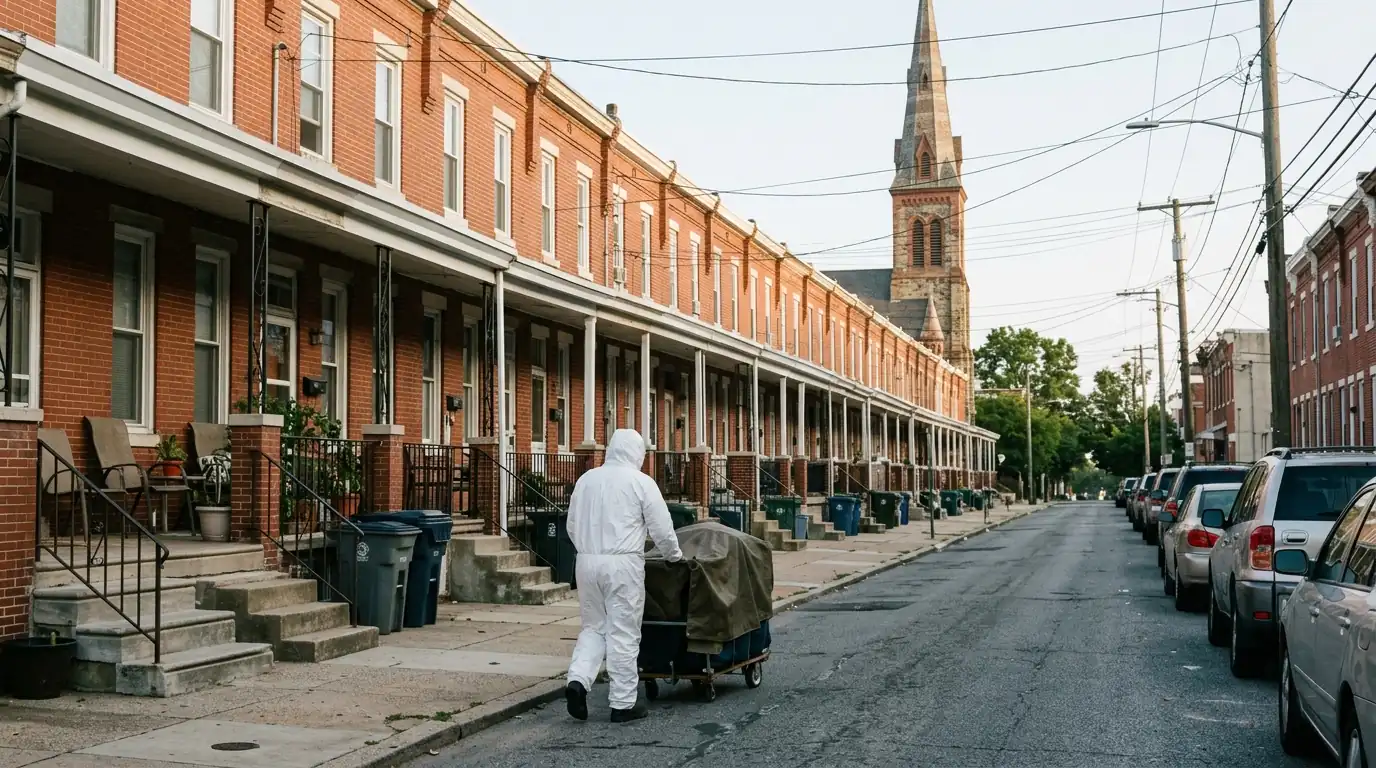
So we keep a low profile. Our technicians park as close as the street allows, change into protective gear inside, and carry sealed containers out in covered carts rather than loose bags. Windows stay shut and HEPA air scrubbers run, which matters when walls are shared and porches sit a few feet apart. If a neighbor asks, we simply say we're doing work for the family. What happened inside the home stays with the family.
Cleanup calls we answer most in Port Richmond
Overdose and trauma scenes in Port Richmond rowhomes
The opioid crisis has reached Port Richmond households, as it has across Philadelphia's river wards. When someone overdoses or dies at home, bodily fluids and possible drug residue can be in the same room. We never dry sweep. Surfaces that might hold powder are wiped with damp disposable cloths and bagged right away, and our crew works in layered nitrile gloves, eye protection and respirators.
Fluids are cleaned under OSHA's bloodborne pathogens standard. Porous items that soaked them up, such as a mattress, a sofa, or carpet and pad, are removed and packaged for a permitted disposal facility. Hard floors, plaster and fixtures are cleaned, then disinfected with an EPA-registered product kept wet for its full dwell time, and checked with ATP testing. The same careful steps apply after a bad fall, a serious injury or a suicide. If the person died, Philadelphia Police and the Medical Examiner's Office release the home before we begin.
Basements, back alleys and older homes near the river
Many Port Richmond rowhomes date to the late 1800s and early 1900s, with brick or stone basements, old cast iron or clay drain lines, and small rear yards opening onto shared alleys. Heavy rain can push sewage up through a basement floor drain, especially on lower blocks toward I-95 and the Delaware River. Sewage is treated as Category 3 water, so wet drywall, paneling, carpet and stored cardboard boxes usually have to go before we disinfect and dry what remains.
Estate work is common here as well. Families who have held a house for generations often need it cleared after a death, and the basement, back bedroom and attic can hold decades of belongings. We set aside keepsakes, religious items, photos and papers for the family, haul the rest, and clean the house so it's ready to sell or rent. Reaching you is simple: from our Society Hill office we take I-95 north to the Allegheny Avenue exit, which puts us right in the neighborhood.