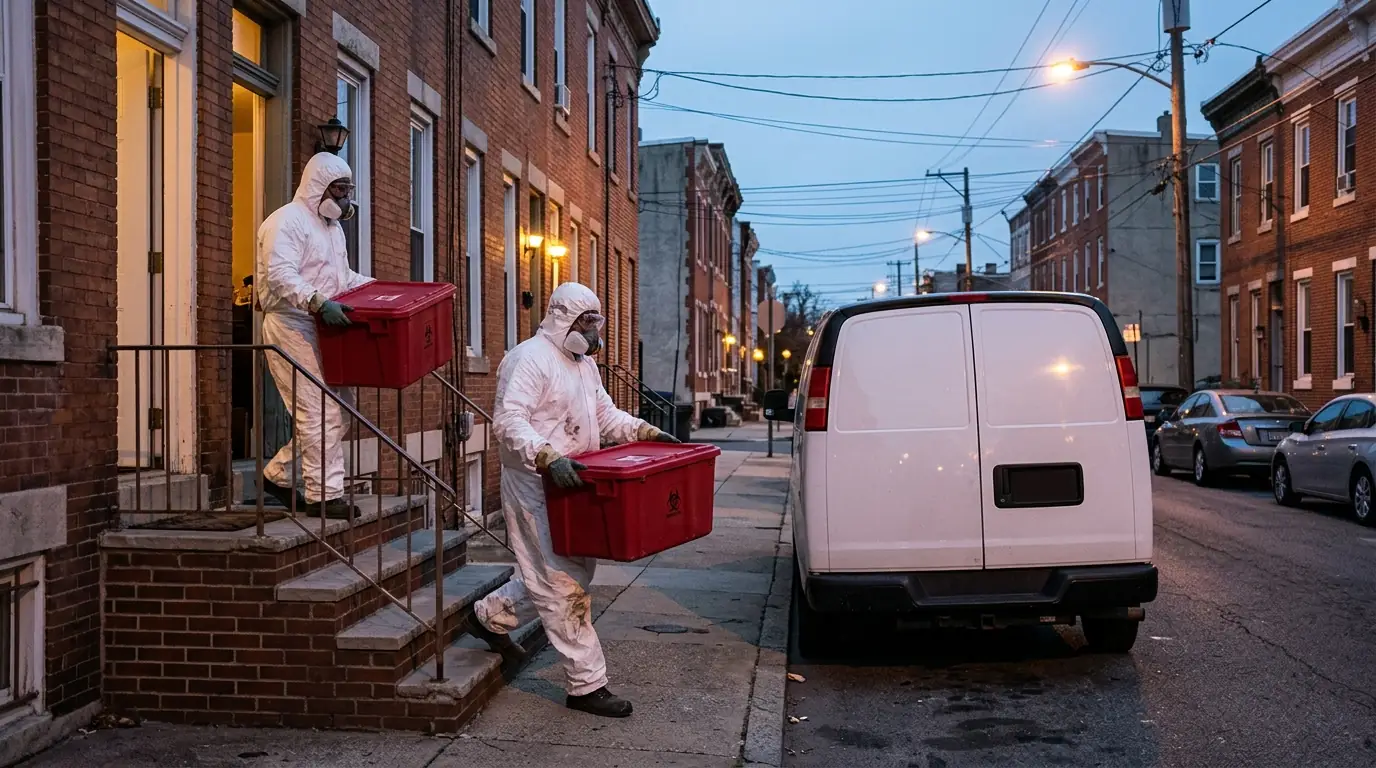
Most families reach this point tired. The funeral is over, the paperwork has started, and someone has to decide what happens to the dishes, the closets full of clothes and the boxes in the basement. If the person who died was found after some time had passed, there may have been a biohazard cleanup first. Once that part is done and the room is safe, the rest of the house still needs to be emptied, and it rarely feels like a simple chore.
We do both parts of this work, so the same crew that restored the affected room can carry on through the rest of the home. In a Philadelphia rowhome that might mean three floors, a narrow staircase, a basement packed with decades of storage and a back patio that hasn't been cleared in years. We take it one room at a time. Before anything goes in a truck, we set aside documents, photos and personal items so the family can look through them, and nothing sentimental is thrown out in a rush.
Sorting a lifetime of belongings without losing what matters
The hardest part of an estate cleanout is rarely the lifting. It's deciding. Our technicians start by asking what the family is looking for: a wedding ring, military papers, a particular recipe box, the deed, bank statements, old letters, a quilt someone made. We keep a running list and set those items aside in labeled boxes as they turn up.
People tuck important things into odd places. We check coat pockets, the backs of drawers, inside books, under mattresses and in freezer bags. Cash, jewelry, keys and paperwork go into a separate secured box for the executor. Photographs and letters stay together so the family can go through them later at their own pace.
Everything else gets sorted into clear groups. Usable furniture, clothing and housewares can go to donation. Items with obvious resale value can be set aside for an appraiser or estate sale if the family wants one. Trash and broken items are bagged and hauled out. Nothing is decided for you, and you can change your mind about any pile before it leaves the house.
Getting a rowhome ready to sell or return to a landlord
Once a Philadelphia house is empty, the next step depends on what happens to it. If it's being sold, the executor usually wants it broom clean so a realtor can photograph it and buyers can see the rooms. If your loved one rented, the landlord will expect the unit returned empty and clean by a certain date, and the security deposit may depend on it.
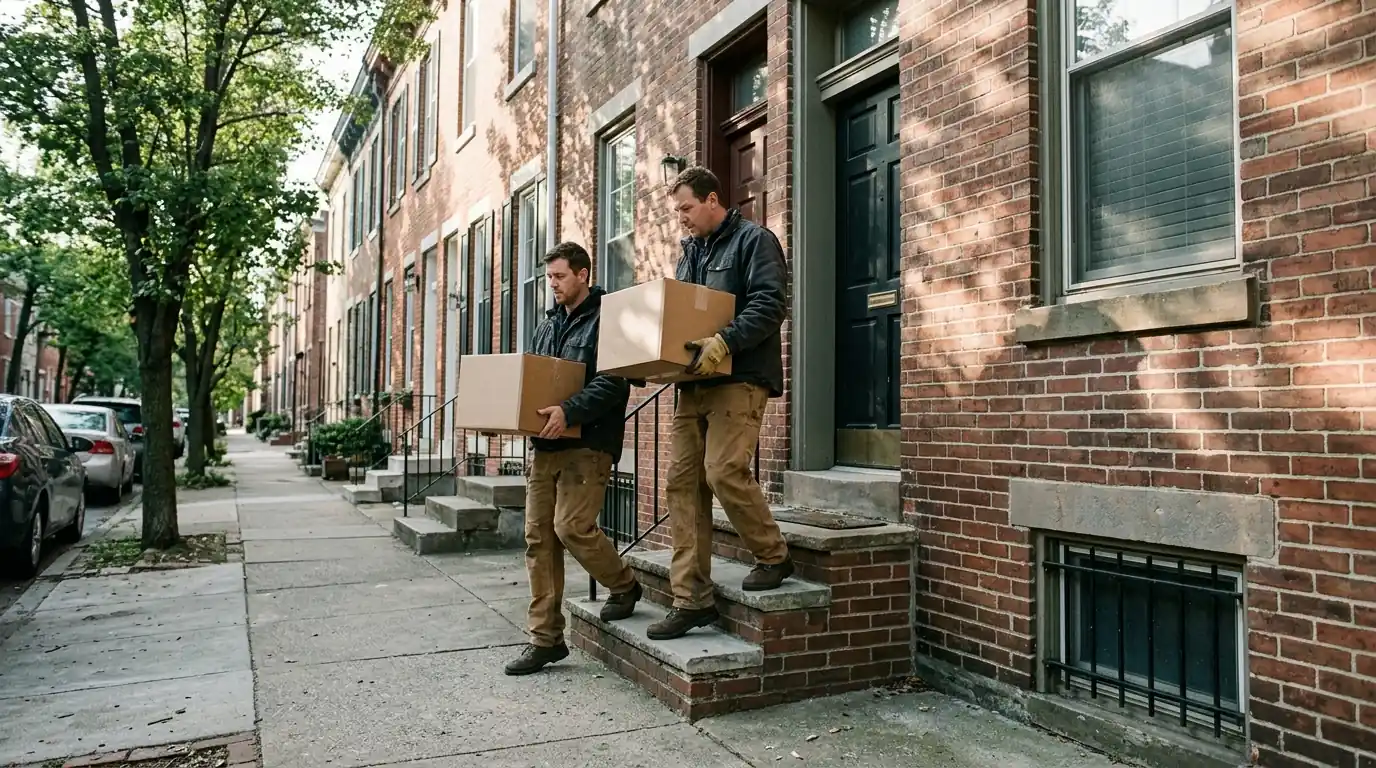
We work toward whichever finish line you have. That can include clearing the basement down to bare concrete, emptying the shed or garage, pulling old carpet if the family asks, and leaving the kitchen and bathrooms wiped down. Rowhomes have their own quirks: tight turns on the stairs, furniture that came in before the railing was installed, and basements reached only through a narrow interior door. We plan the carry-out so walls and banisters don't get damaged on the way. If a room still needs odor treatment after the main cleanup, we take care of that before the house is shown.
How we clear a home after a loss
Walk through and agree on a plan
We tour the home with you or by video and note what to look for, what to keep and when the house needs to be empty.
Find and set aside keepsakes
Documents, photos, valuables and sentimental items are pulled out first and kept in labeled boxes.
Sort room by room
Belongings are grouped for keeping, donation, possible sale or disposal, and you can review any pile before it leaves.
Pack donations and haul debris
Usable items go to local donation centers where accepted, and the rest is bagged and taken away.
Clean the empty rooms
Floors are swept, kitchens and baths are wiped down, and any lingering odor is treated.
Hand back the keys
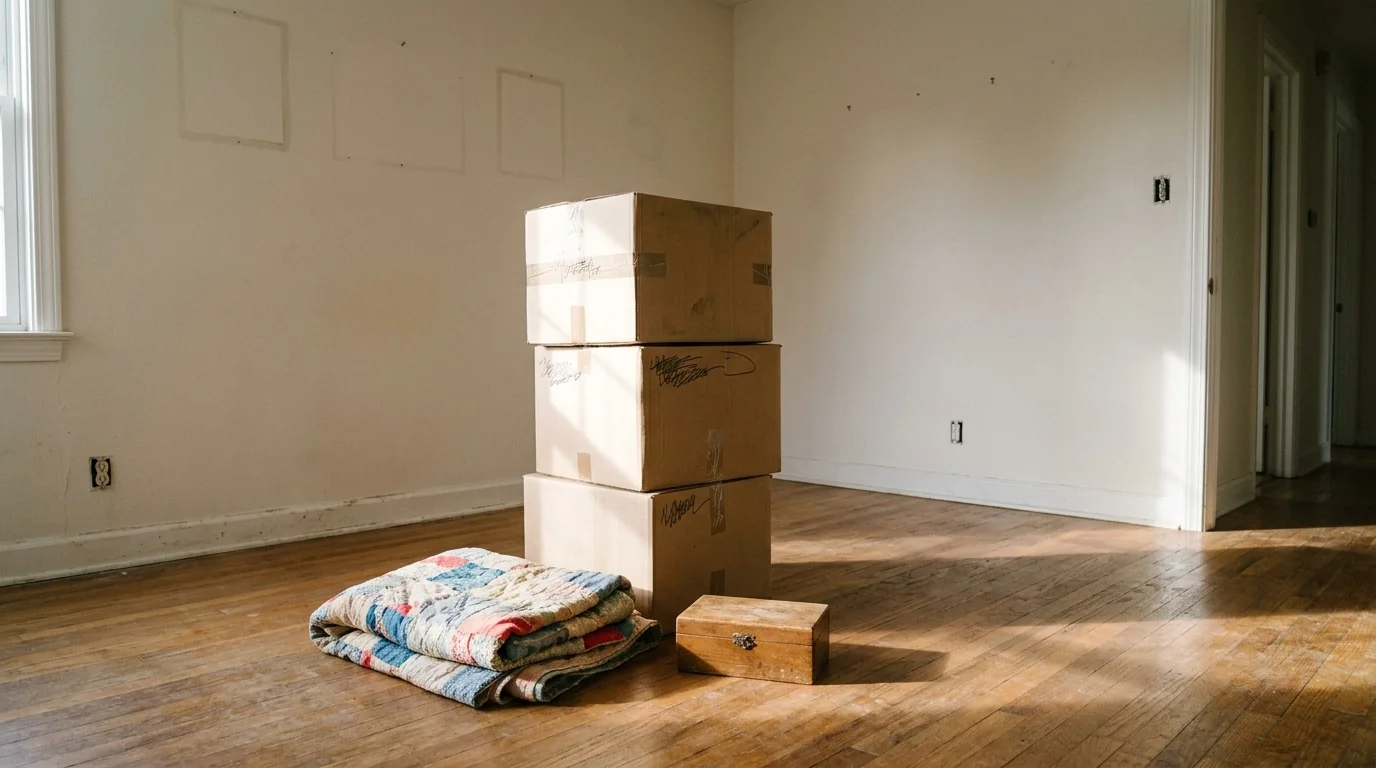
We send photos of the empty house and return keys to the executor, realtor or landlord.
Helping executors who live out of town
Many executors don't live anywhere near the house. A son in Ohio or a niece in Florida may be handling the estate by phone while working full time. They can't spend three weekends in a row driving to Philadelphia to sort a basement.
We can work with you remotely. Before we begin, we agree on what to look for and what to keep. During the cleanout, we hold anything uncertain aside and send you photos so you can decide. Keepsakes and documents can be packed and shipped to you or left with a family member nearby. When we finish, you get photos of every empty room. If a neighbor, realtor or property manager is holding the keys, we coordinate access with them directly.
- Agree on a keep list by phone before work starts
- Photos of uncertain items for your decision
- Documents and valuables held in a secured box
- Keepsakes packed for shipping or family pickup
- Photo record of every room when the house is empty
When an estate cleanout makes sense
The house has to be emptied by a deadline
A lease end date, a closing or a court timeline means the home must be cleared on schedule.
You live far from Philadelphia
Out-of-town executors often can't be on site for days of sorting and hauling.
Biohazard work just finished
Once the affected room is restored, the rest of the home can be cleared by the same crew.
Decades of storage in the basement
Rowhome basements and attics often hold years of boxes that need careful sorting.
The family can't agree what to keep
A neutral crew setting items aside for review gives everyone time to decide.
Heavy furniture and tight stairs
Large pieces in narrow Philadelphia homes need careful handling to protect walls and railings.
When the cleanout follows biohazard work in the same home
Sometimes the estate cleanout comes right after we've restored the room where the person passed. In that case, the affected area has already been cleaned, disinfected and cleared, and any porous items from that room have been packaged and disposed of as biohazard waste. The rest of the house can then be handled like any other cleanout.
We still take care in nearby rooms. Odor can drift into fabrics, upholstered furniture and clothing in adjacent spaces, so we check those items with you before deciding whether to keep them. Mattresses, recliners and rugs close to the scene are often better replaced than saved, and we'll tell you honestly when that's the case. Family members don't need to walk into the restored room until they're ready. We can bring items from that space to you, or leave the door closed until you choose to see it. If a realtor will be showing the house soon, we'll let you know which rooms are finished first.
What shapes the cost of an estate cleanout
Each home is quoted after we see it or tour it by video. These factors make the biggest difference.
Volume of belongings
A sparsely furnished apartment and a packed three-story rowhome are very different jobs.
Sorting time
Searching for documents and keepsakes item by item takes longer than a straight haul-out.
Stairs and access
Upper floors, narrow stairs, basements and no parking out front add carrying time.
Donation and disposal
How much can be donated versus hauled affects trips and disposal fees.
Deadline
A tight closing or lease date may mean a larger crew working longer days.
Cleaning and odor work
Final cleaning or odor treatment after the house is empty adds to the scope.
Estate cleanout costs are often paid from the estate itself, and the executor can usually treat them as an expense of settling it. Homeowner's insurance typically doesn't cover general cleanouts, though it may respond to the biohazard portion if a sudden event caused the damage. We give you a written scope before starting so the executor knows exactly what is included.