Ammonia is usually the first thing anyone notices. In a home where dozens of cats or dogs lived in a few rooms, urine builds up faster than it can be cleaned. Ammonia gas rises from soaked floors, stings the eyes and can make it hard to stay inside for more than a few minutes. Behind that smell sit layers of waste, hair, litter and nesting material that have often been there for years.
Situations like this rarely start with bad intentions. People who take in more animals than they can care for often believe they are rescuing them. By the time family, neighbors or a humane officer step in, both the animals and the person need help. Our role begins after the animals are safe. We restore the house, whether it is a Philadelphia twin, a rowhome with a basement full of litter boxes, or an apartment the landlord needs back.
Why ammonia and urine reach the subfloor
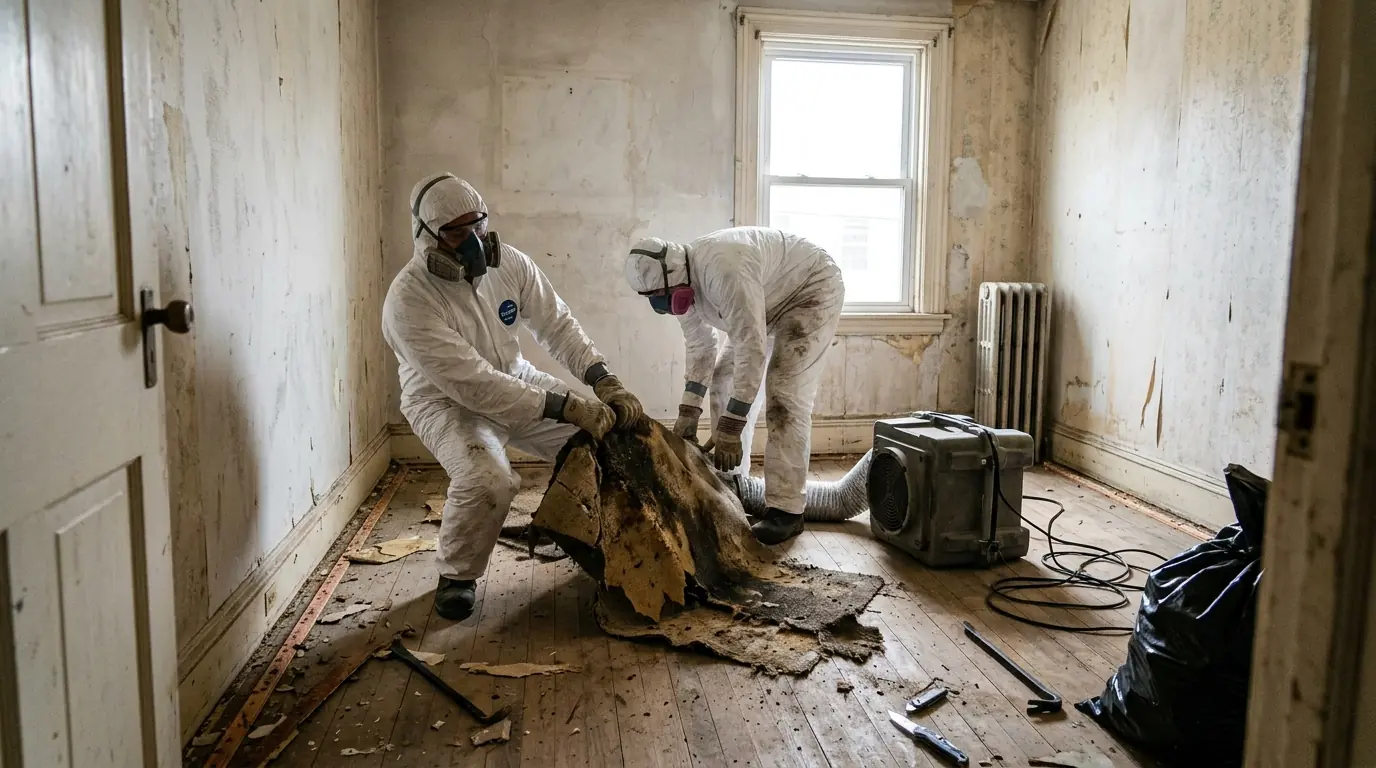
Urine soaks through carpet within minutes, through pad within hours, and into wood subflooring over weeks. Older Philadelphia homes often have plank subfloors with gaps between boards, so urine runs through to the joists and the ceiling below. As it breaks down, it releases ammonia and leaves salts that pull in moisture on humid days, so the smell returns each summer.
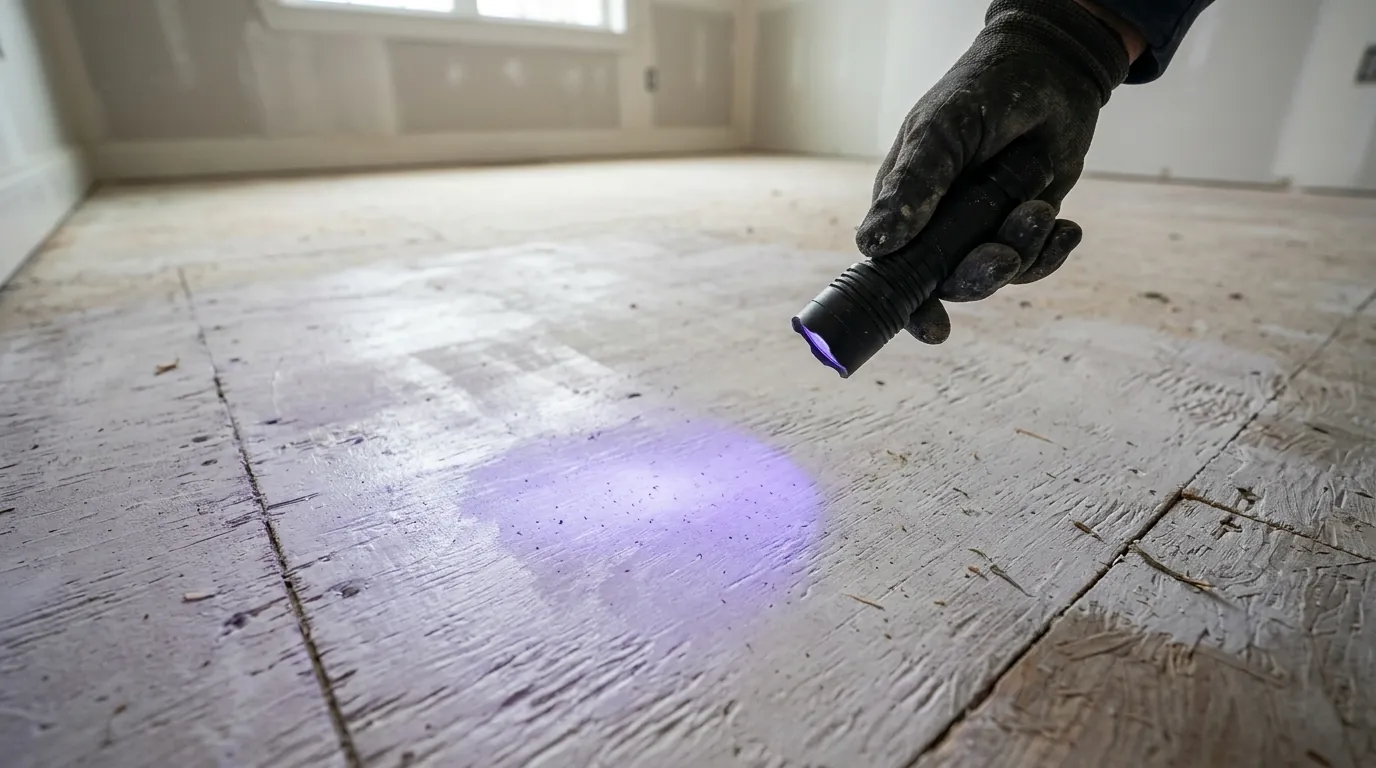
We measure ammonia levels when we arrive and keep fresh air moving throughout the work. Carpet and pad come out first. Then we inspect the subfloor with moisture meters and ultraviolet lights, which show urine deposits clearly. Boards that are soaked or soft are cut out and replaced. Those that are stained but sound are cleaned with an enzyme treatment, dried and sealed with an odor-blocking primer.
Baseboards, the bottom of drywall and door casings absorb urine too, especially where male cats sprayed. We remove and replace those pieces rather than painting over them.
Feces, parasites and health risks for the cleanup
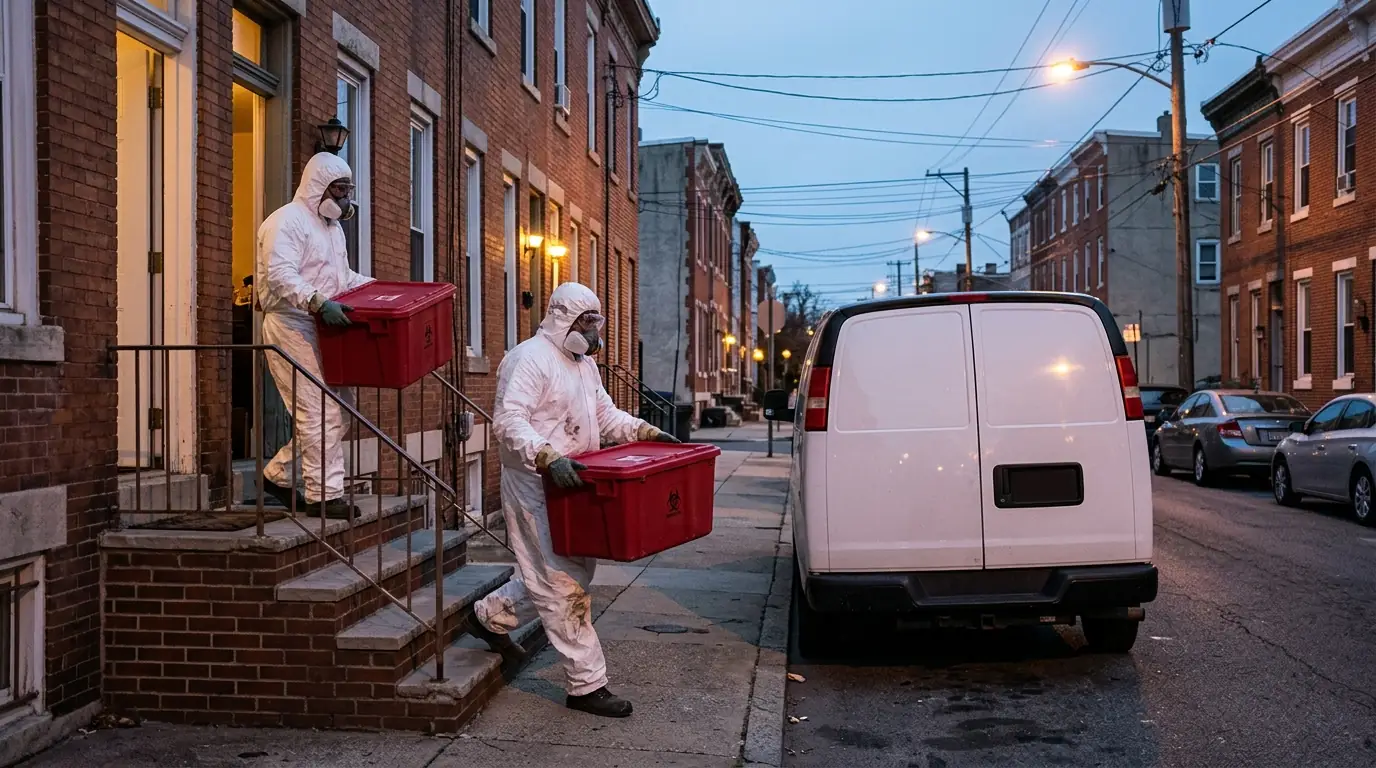
Large amounts of animal feces can carry roundworm eggs, bacteria and, from cats, the parasite that causes toxoplasmosis. Fleas and ticks can survive in carpets and furniture long after the animals are gone. That is why our technicians wear full protective suits, gloves and respirators, and why we avoid dry sweeping, which puts particles in the air.
We wet down material before removing it, scrape and bag waste, and treat surfaces with an EPA-registered disinfectant suited to the organisms involved. Flea infestations often need a pest control company's treatment, and we schedule our work so their treatment and ours support each other. When rodents were drawn in by food and litter, entry points get noted for the owner and the exterminator.
Anyone with a weakened immune system, and anyone who is pregnant, should stay out of the home until the cleanup is complete. That includes family members who want to help sort, so we bring items out to them instead.
How we restore a home after animal hoarding
Confirm animals are out
We coordinate timing with whoever is removing the animals and the person responsible for the property.
Measure and ventilate
Ammonia levels are checked, windows opened where possible and fans set up to exhaust air outside.
Remove waste and soft materials
Feces, litter, carpet, pad and soaked furnishings are wetted, bagged and taken out.
Cut out saturated building materials
Subfloor, baseboards, door casings and lower drywall that absorbed urine are removed.
Disinfect and treat
Surfaces are disinfected, enzyme treatments applied, and pest treatment coordinated where needed.
Seal and deodorize
Framing and subfloor are sealed, air scrubbers run, and we verify with UV light before handing back the house.
Coordinating with animal welfare groups and the owner
Removing animals is handled by animal welfare and humane law officers, shelters and rescues. We do not seize or rehome animals. When animals are still in the house, we wait until those groups have finished, or we work in rooms they have already cleared, so we do not interfere with their efforts.
We often work alongside family members who are worried about the person who lived there. Some owners want to be present; others cannot face seeing the house. Either way, we set aside photos, paperwork, medications and valuables. Personal belongings that can be cleaned are cleaned. Those soaked with urine or waste usually cannot be saved, and we explain that before anything is discarded.
Shelters and humane officers sometimes ask what condition the house was in for their own records. With the property owner's permission, we can share our photos and notes. We keep that information factual and limited to the home itself, and we do not share it with anyone else.
When animal hoarding cleanup is needed
Ammonia makes your eyes water
The smell is strong enough to sting eyes or cause coughing within minutes of entering.
Floors are soft or stained through
Carpet is gone or soaked, and boards underneath feel spongy or look dark.
Waste is layered on floors
Feces, litter and nesting material cover floors, closets or the basement.
Fleas or ticks persist
Insects bite visitors even after the animals have been removed.
Ceilings below are stained
Brown stains or odor appear on the ceiling under rooms where animals lived.
The home must be sold or rented
A landlord, estate or buyer needs the house restored to usable condition.
Sealing, deodorizing and confirming the house is ready
After saturated materials are gone and surfaces are disinfected, we seal exposed framing and subfloor with an odor-blocking primer. This locks in any trace deposits that cleaning could not reach. Then we run air scrubbers with HEPA and carbon filtration and, where needed, use deodorization equipment to clear the remaining smell. Primer goes on only after the wood is fully dry.
Before we finish, we check again with UV light and moisture readings and walk through the house with you. The goal is a home where new flooring and drywall can be installed without the odor bleeding back through on the first humid day of summer.
If the house will sit empty for a while before repairs, we leave the air scrubbers running for an agreed period and return to collect them. That extra time lets any remaining odor clear, and it gives you a fair test before new floors go down.
What shapes the cost of animal hoarding cleanup
The price depends on how many animals lived there, for how long, and how deep the damage goes.
Number of animals and rooms
More animals across more rooms means more material to remove and more surfaces to treat.
Depth of urine saturation
Carpet removal costs less than replacing subfloor and joists.
Waste volume
Heavy layers of feces and litter add labor and disposal.
Pest activity
Fleas, ticks or rodents add coordinated treatment and extra cleaning passes.
Structural repairs
Replacing subfloor, drywall and trim adds carpentry and material.
Homeowner's insurance rarely covers damage that built up gradually from animals, but policies differ, so check with your agent. Estates, landlords and families often plan the work in stages, with the urgent removal first. We give itemized estimates so you can compare options.