Mold rarely shows up out of nowhere. It appears where water has been sitting: behind a basement wall that weeps after every storm, on the bathroom ceiling of a house with no exhaust fan, along a party wall where the neighbor's gutter has overflowed for a year. In Philadelphia's older rowhomes, those conditions are common. Stone and brick foundations pull groundwater in, shared walls hide leaks you can't see from your side, and many bathrooms were tucked into small back rooms with very little airflow.
Some mold is a quick fix. A small patch on tile grout or a painted sill can usually be cleaned with detergent and dried. Growth on drywall, insulation and wood is different. Disturbing it releases spores into the rest of the house, and painting over it only hides it for a season. Remediation is the careful version: isolate the area, filter the air, remove what can't be saved, clean what can, and dry the structure so the growth has nothing left to feed on.
Where mold grows in Philadelphia rowhomes, and why
Most of the mold calls we get in the city start in one of four places. Basements come first. Many rowhomes have rubble stone or brick foundation walls laid without modern waterproofing, so moisture moves through them every wet season. Drywall pressed against those walls traps it, and the back of the board can be black while the front looks fine.
Bathrooms come next, especially second floor bathrooms in houses built before exhaust fans were standard. Steam from daily showers settles on the ceiling and the outside wall, and a slow leak at the tub drain can soak the subfloor and the kitchen ceiling below.
Party walls are the third. When the house next door has a failing roof, a clogged gutter or a pipe leak, water can travel into the shared masonry and show up as staining or growth on your side. Fixing it may mean a conversation with your neighbor, since the source isn't on your property.
Finally, mold often follows water events we already clean up, such as a sewage backup that sat for days.
Containment and negative air keep spores out of the rest of the house
The biggest risk during mold removal is spreading it. Cutting moldy drywall, pulling insulation or even brushing a wall can put a large number of spores into the air, and household air moves from room to room through stairwells, ducts and gaps around pipes. If that happens, a basement problem becomes a whole house problem.
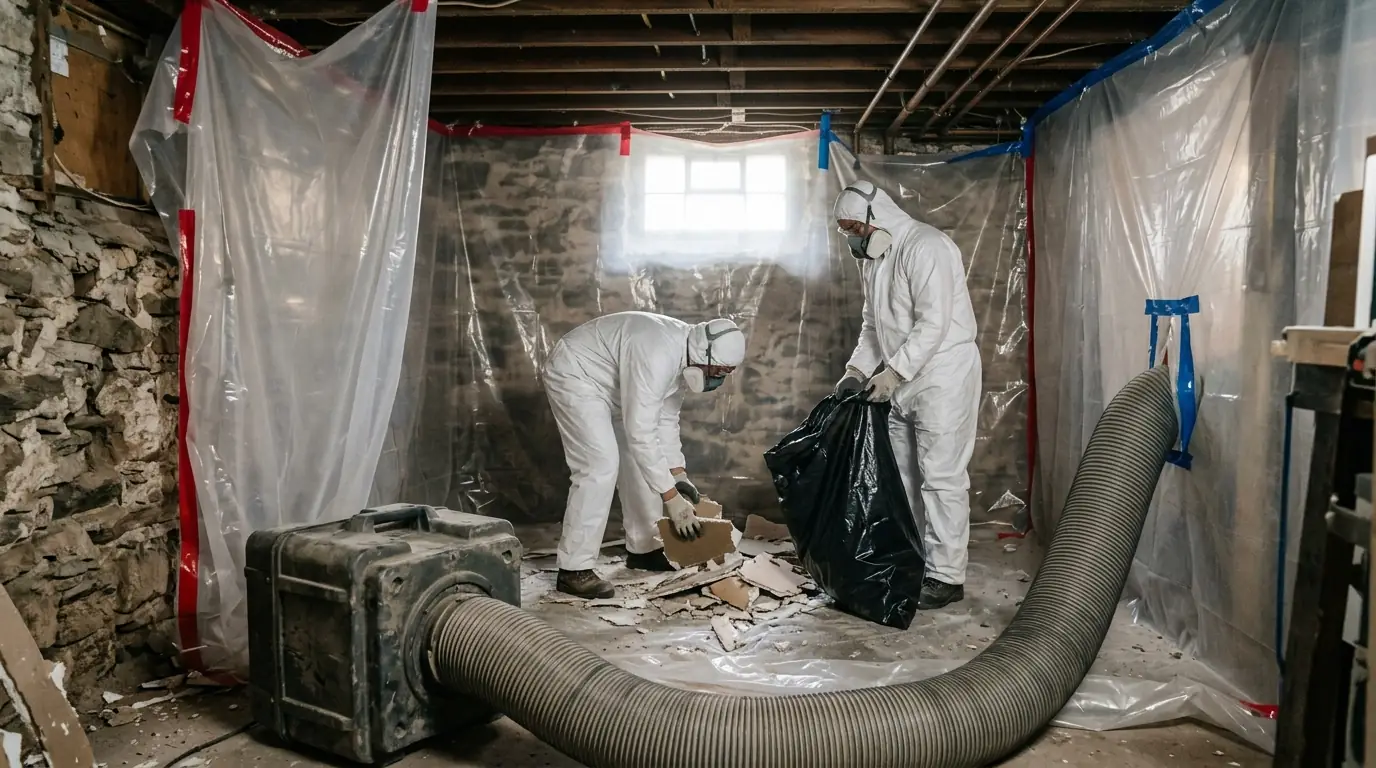
So before anything is removed, our crew builds containment. We hang poly sheeting from floor to ceiling around the work area, seal doorways with zippered entries, and cover supply and return vents so the heating and cooling system doesn't carry spores upstairs. Then we set up an air scrubber with a HEPA filter and duct its exhaust outside the contained area. That creates negative pressure: air flows into the work zone through small gaps, never out of it.
Technicians inside containment wear disposable coveralls, nitrile gloves, eye protection and respirators. Waste is bagged inside the work area and leaves along the same controlled path. A small bathroom patch needs a lighter setup than a basement or a long party wall.
How a mold remediation job runs from walkthrough to dry
Walkthrough and moisture mapping
We look at visible growth, take moisture readings on walls, floors and framing, and look for the water source. Then we explain what needs removal and what can be cleaned.
Set up containment
Poly sheeting, sealed doorways and covered vents isolate the work area. A HEPA air scrubber creates negative pressure so spores stay inside the zone.
Remove colonized materials
Moldy drywall, wet insulation, carpet and damaged contents are cut out, bagged inside containment and carried out along a controlled path.
Clean the structure
Framing, subfloor and masonry are HEPA vacuumed, brushed or sanded where needed, wiped down and vacuumed again.
Dry and confirm readings
Dehumidifiers and air movers run until moisture readings on framing and masonry reach normal levels for each material.
Final cleaning and handover
We clean the contained area top to bottom before taking the sheeting down, then walk you through what was done and what the rebuild will need.
What we remove, what we clean, and what stays in place
Mold roots into porous and semi-porous materials, and that decides what has to go. Drywall paper is food for mold, so drywall with visible growth is cut out, usually well past the stained area to catch growth that hasn't reached the surface yet. Fiberglass and cellulose insulation that stayed wet comes out too, along with carpet, pad and ceiling tile.
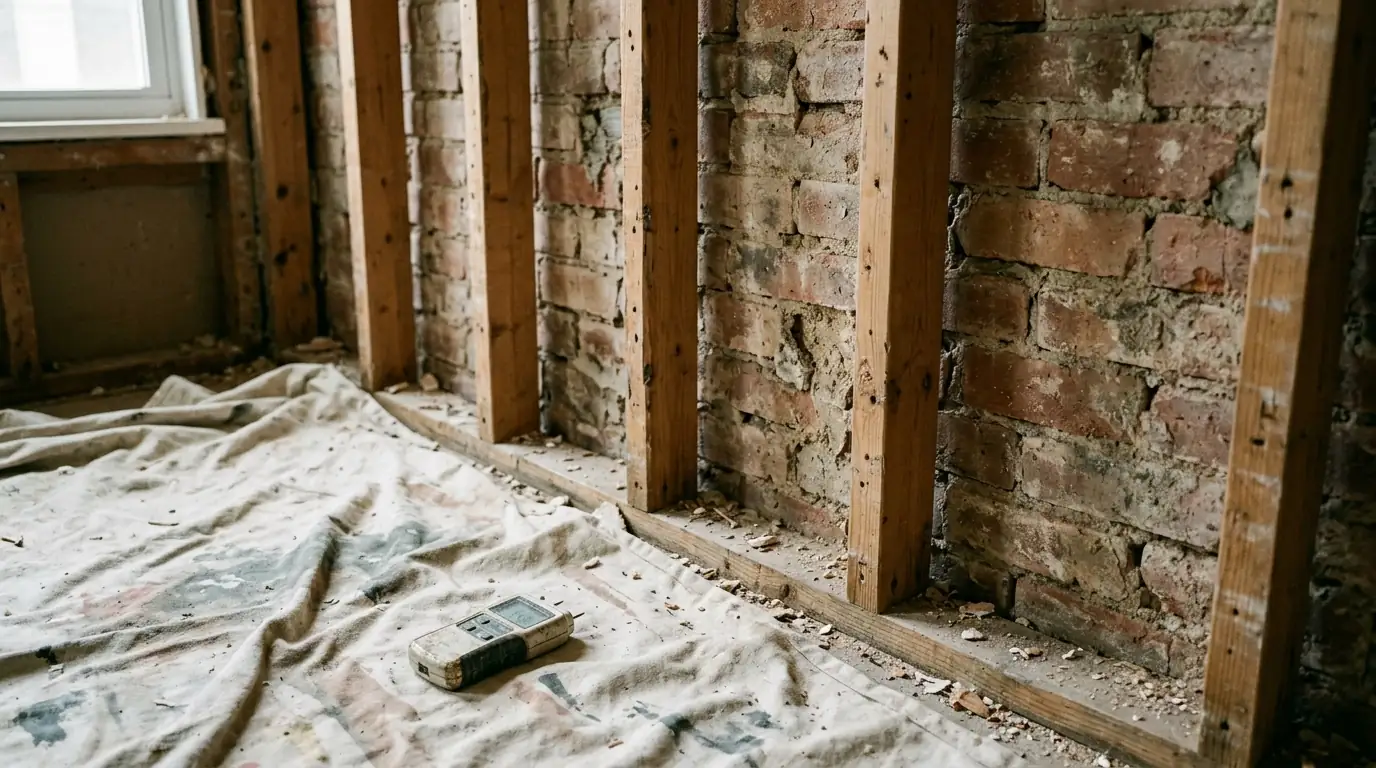
Wood framing is different. Solid studs, joists and subfloor can usually stay if the wood is still sound. We remove surface growth with HEPA vacuuming, then wire brushing or sanding where it's needed, wipe the wood with a cleaning solution and HEPA vacuum again once it dries. On masonry and concrete, we scrub and vacuum the surface the same way. Sometimes we finish cleaned framing with a clear antimicrobial coating, but a coating is never a substitute for removal.
Contents get the same sorting. Hard items like metal shelving, glass and plastic bins can be cleaned. Cardboard boxes, upholstered furniture and stored clothing with growth on them usually can't be saved reliably. We photograph and list what leaves so you have a record for your insurer or your landlord.
When mold growth needs remediation, not a sponge
Growth covers more than a small patch
A spot the size of your hand on tile or a sill can often be cleaned. Growth spread across a wall or ceiling usually goes deeper than the surface.
A musty smell with nothing visible
An earthy odor in a basement or closet often points to growth behind drywall, under flooring or inside a wall cavity.
Stains keep bleeding through paint
Spots that return through fresh paint mean the material underneath is still wet or still colonized.
A leak or backup sat for days
Drywall and insulation that stayed wet for more than a day or two after a leak or sewage backup are at real risk.
Allergy or asthma symptoms flare at home
Mold can irritate the nose, eyes and airways, especially for people with allergies or asthma. If symptoms ease when you leave the house, mention it to your doctor.
You're preparing to sell or rent
Buyers and new tenants notice mold. Dealing with it properly beforehand avoids a surprise in the middle of a sale or a lease.
Why the moisture source has to be fixed before the work will last
Mold needs moisture to grow. Remove it without fixing the water and it will return, often within weeks, on the new drywall you just paid for. That's why we ask about the source on the first call and look for it again during the walkthrough.
The repair itself belongs to the right trade. A leaking supply line, tub drain or toilet seal goes to your plumber. A failing flat roof, party wall flashing or clogged gutter goes to a roofer. Groundwater through a stone foundation may need a waterproofing contractor or a downspout that discharges away from the house. We tell you what we see, and you or your landlord bring in the person who fixes it.
Drying ties it all together. After removal and cleaning, we run dehumidifiers and air movers and take moisture readings on framing and masonry at every visit. Equipment stays until those readings reach normal levels for each material. Only then is the area ready for new drywall and paint.
What shapes the cost of mold remediation
Mold jobs vary widely, so we price after seeing the space and finding out how far the growth actually goes.
Area affected
A bathroom ceiling patch is a different job from a whole finished basement or a long stretch of party wall.
Hidden growth
Growth behind drywall, under flooring or in wall cavities often isn't visible until we open things up, which can widen the scope.
Containment needed
Larger spaces, or areas that are hard to isolate, need more sheeting, more air scrubbers and more setup time.
Materials to remove
Drywall, insulation, carpet and stored contents all add removal, bagging and disposal work.
Access
Tight basement stairs, low crawlspaces and narrow rowhome hallways slow the work of carrying materials out.
Drying time
Stone foundations and soaked framing can need several days of equipment before readings reach normal.
Homeowner's insurance sometimes covers mold that results from a sudden covered event, such as a burst pipe, but it often excludes mold from long-term leaks or humidity, and many policies limit mold coverage. Check with your agent or adjuster. Either way, we provide photos, moisture readings and an item list, and we bill based on the scope we agree on with you before work starts.