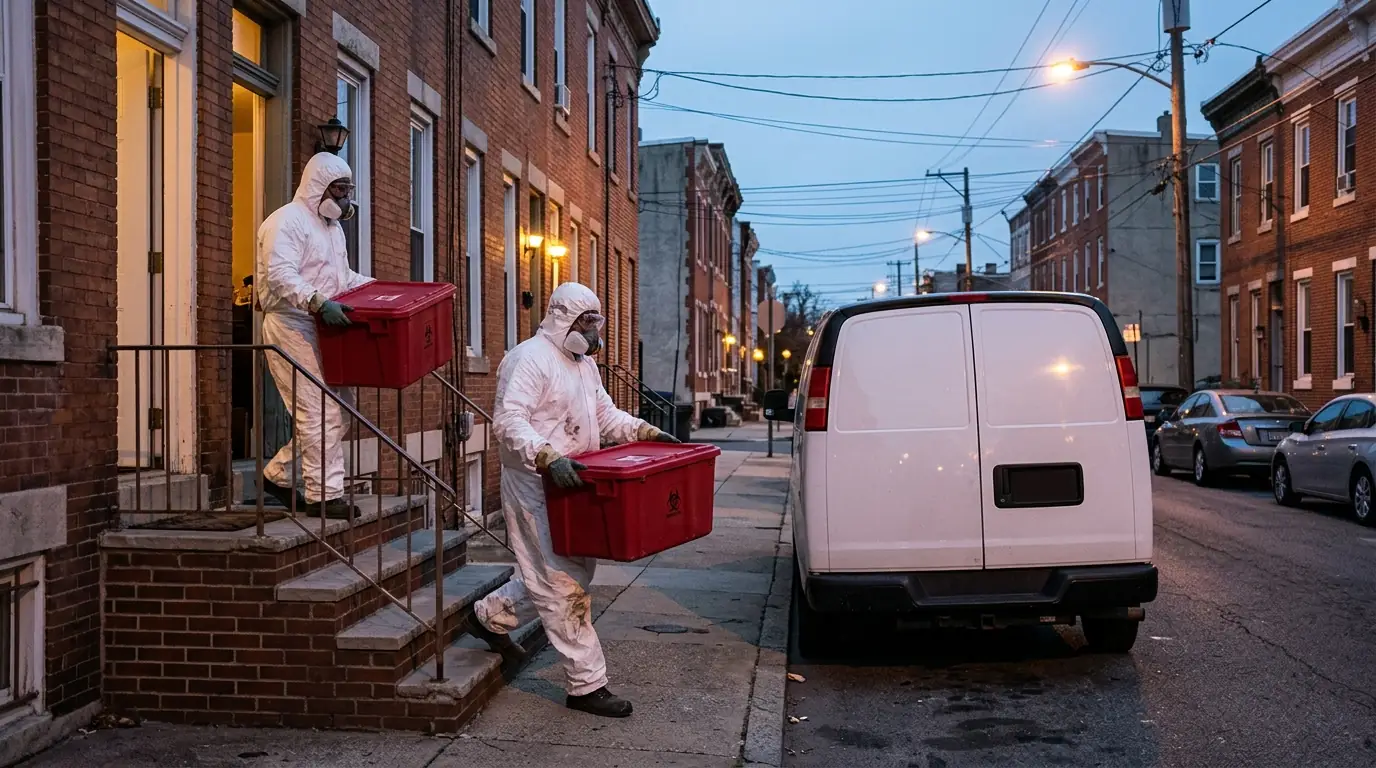
Hospitality runs on turnover. A hotel near the Convention Center might have the same room booked again tomorrow night. A host with a short-term rental in Fishtown has a check-in at four. A property manager in University City has a new tenant arriving on the first of the month. When a death, injury or overdose happens in one of those units, the clock does not stop, and neither do the reviews that follow a room that still smells wrong.
We help keep that schedule without cutting corners. Our crews know how to move through a hotel corridor or apartment hallway without drawing attention, how to deal with mattresses and bedding that absorbed fluids, and how to clear the kind of lingering odor that guests notice the moment they open the door. You get a clean, disinfected unit and the paperwork to show it, so the next arrival walks into a room that feels ordinary.
When a guest room or rental unit needs biohazard cleanup
A guest or tenant died in the unit
Any death, attended or unattended, needs trained cleanup before the space is used again.
An overdose happened in the room
Drug residue, needles and fluids call for careful removal and disinfection.
Blood or fluids on bedding or carpet
Fluids soak deep into soft goods and need more than housekeeping can give.
Housekeeping noticed a strong odor
Unexplained smells in a room or unit often point to fluids or decomposition.
A guest was injured on site
Falls and other injuries in bathrooms, pools or common areas can leave hazards behind.
The unit was left in unsanitary condition
Human waste, vomit or heavy filth left by a guest or departing tenant.
How we return a hotel room or rental unit to service
First call and access plan
You call (267) 699-2329 and tell us the address, unit and what happened. We agree on arrival time, entrance and elevator.
Confirm release and protect the path
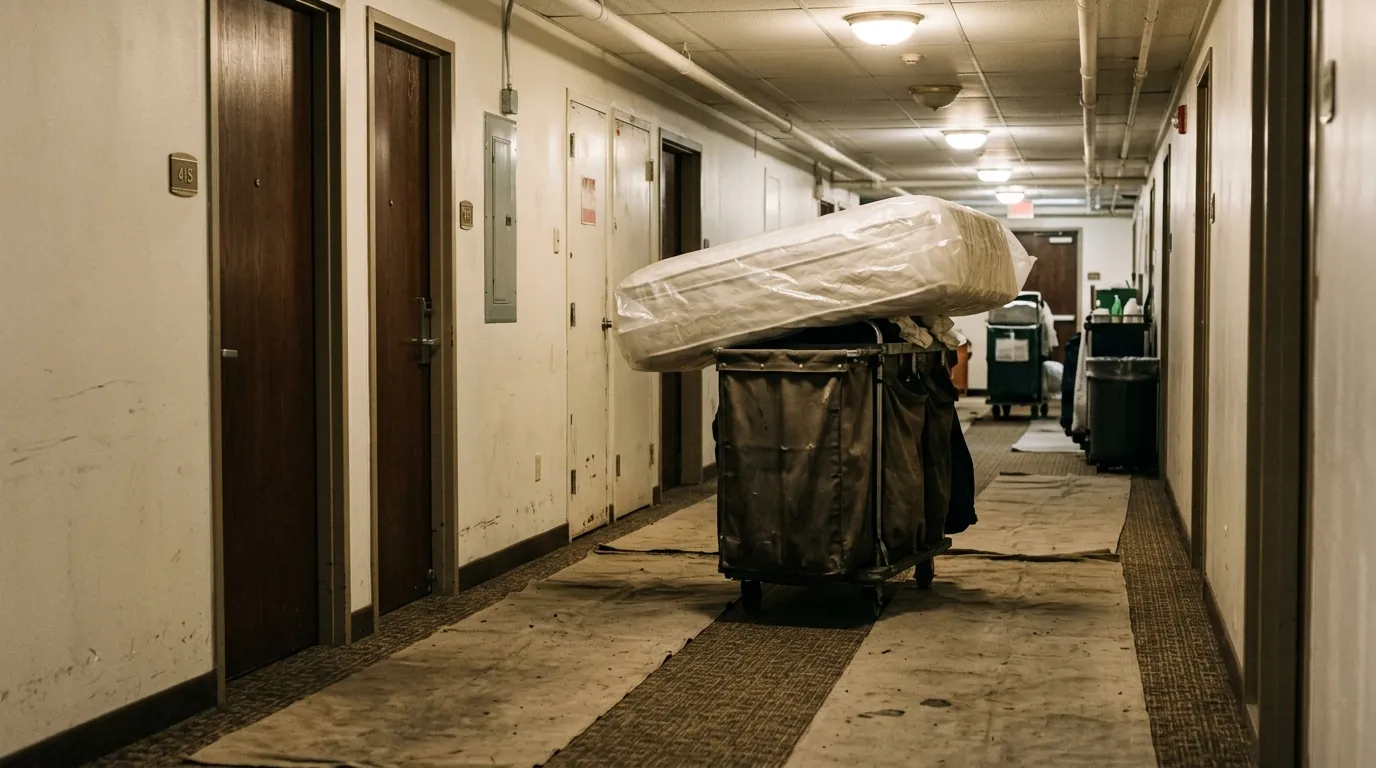
We confirm police or the Medical Examiner have released the unit, then lay runners and corner guards in the hallway.
Contain and remove
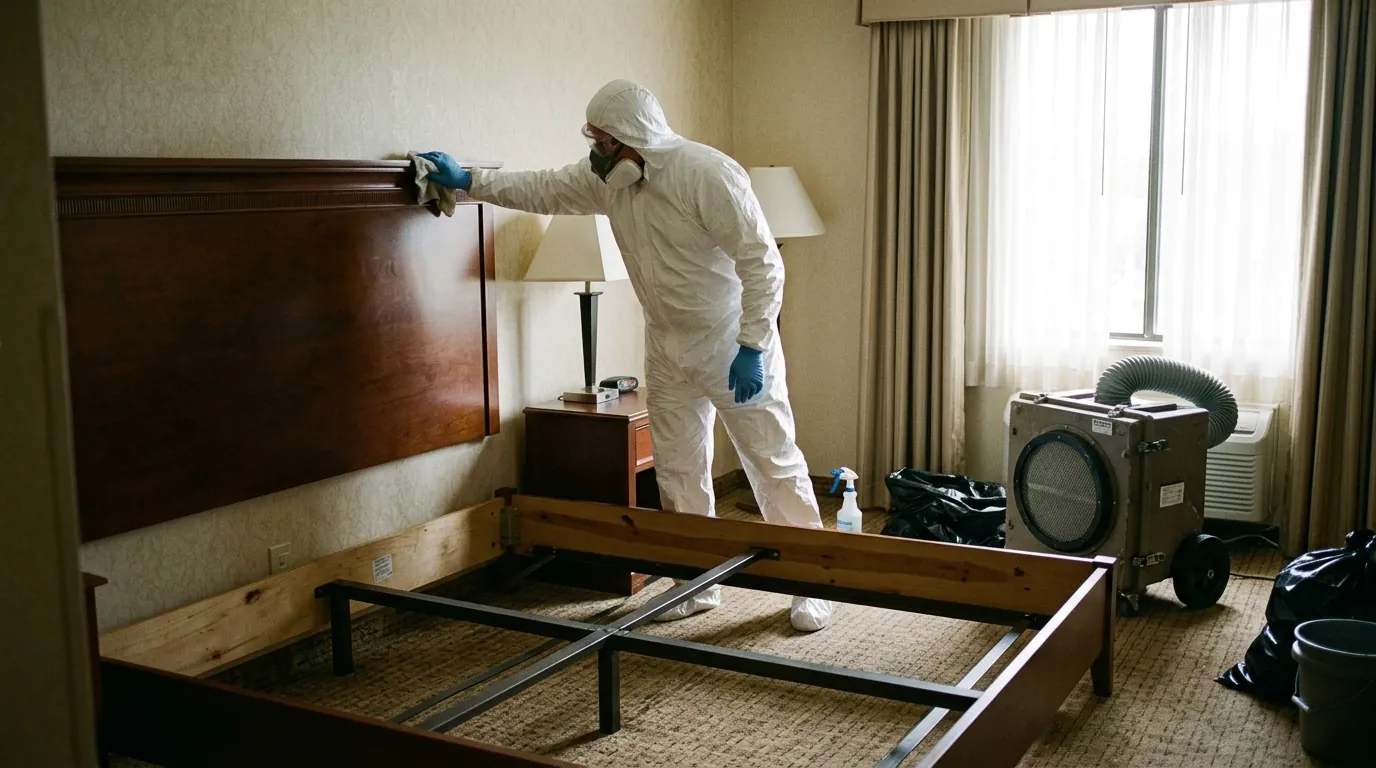
Inside the unit, technicians suit up and remove affected mattresses, linens, carpet and soft goods into sealed bags and containers.
Clean and disinfect
Hard surfaces, fixtures and furniture are cleaned and treated with EPA-registered disinfectants for the full contact time.
Odor and air treatment
We address HVAC filters and grilles, then run deodorization equipment suited to the building.
Final check and records
We walk the unit with you, remove all equipment, and send photos, item lists and waste records.
Mattresses, linens and soft furnishings after fluids
Beds are where many hotel and rental incidents end up, and mattresses are among the hardest items to save. Fluids pass through sheets and mattress protectors into foam and fiber layers, where no surface cleaning can reach them. In nearly every case, a mattress or box spring that absorbed blood or other bodily fluids is removed, sealed and disposed of as contaminated material.
Linens and towels are handled according to how badly they were affected. Lightly soiled items can sometimes go through a hospital-grade laundry process, but anything heavily soaked is bagged and removed. Upholstered chairs, headboards, curtains and carpet are each judged on what they absorbed and how deeply.
We list and photograph everything that leaves the room. Hotels and hosts use that list to restock and to support insurance claims, and it keeps the decision clear: nothing is thrown away without a record.
- Affected mattresses and box springs removed and sealed
- Bedding and towels bagged or sent for proper laundering
- Upholstery, drapes and carpet judged item by item
- Every removed piece photographed and listed
Clearing odor so the next guest never notices
Odor is often what triggers the call, and it is the thing guests notice first. In hotel rooms and apartments, smells move through heating and cooling units, bathroom exhaust fans and gaps under doors. Spraying a fragrance only masks the problem for a few hours. Lasting results come from removing the source material first, then treating the air and surfaces.
After cleanup and disinfection, we clean or replace the HVAC filter in the unit and wipe down the air handler grilles. Where needed, we use hydroxyl generators or other deodorization equipment suited to occupied buildings. Ozone is only used in a fully vacated, sealed space and never when people or pets could be exposed.
We check the room again before handing it back. A unit that still smells is not ready for a guest, however clean it looks.
Turnaround that fits hotel and short-term rental schedules
Speed matters, but so does doing the work right the first time. For a typical hotel room or one-bedroom rental, removal, cleaning and disinfection can often be completed in a single visit. Odor treatment and drying may take longer, especially if carpet or subfloor was affected.
We give you a realistic timeline on the first call, then update you as the work goes on. Hotel managers can decide whether to block one room or adjoining rooms too. Short-term rental hosts can decide whether to cancel the next booking or shift it a day. Apartment managers can plan for the incoming tenant's move in date with a clear sense of when the unit will be ready.
If police or the Medical Examiner's Office were involved, the unit has to be released before we can begin. Once it is, we can usually start right away, since we answer 24/7 every day of the year.
What shapes the cost of hotel and rental biohazard cleanup
Each unit is different, and a few details set the scope of work.
How far contamination spread
A single bed is a smaller job than fluids that reached carpet, subfloor or a bathroom.
Time before discovery
Longer delays usually mean deeper contamination and more odor work.
Soft goods to remove
Mattresses, upholstered furniture and carpet add removal and disposal time.
Building access
Elevator lockouts, limited work hours and long carries from the loading area take more crew time.
Odor treatment needed
Strong or lingering odors may need extra equipment and more days.
Hotels and property owners often have commercial property policies that cover sudden events like this, and short-term rental hosts may have host protection or homeowner's coverage that applies. We provide photo records and item lists for claims, and we can bill the property owner, management company or insurer as agreed.