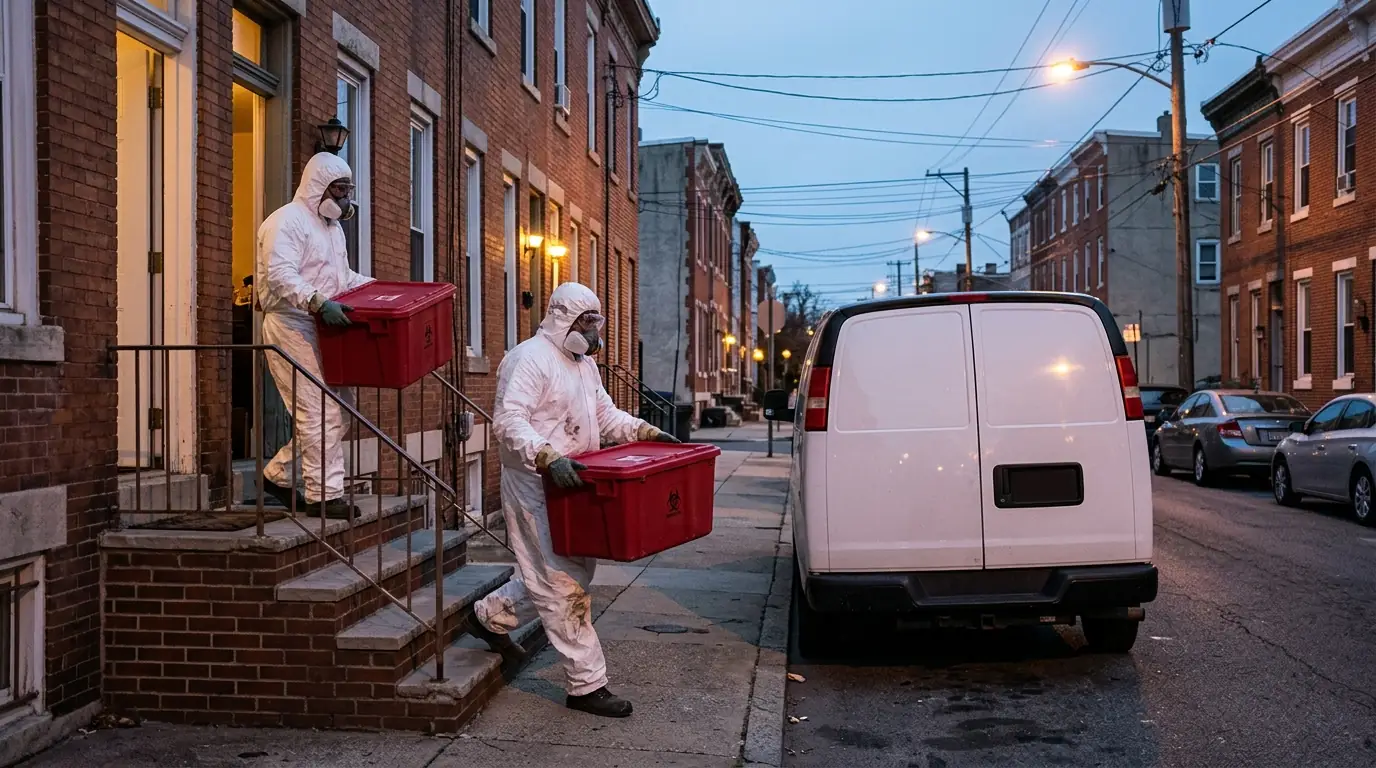
A customer collapses in an aisle. An employee is hurt on a warehouse floor. Someone is found in a restroom at a transit stop or in a stairwell of a parking garage. In each case, a manager has to protect people, keep the business running, answer questions from staff and customers, and deal with a scene nobody on the payroll should be asked to clean. That is the moment to call us, before anyone reaches for a mop.
Commercial work is different from a house call. There are tenants and customers to consider, shift changes, building engineers, corporate safety teams and insurers who want paperwork. Our technicians plan around all of that. We can seal off one restroom while the rest of a store stays open, work through the night so an office is ready by morning, or coordinate with a facilities team to clean a school hallway between dismissal and the next day's arrival.
Places we clean, from Center City offices to suburban warehouses
Our commercial calls come from almost every kind of building in and around Philadelphia. Office towers in Center City and University City call after a medical emergency in a conference room or an injury in a freight elevator. Retail stores along Market Street and in malls such as King of Prussia call about restroom incidents and shoplifting injuries. Restaurants and bars call when a kitchen accident or a late night fight leaves blood on floors and fixtures.
We also work in warehouses and distribution centers along the I-95 corridor and in Northeast Philadelphia, where forklift and machinery accidents happen. Gyms and fitness studios call about injuries and fluids on mats and equipment. Schools, colleges and daycares need fast, quiet work before students return. Churches and community halls call after a medical event during a service.
Transit and parking facilities are their own category. Stairwells, elevators, platforms and garage levels see overdoses, assaults and people sheltering, so we clean those with attention to foot traffic, ventilation and the hard, textured concrete that holds residue.
- Offices, banks and medical office suites
- Retail stores, malls and grocery stores
- Restaurants, bars and commercial kitchens
- Warehouses, plants and loading docks
- Gyms, schools, daycares and houses of worship
- Parking garages, stations and transit stops
How we keep your doors open while we work
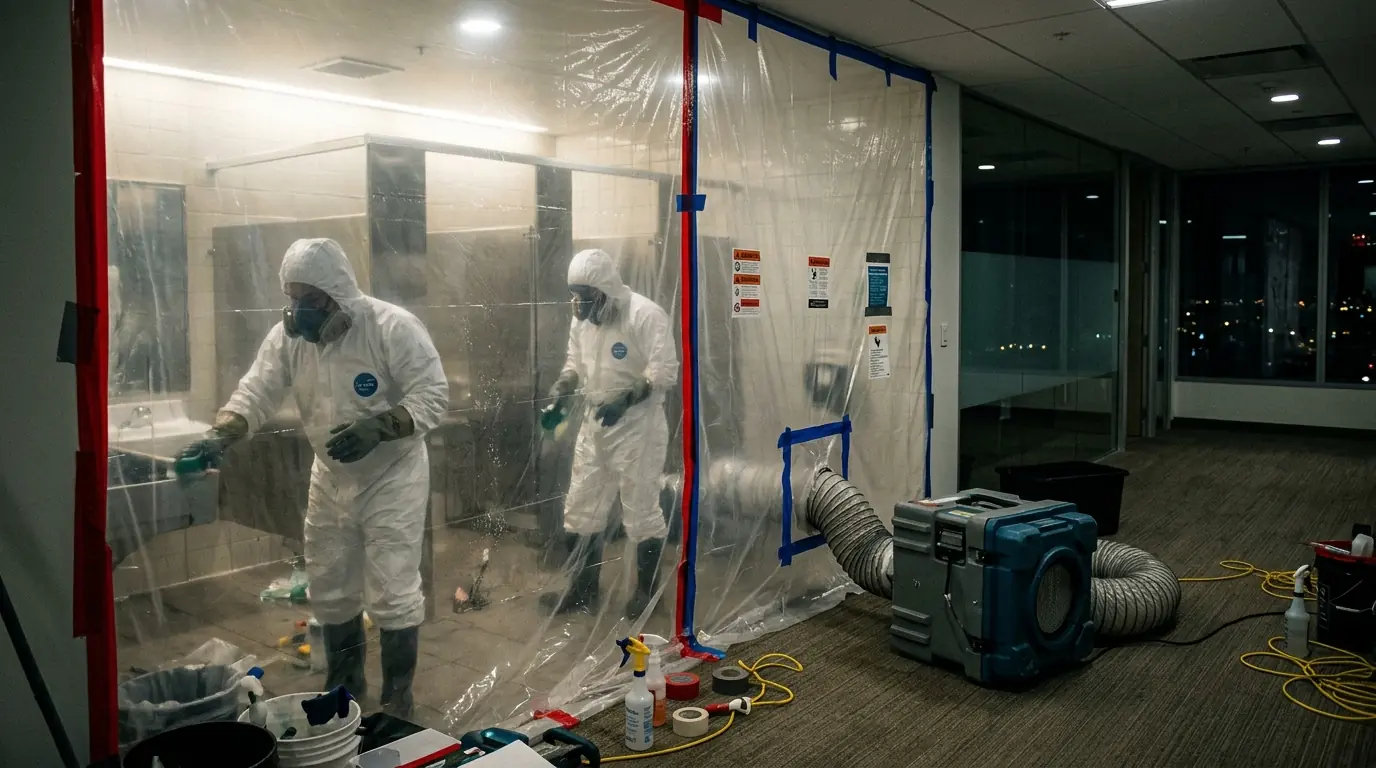
Closing an entire building because of one affected room is rarely necessary. We start by defining a clear work zone with barriers, poly sheeting and, where needed, negative air machines with HEPA filters. Signage and a staffed entry point keep employees and customers out without drawing attention to what happened.
Timing matters as much as containment. Many Philadelphia businesses ask us to come after close, overnight, or early on a weekend so customers never see the work. We answer 24/7, so a call at closing time can mean a crew at the loading door within a short window. For buildings that cannot close at all, such as hospitals, transit stations and twenty-four hour stores, we stage the work in sections and keep a technician at the boundary the whole time.
We also work with the people who run the building. Facility managers know where the shutoffs are, which elevator can be locked out, and when deliveries arrive. A short walkthrough with them before we start often saves hours. When the work is done, we remove barriers, clear equipment and leave the space ready for normal use.
How a commercial cleanup moves from first call to reopening
Call and quick briefing
You call (267) 699-2329 and tell us the location, what happened, and when the space needs to be back in use. We confirm access details and any building rules.
Walkthrough with your contact
On arrival, we meet your manager or facility lead, confirm police have released the scene if they were involved, and agree on the work zone.
Containment and protection
Barriers, sheeting and HEPA air filtration go up. Technicians suit up inside the zone so the public sees as little as possible.
Removal and cleaning
Affected materials are removed and bagged, and surfaces are cleaned, then disinfected with EPA-registered products for the full contact time.
Waste packaging and transport
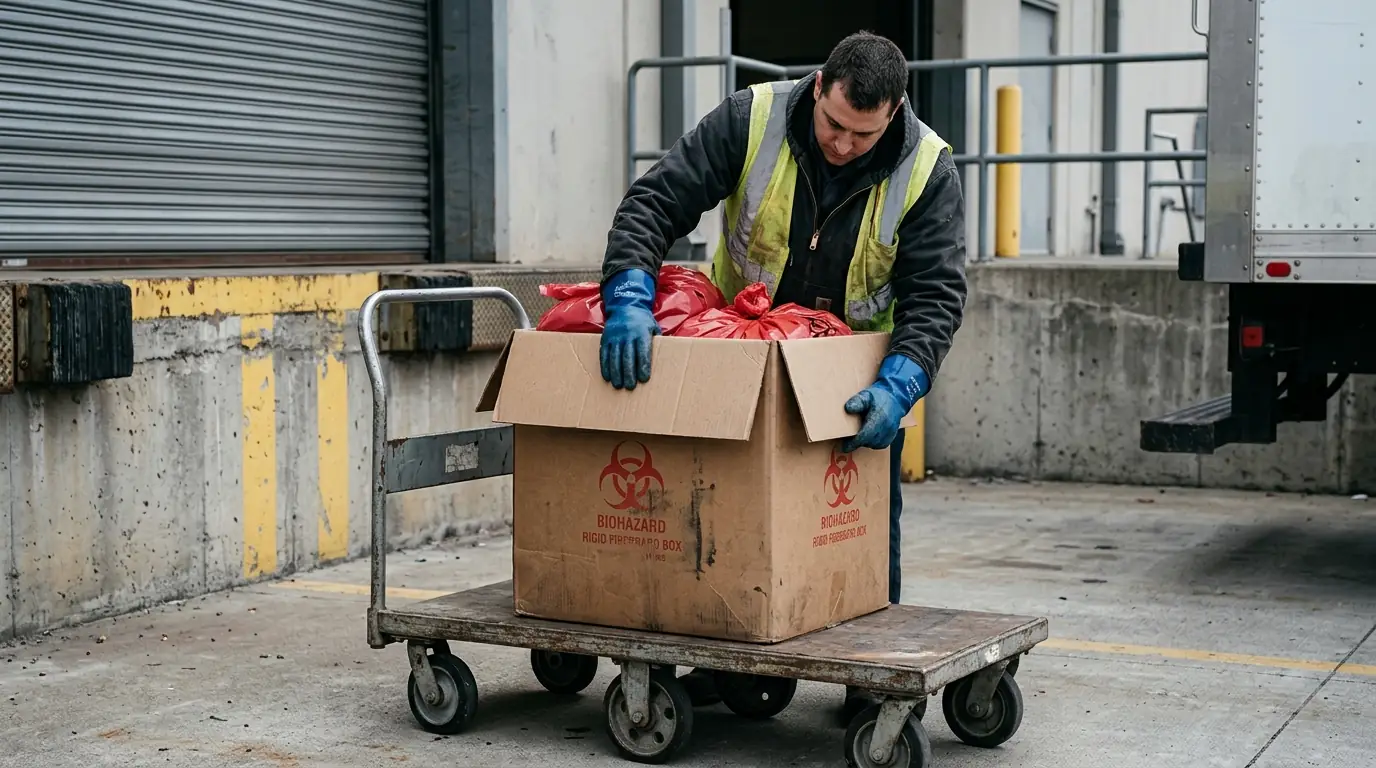
Regulated waste is sealed in red bags and rigid containers and taken to a permitted treatment facility, with manifests kept.
Handover and records
We walk the space with your contact, remove equipment, and deliver photos, notes and disposal records.
Documentation your safety team and insurer will ask for
Most businesses need more than a clean floor. They need a record. OSHA's bloodborne pathogens standard requires employers to protect workers who might be exposed to blood and other potentially infectious material, and to keep certain records. Bringing in an outside crew for the cleanup is one way many employers keep their own staff out of that exposure.
Our paperwork is built around what managers and adjusters ask for. You get the date and times of work, a description of the affected area, before and after photos, a list of removed materials, the disinfectant product and contact time used, and waste manifests showing that regulated medical waste went to a permitted facility under Pennsylvania DEP rules. If you ask for it, we add ATP surface readings taken before and after cleaning.
That file goes straight to your safety officer, your corporate risk team, your property manager or your insurer. Clear records also help if an employee, customer or tenant asks questions later.
When a business should call for biohazard cleanup
Blood or fluids after an injury
Any visible blood, vomit or other fluids from an injury or medical event on site.
A death on the premises
A sudden or unattended death in an office, store, garage or other facility needs trained cleanup.
Needles or overdose evidence
Syringes, overdose residue or drug paraphernalia found in restrooms, stairwells or parking levels.
Assault or fight aftermath
Scenes released by police after a violent incident in a bar, store or public area.
Sewage or feces in a public area
Restroom overflows or human waste in stairwells and entrances that staff should not touch.
Employees are asked to clean it
If the plan is to hand a mop to a staff member, that is a sign to call instead.
Protecting employees and customers who saw what happened
Staff who witnessed an incident, or who found someone, are often shaken. Asking them to clean the area adds to that strain and can expose them to bloodborne pathogens they are not equipped to handle. Our technicians take that load off them entirely, using the protective gear and training the work requires.
We keep our presence low key. Our crew wears standard work clothes when walking through public areas and suits up only inside the work zone. We do not discuss the incident with customers or passersby, and we route waste out through a back entrance or loading dock wherever the building allows.
If an employer has an employee assistance program, managers sometimes let staff know about it while we work. Our part is to return the space to a normal condition quickly so people are not reminded every time they walk past a taped off room.
What shapes the cost of commercial biohazard cleanup
Commercial jobs vary widely, so we talk through the details before starting.
Size and spread
A single restroom stall is a smaller job than a scene that spread across a sales floor or stairwell.
Surface types
Commercial carpet, ceiling tiles and porous concrete may need removal or extra treatment.
Timing
Overnight, weekend or phased work to keep a business open can change crew hours.
Access and building rules
Freight elevator booking, security escorts and limited loading hours affect how long work takes.
Waste volume
More removed material means more containers and more disposal.
Records required
Detailed reports, ATP testing or multi-site documentation add time.
Commercial property and general liability policies often cover sudden biohazard events, though terms differ. We can bill your company, your property manager or the insurer directly once the details are confirmed, and we send records in whatever arrangement your accounts team needs. We explain our billing approach on the first call.