Cars are built to hide what spills inside them. A seat cover looks clean while the foam underneath holds fluid. Carpet dries on top while the jute pad below stays wet against the floor pan. Seat belt webbing wicks moisture into the retractor. That is why a vehicle that has been wiped down can still smell days later, and why detailing shops usually turn these jobs away.
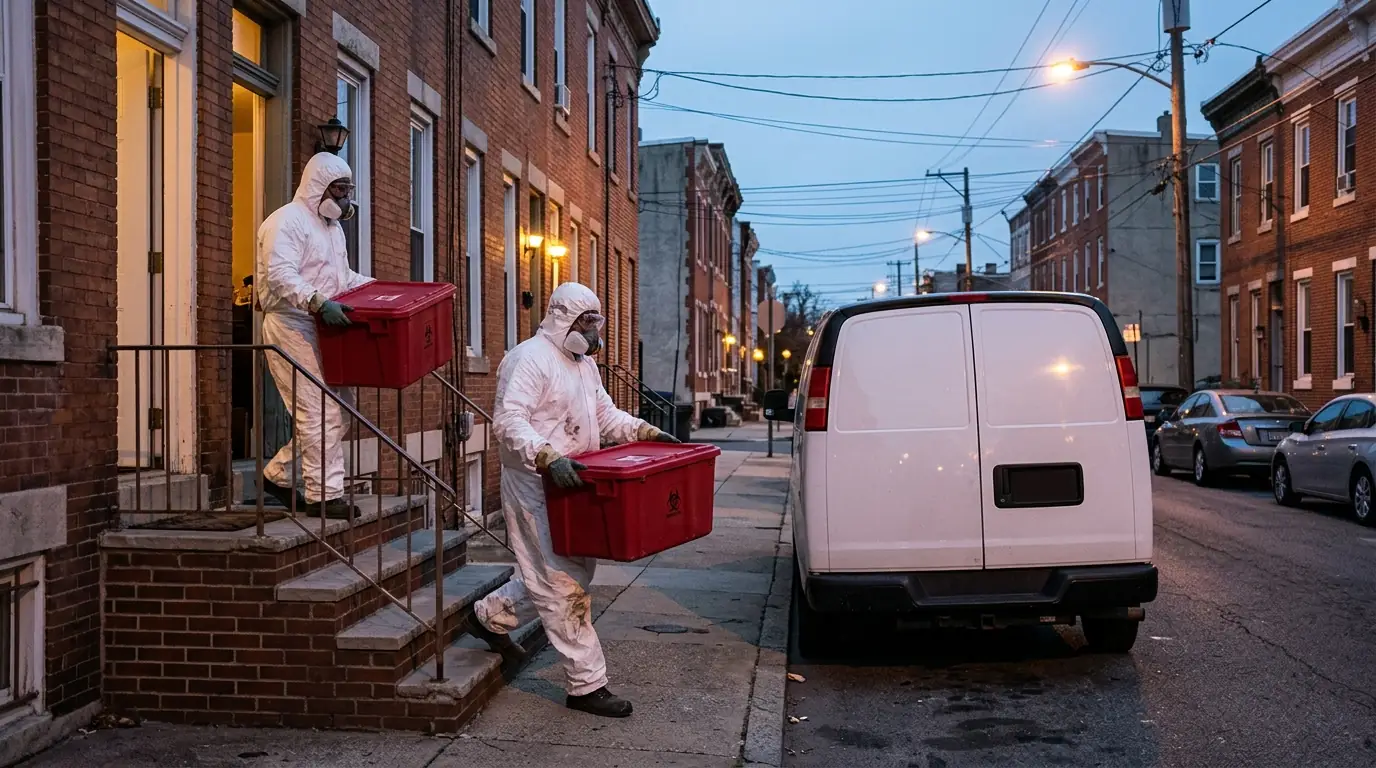
We get calls from families whose loved one died in a parked car, from rideshare drivers after a passenger was sick or injured, from fleet managers whose delivery van needs to return to service, and from people retrieving a vehicle from a tow yard after an accident. Each call starts with where the vehicle is now, because in Philadelphia moving it is often the hardest part. Our technicians come to it, so you don't have to drive or tow a contaminated car anywhere.
When to call us about a contaminated vehicle
A death occurred in the vehicle
Your loved one passed away in a car or truck, whether found right away or after some time.
Fluids soaked into a seat
Blood, vomit, urine or other fluids reached the fabric or foam of a seat.
An overdose happened inside
Paraphernalia, fluids or residue were left after an overdose in the vehicle.
Odor returns with the fan on
The cabin smells fine until the heat or air conditioning runs.
A rideshare passenger was injured or sick
You need the car clean and documented before your next trip.
The car is at a tow lot
You need belongings recovered or the interior cleaned before reclaiming or selling it.
Where fluids hide inside a car or truck
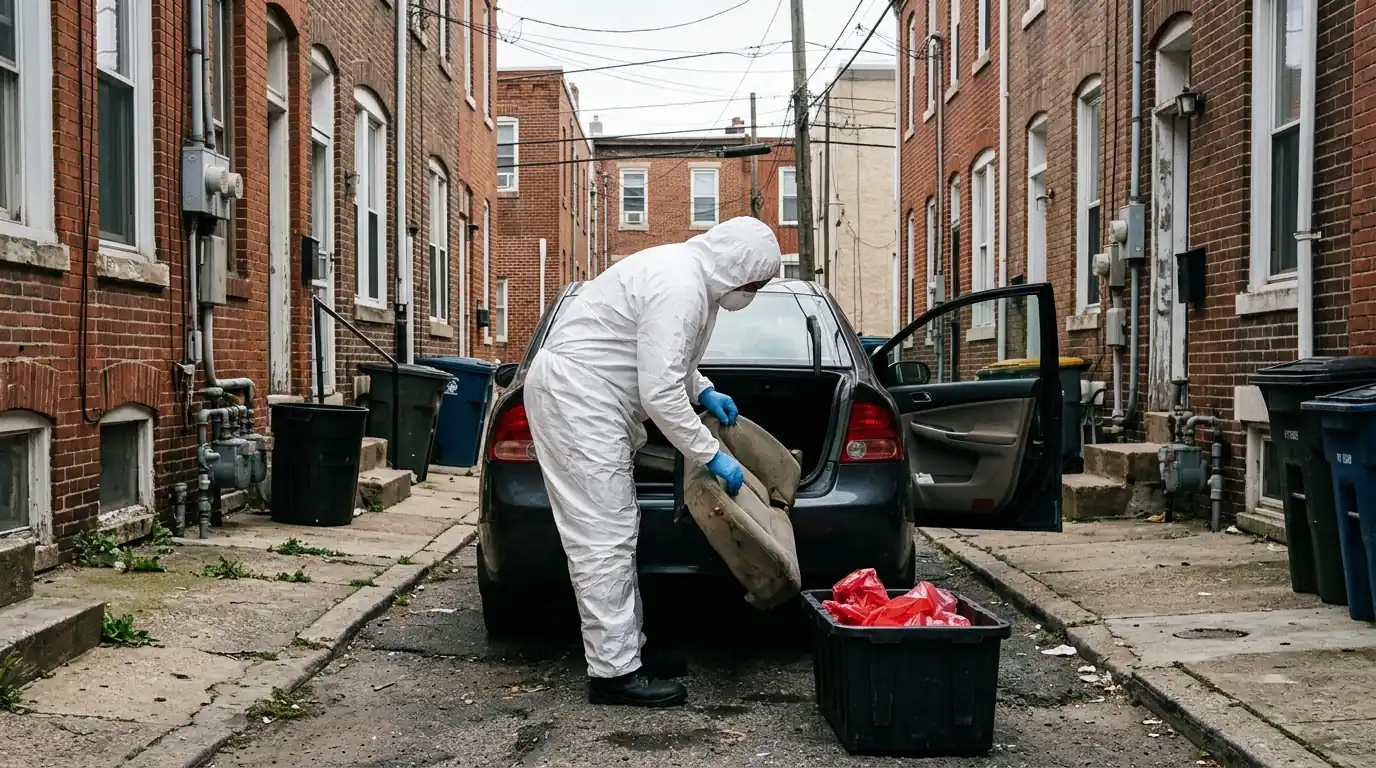
Most vehicle seats are a fabric or leather cover stretched over molded foam, mounted on a metal frame with wiring for heaters, airbag sensors and power adjusters. Fluid runs through seams and pools in the foam. We unbolt affected seats, remove the covers, and decide whether the foam can be cleaned or must be replaced. Usually it is replaced, because foam holds fluid the way a sponge does.
Under the carpet sits a thick pad that soaks up anything reaching it. Fluids then sit against the floor pan, where they can cause corrosion and lasting odor. We pull the carpet back or out, bag the pad, clean and disinfect the metal, and let it dry fully before anything is reinstalled.
Other hidden spots include seat belt webbing, the gap between the seat and center console, under-seat storage trays, door pockets, and the rear cargo area in trucks and SUVs. We check each one with a bright light and moisture readings rather than guessing, and we photograph what we find.
How we clean a vehicle from the seats to the floor pan
Meet at the vehicle
We arrive where the car is parked, confirm access with the lot or property owner, and set up waste containers beside the doors.
Recover personal items
Belongings are collected first, cleaned where possible, and set aside for you.
Remove contaminated parts
Affected seat covers, foam, carpet pad, mats and belts are removed and packaged in sealed biohazard bags and boxes.
Clean and disinfect
Metal, plastic and vinyl surfaces are cleaned, then treated with an EPA-registered hospital-grade disinfectant for its full dwell time.
Treat vents and air
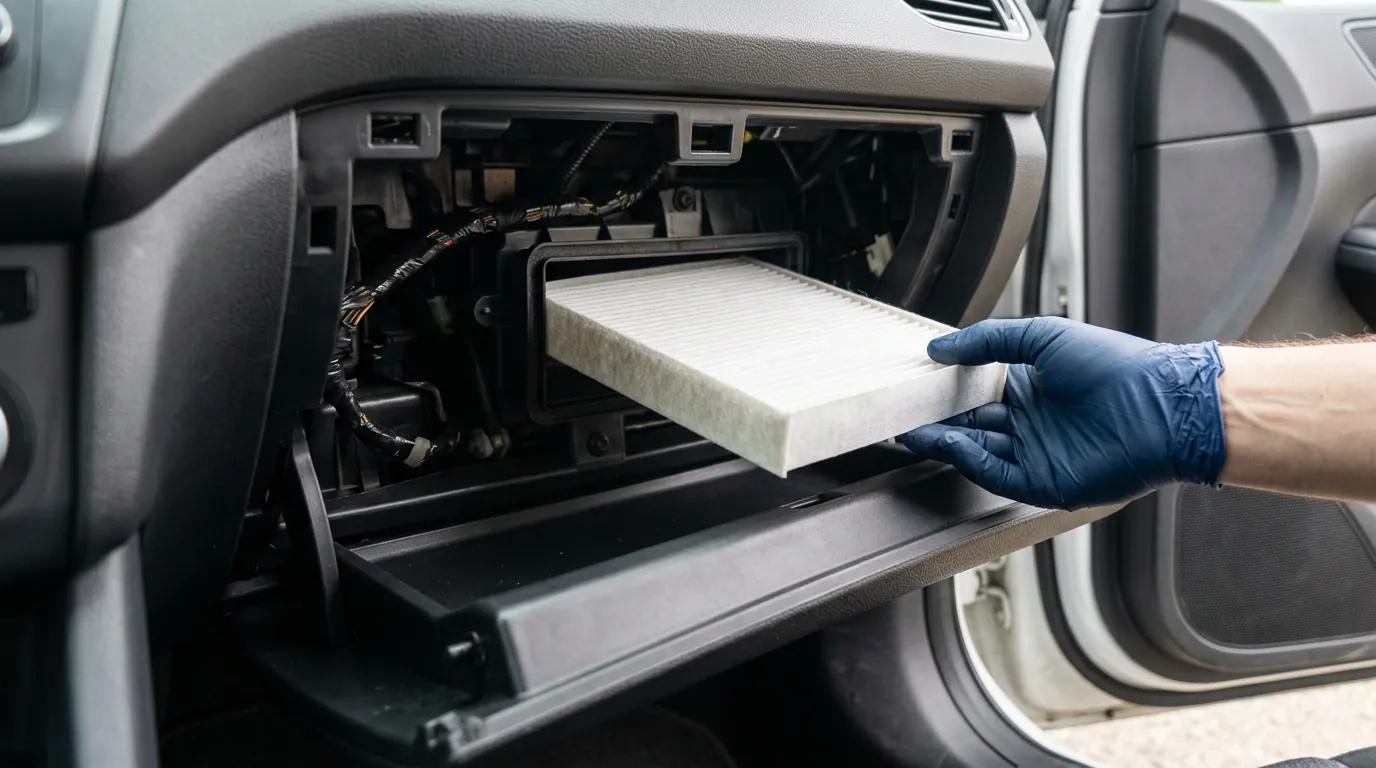
The cabin filter is replaced and the ventilation system is cleaned and deodorized.
Dry, reinstall and document
Once everything is dry, cleaned parts go back in and you receive a written record of the work.
Clearing vents and cabin air after a vehicle death
When a person dies in a closed vehicle and is not found right away, odor moves through the cabin air system. The cabin air filter captures some of it, and the rest settles into the ducts behind the dashboard. Even after the seats and carpet are handled, turning on the fan can bring the smell straight back.
We replace the cabin air filter, clean the vent openings and accessible duct runs, and treat the system with an odor counteractant while the fan runs on recirculate. For stubborn cases, we close the vehicle and use controlled deodorization methods, then air it out completely before handing back the keys. We let you know before using any treatment that requires the cabin to stay empty for a period.
Our aim is a vehicle you can sit in comfortably with the windows up and the fan on high, not one that only smells clean for a day.
When the vehicle is at a tow yard or impound lot
After an accident or a police investigation, a vehicle may sit at a tow yard or impound lot before the family can reclaim it. Many families want to retrieve personal belongings without seeing the interior as it is. We can meet you at the lot, recover personal items such as wallets, phones and photos, clean them where possible, and hand them over in a clean bag.
If the car will be totaled, the insurer may only need belongings recovered and the interior made safe for the adjuster. If it will be repaired or sold, we complete the full cleanup. We coordinate access with the lot so the work fits their rules and hours.
Tow yards across the region have their own hours and access rules, and some limit how long a vehicle can stay. Tell us where the car is being held when you call, and we will work out the timing with the yard directly so you have one less call to make.
What shapes the cost of vehicle biohazard cleanup
No two vehicles are the same inside, so we assess the vehicle before giving you a price.
How far fluids traveled
A surface spill on a vinyl seat differs from fluid that reached the foam, pad and floor pan.
Time before discovery
Longer time means deeper odor and more parts to remove.
Vehicle size and layout
A compact sedan has less to clean than a minivan with three rows or a box truck.
Parts replacement
Seat foam, carpet and belts may need replacement through a dealer or upholstery shop.
Location and access
Tow lots with limited hours or tight garage spaces can add time.
Full coverage auto insurance often pays for interior biohazard cleanup after sudden events, so call your carrier and ask. If the death or injury resulted from a crime, Pennsylvania's Victims Compensation Assistance Program may help eligible families with cleanup costs. We can provide the itemized paperwork your insurer or program requests.