What to do in the first hours after a tenant dies in your building
The first sign is often a tenant downstairs mentioning a smell, or a relative asking you to open a door because nobody has answered the phone. Once police and the Medical Examiner's Office are involved, the unit belongs to them until they finish. Philadelphia Police and the Medical Examiner will tell you when the scene is released, and nothing inside should be moved before that.
After release, keep the unit locked and resist the urge to send maintenance staff in with a mop and bleach. Fluids from an unattended death soak into carpet pad, subfloor and drywall, and the bloodborne pathogens standard from OSHA exists because that work carries real exposure risk. Change the lock or secure the keys, note who has access, and call us. We can usually walk you through the next steps on that first call, including what to tell the family and other residents while you wait for our crew.
Protecting the units above, below and beside the affected one
Much of Philadelphia's rental stock is rowhomes split into apartments, twins with shared walls, and older walk-ups where one set of floor joists carries two units. Fluids that reach a subfloor can travel along those joists and stain a ceiling below. Odor rides shared ductwork, plumbing chases and gaps around pipes into apartments that were never touched.
Before we remove anything, we set up containment with poly sheeting and zipper doors, and we run HEPA air scrubbers so the work area stays under negative pressure. That keeps particles and odor moving toward filtration rather than into the hallway. We seal supply and return vents in the affected unit, check the ceiling and walls of neighboring units where contamination could have traveled, and tell you plainly if a second unit needs attention. Catching it early is far easier than chasing an odor complaint from the tenant below three weeks later.
How we keep the work discreet for your other tenants
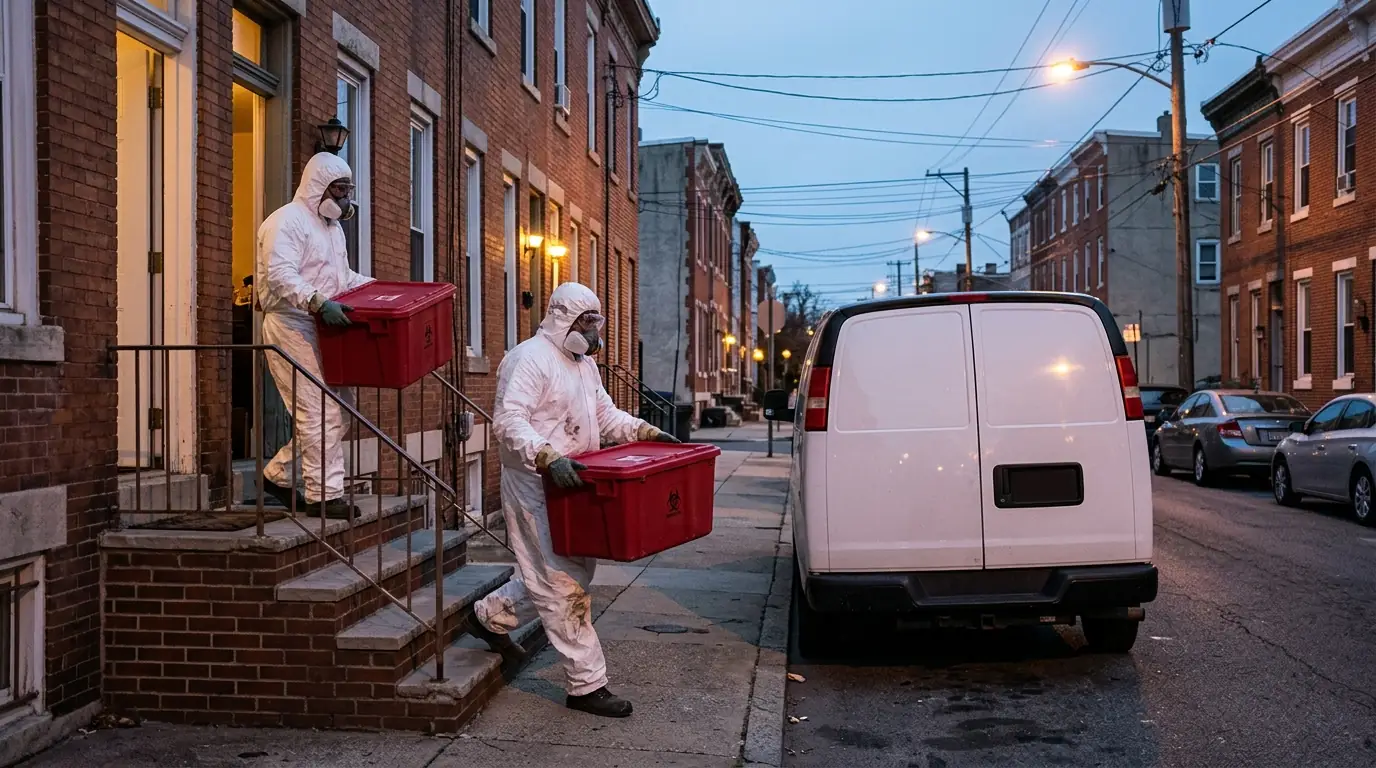
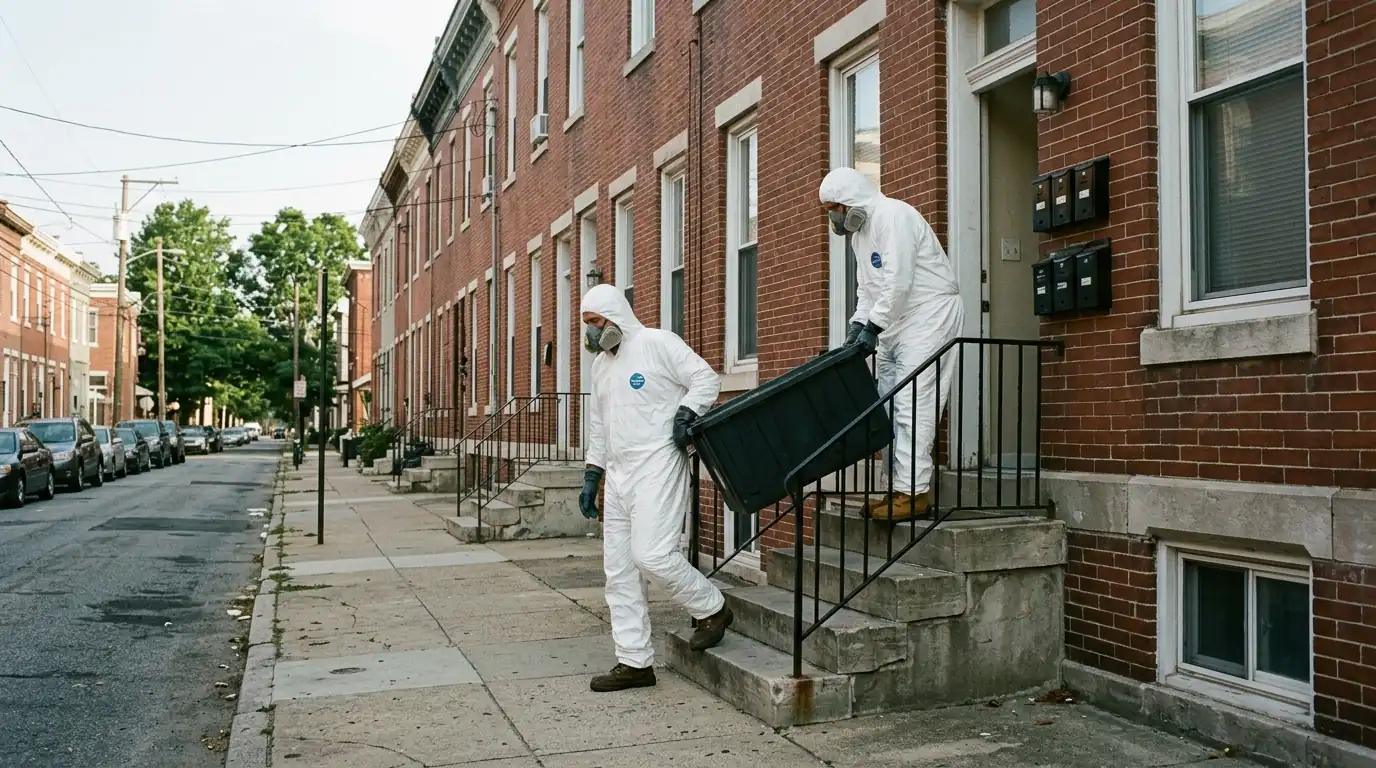
Your residents will notice activity, and some will ask questions. We don't discuss what happened with anyone except the people you tell us to speak with. Our technicians suit up inside the unit where the layout allows, and waste leaves in sealed bags inside closed rigid containers, so the hallway never shows anything upsetting.
We can work out arrival times with you, such as early in the day before most tenants leave for work, and we keep equipment staged out of common areas when we can. If you plan to send a short note to residents, we're glad to describe in general terms what the work involves so your message is accurate and calm. Most tenants mainly want to know that the building is safe and that someone capable is handling it.
Hoarded, abandoned and evicted units need a different plan
A unit left behind after an eviction or an abandonment often holds more than clutter. We find rotting food, pet waste, rodent droppings, used needles and soaked mattresses, sometimes all in one bedroom. Our crews sort and bag in a set order: sharps go into rigid containers first, then contaminated soft goods, then general debris, so nobody reaches blindly into a pile.
Pennsylvania and Philadelphia have rules about what a landlord can do with a former tenant's belongings and when. Those rules change depending on the facts, so talk to your attorney about the lease, the estate, any abandoned property and the eviction itself before you tell us what to keep. Once you've decided, we follow your written direction, set aside documents, photos and anything that looks valuable, and photograph what we remove. If the Landlord-Tenant Officer has just completed a lockout, we can often begin as soon as you have the unit back.
Sewage, droppings and other problems that cross unit lines
Not every call involves a death. A main line backs up and sewage rises through the floor drain of a basement apartment. Pigeons have been roosting in a rooftop mechanical space for years, or mice are nesting inside the wall between two kitchens. These problems start in shared systems, so they rarely stay in one unit.
For sewage, we pump out standing water, remove saturated drywall and flooring, disinfect with an EPA-registered product held for its full dwell time, and dry the structure before anyone rebuilds. For droppings, we wet down material before removal so dust doesn't spread, then clean or replace contaminated insulation. Your plumber or pest control company handles the cause, and we handle the contamination left behind. Coordinating those visits so tenants aren't disturbed three separate times is part of the job.
- Basement unit sewage and floor drain backups
- Pigeon droppings on roofs, fire escapes and attic spaces
- Rodent nesting inside shared walls and ceilings
- Odor traveling through shared ducts and plumbing chases
Records that owners, estates and insurers ask for
A property manager answers to an owner, and an owner may answer to an insurer, a lender or an estate. We document each job with that chain in mind. You receive dated photos taken before, during and after the work, a written scope listing every material we removed and why, and disposal records showing the waste went to a permitted facility under Pennsylvania DEP rules for infectious waste.
When we run ATP surface tests at the end, the readings go into the file too. If you manage several properties, we keep the format consistent so your bookkeeper and your owners see the same layout every time. We address invoices the way you tell us to, whether that's the management company, the owner of record or an estate representative. Clean records also help when a future tenant, buyer or inspector asks what happened in the unit and how it was handled.
Getting the unit rent-ready, with one number for your whole portfolio
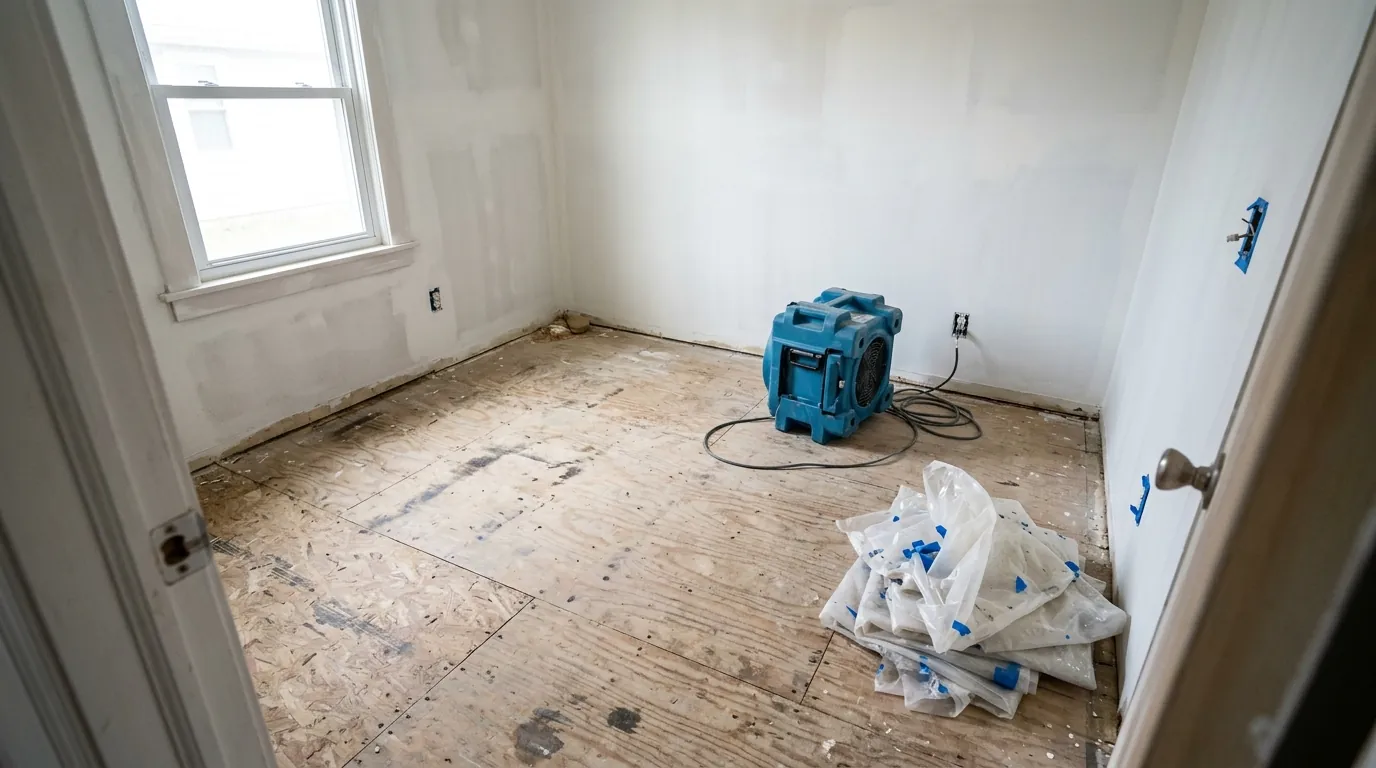
Our part ends when the unit is clean, disinfected, deodorized and verified. Affected flooring, drywall and trim are out, surfaces have passed testing, and odor sources are gone rather than masked. From there, your painters, flooring installers and maintenance staff can rebuild without worrying about what's under the surface. We'll tell you which areas we opened up so your trades know where to start.
If you manage buildings across Philadelphia, the suburbs or the Lehigh Valley, you don't need a new vendor for every address. Crews leave from our Society Hill office for city and nearby suburban jobs, and from our Allentown office for Lehigh and Northampton counties. Housing providers, condo boards and HOA managers use the same line for common-area incidents in lobbies, stairwells, elevators and parking areas. One call to (267) 699-2329 reaches us at any hour.