When a worker is hurt on a loading dock, falls from a ladder in a stockroom, or is injured by a machine on a production line, the first hours are taken up by emergency response, the injured person's family, and questions from supervisors. Then someone has to deal with the area itself. Too often a coworker gets handed a bucket, and that's a mistake. Cleaning blood is covered by OSHA's bloodborne pathogens standard, and asking unprepared staff to do it can expose them to infection and expose the business to a citation.
We clean accident scenes for warehouses, factories, construction sites, auto shops, retail stores, restaurants, gyms and apartment buildings throughout Philadelphia and the surrounding counties. Our technicians wear full protective gear, contain the area, and work around the equipment you need to keep. We answer 24/7, and we can usually work overnight or over a weekend to shorten downtime. When we leave, you have a clean space, a record of the work, and nothing sitting in a dumpster that shouldn't be there.
When to call us after an accident
A forklift or machinery injury
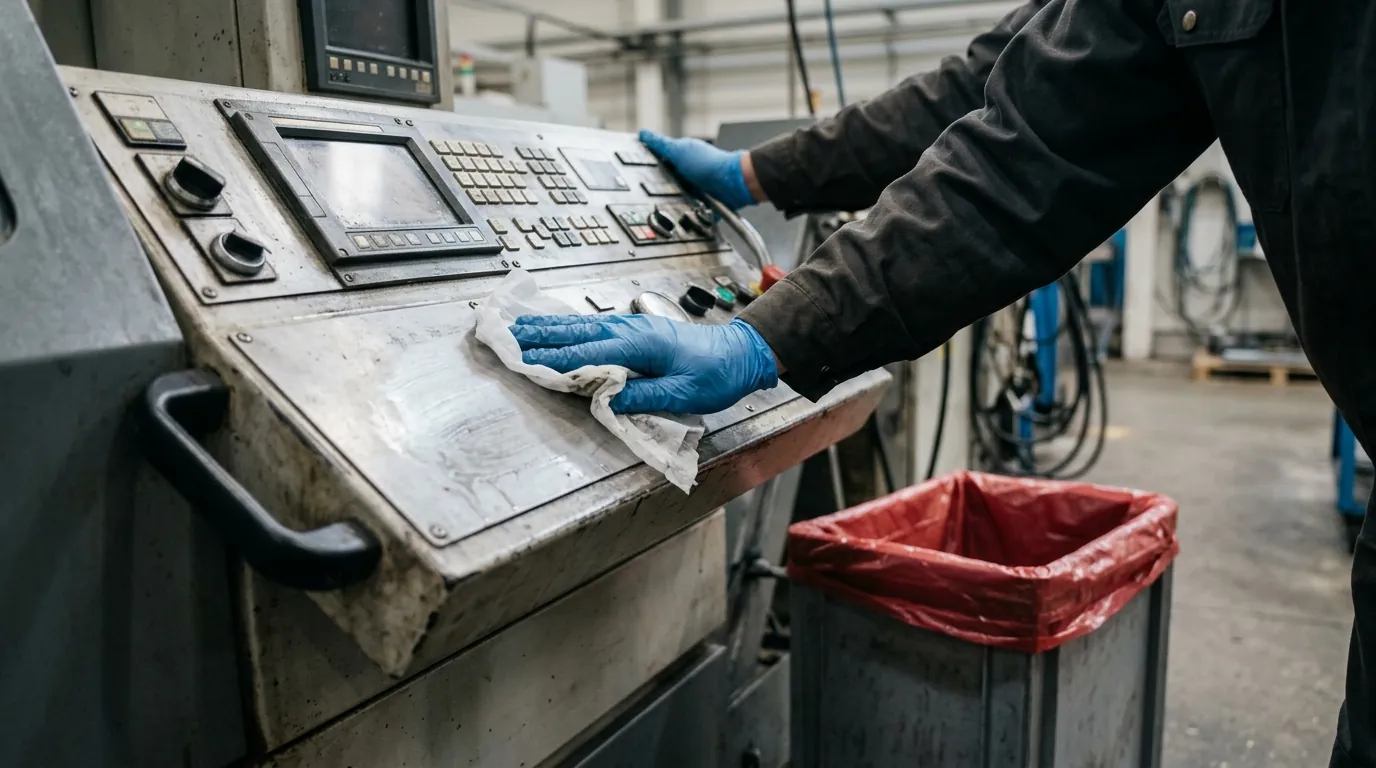
Blood on equipment, controls or nearby stock needs cleaning by protected technicians, with lockout before anyone touches the machine.
A fall from a ladder or height
Falls often leave fluid on several surfaces, from concrete floors to racking. We clean every surface the scene reached.
An injury on a loading dock
Dock plates, levelers and drains trap fluid. They need careful cleaning so the bay can return to use.
A serious cut in a kitchen or shop
Food prep areas and workbenches need disinfection that is safe for the surface and the work that happens there.
A fall inside a home
Carpeted stairs and hardwood landings absorb blood quickly and usually need more than surface cleaning.
Staff were asked to clean it
If coworkers have already started, stop and call. We can finish safely and check what has been missed.
What OSHA expects after a serious workplace injury
Federal OSHA rules require employers to report a work-related fatality within eight hours, and an inpatient hospitalization, amputation or loss of an eye within 24 hours. After a report, OSHA may send an inspector, and police may also be involved. Until they finish, the area should be left as it is. We don't start until the scene has been released, and we can talk with your safety manager about timing so we're ready to begin the moment it is.
The cleanup itself is shaped by OSHA's bloodborne pathogens standard, which covers any employee who could reasonably be exposed to blood on the job. It calls for protective equipment, proper decontamination, and regulated waste handling. Bringing in a crew equipped for that work keeps your staff out of exposure and gives you a clear record if an inspector later asks how the area was cleaned. We provide photos, a scope of work and disposal paperwork you can add to the incident file.
How an accident scene cleanup unfolds
Release and scheduling
We confirm with you that police or OSHA have released the area, then set a start time that fits your operation.
Lockout and containment
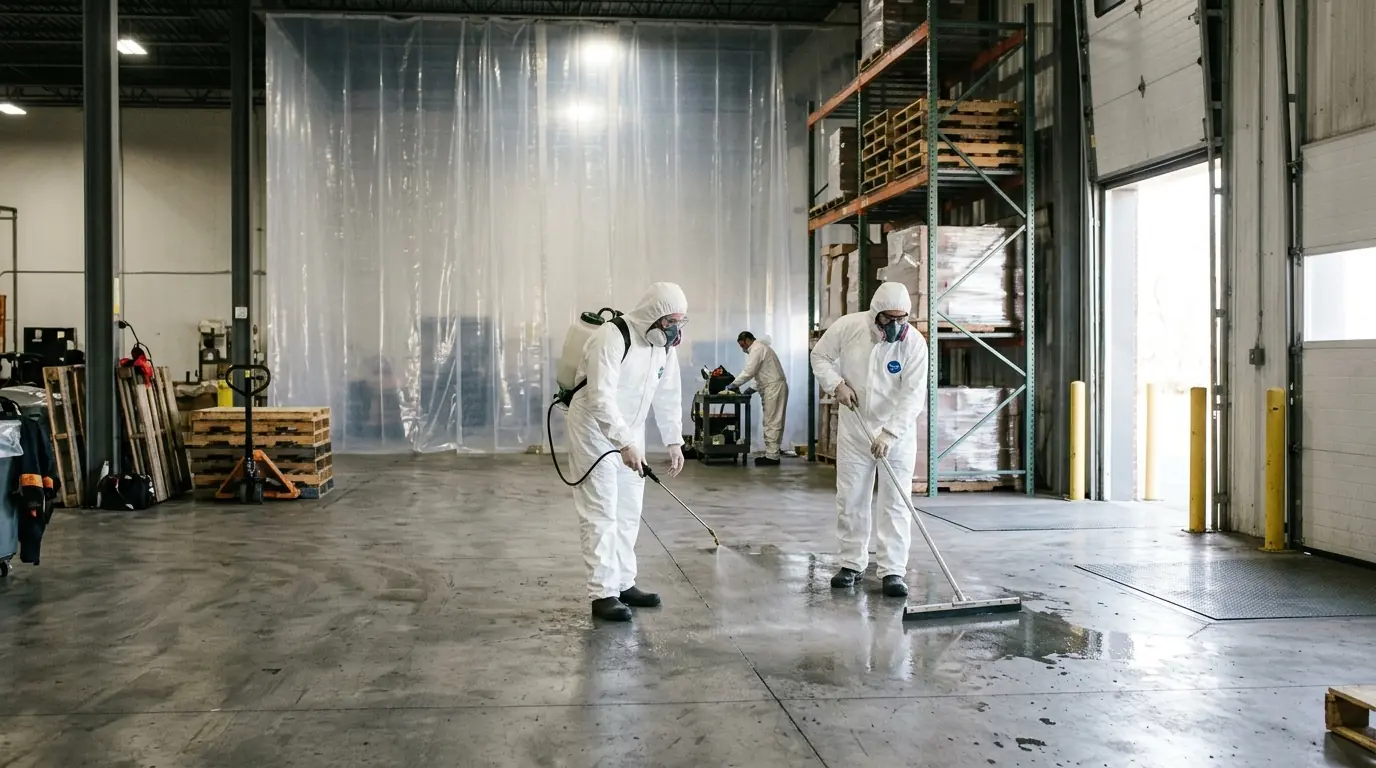
Your maintenance team locks out affected equipment. We set up poly sheeting, mark clean and dirty zones, and suit up.
Removal of contaminated items
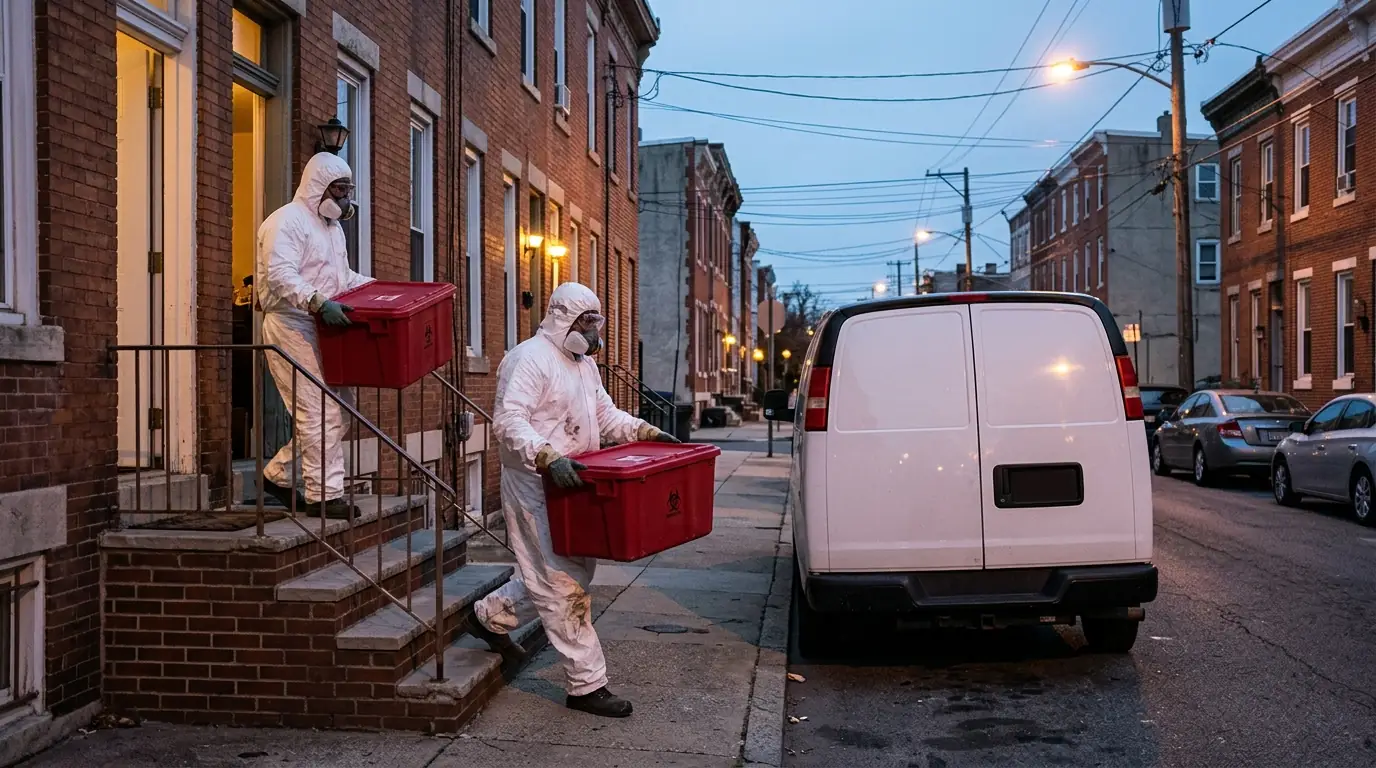
Soaked pallets, packaging, ceiling tiles or flooring are cut out or bagged in red biohazard bags inside rigid boxes.
Cleaning and disinfection
Floors, equipment and structures are cleaned of residue, then disinfected with products suited to each surface at full dwell time.
Testing and walkthrough
We use ATP testing to confirm surfaces are clean, then walk the area with a manager before handing it back.
Waste and documentation
Waste goes to a permitted treatment facility. You receive photos, a scope of work and the disposal manifest for your incident file.
Cleaning around machinery, racking and loading docks
Industrial accidents rarely happen on a clean, flat floor. Blood can reach conveyor belts, pallet jacks, forklift controls, dock plates, racking uprights and the inner workings of a machine. Each of those needs its own approach. We work with your maintenance team to lock out equipment before we touch it, and we avoid harsh products on electronics, gaskets or food-contact surfaces where a gentler EPA-registered disinfectant will do the job.
Porous materials such as wooden pallets, cardboard packaging, cloth gloves and stock in open cases usually can't be decontaminated and are better removed. Sealed concrete floors clean well, but older concrete that has cracked or worn can absorb fluid and may need scrubbing and sealing. On loading docks, we check the drain and the seal around the dock leveler, where fluid tends to collect. Outdoor scenes, such as a construction site or a parking lot after a fall, get the same treatment, with extra care to keep runoff out of storm drains.
Falls, ladder injuries and accidents at home
Not every accident happens on a job site. A fall down steep rowhome stairs, a ladder that slips while someone clears a gutter, a deep cut in a kitchen, or an injury in a basement workshop can all leave a scene a family shouldn't have to face. In a home, blood often reaches carpeted stair treads, the wall along a stairwell, and the hardwood at the bottom, all places that soak up fluid.
The steps are the same as on a commercial job, scaled to the space. We contain the area, remove soaked materials, clean and disinfect what remains, and test the result. For many families, the hardest part is simply walking past that spot afterward, so we pay attention to the small details: the handrail, the light switch, the grout line by the door. If the injured person is recovering in the hospital, we can do the work while you are at their side.
Getting your business open again with less downtime
Every hour a line or a store stays closed costs money, and a cleanup that drags on adds stress for staff who are already shaken. We plan around your schedule: arriving as soon as the area is released, bringing enough technicians to finish in one shift when possible, and working nights or weekends if that keeps your doors open. If only part of the floor is affected, we wall it off with poly sheeting so the rest of the operation can continue.
Before we leave, we walk the area with a manager, show the ATP test results, and confirm that waste has gone out in sealed containers. Many employers also choose to give staff a short explanation of what was done, which helps people feel comfortable returning to that part of the building. We're glad to answer questions from your team or your insurer.
What drives the cost of accident scene cleanup
Accident scenes vary widely, from a single stairwell to a production line. Here is what tends to affect the price.
Size and spread of the scene
One spot on concrete differs a great deal from fluid spread across equipment, floors and stock.
Equipment involved
Cleaning inside or around machinery takes more time and care than open floor.
Materials to remove
Pallets, packaging, carpet and drywall that must be disposed of add to labor and waste costs.
Work hours
Overnight or weekend work to avoid downtime affects how we staff the job.
Indoor or outdoor setting
Outdoor scenes may need runoff control and extra protection from the weather.
Commercial property and liability policies often cover accident cleanup, while workers' compensation deals with the injured person's care rather than the cleanup. For home accidents, homeowner's insurance often covers sudden events. We provide the photos, scope and disposal records insurers ask for, and we can bill the carrier directly once a claim is open.