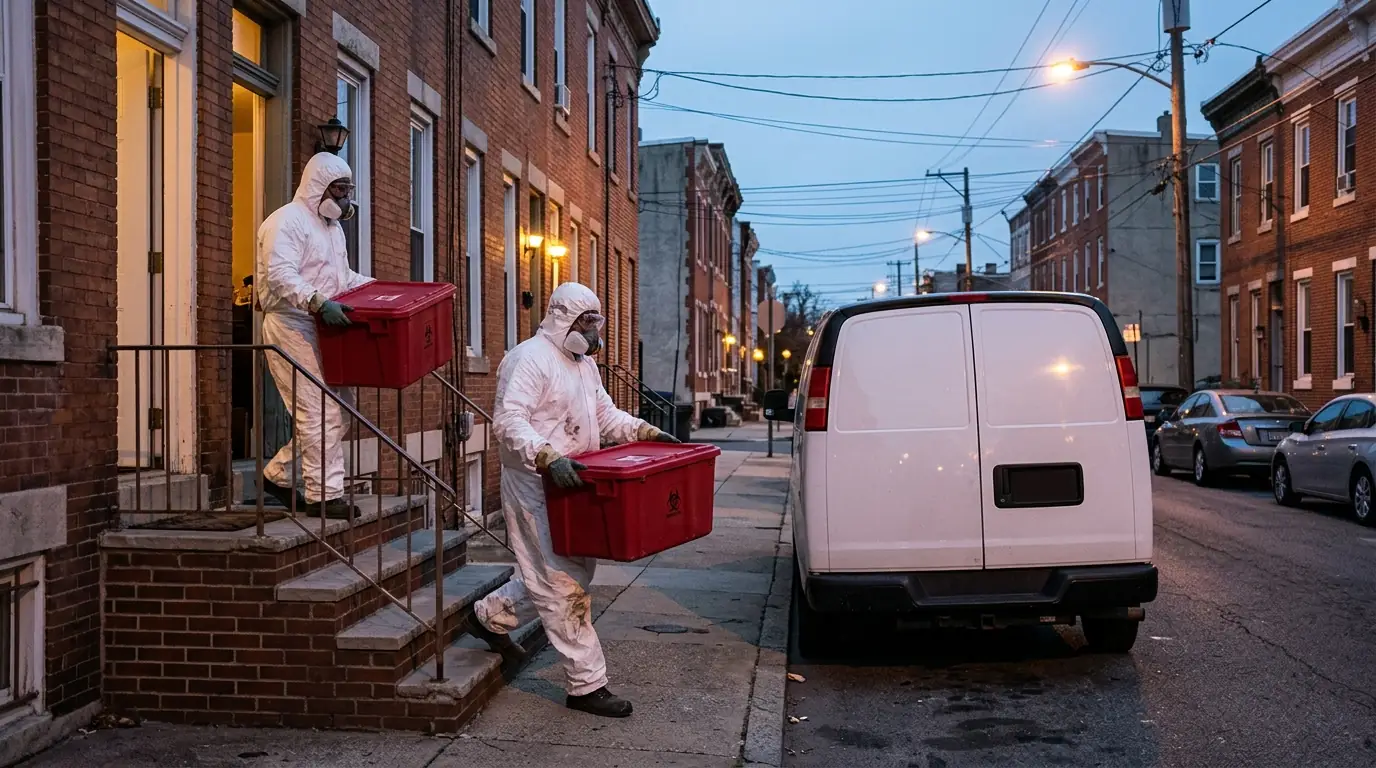
A rental left behind after an eviction is rarely just dirty. Landlords and property managers in Philadelphia walk into units with spoiled food in a dead refrigerator, bags of trash stacked to the ceiling, soiled mattresses, pet waste in every room and, sometimes, used needles in a drawer or between couch cushions. Squatted properties can be worse, because nobody was paying for water or trash pickup while people were living there.
We focus on the physical side once you have legal possession. Our technicians treat every unit as if sharps and bodily fluids could be present, because they often are. We work in protective gear, sort what has to be handled as biohazard waste from ordinary debris, and leave the space empty, disinfected and ready for your painters and contractors. Whether you own one duplex in Frankford or manage a portfolio across North and West Philadelphia, the goal is the same: a unit you can turn over without putting your maintenance staff at risk.
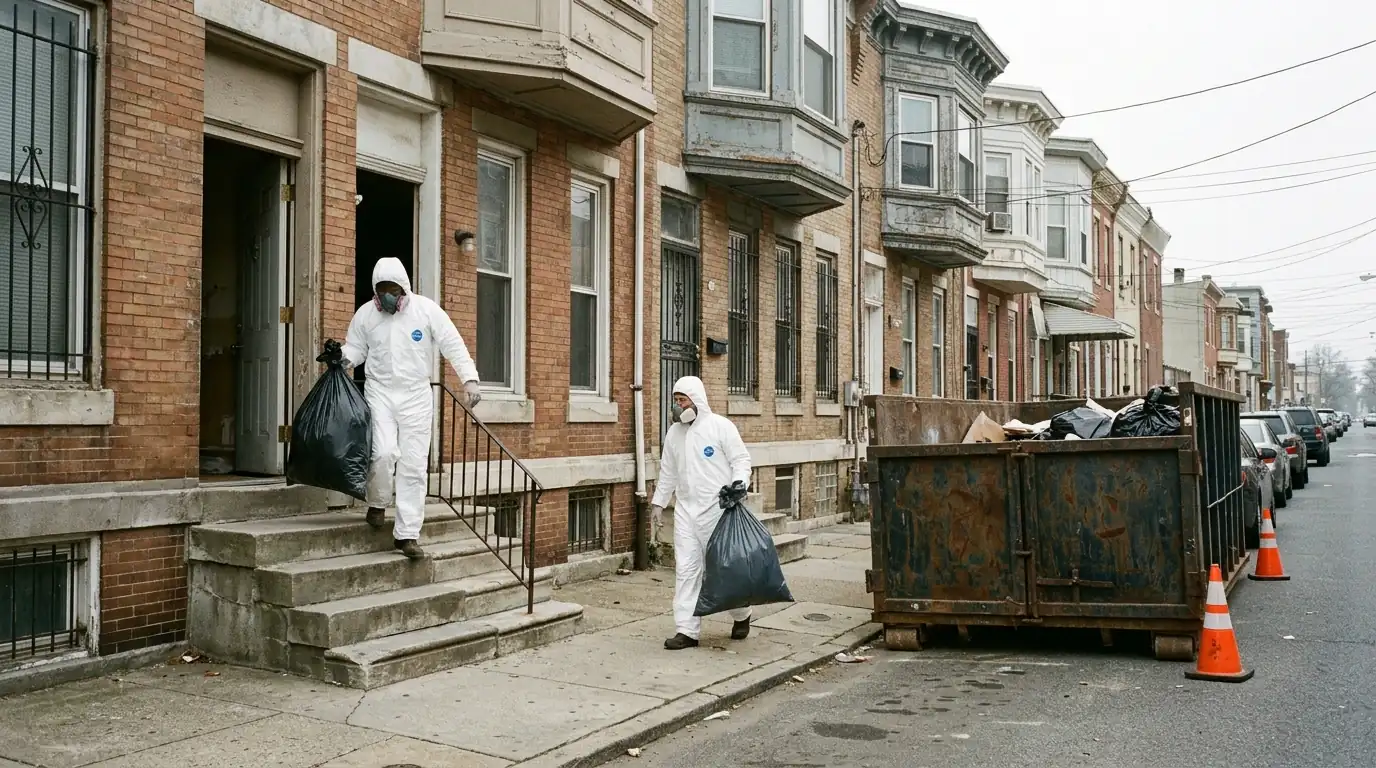
Where the legal process ends and the cleanout begins
Evictions in Philadelphia run through the court system, and the owner or their attorney handles that part. We don't give legal advice, and we don't change locks, serve notices or decide when a tenant's belongings can be removed. Those questions belong to your attorney and the court process. Rules about how long abandoned property must be held, and how to give notice, are specific and change over time, so owners should confirm them before anything leaves the unit.
What we need from you is simple: confirmation that you have possession and that the belongings in the unit can be cleared. Many owners ask us to photograph everything before we start, which gives you a clear record of the condition of the unit and what was left inside. If your attorney wants certain items set aside or stored, tell us before we begin and we'll box and label them. From there we clear the unit room by room, and the job moves quickly once the legal side is settled. Squatter situations follow the same pattern. Once the occupants are gone through the proper channels, we come in to clean.
Sharps, waste and spoiled food: the hazards hiding in a vacated unit
The obvious problem in a vacated rental is volume: furniture, clothing, bags of trash. The hidden problems are what make the job dangerous for a maintenance worker with a pair of work gloves and a contractor bag. Used syringes turn up in pockets, under mattresses, in bathroom vanities and in heating vents. A gloved hand reaching into a trash bag can be stuck by a needle nobody saw.
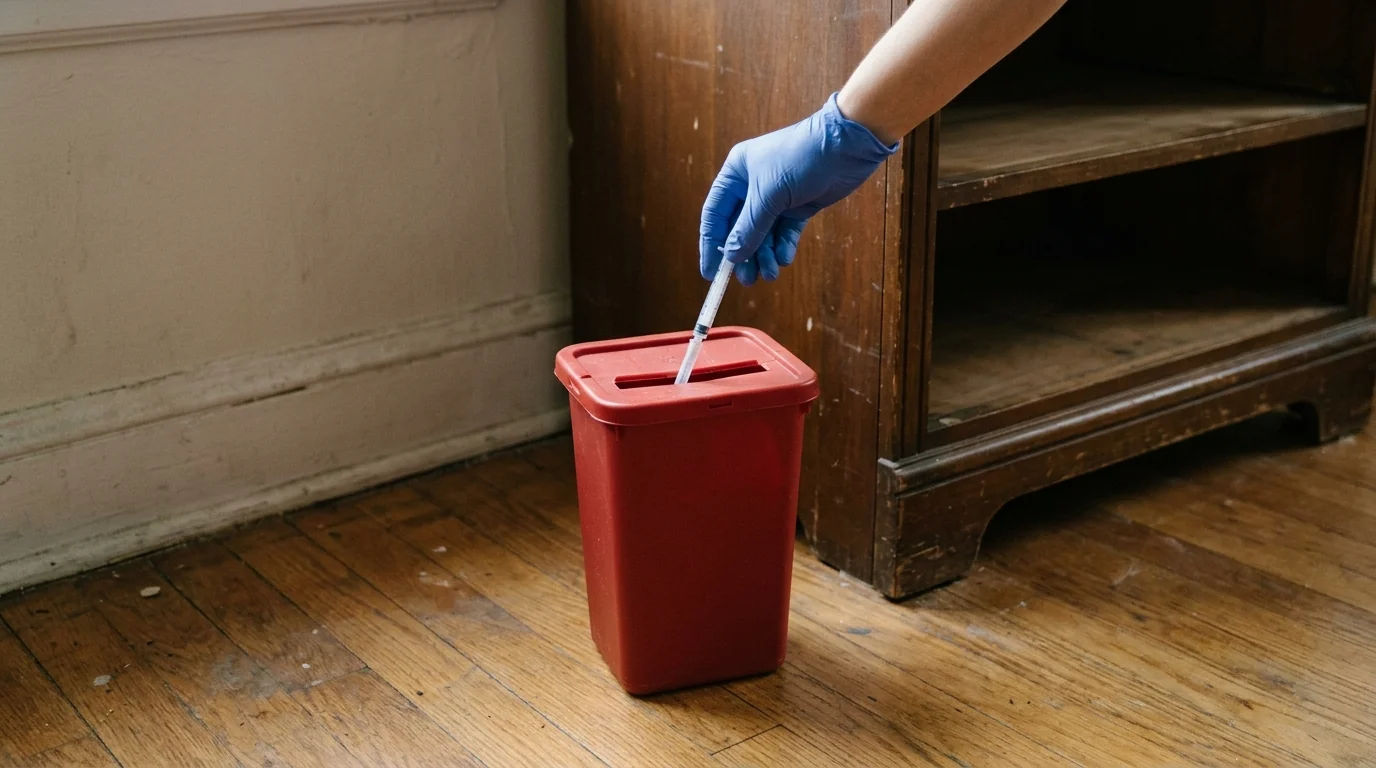
Our crew uses puncture-resistant gloves, tongs and rigid sharps containers. We never compress trash bags by hand, and we check soft furniture and drawers before moving them. Human and animal waste is lifted, bagged and the surfaces underneath disinfected. Refrigerators left unplugged for weeks are sealed shut and handled whole when the contents are too far gone to open safely.
- Used needles and syringes in drawers, couches and vents
- Human or animal waste in bedrooms, closets and basements
- Refrigerators and freezers full of spoiled food
- Soiled mattresses and upholstered furniture
- Trash piles attracting rodents and insects
How we clear and clean a vacated rental
Confirm possession and scope
You confirm the unit is legally yours to clear and tell us anything that should be set aside or stored.
Photograph the unit
We document each room before work starts so you have a record of what was left and its condition.
Sweep for sharps and hazards
Technicians check drawers, furniture, vents and trash for needles and other sharp items before moving anything.
Remove debris and waste
Trash and belongings are cleared, while biohazard material is packaged separately in sealed bags and rigid containers.
Clean and disinfect
Bathrooms, kitchens and floors are cleaned and treated with hospital-grade disinfectant, and contaminated carpet or drywall comes out.
Final walk-through and photos
We send after photos and note any repairs or pest issues your contractors should know about.
Turning a trashed unit into a rentable one
Once the debris is out, the unit still needs to be safe for the next crew. Our technicians clean and disinfect bathrooms, kitchen counters, cabinet interiors and floors with EPA-registered hospital-grade products. Where waste has soaked into carpet or pad, we pull it up. Drywall with heavy contamination is cut back so your contractors start from a clean surface.
We also deal with smaller issues that slow down a turnover. Rodent droppings get cleaned with wet methods instead of sweeping. Insect activity is noted so your exterminator knows where to start. Persistent odor from pets, smoke or spoiled food can be treated after cleaning. When we finish, we walk the unit with you or your property manager and send photos of each room. That record helps when you're pricing repairs, filing an insurance claim for tenant damage, or pursuing the former tenant through the court for costs. Keys, garage remotes and mailbox keys found during the cleanout are handed back to you.
When to bring us in after a tenant or occupant leaves
You've regained possession after an eviction
Once the court process is complete and you have the keys, the unit can be cleared and cleaned.
A tenant abandoned the unit
Personal items, trash and spoiled food left behind need sorting and safe removal.
Squatters have left a property
Occupied vacant buildings often have waste, sharps and no working utilities.
You've found needles or drug items
Sharps need rigid containers and puncture-resistant handling, not a trash bag.
Human or pet waste is present
Waste on floors and in closets needs removal and disinfection before repair crews start.
Your maintenance crew refuses the job
Staff without protective gear shouldn't be handling biohazards in a vacated unit.
Working with Philadelphia property managers on repeat turnovers
Property managers who handle dozens of doors don't have time to explain the same job every month. We keep notes on each building you send us to, including how to get in, where the trash staging area is and who holds keys. If you prefer a standard scope for every unit, we can follow it so your invoices and photo records look the same from job to job.
Multi-unit buildings bring their own concerns. Neighboring tenants are still living next door, so we keep hallways clear, carry waste out in sealed bags and avoid blocking shared entrances. In rowhome conversions with narrow stairways, we plan the carry-out to avoid scuffing common walls. For scattered-site owners, we can work across North Philadelphia, Kensington, Germantown and the river wards in the same week so your vacancies don't sit. If a unit needs to be ready by a set showing date, tell us when you call and we'll plan the crew size around it.
What shapes the cost of an eviction cleanout
We quote each unit after seeing it or reviewing photos. These are the main factors.
Volume of trash and belongings
A unit with a few bags left behind is quicker than one packed wall to wall.
Sharps and biohazard waste
Needles and bodily waste require separate packaging and disposal as regulated waste.
Unit size and floors
Larger units and walk-ups with narrow stairs take more labor to clear.
Material removal
Pulling carpet, pad or contaminated drywall adds time and disposal volume.
Utilities and access
Units without power or water need extra equipment and planning to clean properly.
Number of units
Property managers sending several turnovers can often be scheduled more efficiently.
Landlord insurance policies vary widely on tenant damage and vandalism, so check your coverage with your agent. Some owners seek cleanout costs from the former tenant through the court, and our photos and written scope can support that. We bill the owner or management company directly and explain the scope in writing before work starts.