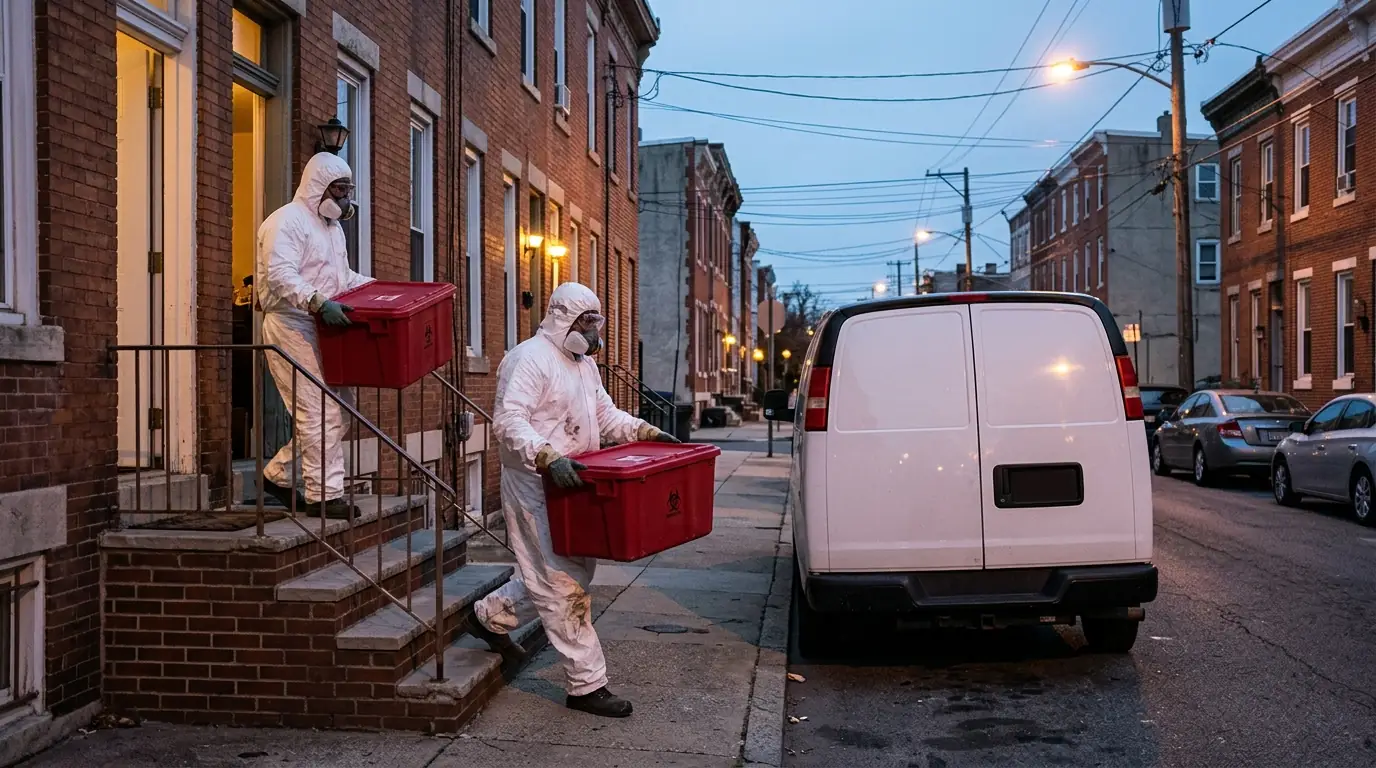
Decomposition odor is unlike any household smell, and it is stubborn. It comes from a mix of compounds released as tissue breaks down, and those compounds cling to fabric, soak into wood and drywall, and settle into ductwork. Families often tell us the funeral home or the Medical Examiner's Office has already taken their loved one into care, the windows have been open for days, and the house still smells. That's normal. The odor has moved into the building itself.
We also get these calls after a raccoon, squirrel or rat dies inside a wall, under a floor or in a crawlspace, and the animal has since been pulled out. Whether the source was a person or an animal, the approach is the same: find every material that is still holding the smell, take out what can't be saved, and treat the rest of the space properly. Our technicians are on the phone 24/7 at (267) 699-2329.
When to call us about lingering decomposition odor
The smell comes back when windows close
Odor that returns within hours of closing up means porous materials are still releasing it.
The smell is worse on hot days
Heat drives odor out of wood, drywall and fabric, so summer often reveals what winter hid.
A dead animal was removed, but the smell stayed
Nesting material, insulation or fluids left in a wall or crawlspace keep producing odor after the animal is gone.
Neighbors in an attached home notice it
In rowhomes and apartments, odor travels through shared walls, floor gaps and ceiling cavities.
The HVAC system spreads the smell
Odor in rooms far from the source often means it has moved into the ductwork.
You plan to sell or rent the property
Buyers and tenants notice odor right away, and new flooring or paint won't hide it.
Why air fresheners and open windows don't fix decomposition odor
Air fresheners add a scent on top of the existing smell. For a short while the perfume can dominate, but the decomposition compounds are still being released from the materials that absorbed them, so the odor comes through again, often mixed into something worse. Candles, plug-ins and baking soda have the same limit.
Fresh air helps for a while, which is why many people believe a few days with the windows open will solve it. Ventilation thins the odor in the air, but it doesn't touch the source sitting in a mattress, a carpet pad, a subfloor or the cavity under a bathroom vanity. Once the windows close, the smell builds back up within hours. Summer heat in a closed Philadelphia rowhome makes it stronger, because warmth speeds up how quickly porous materials release odor.
Odor is a signal, not just an annoyance. If the smell is still strong, something porous is still holding residue, and that material needs to be found.
How our technicians clear decomposition odor step by step
Walk the property and find the source
We inspect the room and the spaces around it, including floors below and ceilings above in attached homes, to locate every area still holding odor.
Remove saturated porous items
Mattresses, furniture, carpet, pad and damaged drywall or subfloor are bagged, sealed and handled as biohazard waste.
Clean and disinfect hard surfaces
We apply an EPA-registered disinfectant and leave it wet for the full label dwell time, then clean the residue away.
Seal what stays
Framing, subfloor and drywall that remain get an odor-blocking primer so traces can't keep escaping.
Treat the air
We run hydroxyl, ozone in an empty space, or thermal fogging, and check the HVAC system and ducts.
Test with the doors closed
We close the property for several hours, then walk through with you before calling the work finished.
Removing the source material that is still holding the smell
Our first job is detective work. We look and smell our way through the room, lift carpet edges, check baseboards and the gaps around flooring, and use moisture meters to find areas where fluids may have traveled. In older rowhomes with plank floors, fluids can run between boards and reach joists or even the ceiling of the room below, so we check that ceiling as well.
Anything soft and saturated comes out: mattresses, upholstered furniture, carpet, pad, and sometimes drywall and subfloor sections. Those materials are bagged, sealed and handled as biohazard waste. Hard surfaces are cleaned with an EPA-registered disinfectant and left wet for the full dwell time the label requires.
With a dead animal, the source is often small but hard to reach. Nesting material, insulation or debris around where it died can carry as much odor as the animal did, so we open the wall or floor cavity enough to clean and treat that space directly.
Hydroxyl, ozone and thermal fogging: what each one does
Once the source material is out, air treatment deals with odor that has moved into the rest of the house. We choose the method by the size of the job and whether anyone can leave the property.
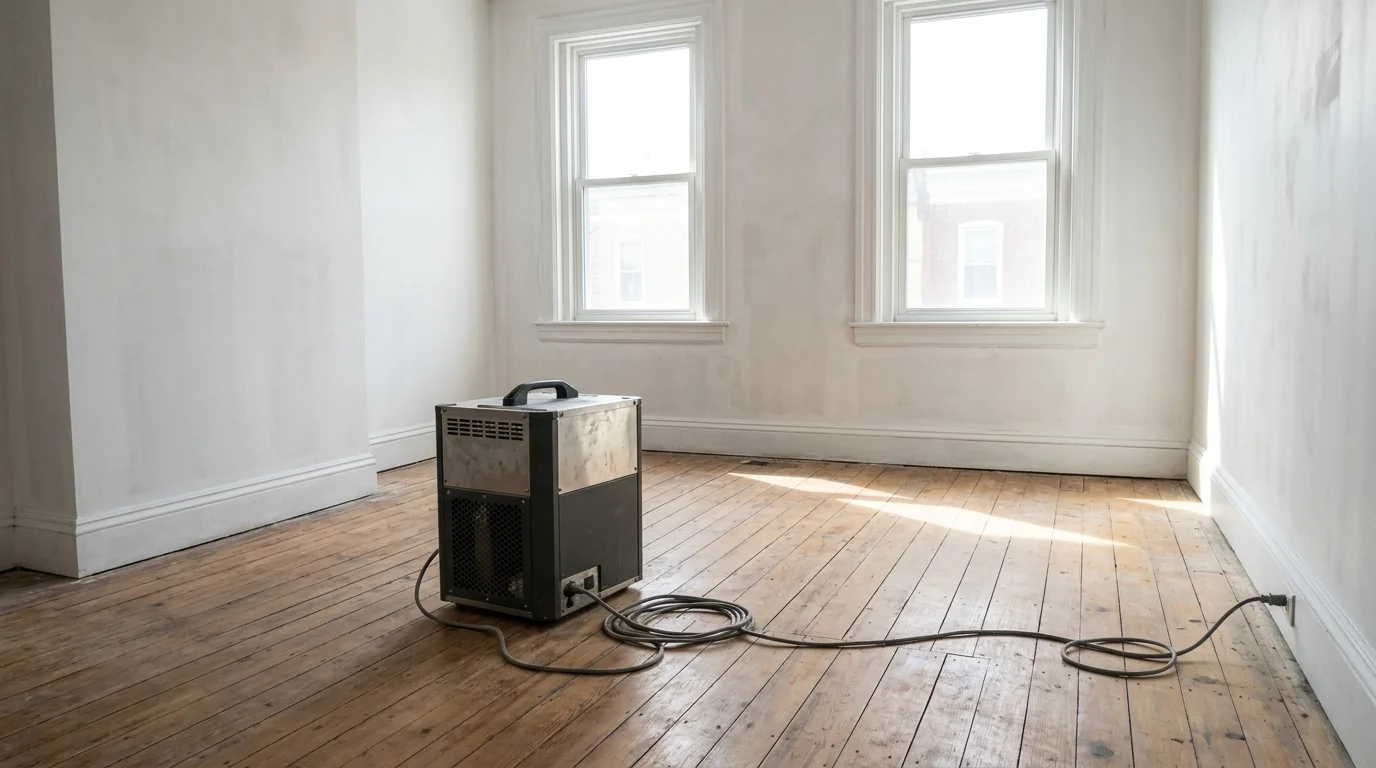
Hydroxyl generators use ultraviolet light to create hydroxyl radicals from the moisture in the air, which react with and break down odor molecules. They work more slowly than ozone, but they are generally considered safe to run with people and pets present, which helps in an occupied home or an apartment building where neighbors share air.
Ozone is stronger and faster, but it is also a lung irritant. Ozone treatment requires an empty space: no people, pets or houseplants inside while the machine runs, and the space has to air out before anyone returns. We seal off the area and post a warning at the entrances. Ozone can also affect rubber and some fabrics, so we remove or protect sensitive items first.
Thermal fogging heats a deodorizing solution into a very fine fog that travels the way smoke does, into cracks, outlets and fabric fibers. It reaches spots that wiping and spraying miss.
- Hydroxyl: slower, can run in an occupied space
- Ozone: faster, only in an empty, sealed space
- Thermal fogging: reaches cracks, outlets and soft goods
Sealing wood and drywall, and checking the ductwork
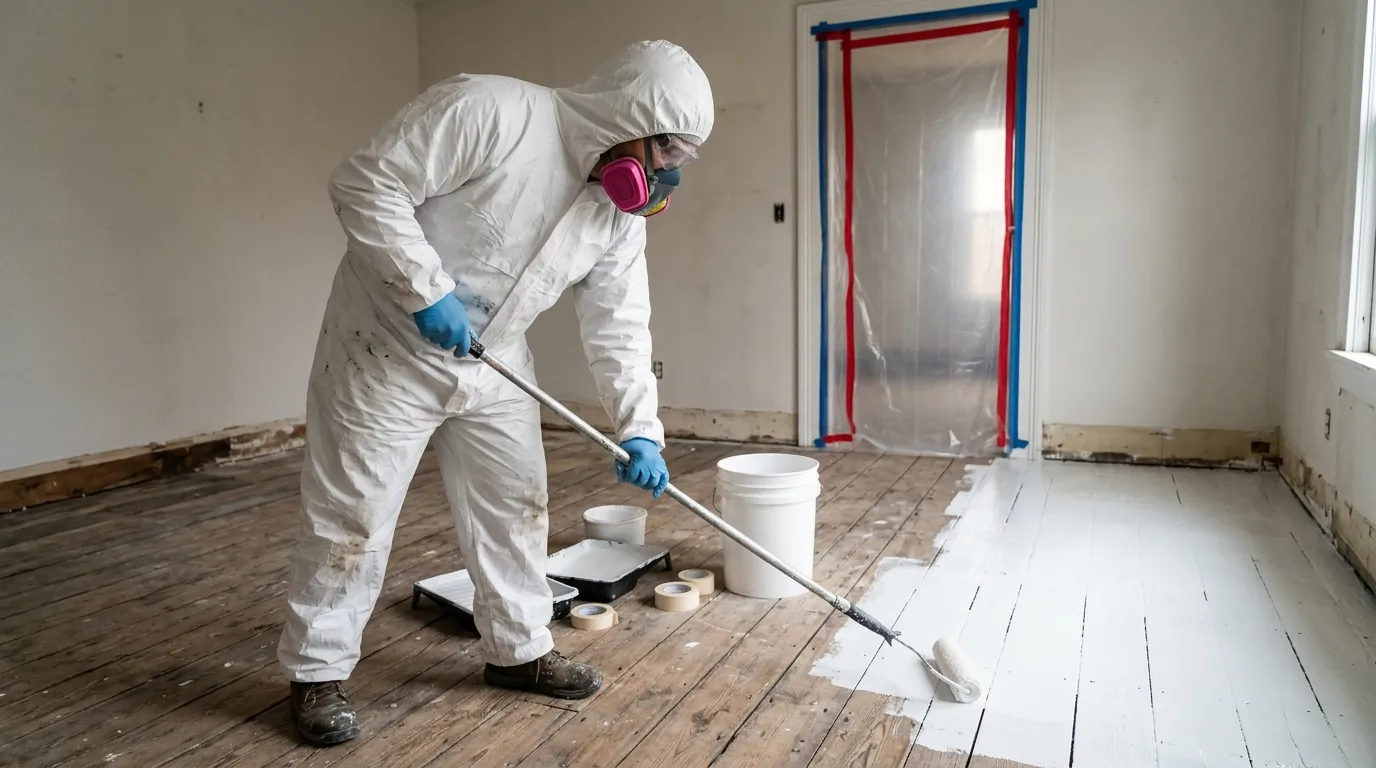
Some odor ends up in materials that are sound enough to keep. Wood framing, plank subfloors and drywall that only took on a light amount of odor can stay in place once they're cleaned and coated with a shellac-based or similar odor-blocking primer. That coat locks in what remains so it can't keep escaping into the room.
We also look at the HVAC system. If forced air ran while the odor was building, the return and supply ducts may have spread it to rooms far from where it began. We check filters and registers and treat the ducts when needed, and we'll tell you if a duct cleaning company should follow us for a larger system.
Before we leave, we walk the property with you with the air treatment off and the doors closed for several hours. If any odor remains, we keep working until the space smells neutral.
What shapes the cost of decomposition odor removal
The time that passed before discovery and the materials involved matter more than the size of the room. These factors drive the scope.
Time before discovery
A longer period usually means fluids traveled farther and more material has to come out.
Flooring and subfloor type
Plank floors and particleboard absorb more than tile or sealed concrete, and may need to be cut out.
Spread through the building
Odor in ducts, the room below, or a neighbor's shared wall extends the work beyond one room.
Air treatment method
Ozone in a vacant home works fast, while hydroxyl in an occupied building takes more days on site.
Volume of contents removed
Furniture, bedding and personal items that can't be saved add bagging and disposal time.
Access to hidden cavities
Opening walls, floors or crawlspaces to reach a dead animal site adds labor.
Homeowner's insurance often covers cleanup after an unattended death because it is a sudden event, and the claim may include odor removal. Dead animal odor is less consistently covered, depending on the policy. We provide photos and a written scope for your adjuster, and we can talk with the insurer about the work if you want us to.