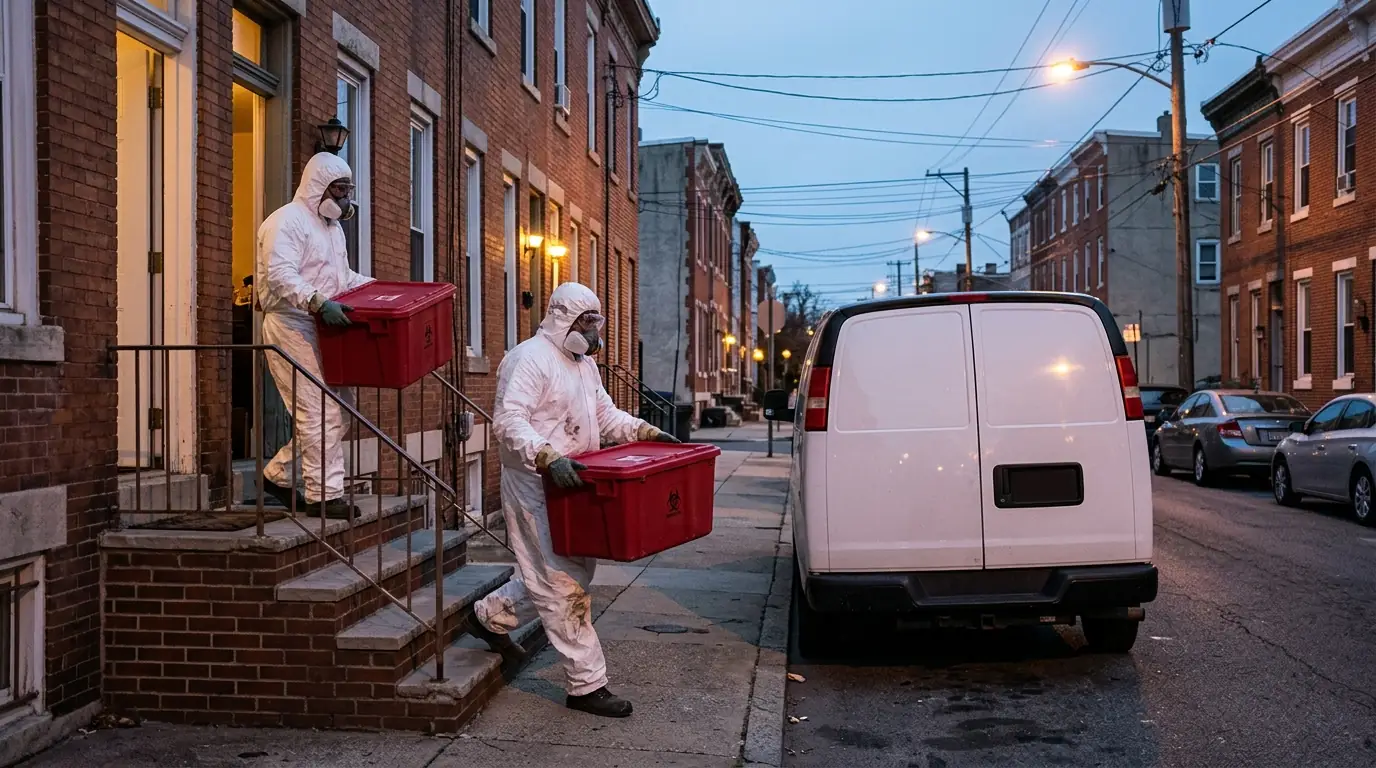
A canister fired through a window during a warrant service, a pepper spray burst in a store aisle, a can that went off in a car's cup holder on a hot day. The events differ, but the aftermath is the same. Eyes water, people cough, and the sting returns every time someone sits on the couch or turns on the heat. Residue settles on every surface it touches and keeps irritating for weeks if it is only wiped once.
These agents are chemicals, not germs, so the cleanup works differently from our other jobs. CS is a fine solid that drifts into cracks, carpets and air returns. OC is an oily resin that clings to fabric and skin. Each one needs patience, cool water and repeated washing rather than a single disinfectant pass. We work across Philadelphia rowhomes, corner stores, apartments and parked vehicles, and we plan the job around which agent was used.
Why CS powder and OC spray need different cleanup methods
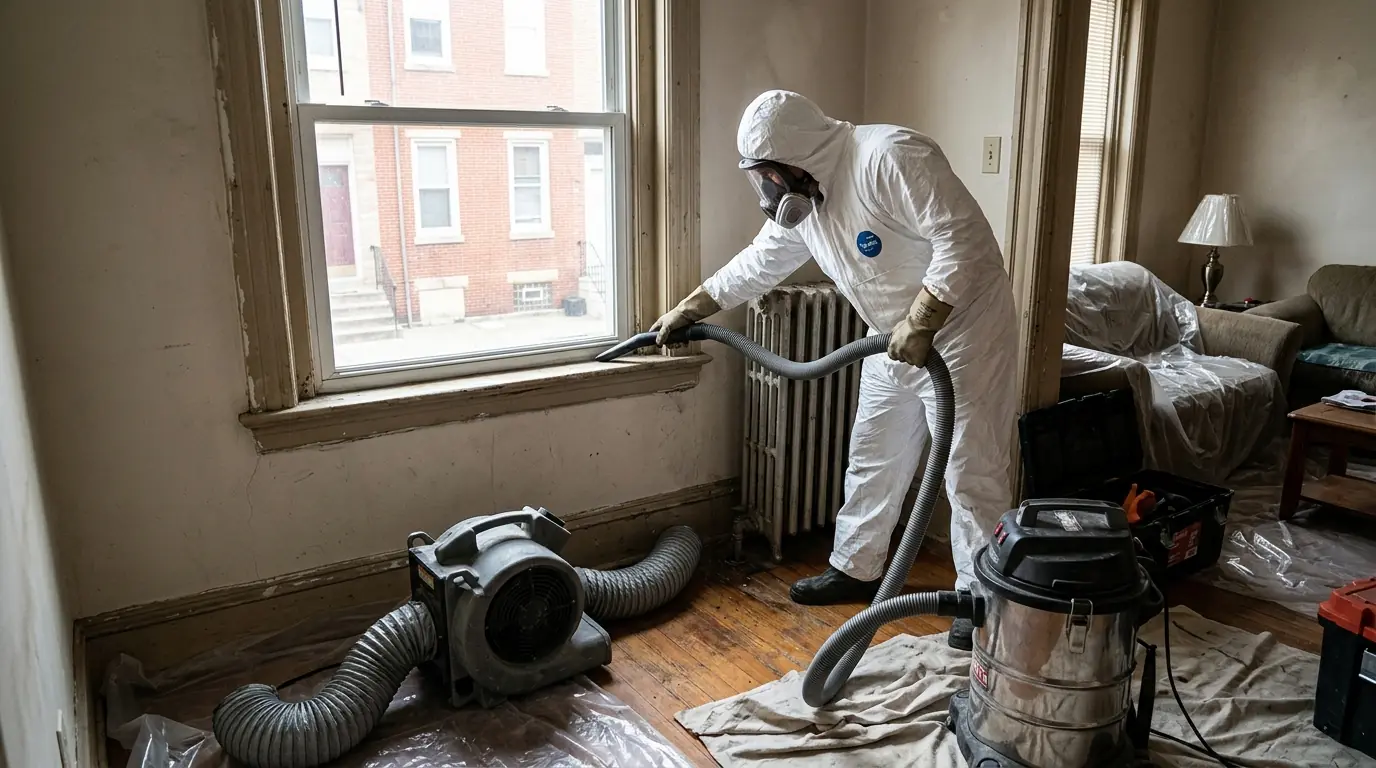
CS, the agent most people mean by tear gas, is released as a smoke or fine powder. It settles like dust on floors, shelves, window sills and the tops of cabinets. Disturbing it puts it back in the air, so our first pass is always a slow HEPA vacuuming of every horizontal surface before anything gets wet. Sweeping or using a household vacuum only spreads it around and can carry it into other rooms.
OC, the active ingredient in pepper spray, is an oil. It does not dust off. It soaks into upholstery, smears on counters and coats steering wheels and door handles. We break it down with degreasing detergents and cool water, wiping in repeated passes with fresh cloths so we lift the oil instead of spreading it. Hot water and steam are avoided early on because heat can release vapor and irritate everyone in the room.
Many scenes contain both agents, especially after police action. We test small areas with a damp cloth, note where people still react, and adjust our method room by room until the reaction stops.
Clearing the HVAC system so the sting stops coming back
A common complaint we hear goes like this: the room seemed fine, then the furnace kicked on and everyone started coughing again. Forced-air systems pull residue into the return grilles and push it back out through every register in the house. Window units and through-wall air conditioners in older Philadelphia rowhomes trap it in their filters and coils.
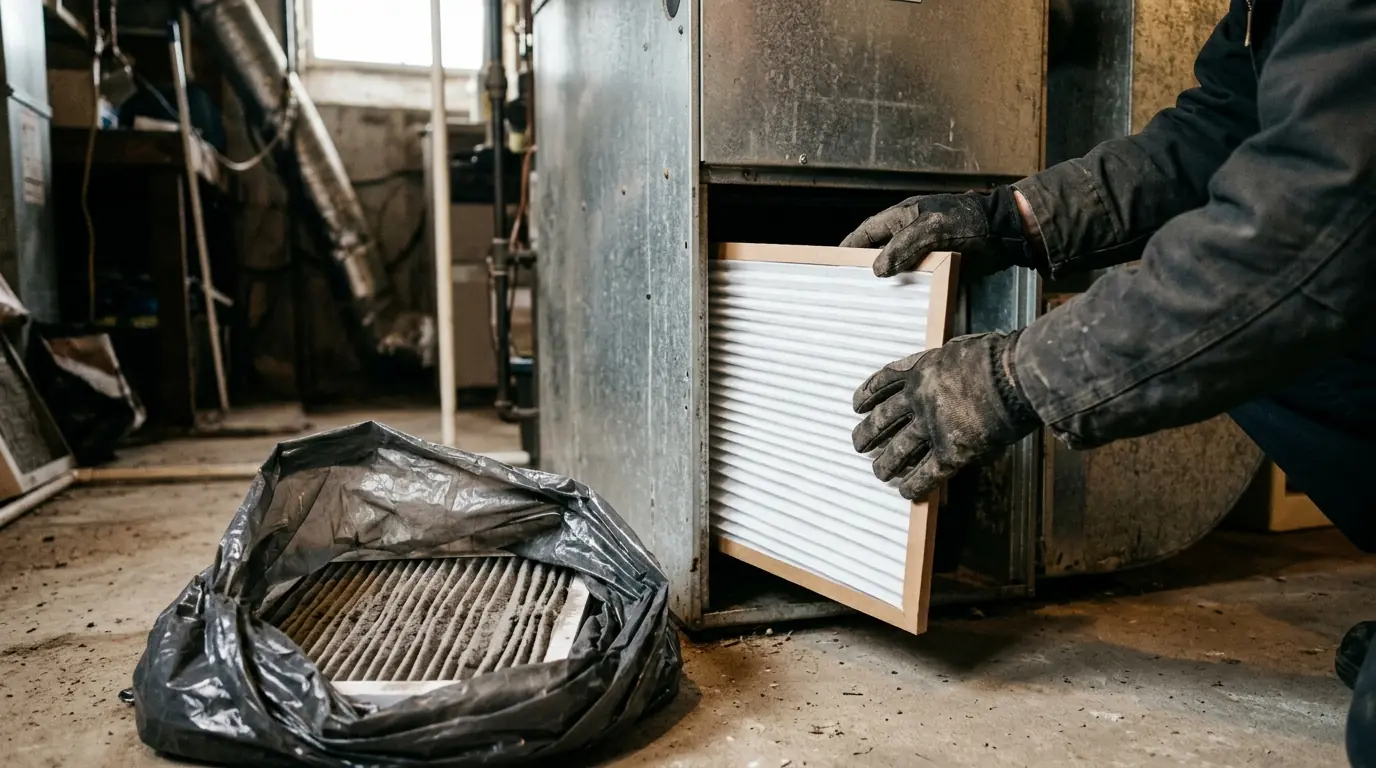
We ask you to keep the system off until we arrive. Then we replace filters, clean return grilles and supply registers, and wipe accessible duct openings. When residue has traveled deep into ductwork, duct cleaning with negative air and HEPA filtration is the reliable fix. In vehicles, we replace the cabin air filter and run the fan on recirculate while cleaning the vents and intake area.
We finish by running the system with you present. If anyone still feels irritation, we keep working until the air is comfortable, because a house that only feels fine with the furnace off is not finished.
How we remove CS and OC residue step by step
Assess and ventilate
We identify which agent was used, open windows where possible, and set up air movement exhausting outdoors. The HVAC system stays off.
HEPA vacuum everything
Every floor, shelf, sill and soft surface gets a slow HEPA pass to lift loose powder before anything gets wet.
Wash hard surfaces
Walls, counters, cabinets and fixtures are washed with cool water and detergent in repeated passes using fresh cloths.
Treat the HVAC system
Filters are replaced, grilles and registers cleaned, and ducts addressed when residue has traveled deep into the system.
Sort soft goods
Laundry is bagged for separate washing, and furniture or mattresses are cleaned or flagged for disposal with your approval.
Walk through together
We run the HVAC system and walk the space with you, then retreat any spot where someone still reacts.
Fabrics, mattresses and what can be saved
Clothing, curtains and bedding can often be saved with separate cool-water laundering, sometimes two or three cycles, before they go into a dryer. Items should be washed apart from everything else in the house so residue does not transfer. We bag affected laundry for you, mark the bags clearly, and explain how to run the loads.
Upholstered furniture and mattresses are harder. Residue works into foam where washing cannot reach it. Some pieces respond to repeated extraction cleaning with a degreasing solution; others keep irritating no matter what. We tell you honestly which items are worth the effort. Carpet is similar: low-pile carpet often comes clean with HEPA vacuuming and hot-water extraction later in the process, while thick pad soaked by spray may need replacement.
Children's toys, pet beds and food left open in the room are usually simplest to replace rather than clean, and we bag them for you.
When tear gas residue needs professional cleanup
Eyes sting when you enter
The air looks clear but people react within a few minutes of walking into the room.
Coughing starts with the heat on
Irritation comes back each time the furnace or air conditioner runs.
Fine white dust on surfaces
A powdery film sits on sills, shelves and floors after a CS canister was used.
Furniture burns on contact
Skin tingles after sitting on a couch, chair or car seat.
Store reopening is on hold
Staff or customers react in an aisle or fitting room after a pepper spray discharge.
Children or pets live there
Small children and animals are closer to floors and carpets where residue settles.
Stores, offices and vehicles after a discharge
A pepper spray discharge in a retail aisle can close a store for the day. Shelving, packaged goods, checkout counters and fitting rooms all collect residue, and customers notice it before staff do. We work after hours where possible, clean fixtures and high-touch surfaces first, and help you decide which merchandise should be pulled.
Vehicles are compact, so residue concentrates. Seat fabric, headliners, seat belts, floor mats and the dashboard vents all hold it. We can come to the car wherever it is parked in Philadelphia, clean every surface in order from top to bottom, and leave the doors open to ventilate while the cleaning solution dries.
In offices and waiting rooms, we pay special attention to shared keyboards, phones, door handles and break room surfaces. Those are the places staff touch all day, and lingering OC oil on them leads to rubbed eyes and complaints long after the incident itself.
What shapes the cost of tear gas cleanup
The price depends on how far the residue spread and what it settled into, so we assess before quoting.
Number of rooms affected
A single room after a spray can costs far less than a whole rowhome after canisters were fired inside.
Which agent was used
CS powder spreads widely and needs more vacuuming, while OC needs more degreasing and repeated washing.
HVAC involvement
Filter changes are simple; full duct cleaning adds equipment and time.
Soft goods volume
Large amounts of upholstery, carpet and bedding add extraction work or disposal.
Building or vehicle type
A car is compact, a store has shelving and stock, and a house has many hidden surfaces.
Homeowner's and commercial insurance policies sometimes cover tear gas or pepper spray residue as sudden damage, so it helps to call your agent early. When police action caused the damage, keep photos and records and ask your insurer or attorney about any claim. We provide itemized documentation of every step for adjusters.