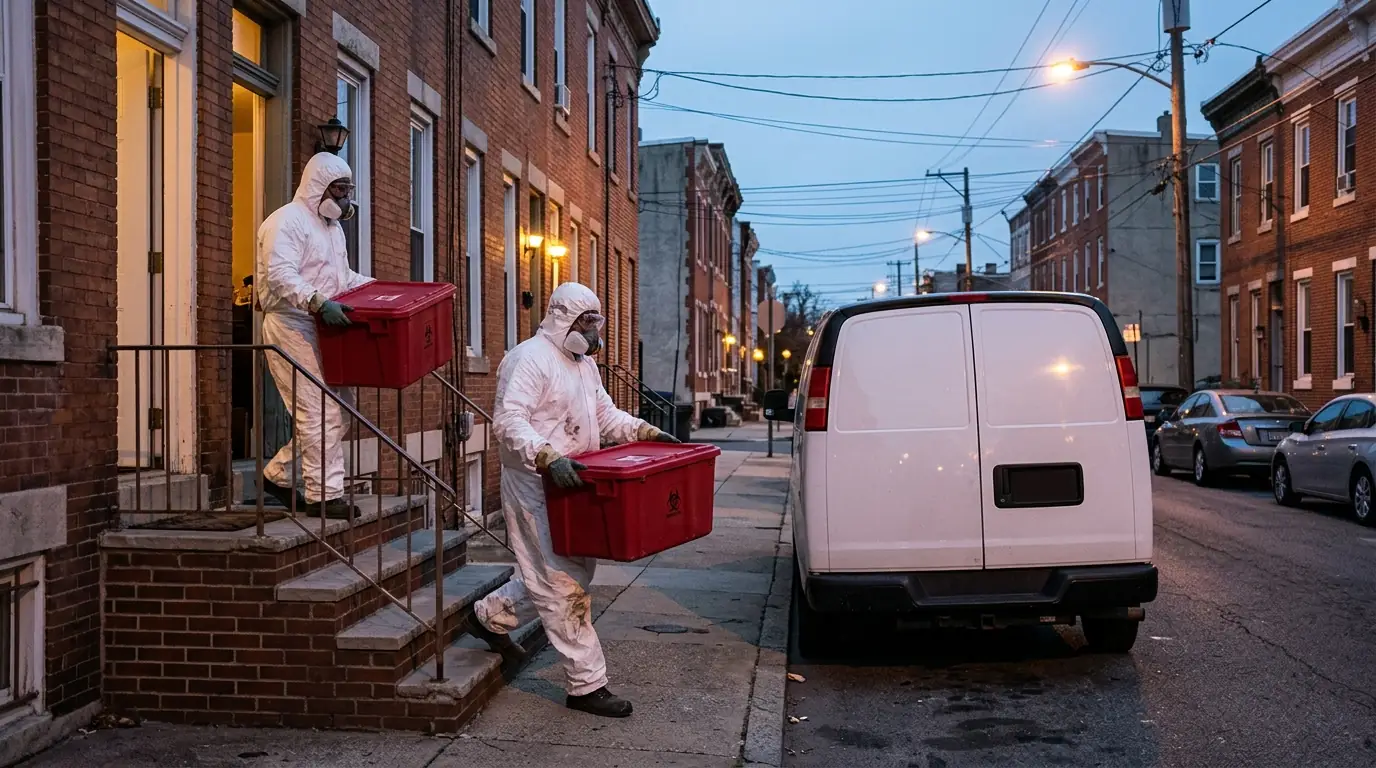
Philadelphia has no shortage of places for pigeons to sit. Brick and brownstone cornices, window ledges along Market Street, fire escapes on old apartment buildings, the steel beams under the Market Frankford Line and the rafters of converted warehouses in Northern Liberties and Port Richmond all give birds shelter from wind and rain. Where they roost, droppings pile up. On a busy ledge, a thick crust can build up in a single season.
The mess is more than cosmetic. Bird droppings are acidic and slowly eat into stone, brick mortar, painted metal and roofing. Piles of droppings can clog gutters and scuppers, and they make fire escapes and walkways slippery. Dried droppings can also harbor fungi linked to lung infections. Our technicians clean these areas with methods that keep the dust down and protect the people working in and around the building, and we leave the surface prepared for whatever bird control you choose next.
Why dried pigeon droppings call for respirators and wet methods
Two fungal diseases come up often in conversations about bird droppings. Histoplasmosis is caused by a fungus that grows in soil enriched with bird or bat droppings. Cryptococcosis is linked to a fungus often found in pigeon droppings. In both cases, people are usually exposed by breathing in spores when dry material is disturbed. Most healthy people who breathe in small amounts don't get seriously ill, but people with weakened immune systems face higher risk, and large disturbances can expose anyone.
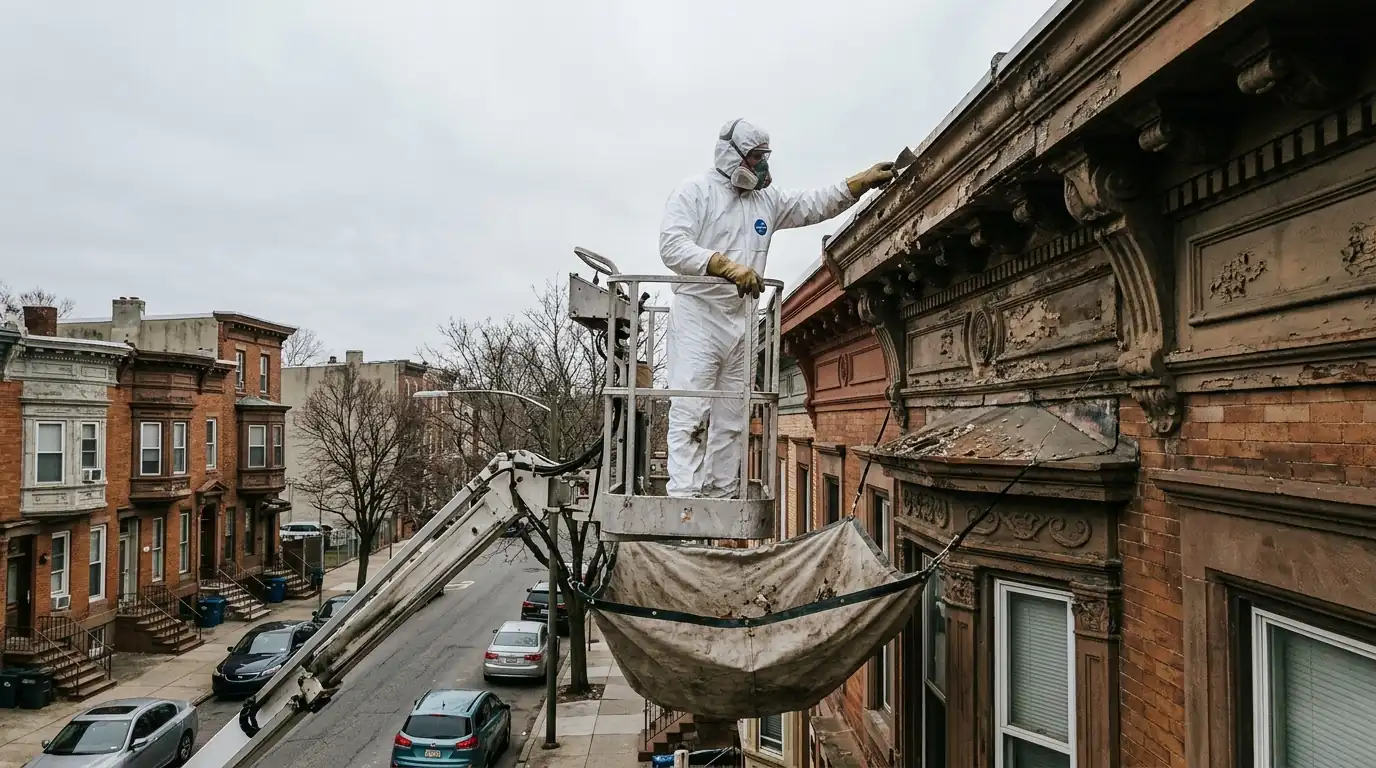
That's why we never dry-scrape or blow off a ledge. Our technicians mist the droppings with water or a disinfectant solution to keep particles from going airborne, then scrape the softened material into heavy bags. Workers wear respirators, eye protection, gloves and disposable coveralls. In enclosed spaces such as attics, steeples and warehouse lofts, we seal off the area and run HEPA air scrubbers so dust doesn't drift into occupied rooms or HVAC returns. Waste is bagged, sealed and removed, and our equipment is cleaned before it leaves the site. The extra steps take more time, but they protect our crew and your building's occupants.
When to call us for pigeon and bird droppings cleanup
Thick crust on ledges or cornices
Droppings that have built up into a layer can be heavy, acidic and hard to remove safely.
Fire escapes or walkways are slippery
Droppings on steps and grates create a fall hazard for residents and workers.
Birds nesting around rooftop units
Nests and droppings around condensers can block airflow and complicate service visits.
Droppings in an attic or warehouse loft
Enclosed spaces concentrate dust and need containment and HEPA filtration.
Clogged gutters or roof drains
Droppings and feathers can block water flow and lead to leaks.
Deterrents are about to be installed
Spikes and netting need a clean, dry surface to attach properly.
Cornices, fire escapes and the steel under the El
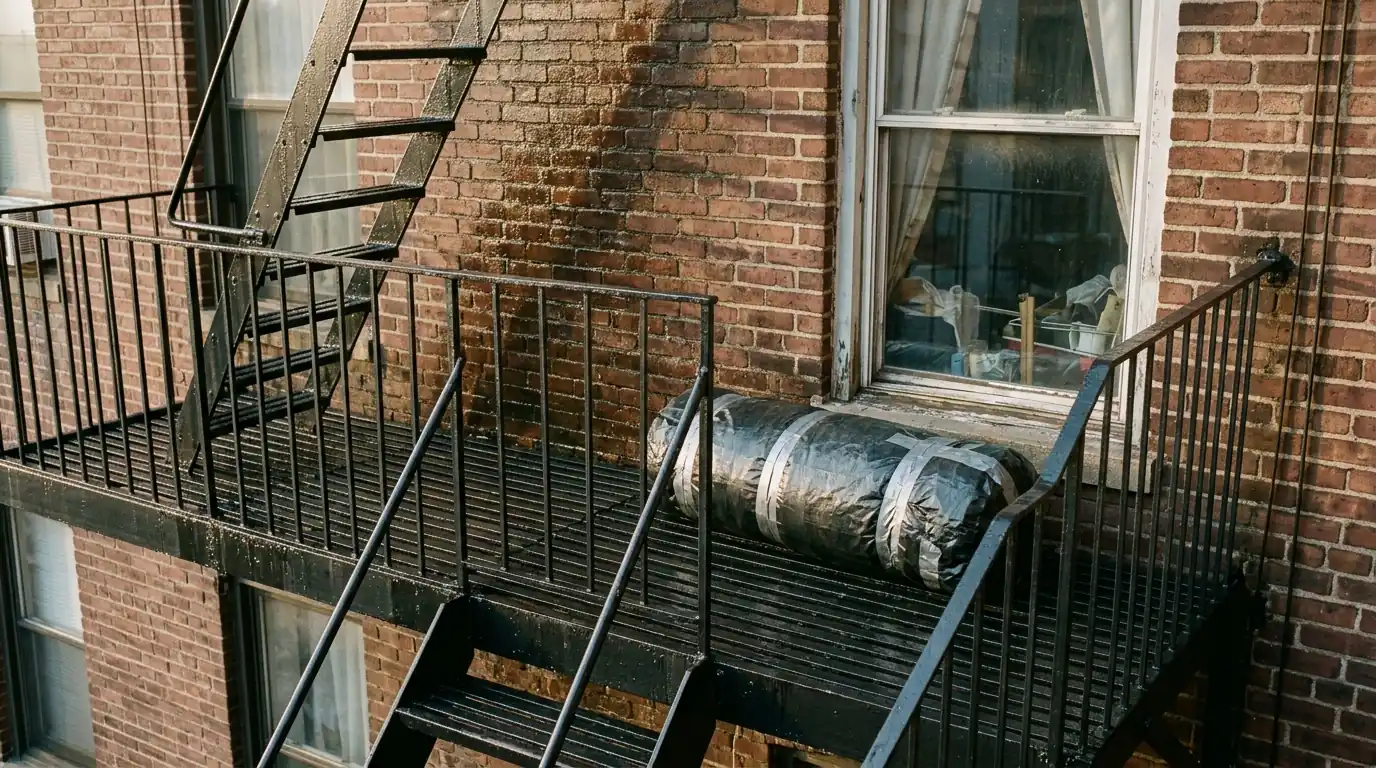
Each roost site brings its own challenges. Ornate cornices on Philadelphia's older commercial blocks have deep ledges and decorative brackets where droppings pack in tight. Fire escapes are steel grates with open gaps, so whatever we remove has to be caught before it falls to the sidewalk or the unit below. Spaces under elevated tracks and bridges are often shared with businesses, parking and foot traffic, which means careful staging and timing.
We plan each site around safe access and the people below. That can mean working from a lift, from the roof down, or from inside a window. We lay drop cloths and catch tarps under the work area and keep sidewalks clear. Where droppings have stained brick or stone, we clean them with methods suited to the material, avoiding harsh blasting that could damage old masonry.
- Brick and brownstone cornices and window ledges
- Steel fire escapes on older apartment buildings
- Beams and ledges under elevated tracks and bridges
- Rooftop HVAC units and condenser housings
- Warehouse rafters, trusses and loading docks
What shapes the cost of bird droppings cleanup
Bird cleanup jobs vary widely, so we quote after seeing the site. These factors make the biggest difference.
Volume of droppings
A light layer on a few ledges is a quick job compared with years of buildup.
Height and access
Lifts, roof work and tight crawl spaces add equipment and labor.
Enclosed versus open spaces
Attics and lofts need containment and HEPA filtration that open ledges may not.
Surface type
Older masonry requires gentler cleaning methods than metal or concrete.
Foot traffic below
Work over sidewalks, entrances and parking needs extra staging and timing.
Recurring service
Buildings on a regular cleaning schedule often need less work per visit.
Insurance policies usually treat bird droppings as maintenance rather than sudden damage, so cleanup is typically paid by the owner or tenant responsible for the building. We provide photos and a written scope, which property managers often use to plan budgets and deterrent work.
Rooftop AC units, gutters and the damage droppings cause
Pigeons love rooftop equipment. Condenser units give off warmth, and the gaps around them provide shelter from wind. Over time, droppings and nesting material collect around fan housings and coils, cutting airflow and making service visits unpleasant for HVAC technicians. On flat rowhome roofs, droppings wash toward drains and scuppers, where they can trap debris and lead to standing water.
We clear droppings, nests and feathers from around rooftop units with the power off, and we coordinate with your HVAC contractor if any panels need removing. Gutters and drains are cleared so water flows freely. Because droppings are acidic, leaving them in place shortens the life of roof coatings, metal flashing and painted surfaces. Cleaning them away regularly protects the building as well as the people who work on it. On commercial buildings, we can time rooftop work for early mornings or weekends so tenants and deliveries aren't disrupted while we're up there.
How we clear a pigeon roost
Assess access and safety
We look at the roost site, decide whether a lift, roof access or interior approach is needed, and plan for foot traffic below.
Protect the area
Drop cloths and catch tarps go down below the work zone, and enclosed spaces are sealed with poly sheeting.
Wet the droppings
Droppings and nests are misted with water or disinfectant to keep spores and dust from becoming airborne.
Scrape and bag
Softened material is scraped into heavy bags, sealed and removed from the building.
Clean and disinfect
Surfaces are washed and disinfected, with masonry cleaned gently to avoid damage.
Dry and prepare for deterrents
Ledges are left dry and clean, and we note the heaviest roosting spots for your installer.
Leaving surfaces ready for spikes, netting or other deterrents
Without some kind of deterrent, pigeons usually come back to a favorite roost. Spikes, netting, bird wire and slope panels all work by making the spot less comfortable to land on. Every one of these systems needs a clean, dry surface to attach to, and adhesives won't bond to a ledge still crusted with droppings.
When we finish, the surface is scraped, cleaned, disinfected and dried. We note which ledges see the heaviest use so whoever installs your deterrents knows where to focus. In warehouses and loading docks, netting is often installed right after we finish so birds don't return to rafters overnight. If you manage several buildings, we can schedule recurring cleanings for the spots where deterrents aren't practical, such as under bridges or over loading bays. Regular visits keep buildup thin, which makes each cleaning quicker and keeps acidic waste from sitting on stone and steel for months.