Where pigeons settle on a Philadelphia rowhome
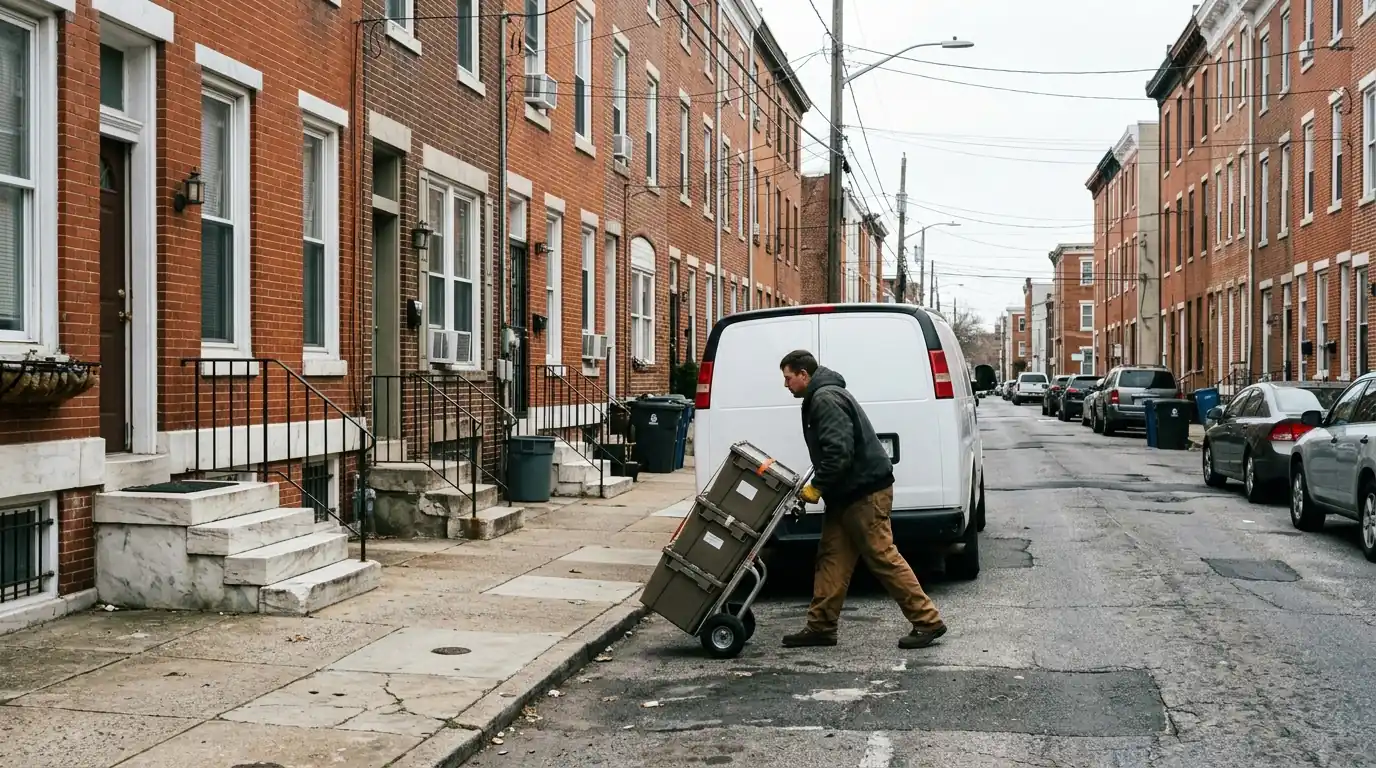
Pigeons look for flat ledges with a roof overhead, and older Philadelphia rowhomes offer plenty of both. The decorative wood and pressed metal cornices along many blocks have gaps behind the trim where birds roost and nest. Porch roofs and bay window tops catch droppings from the cornice above. Window air conditioners sitting on brackets or in wall sleeves give birds a warm, sheltered perch right beside the glass.
Rear additions, shed roofs and roof decks add more ledges out of sight from the street. Under the elevated tracks on Kensington Avenue and Frankford Avenue, the steel girders shelter large flocks, and the sidewalks, awnings and storefront ledges below take the result every day. A vacant house next door can make things worse, since birds move into open windows and broken attic vents and spill over onto your side of the shared roofline.
What the health risks actually are
Most people who brush past a little pigeon waste never get sick. The concern grows when droppings pile up, dry out and get stirred into dust that you breathe. Three infections come up most often, and each one is worth understanding without panic.
Doctors also see skin and eye irritation from the acidic waste, and accumulations attract mites and insects. None of this means your family is in danger from a few spots on the stoop. It does mean the cleanup method matters more than the cleaning product.
- Histoplasmosis: a fungus that grows in soil enriched by bird or bat droppings, spread by inhaling airborne spores.
- Cryptococcosis: a yeast often found in pigeon droppings, mainly a risk for people with weakened immune systems.
- Psittacosis: a bacterial infection birds can carry, uncommon in people and usually tied to breathing dust from dried waste or feathers.
Who should not do the cleanup at all
Some people should leave pigeon waste to someone else, even a small patch. That includes anyone with a weakened immune system from chemotherapy, an organ transplant, HIV or long-term steroid use. People with asthma, COPD or other lung conditions should also stay clear, along with older adults and anyone who is pregnant.
Children should never help, and pets should be kept inside while the area is disturbed. If someone in the house fits these groups, it's worth thinking about where the dust goes too. A window unit packed with droppings can blow spores straight into a bedroom when it switches on. In that case, unplug the unit and keep the window closed until it has been cleaned. If anyone develops a fever, cough or chest discomfort in the weeks after a cleanup, tell a doctor about the bird exposure, since that detail can change what they test for.
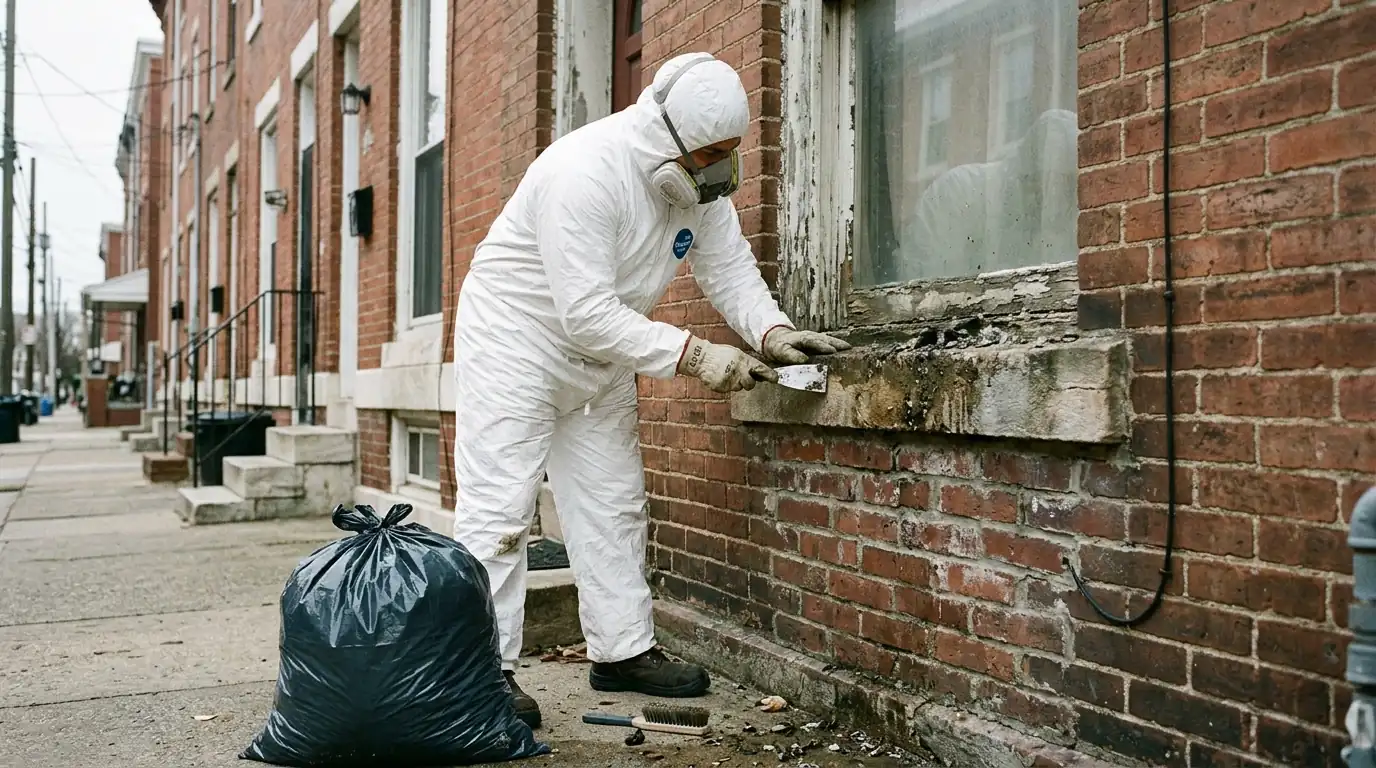
How to clean a small, reachable patch safely
A few droppings on a stoop, railing or ground-level window sill are a reasonable do-it-yourself job if you can reach them from the ground. The goal is simple: keep everything damp so nothing becomes airborne, and bag it rather than washing it into the street.
Afterward, take off gloves first, then the respirator, and wash your hands and face. Put your clothes straight into the washer instead of shaking them out. Skip leaf blowers, shop vacuums without HEPA filtration and pressure washers, because each one turns dried waste into fine dust.
- Wear a fitted N95 respirator, disposable gloves and safety glasses.
- Mist the droppings with water and a little dish soap until fully soaked.
- Scrape with a plastic putty knife into a heavy trash bag, then double bag it.
- Wipe the surface with a household disinfectant and let it sit for the label's contact time.
- Never climb onto a porch roof or cornice ladder alone to reach waste.
When the job is bigger than a scraper and a bucket
Call a crew when droppings sit inches deep, when birds have nested inside a cornice cavity or attic, or when waste has fallen into a vent, chimney or HVAC intake. Height is another reason. Porch roofs on rowhomes are often slick and fragile, and a fall from one does far more harm than any fungus.
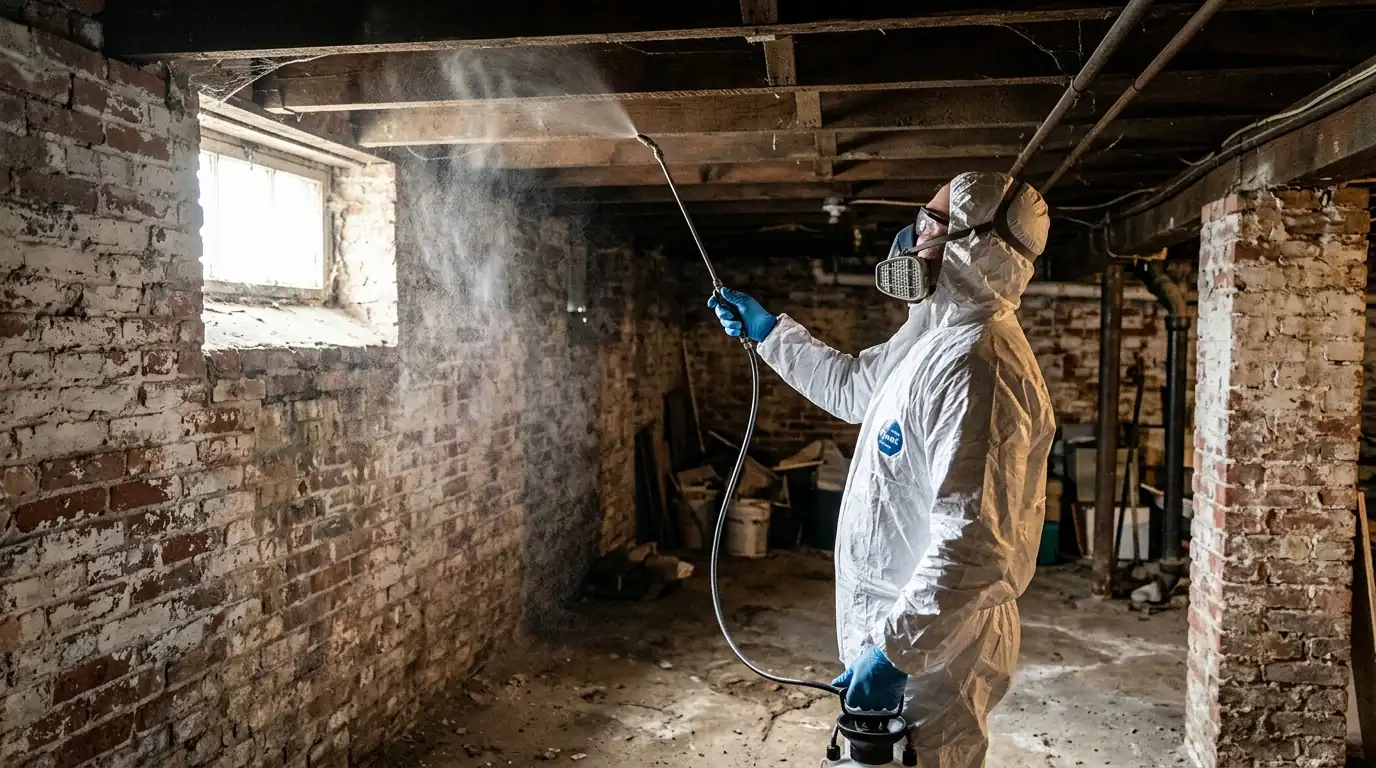
When our technicians handle a pigeon job, they set up poly sheeting to contain the work area and wear respirators and Tyvek suits. They wet the waste, remove it by hand and with HEPA vacuums, then clean and disinfect every surface. Nests, feathers and soaked insulation get bagged and sealed. For storefronts under the El, we often work early in the morning so the sidewalk is clear. If you're not sure which side of the line your situation falls on, call (267) 699-2329 and describe what you see; we'll tell you honestly whether it needs us.
Keeping pigeons off after the ledges are clean
Clean first, then deter. Droppings carry scent and signal a safe roost, so birds return to dirty ledges even after spikes go up. Once surfaces are clean, a few physical barriers do most of the work.
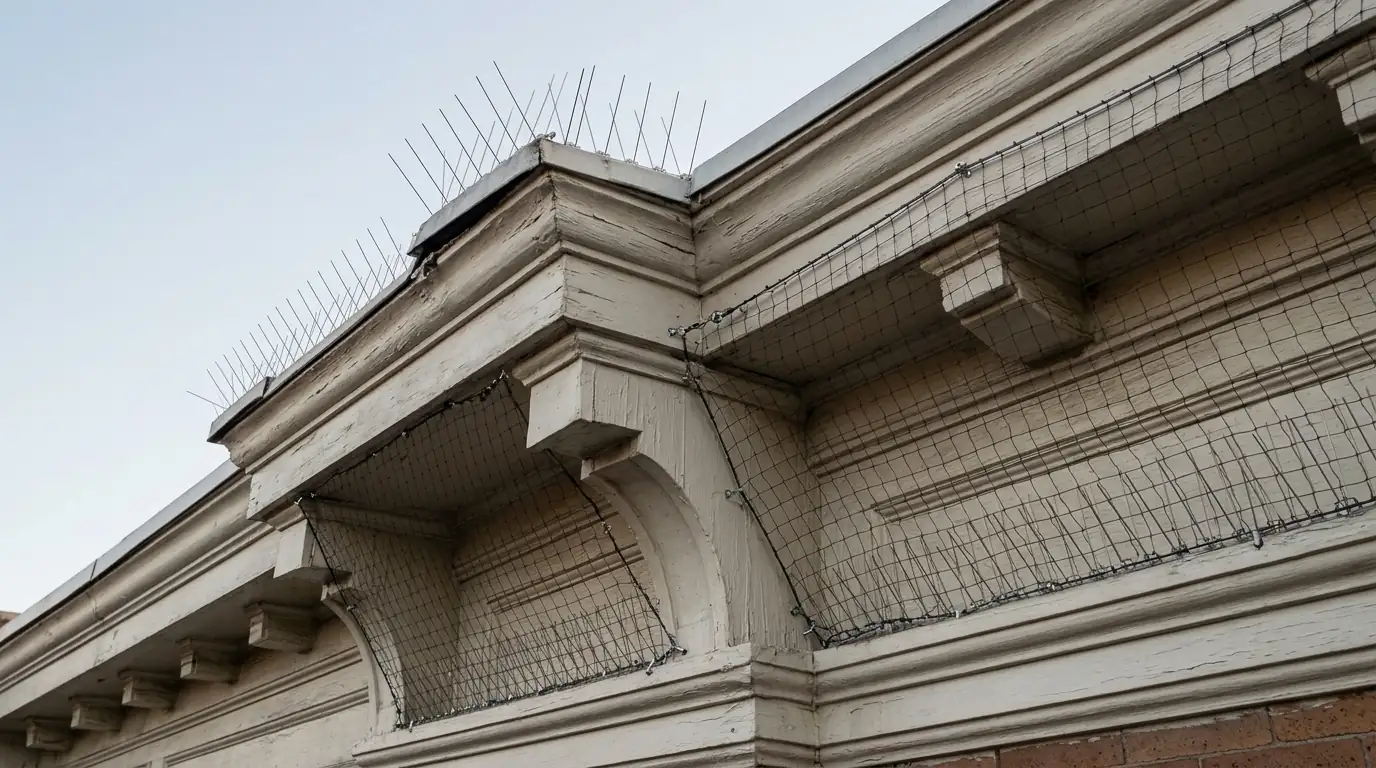
Stainless steel spikes along cornice tops and AC unit lids stop landing. Bird netting closes off porch ceilings, light wells and the space under rear decks. Angled slope covers on window ledges make perching awkward. Sealing gaps behind cornice trim and screening attic vents removes nesting spots, which matters more than anything else. Food is the other half. Feeding pigeons, spilled seed from songbird feeders and open trash all hold a flock on a block. A polite word with a neighbor who feeds birds often helps more than hardware.
Ellsworth Bristow, Family Resources Editor, writes and updates our family guides from the questions callers ask our technicians every week. Last updated October 16, 2026.