Before the crew pulls up
The visit really starts with the phone call. We'll ask what happened, which rooms are involved, whether police or the Medical Examiner's Office have released the home, and who has the right to authorize work there. That might be you, an executor, a landlord or a property manager. We also ask about access: keys, a lockbox, a building superintendent, pets that need to be kept away, and anyone in the home with health concerns.
It helps to have a few things ready before we arrive. Keep children and pets out of the affected area. Gather any insurance policy information you have, along with a claim number if you've already called your insurer. Don't start cleaning, moving rugs or throwing things out. Those steps can spread contamination and make it harder to document the loss for a claim.
Parking and unloading on a rowhome street
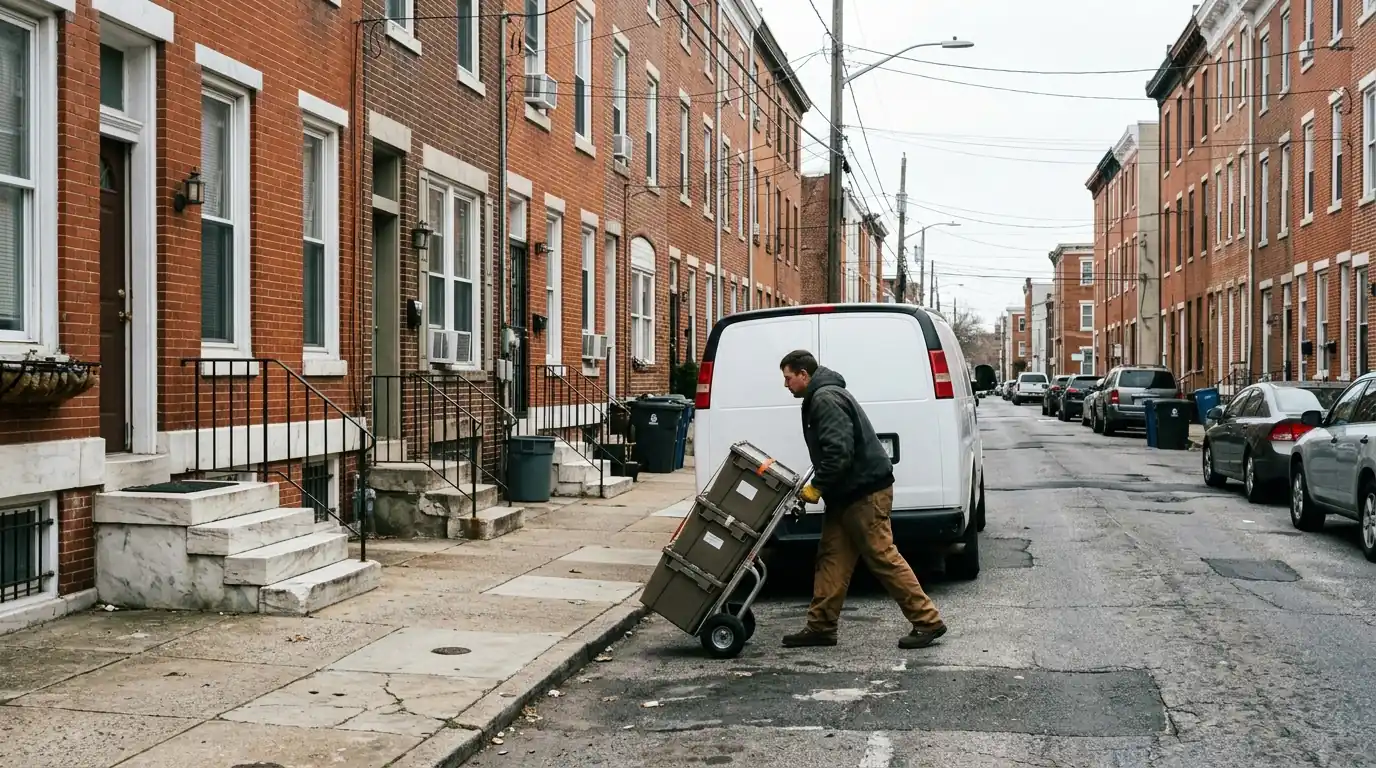
Many Philadelphia blocks are narrow, one way and lined with parked cars, and some small streets barely fit a van. Our crew looks for the closest legal spot, and we may unload equipment quickly at the curb and then move the vehicle to a nearby space. On tight streets we'll ask whether there's a rear alley, a driveway or a spot a neighbor is willing to give up for a few hours.
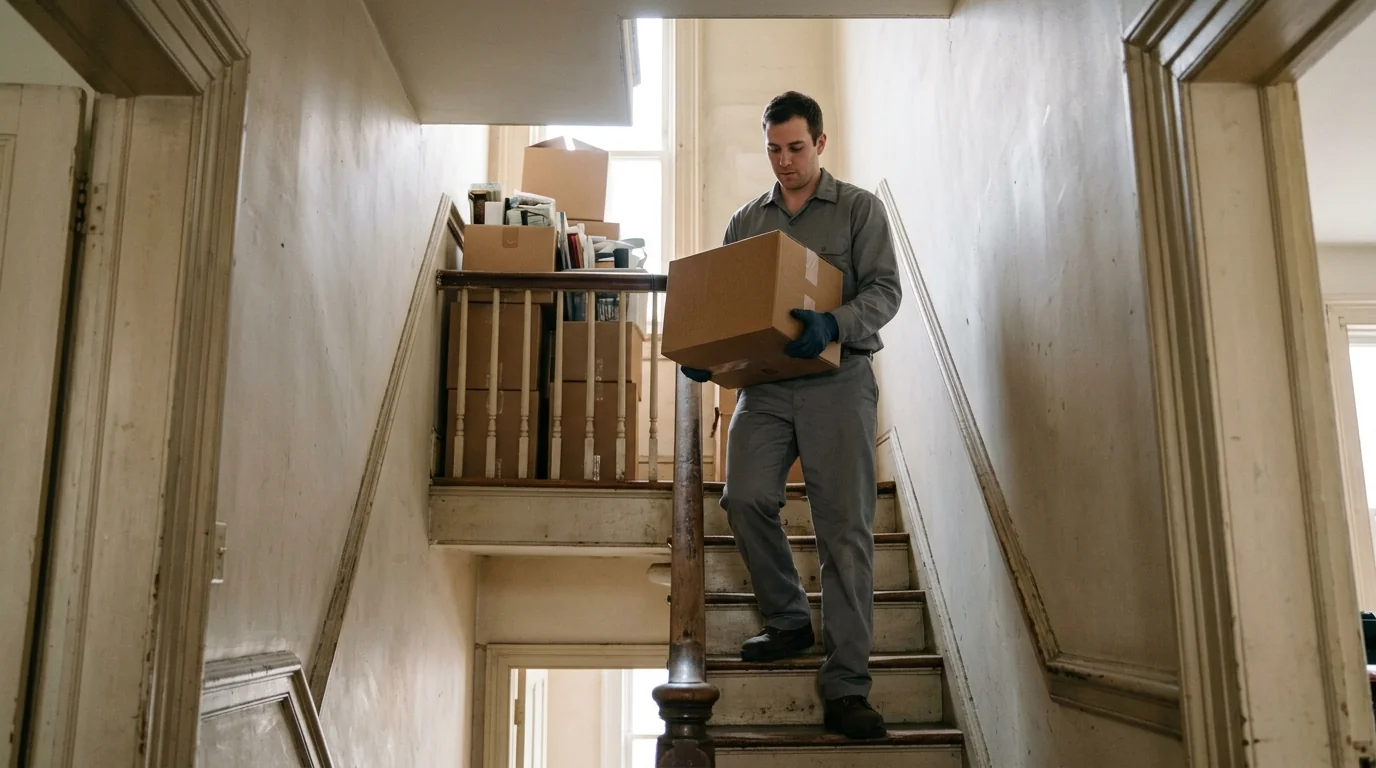
We keep the curb as quiet as we can. Our work clothes are plain, and our technicians change into protective suits inside the home rather than out on the sidewalk. Equipment like air scrubbers, waste boxes and sprayers comes in on hand trucks. If a neighbor asks what's going on, we say only that we are doing work for the household and leave the rest to you.
The first walkthrough and what you'll sign
Before anyone puts on a suit, a lead technician walks the affected area with you or your representative. They look at what's visible, ask about anything you noticed before arriving, and check how far material may have traveled under flooring, behind baseboards or into the room below. Then they explain the plan in plain language: what will be removed, what can likely be saved, and roughly how long the work should take.
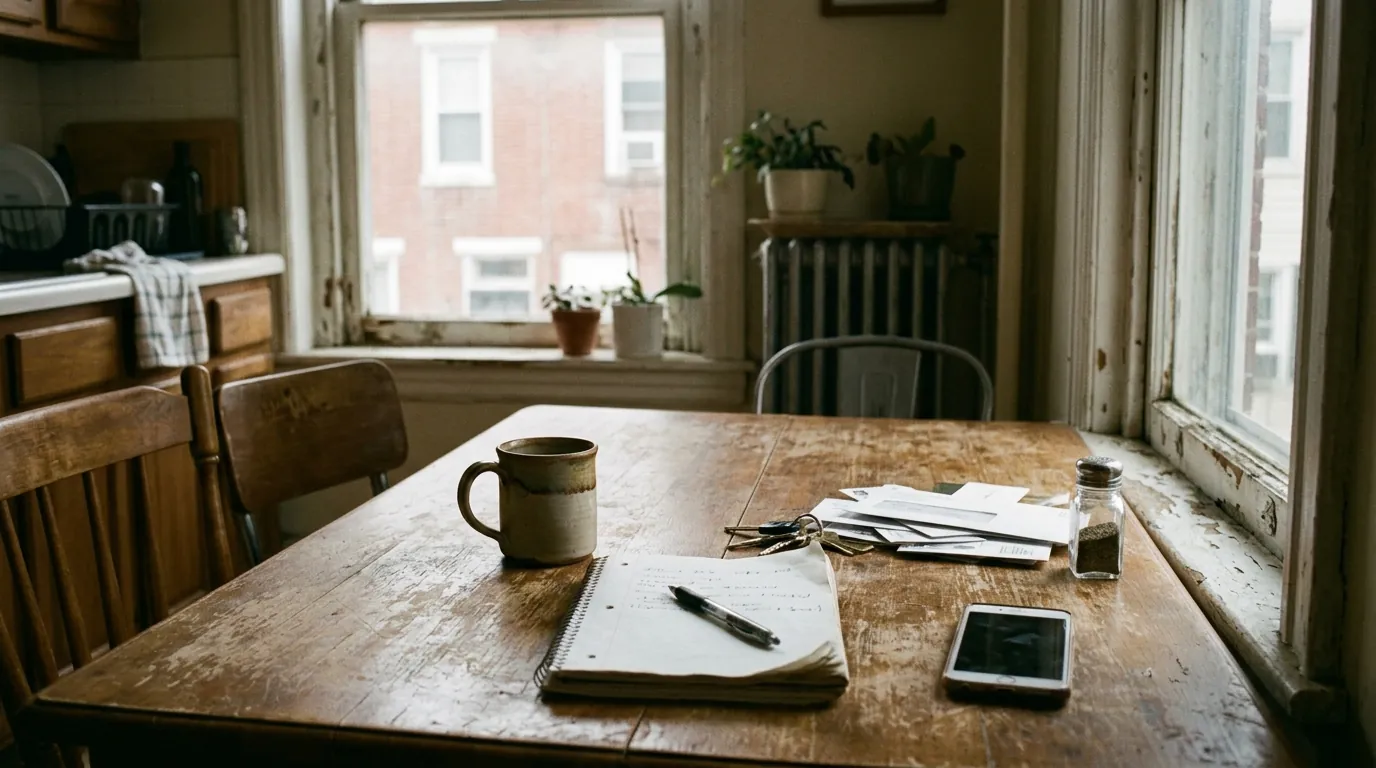
You'll be asked to sign a work authorization that confirms you have the right to approve work at the property and agree to the scope. If insurance is involved, there may be a document that lets us share photos and records with your adjuster. Read everything before signing and ask questions. Nothing should be rushed, and a good crew is happy to wait while you call a relative or the executor.
Suits, respirators and sealing off the room
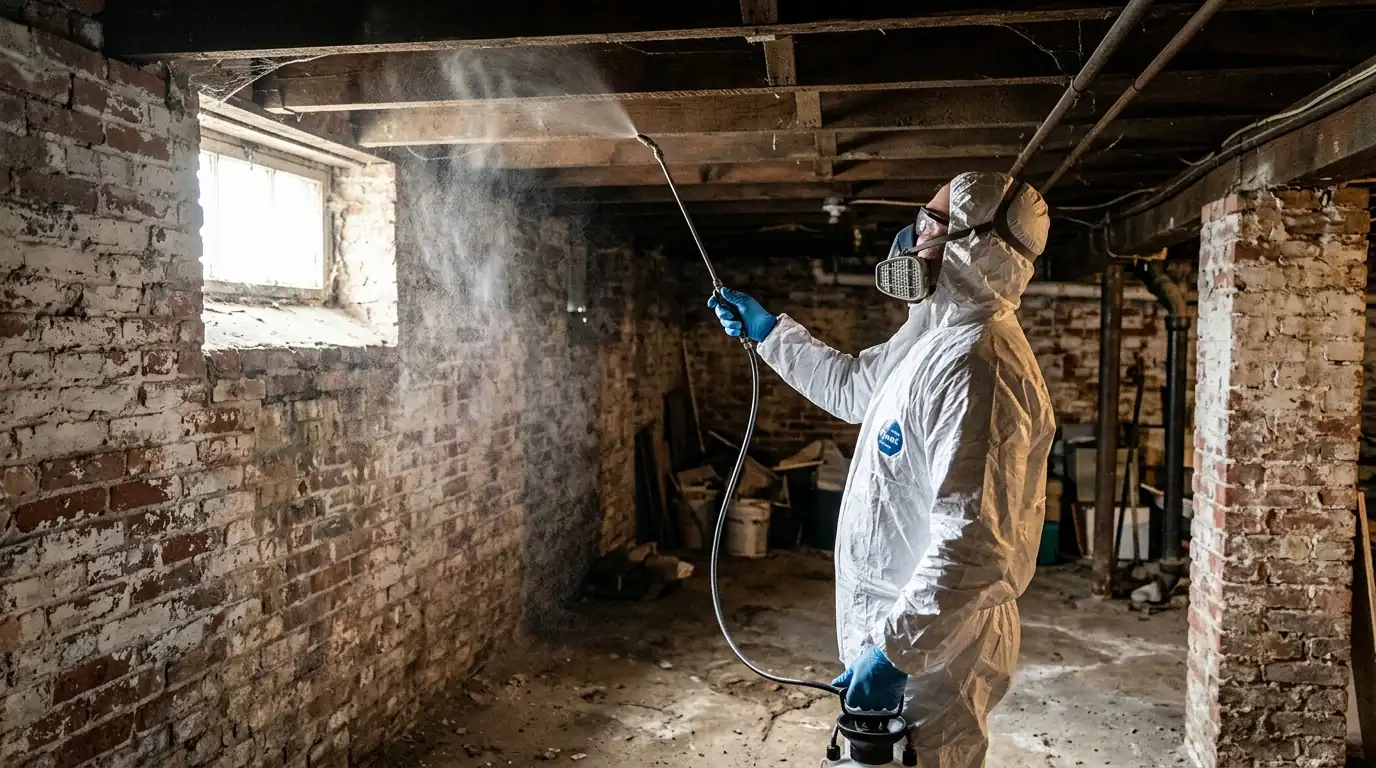
Once the plan is agreed, the crew suits up. Our technicians wear disposable coveralls, nitrile gloves, shoe covers and respirators, following OSHA's bloodborne pathogens standard for work where blood or other potentially infectious material may be present. The protection can look alarming, but it's routine. It protects the crew and keeps residue from leaving the work area on clothing or shoes.
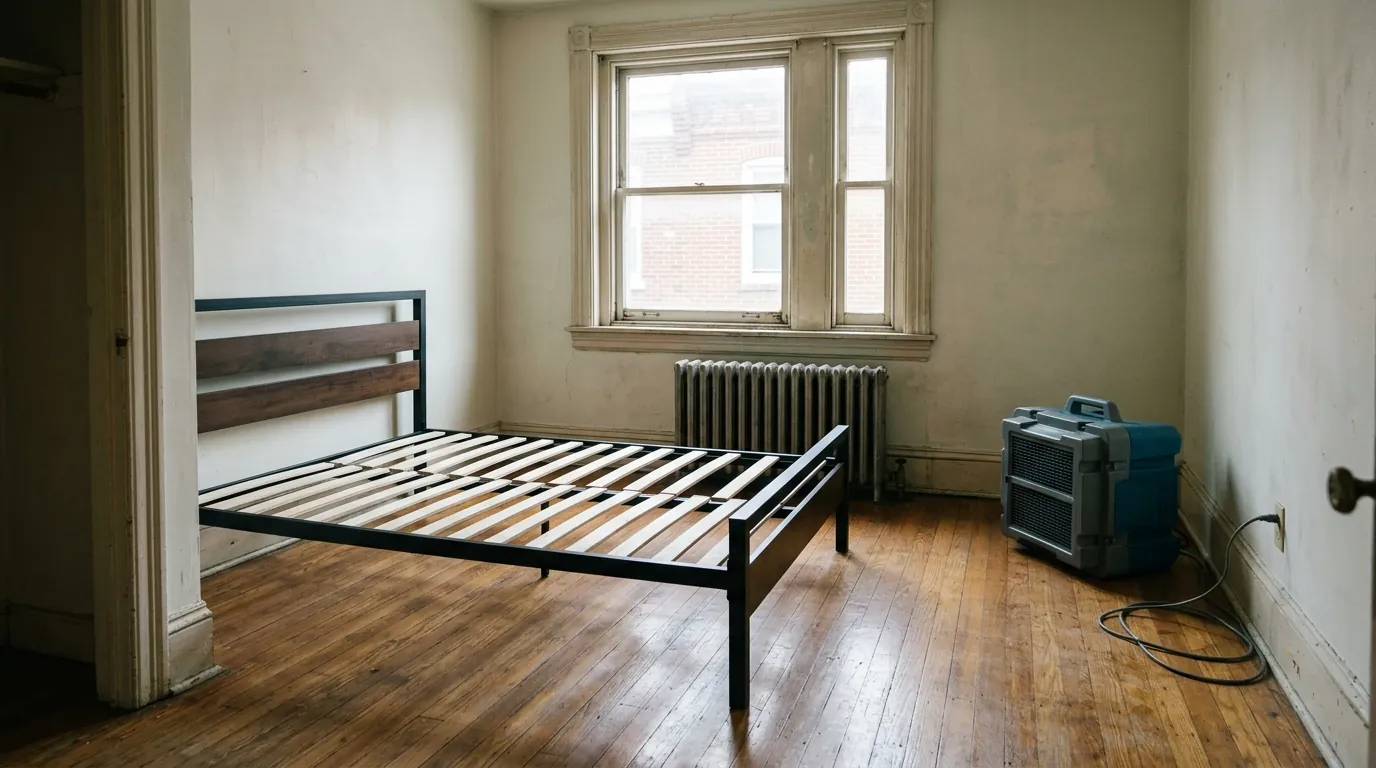
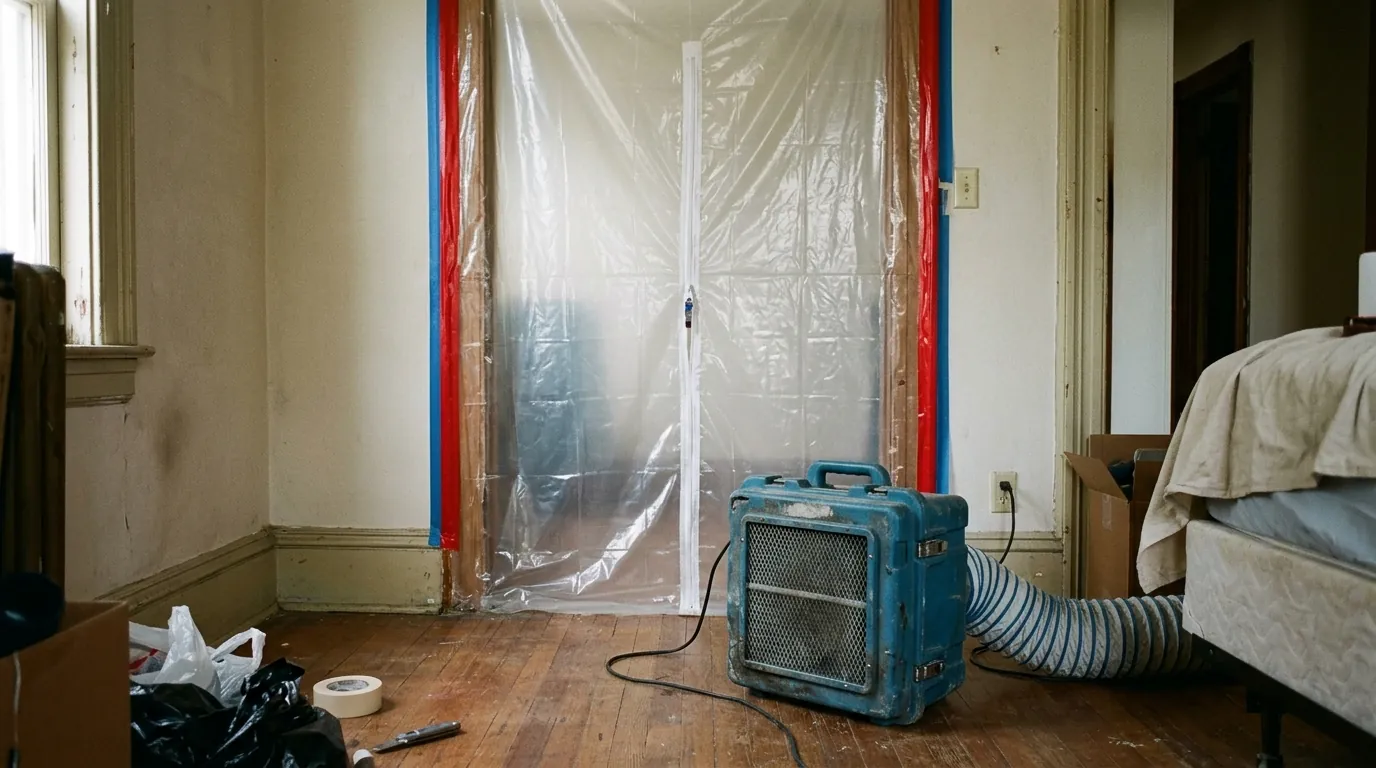
Next comes containment. We hang plastic sheeting across doorways and sometimes over vents and returns, creating a closed work zone. HEPA air scrubbers filter the air inside it, and a set path to the exit keeps traffic out of the rest of the house. Clean rooms stay clean, and waste leaves through one controlled route.
What the crew does inside, and what you shouldn't do
Inside the zone, the work follows a steady order. Personal items are recovered first where possible and set aside for you. Then the crew removes contaminated porous material such as carpet, pad, mattresses and sometimes sections of drywall or subfloor. Hard surfaces are cleaned, then treated with EPA-registered hospital-grade disinfectant and left wet for the full dwell time listed on the label. Odor control comes last, once the source is gone.
Waste is packed in sealed red bags and rigid containers for transport to a permitted disposal facility, in line with Pennsylvania DEP rules for infectious waste.
- Don't step past the plastic sheeting or lift it to look inside
- Don't turn on central air or heat unless the crew says it's safe
- Don't throw items from the affected room into household trash
- Don't try to clean adjoining areas on your own while work is underway
- Do tell the crew about anything you want them to search for
How long rooms stay sealed
Many residential jobs take part of a day or a full day, while larger scenes, hoarded homes or cases where fluids reached the subfloor can take several days. The containment stays up until the work inside is finished and checked, even if that means the room is closed overnight. Leaving it in place keeps air scrubbers working on a closed space and stops anyone from walking through a half-finished area.
If drying time is needed after cleaning, or if a sealer has been applied to subfloor or framing, the room may stay closed a little longer so it can cure. The lead technician should tell you each day what's done, what's left, and when to expect the next step.
The final walkthrough and the paperwork you keep
Before the plastic comes down, we check the work. ATP testing gives a reading of organic residue on treated surfaces, and the crew looks for anything missed along edges, under fixtures and behind trim. Then the lead technician walks the room with you. Look closely, ask questions and point out anything that worries you. Close the room for a while and check the odor too.
When you're satisfied, you'll receive a record of the work: photos taken before and after, a list of materials removed, notes on the products used, and the paperwork that shows waste went to a permitted facility. Keep these with your insurance documents. If you have questions later, or want us to look at something again, call (267) 699-2329 any time.
Ellsworth Bristow, Family Resources Editor, writes and updates our family guides from the questions callers ask our technicians every week. Last updated October 16, 2026.