Released by the authorities is not the same as ready to live in
Once the Medical Examiner's investigator and the police finish, they hand the home back to the family or the owner. That release is a legal step. It means nobody needs the scene anymore, and nothing more. The room where your loved one was found is still exactly as it was when they left, and nobody from the city cleans it.
Many families assume that if officials let them inside, the house must be fine. In reality, what they allow and what is healthy can be quite different. It's reasonable to use the kitchen, a bathroom on another floor, or a bedroom at the far end of a twin while the affected room stays closed. It's also reasonable to stay with relatives for a few nights instead. There is no rule that says you must sleep in the house the day it is released, and nothing is lost by waiting.
Why the affected room needs to stay closed for now
After a death, especially one that went unnoticed for some days, fluids move downward and outward. They pass through a mattress, a couch cushion or a carpet, reach the pad and the subfloor, and sometimes travel along floorboards toward the wall. Much of this can't be seen. A rug that looks only slightly stained may be saturated underneath.
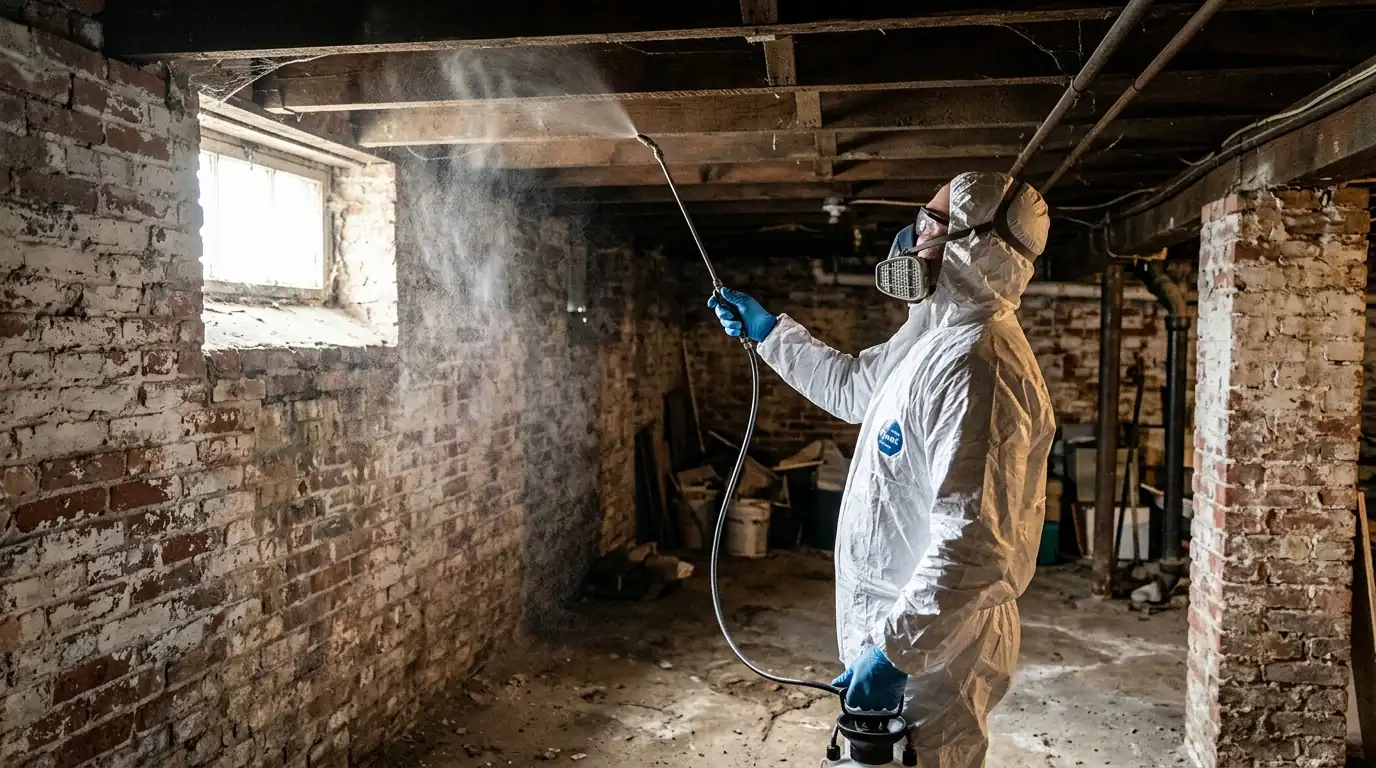
Those fluids can carry bloodborne germs such as hepatitis B and hepatitis C, along with ordinary bacteria that multiply quickly in a warm room. The risk comes mostly from touching contaminated surfaces and then your eyes, nose or mouth, or from tracking residue on shoes into other rooms. That is why our technicians wear gloves, suits and respirators, and why we suggest you keep the door shut, keep children and pets out, and resist the urge to start tidying.
What the odor is, and why it lingers
The smell after a death comes from gases released as tissue breaks down. It is not a sign of a ghost, a curse or poor housekeeping, and it is not something you did wrong by not noticing sooner. These compounds are strong, and they cling to anything porous: drywall paper, plaster, curtains, clothing, upholstery and the soft wood of an old floor.
Breathing the odor for a short time is unpleasant rather than dangerous for most people, though it can cause headaches or nausea and is hard on anyone with asthma. The bigger problem is that it does not fade on its own while the source is still there. Air fresheners, candles and plug-in scents only mix with it. Bleach poured on the floor adds its own fumes without reaching what soaked in. Real odor removal starts with taking out the contaminated material, then treating the structure underneath.
Getting essentials out without spreading the problem
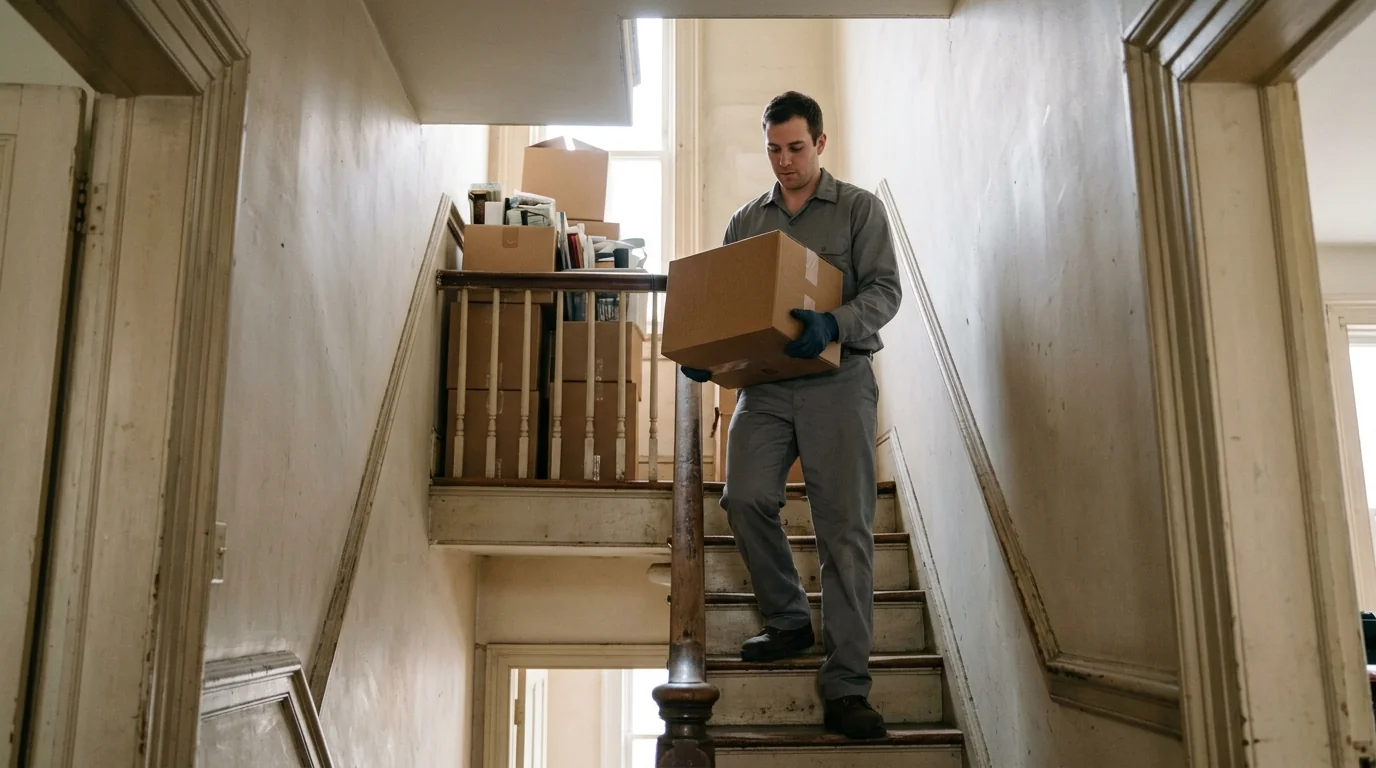
Most families need a few things right away: medication, wallets, phones and chargers, glasses, a change of clothes, pet food, or papers a funeral home has asked for. If those items are in unaffected rooms, a quick trip is usually fine. Go in with a plan, take what you need, and leave.
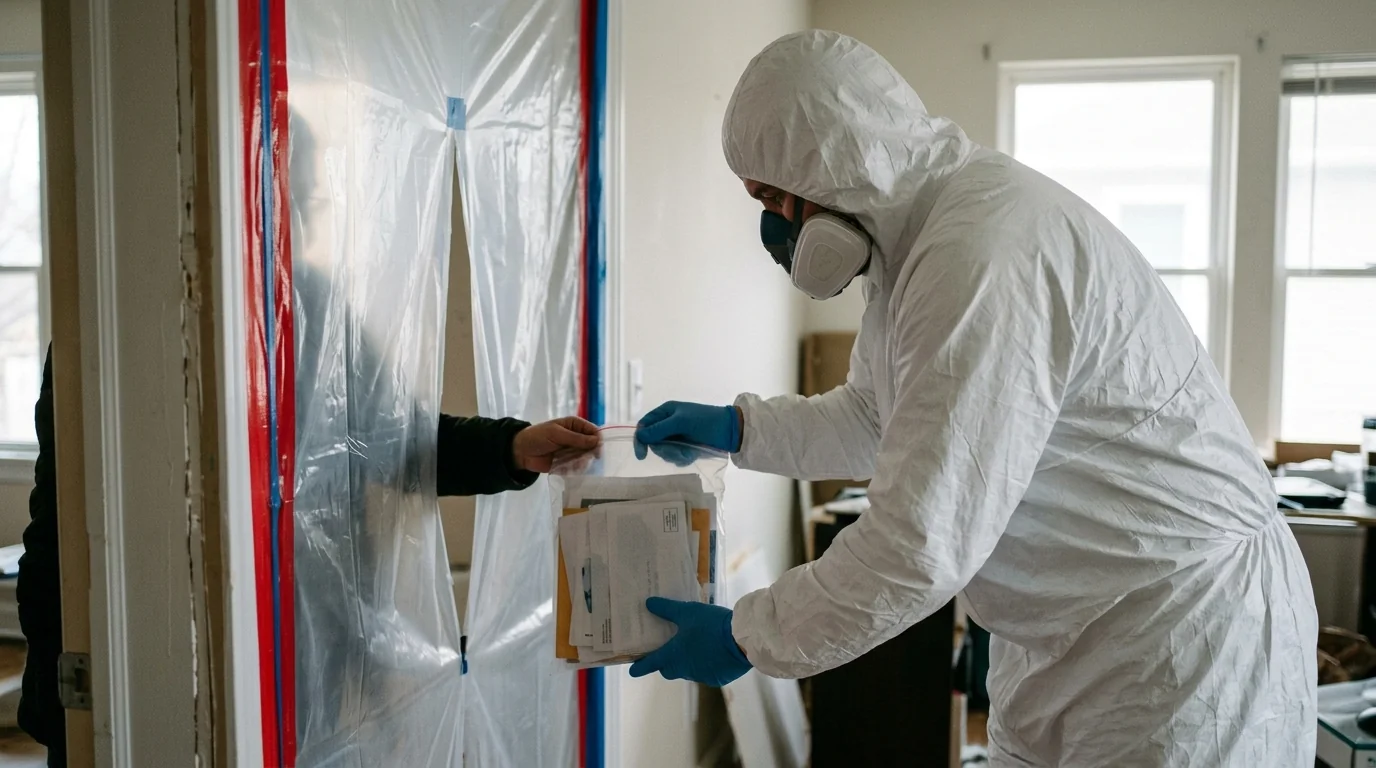
If something important is in the affected room, ask us to retrieve it. Our technicians can bring it out, wipe it down where that is safe, and bag it for you, so you never have to step past the door. Clothing and fabric items from that room may hold odor and should be set aside for laundering or evaluation rather than packed with clean things.
- Wear closed shoes and leave them by the front door afterward
- Avoid touching walls, rails or furniture in the affected area
- Don't move bedding, rugs or cushions to another room
- Keep hands away from your face and wash right after
- Take photos for insurance, but don't rearrange anything first
Rowhomes and twins: when the problem crosses the party wall
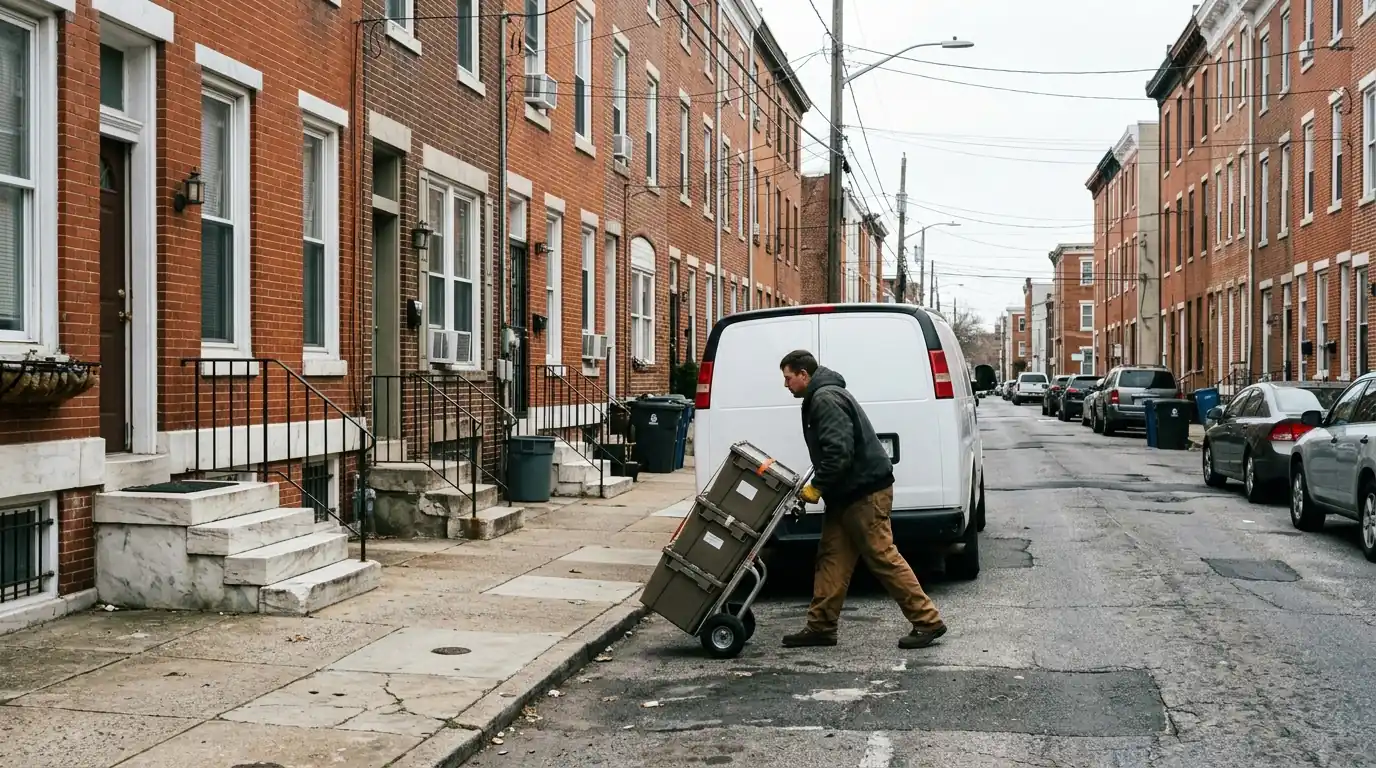
Philadelphia rowhomes share walls with the houses on either side, and many older ones have plaster on brick with gaps around joists, pipes and old chimney chases. Odor can travel through those paths into a neighbor's house, and fluids on an upper floor can find their way into the ceiling below. In a twin or a converted apartment building, the same thing can happen through shared floors and ductwork.
If a neighbor mentions a smell, it helps to tell them that cleanup is planned and that the room is closed. We seal the affected room with plastic sheeting during work and run HEPA air scrubbers, which keeps dust and odor from drifting while materials are removed. If the house has forced air heating or cooling, it's best to keep that system off for the affected area until we have looked at the ducts and returns.
What clean should mean before you move back in
A room is not ready because it looks better. Before you live in that space again, you should be able to answer yes to a short set of questions. If any answer is unclear, ask whoever did the work to show you, or walk the room with them.
Our technicians use ATP testing on treated surfaces to give an objective reading of organic residue after disinfection. It's not a germ count, but it is a far better check than looking at a wiped floor. We also ask families to judge odor the honest way: with the windows shut, the heat or air running, and after the room has been closed overnight.
- Every soaked mattress, cushion, carpet and pad has been removed
- Subfloor and framing were cleaned, disinfected and sealed where needed
- Surfaces were treated with an EPA-registered disinfectant for the full dwell time
- No odor returns after the room is closed up overnight
- Waste left the house sealed and bound for a permitted disposal facility
- You received photos and a written record of what was done
Giving yourself time to come back emotionally
Physical readiness is only part of returning. Some people want to be back in the house quickly because it feels close to the person they lost. Others can't face a particular room for weeks. Both reactions are normal. A clean room may still hold hard memories, and it's fine to repaint, rearrange furniture or change how a space is used.
If you can, plan the first visit after cleanup with someone you trust, at a time of day when the house gets good light. Grief counselors, faith leaders and hospice bereavement programs often support families after any death, not only expected ones. When you're ready to talk about cleaning the room itself, you can reach us at (267) 699-2329, day or night.
Ellsworth Bristow, Family Resources Editor, writes and updates our family guides from the questions callers ask our technicians every week. Last updated October 16, 2026.