Your safety comes before the cleanup
Electricity and water are the first danger, not germs. If water has reached outlets, extension cords, a furnace, a washer or the electrical panel, don't step into it. Shut off power at the panel only if you can reach it while standing somewhere dry. If you can't, leave the basement and call PECO.
Gas is the second concern. Many Philadelphia basements hold a gas water heater and furnace, and floodwater can put out pilot lights or shift connections. If you smell gas, get everyone outside without flipping switches and call PGW or 911 from the sidewalk. Keep children and pets upstairs. Anyone who must go down should wear rubber boots, gloves and eye protection, and should wash thoroughly afterward.
Why sewage is treated as Category 3 water
Restoration work sorts water into three categories by how contaminated it is. Clean water from a supply line is Category 1. Water with some contamination, like a washing machine overflow, is Category 2. Sewage is Category 3, sometimes called black water, because it can carry E. coli, hepatitis A, norovirus and other pathogens.
Category 3 changes what can be saved. Clean water damage often allows carpet and drywall to be dried in place. Sewage soaks the same materials with germs that drying alone can't remove. That's why the cleanup is mostly about removal and disinfection, not just fans and dehumidifiers.
Why Philadelphia basements back up in heavy rain
Much of Philadelphia, especially the older core of the city, is served by a combined sewer system. That means stormwater from streets and roofs flows into the same pipes as household sewage. During a hard summer storm, those pipes can fill faster than they drain, and water looks for the lowest opening. In many rowhomes, that's the basement floor drain.
Backups also happen for reasons that have nothing to do with weather. Tree roots in an old clay lateral, grease buildup, wipes and collapsed pipe sections can all block the line between your house and the street. When only your house backs up on a dry day, the problem is usually in your own lateral. If several neighbors flood during the same storm, the city system is more likely involved.
Who clears the line, and who to call
In Philadelphia, the property owner is generally responsible for the house connection, called the lateral, from the house out to the city sewer main. The Philadelphia Water Department handles the main itself. If you suspect a city sewer problem, report it through Philly311 or the Water Department so they can check the main.
For a blockage in your own line, a plumber or drain cleaning company will snake or jet it, and a camera inspection can show roots or broken pipe. Have the line cleared before the basement is cleaned, or the next flush may undo the work. Until it's cleared, avoid running the washer, dishwasher, showers and toilets.
What has to be thrown out and what can stay
Porous materials that touched sewage usually can't be made safe. Hard surfaces generally can, after thorough cleaning and disinfection. Before anything goes to the curb, photograph it for your insurer.
Drywall wicks water upward, so it's normally cut out at least a foot or two above the visible waterline. Food stored in the basement, including canned goods with dented or rusted seams, should be discarded if sewage reached it.
- Throw out: carpet and pad, upholstered furniture, mattresses, cardboard boxes, paper, stuffed toys.
- Usually removed: wet drywall, insulation, particleboard shelving, laminate flooring.
- Usually saved: concrete floors, sealed tile, metal shelving, plastic bins, solid wood after cleaning.
- Ask first: furnace, water heater and washer exposed to sewage need a technician's check.
Backwater valves and other ways to lower the risk
A backwater valve is a one-way device installed on the sewer line that lets wastewater leave the house but closes when water tries to flow back in. Homes with repeated storm backups often consider one. Installation is plumbing work, and the right type and location depend on the house, so talk with a plumber about whether it fits yours. The Philadelphia Water Department has offered programs to help some homeowners with backflow prevention over the years, so it's worth asking what is currently available.
Smaller habits help too. Keep wipes, grease and paper towels out of drains. Store valuables on shelves or in sealed plastic bins rather than on the basement floor. Make sure downspouts carry roof water away from the foundation.
How a basement is cleaned and dried after sewage
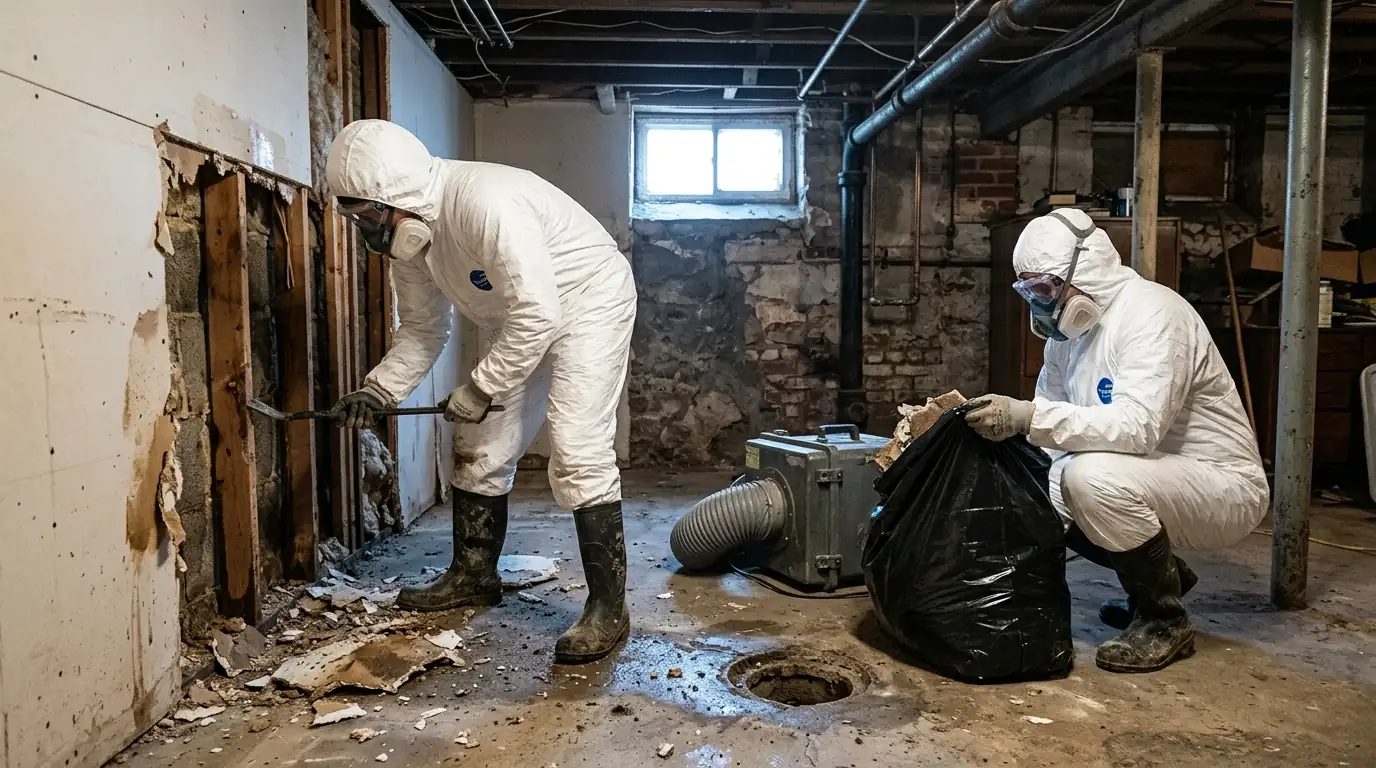
Professional sewage cleanup follows a set order. First, standing water is pumped out and solid waste is removed. Next, contaminated porous materials are cut out and bagged, which often includes the bottom of finished walls, carpet, padding and any insulation. With the room opened up, crews clean every hard surface with detergent to strip off the residue, then apply an EPA-registered disinfectant and leave it wet for its full contact time.
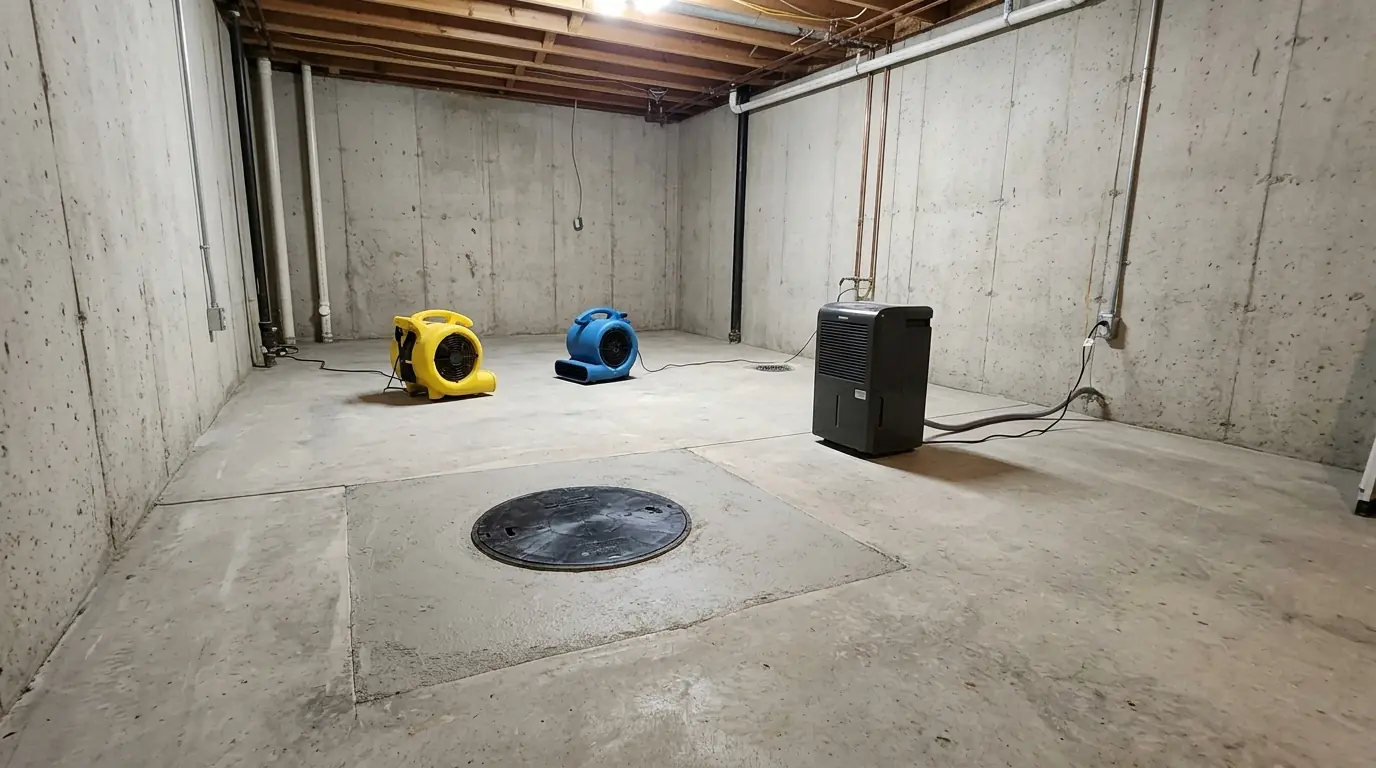
Drying starts only after the space is clean. Air movers and dehumidifiers run until moisture meters show framing and concrete are back to normal levels. Rowhome basements are often tight and poorly ventilated, so HEPA air scrubbers help clear airborne particles and odor during the work. ATP testing can confirm surfaces are clean before rebuilding begins, so you're not closing walls over a problem.
Documenting the damage for your insurer
Coverage for sewer backups varies widely. Many standard homeowner policies exclude it unless you added a sewer or water backup endorsement. Call your agent early, ask what's covered and what they need, and don't assume either way.
Take wide photos and close-ups before cleanup starts, including the waterline on walls. Keep a list of damaged items with rough age and description. Save receipts for plumbing work, cleanup and anything you buy. If a plumber finds roots or a collapsed pipe, ask for the camera footage or a written note. When our crew handles a basement sewage cleanup in Philadelphia, we photograph conditions, record moisture readings and give you a written scope for the claim. Call (267) 699-2329 any hour; we answer 24/7.
Ellsworth Bristow, Family Resources Editor, writes and updates our family guides from the questions callers ask our technicians every week. Last updated October 16, 2026.