Why police and the Medical Examiner leave the scene as it is
Families are often surprised, and sometimes hurt, when the last officer leaves and the room looks exactly as it did. That isn't neglect. The Philadelphia Police Department's role is to investigate and collect evidence, and the Medical Examiner's Office is responsible for the person who died, not the property. Fire crews and medics handle the emergency and then return to service.
Once detectives release the scene, the home or business goes back to the people who own or control it. Nobody from the city returns with cleaning supplies. Investigators may leave behind fingerprint powder or cut out sections of carpet they needed, which is part of normal evidence work. If you aren't sure the scene has been released, ask the assigned detective directly. Starting cleanup before release can disturb evidence and create problems for the case.
Who is responsible depends on who owns or controls the property
The general rule is simple: whoever owns or controls the property arranges the cleanup. How that plays out depends on the setting.
Tenants and relatives are not expected to clean anything themselves, and they shouldn't try. A landlord may ask a family to clear belongings, but the affected structure, meaning walls, floors and fixtures, is the owner's to restore. When responsibility is unclear, a short conversation among the family, the landlord and any insurer prevents delays later. With your permission, we can talk with each party about the scope.
- Owner-occupied home: the homeowner, or the family or executor if the owner died
- Rental apartment or rowhome: the landlord, who owns the structure
- Store, restaurant or office: the business owner or property manager
- Car or truck: the registered owner, often working with their auto insurer
- Shared hallways and lobbies: the building owner or condo association
Why family members should not clean a crime scene themselves
It's natural to want to take care of it yourself, quietly and quickly, so nobody else has to see. We gently advise against it. Blood and other bodily fluids can carry hepatitis B, hepatitis C and HIV, and those risks are the reason OSHA's bloodborne pathogens standard requires training, protective equipment and specific handling for workers exposed to them.
Contamination also travels further than it appears. Fluids seep under baseboards, into carpet pad, between floorboards and down into the subfloor of an older rowhome. Household cleaners can leave the source behind and set stains into wood and grout. Then there is the emotional weight. Cleaning the place where someone you love was hurt can stay with you for a long time. Letting a trained crew handle this part is not a failure of duty. It frees you to deal with the funeral, the detectives and your own family.
Questions to ask a crime scene cleanup company before work starts
A few direct questions reveal a lot about how a company works. Any reputable crew should answer them easily on the first call.
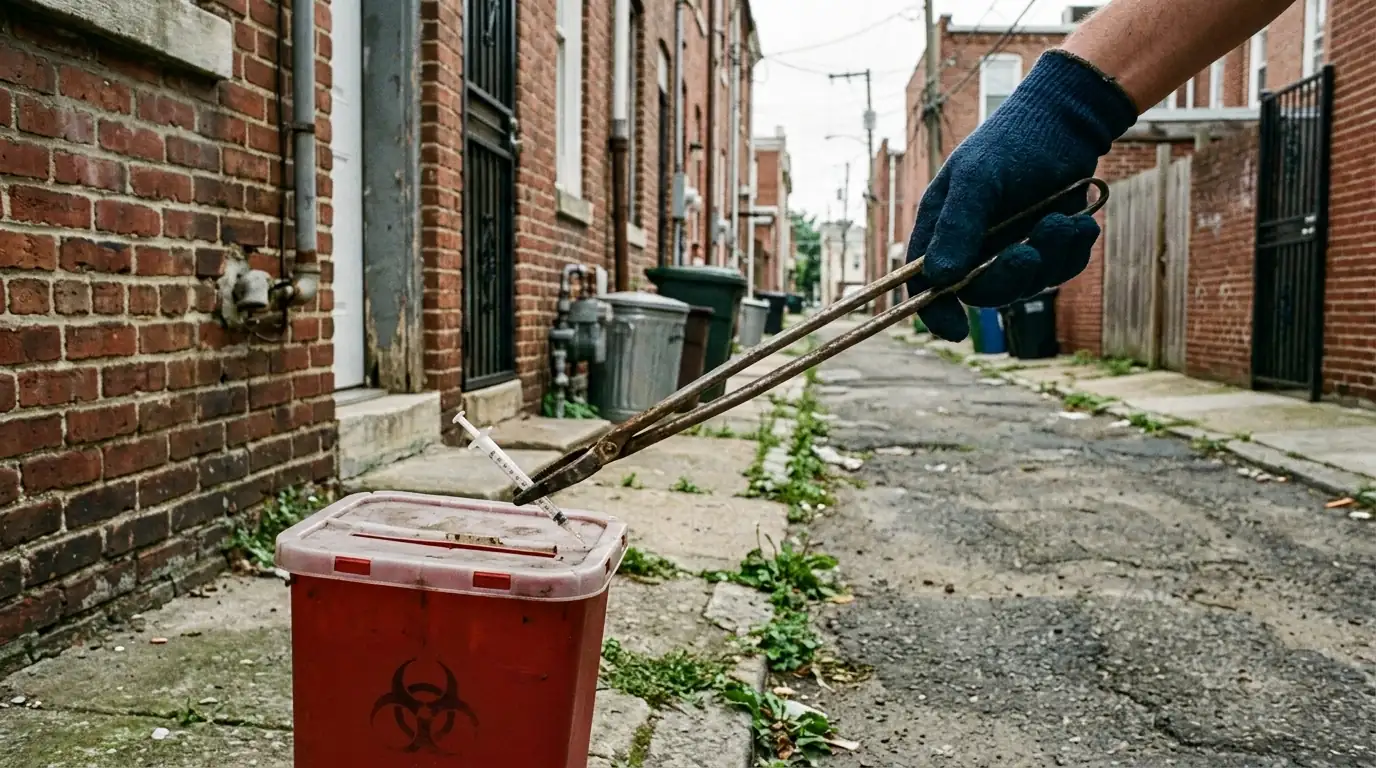
Be cautious with anyone who quotes a price before asking about the scene, pressures you to sign on the spot, or can't explain where the waste goes. In Pennsylvania, infectious waste must go to a facility permitted to accept it, and a cleanup company should be able to show you that record.
- Do your technicians follow OSHA's bloodborne pathogens standard on every job?
- Where does the infectious waste go, and will I receive disposal records?
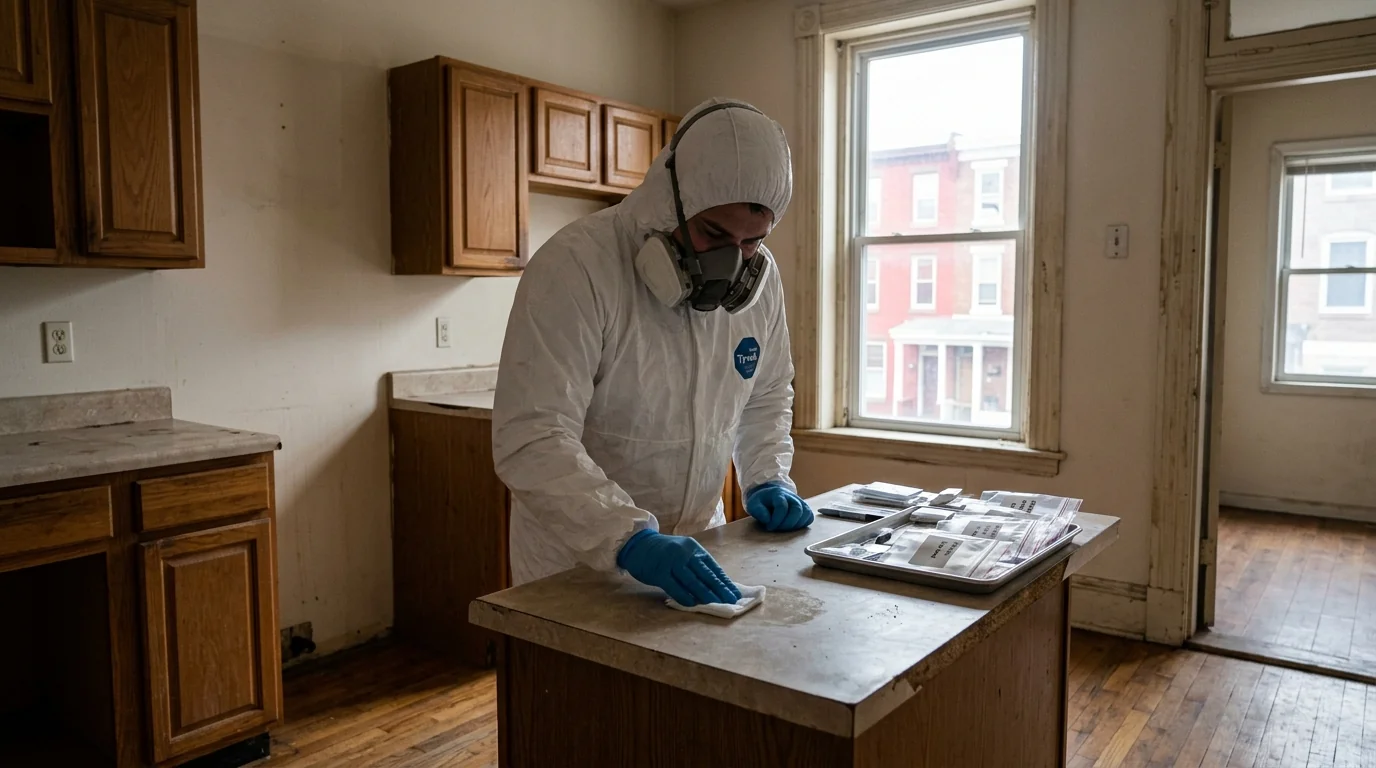
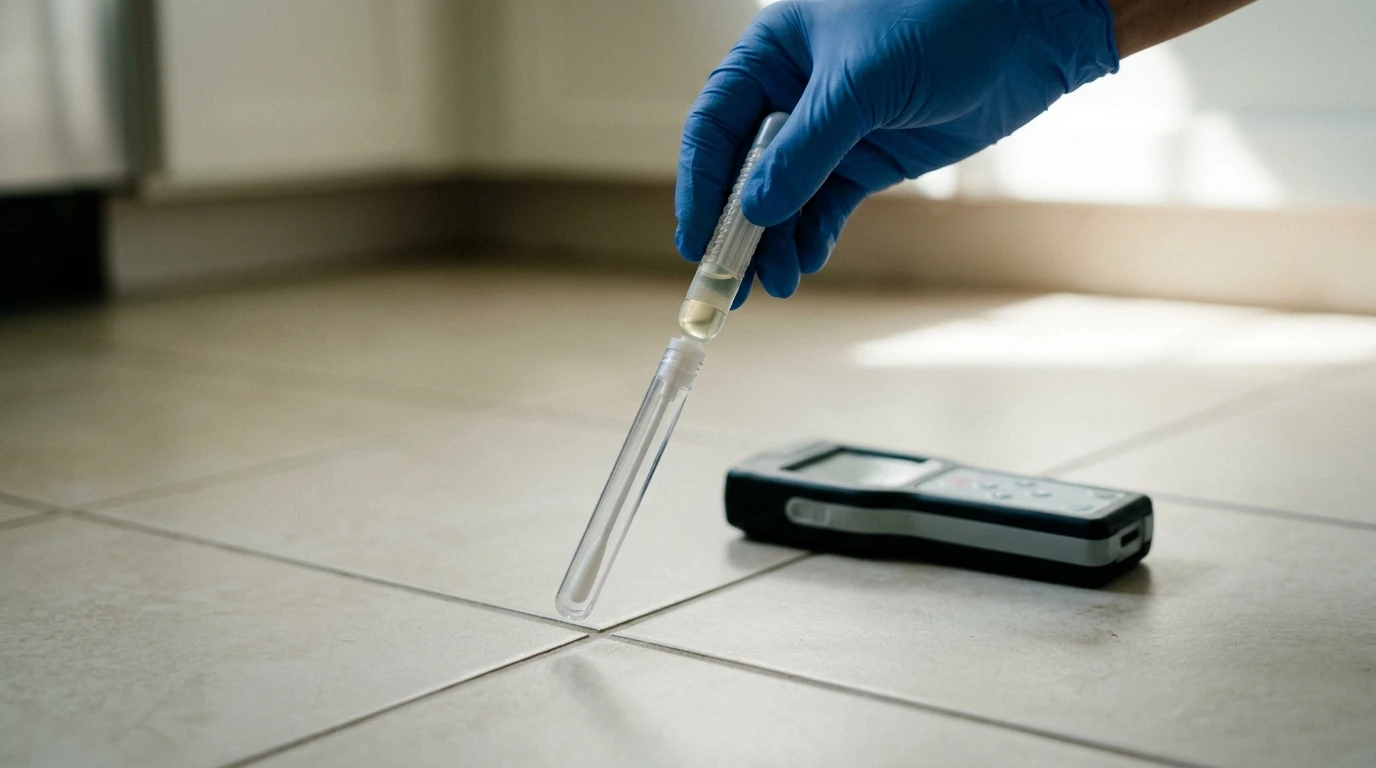
- How do you confirm a surface is clean, and do you use ATP testing?
- Will you work with my insurer or with a VCAP claim?
- Do you remove affected subfloor and drywall, or only clean the surface?
- How will your crew keep the work discreet in front of my neighbors?
How long crime scene cleanup usually takes
Time on site depends on the size of the affected area and how deep contamination went. A contained scene on a tile floor may be finished in a few hours. A scene that reached carpet, subfloor, a stairway and a second room can take one to several days, especially when drywall or flooring has to be cut out and carried away.
Other things affect timing too. Narrow Philadelphia rowhome stairs slow the removal of large items like a sofa or mattress. A scene found after a delay usually means more material to remove and more odor to treat. Waiting for an adjuster to inspect can add a day. After cleaning, disinfectants need their full label dwell time, and then we run ATP testing to confirm results. Any rebuilding afterward, such as new flooring or fresh drywall, is separate work done once the space is clean and verified.
What the family can expect on the day of the cleanup
You don't need to be there. Many families hand over a key, sign the authorization and wait somewhere else. If you prefer to stay nearby, we set up so you never have to look into the affected room.
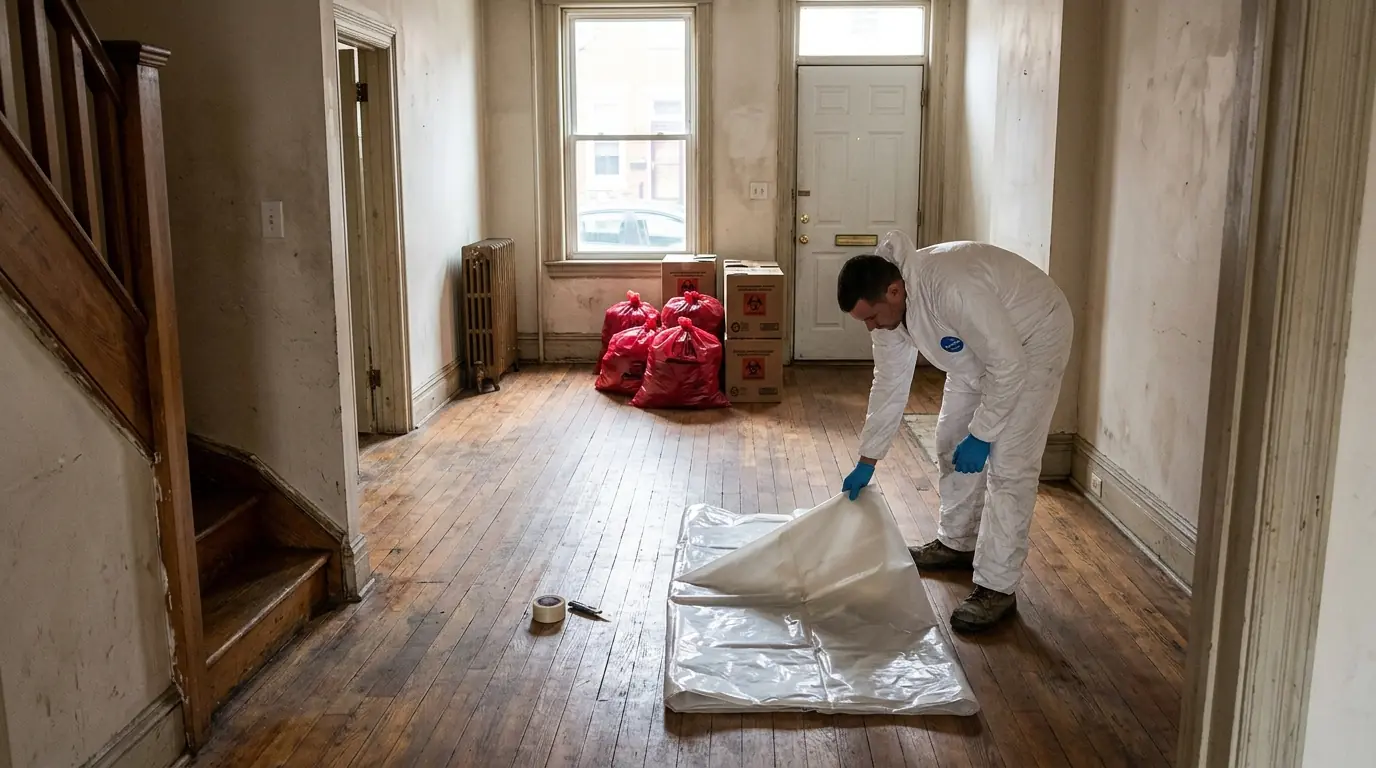
Our crew arrives in protective gear, seals off the work area with poly sheeting, and starts HEPA air filtration. Personal items near the scene are sorted with care. Anything that can be cleaned and saved is set aside, and we ask before discarding photographs, papers or keepsakes. Affected porous materials go into sealed red bags and rigid containers for disposal at a permitted facility. When the work is complete, we walk you through what was done and what was removed, and the space is ready for any repairs. Questions at any point go to (267) 699-2329.
When the crime happened in a business or a vehicle
Commercial scenes follow the same rules with a few differences. A store, restaurant or office may need to reopen quickly, so planning often focuses on cleaning one zone while the rest of the space stays sealed off. OSHA rules protect employees too, so managers should keep staff away from the affected area rather than asking them to wipe it down.
A vehicle where a crime occurred is usually released by police after processing, sometimes from a tow or impound lot. Fabric seats, carpet and headliners absorb fluids quickly, and several parts may need to come out entirely. Check with your auto insurer before work starts, since some policies cover this cleanup. Either way, we can document the vehicle before, during and after the work.
Ellsworth Bristow, Family Resources Editor, writes and updates our family guides from the questions callers ask our technicians every week. Last updated October 16, 2026.