Stop, look, and keep others back
Your first move is to slow down. Keep children and pets away, and look around before you reach for anything. Where there's one syringe, there are often others nearby, along with caps, cookers or small bags hidden in leaves, weeds or trash. Check the ground in a wide circle before you kneel or step.
Rowhome yards, back alleys, stoops and the corners of business entrances all collect needles in parts of Philadelphia. Look under steps, inside planters, behind trash cans and along fence lines. If you see a large number, or the needles are mixed into a pile of debris, stop there. That's a cleanup job, not a quick pickup.
How to pick up a single needle safely
If there's only one or two in plain view, you can handle it yourself with care. The most common injury happens when someone tries to put the cap back on, so leave the cap alone even if it's lying right there.
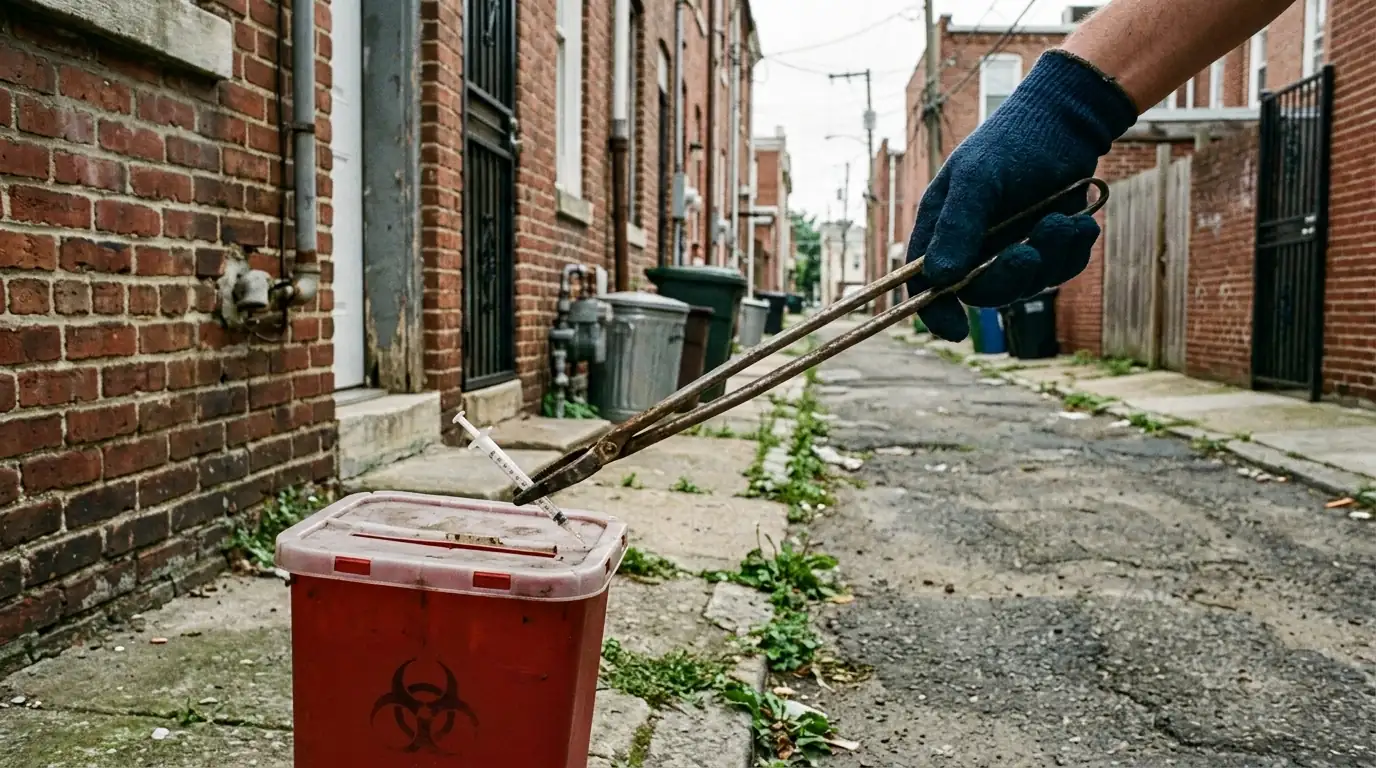
Never carry a syringe in your hand to a container across the yard. Bring the container to the needle, set it on the ground, and drop the needle straight in.
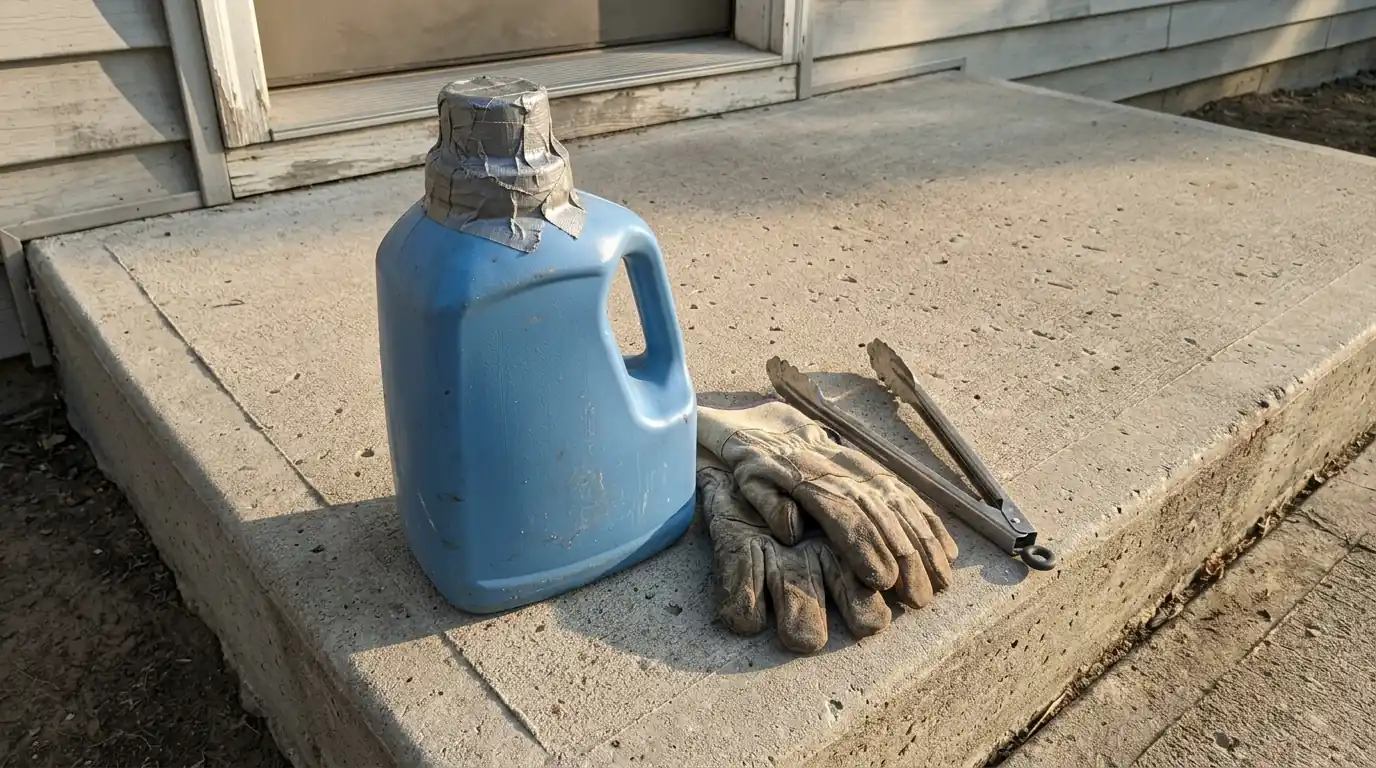
- Wear thick work gloves; thin latex or nitrile alone won't stop a stick.
- Use tongs, kitchen pliers or a litter grabber, never fingers.
- Grab the barrel, keep the point aimed down and away from you.
- Drop it into the container sharp end first and close the lid.
- Wash your hands afterward, even though you wore gloves.
Choosing a puncture-proof container
A proper sharps container from a pharmacy is ideal. If you don't have one, a heavy plastic laundry detergent bottle with a screw cap works for a few needles. Avoid soda bottles, glass jars, coffee cans with plastic lids and plain trash bags, since needles can punch through or the container can break.
Label the bottle clearly in marker, tape the cap shut and keep it out of reach of children. Don't put loose needles into recycling or household trash, where they injure sanitation workers. Ask your pharmacy, doctor's office or Philly311 about current drop-off options for household sharps in Philadelphia. Disposal rules change over time, so it's worth confirming before you go.
Public spaces belong to the city: use Philly311
Needles on sidewalks, in public parks, on playgrounds, along city-owned lots or in the street are the city's responsibility. Report them through Philly311 by phone, app or website, with the exact location and how many you see. The city has teams that respond to discarded needles in public areas.
Your own yard, stoop, alley gate, parking area and business entrance are generally your responsibility. Shared alleys behind rowhomes can be a gray area, so it helps to report them through Philly311 as well. If you're a business owner and needles keep appearing near your door, the problem is a recurring one and deserves a plan instead of a daily scramble.
If you get stuck by a needle
Stay calm and act quickly. Let the wound bleed freely for a moment, then wash it with soap and running water. Don't squeeze it hard, scrub it raw, or soak it in bleach. Cover it with a clean bandage.
Then get medical care promptly, the same day. Go to an emergency department, an urgent care center or call your doctor and say you had a needle-stick from a discarded syringe. Doctors will assess the risk and talk with you about testing and whether preventive treatment for HIV, hepatitis B or tetanus makes sense. Some of these work best when started within hours, so don't wait until morning. If you can, bring the needle in a sealed rigid container, but never risk a second stick to retrieve it.
Talking with kids, tenants and staff about needles
Children are curious, and a syringe in the grass can look like a toy. Teach them a short rule: if you see a needle, don't touch it, step away and tell an adult. Practice it the way you would a fire drill. Older kids walking through alleys or parks should know the same rule applies everywhere.
Landlords can share simple written instructions with tenants about who to call if needles turn up in a shared yard or hallway. Business owners should make sure staff who open in the morning know not to pick up sharps barehanded and where the sharps container and tongs are kept. A clear plan means nobody is guessing at seven in the morning with a broom. Keep the container and tools in the same spot every day, and restock gloves before they run out.
When to call a cleanup crew
Call a crew when you find more than a handful of needles, when they're tangled in debris, leaves or bedding, when they're on a roof, in a crawl space or inside a vacant unit, or when there are signs of drug use like burnt foil or residue on surfaces. Fentanyl and other drugs can leave residue that shouldn't be handled casually.
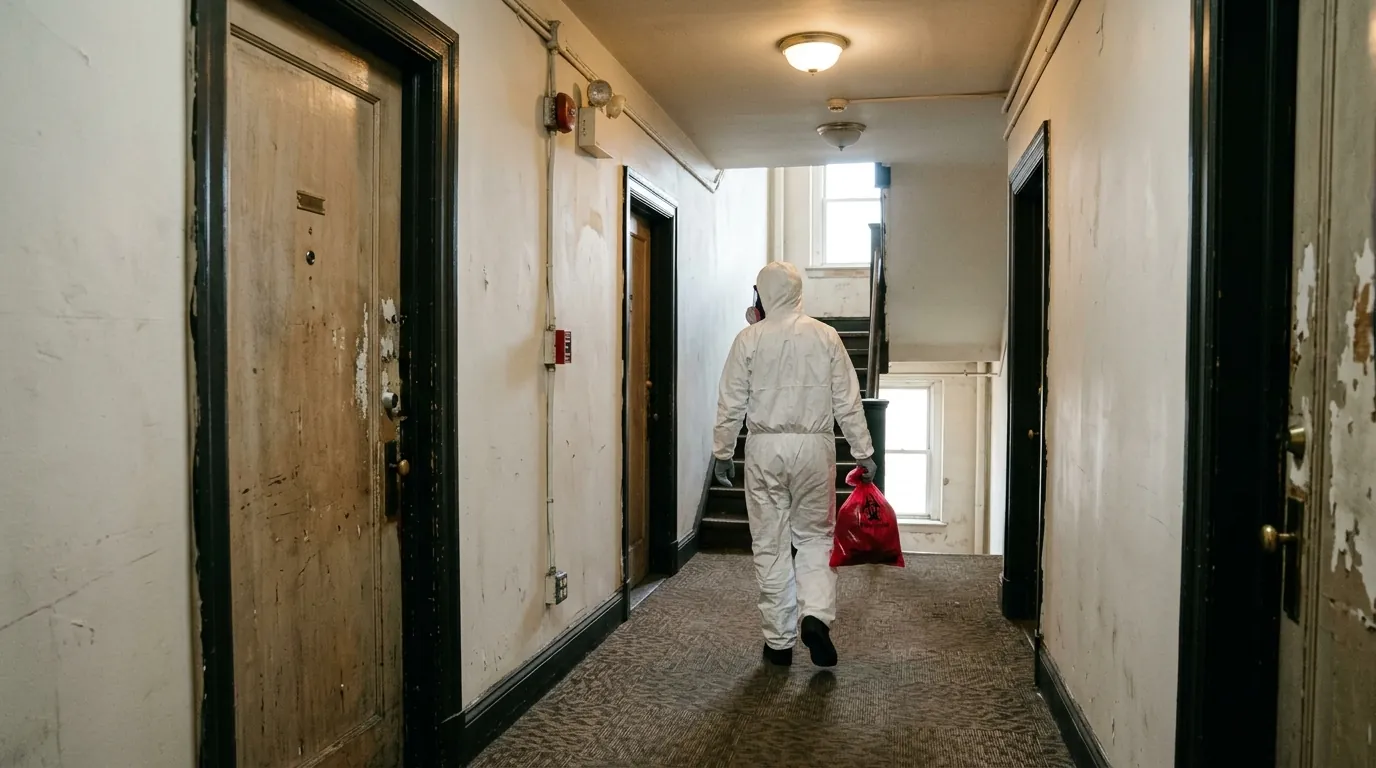
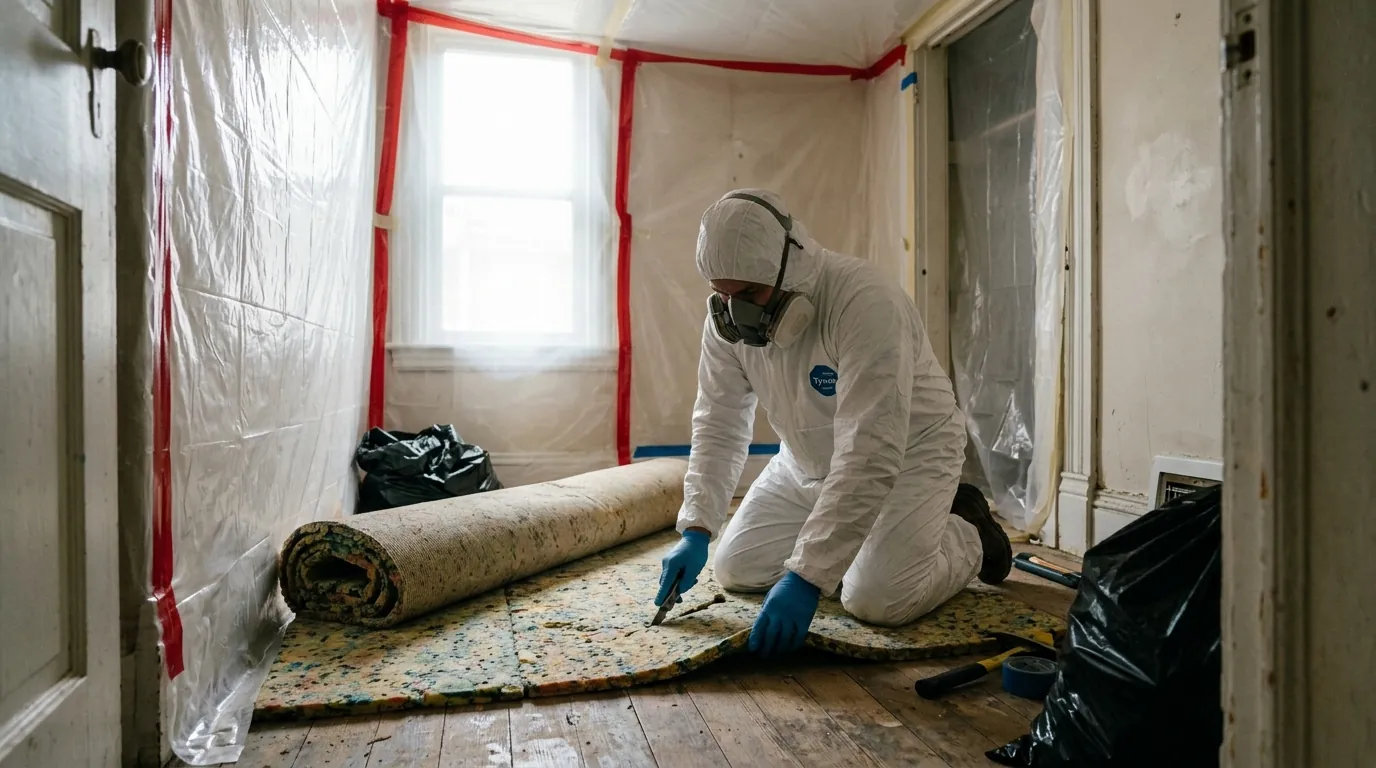
Our technicians wear puncture-resistant gloves and protective suits, sweep areas in a grid pattern and use magnets and grabbers to collect sharps. Everything goes into rigid sharps containers and travels as regulated medical waste to a permitted facility. We also clean and disinfect the surrounding surfaces. For businesses, we can set up a recurring sweep of entrances, alleys and parking areas. Call (267) 699-2329; we answer 24/7.
Making your property less attractive for drug use
Needles tend to collect in hidden, sheltered spots. Bright motion lights, trimmed shrubs, locked side gates and closed-off spaces under steps all help. Regularly clearing trash from alleys removes cover. Business owners sometimes add a lock to outdoor restrooms or close off recessed doorways after hours.
These steps won't solve a citywide problem, and they shouldn't put anyone at risk. They do make it less likely that you or a child will stumble onto a syringe tomorrow morning. If someone on your property seems to be having an overdose, call 911 right away.
Ellsworth Bristow, Family Resources Editor, writes and updates our family guides from the questions callers ask our technicians every week. Last updated October 16, 2026.