Why a brief touch is not the overdose risk many people fear
News stories about people collapsing after touching a surface have left many families afraid of every countertop. The medical picture is calmer. The American College of Medical Toxicology and the American Academy of Clinical Toxicology have stated that incidental skin contact is unlikely to cause opioid toxicity. Fentanyl does not pass quickly through intact skin, and the amount left on a household surface is usually small.
That does not mean you should handle it. If your skin touches powder or residue, wash with plain soap and water. Skip hand sanitizer, alcohol wipes and bleach on your skin, since public health guidance warns these may help the drug absorb. Wash any clothing that touched the area separately. Knowing the real risk helps you act sensibly instead of panicking, and it keeps attention on the exposures that actually cause harm.
The exposures that do carry real danger
Fentanyl becomes dangerous when it reaches the bloodstream through the mouth, nose, eyes or lungs. In a home, that happens in a few predictable ways. Loose powder can lift into the air when someone sweeps, shakes out a rug or runs an ordinary vacuum. Residue on hands can reach the mouth during eating or smoking. Tiny pieces of pills or powder can drop into carpet fibers and couch cushions, where they sit unseen.
Smoking fentanyl on foil, which is common in Philadelphia, leaves a sticky residue on foil, glass, walls and ceilings around the spot where it happened. That film is less likely to become airborne than loose powder, but it transfers to hands and objects. Xylazine, an animal sedative often mixed into the local drug supply, adds another concern because naloxone does not reverse it, though naloxone should still be given in any suspected overdose. Treat any unknown powder as hazardous, and never try to identify it by sight or smell.
Children and pets face the highest risk in a contaminated home
Toddlers explore with their hands and mouths, crawl on floors and pick up tiny objects, so a trace that would never affect an adult can seriously harm a young child. Dogs and cats sniff, lick and groom contaminated paws. For both, the danger comes from swallowing residue, not from simply being in the room.
If a child or pet may have been exposed, watch for unusual sleepiness, slow or shallow breathing, pinpoint pupils, or trouble waking. Call 911 for a child right away, and an emergency vet for an animal. Naloxone, sold as Narcan and available without a prescription, can be given to a person while you wait for help. Keep a dose at home if anyone in the household could be exposed. Until a contaminated home has been cleaned and tested, children and pets should stay elsewhere, and toys, crib bedding and pet beds from the area should be bagged rather than carried along.
Clues a rental or newly purchased home may hold residue
Landlords turning over a unit and buyers taking the keys to a newly purchased house are often the first to find residue. Some clues are obvious, while others are easy to miss behind furniture or above ceiling tiles.
None of these proves contamination on its own. A known overdose in the unit, repeated police activity, or a previous tenant's history raises the concern. If you find items like these, don't pick them up bare-handed and don't toss them in household trash. Close the area off and have it assessed.
- Pieces of foil with dark burn streaks, often under furniture or in vents
- Cut straws, empty pen tubes or small glass pipes
- Tiny plastic baggies, especially ones with colored stamps
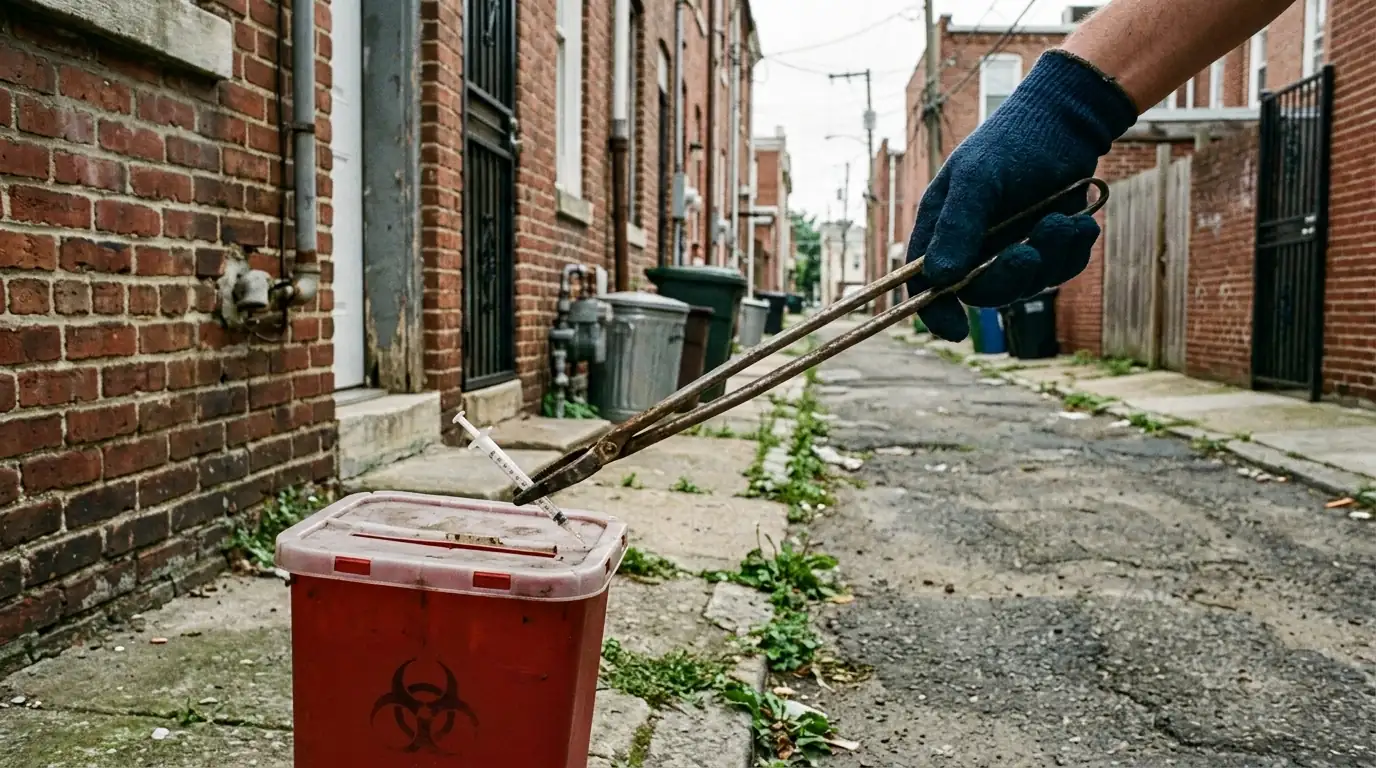
- Syringes or orange syringe caps in drawers or above ceiling tiles
- Burn marks on countertops, windowsills or bathroom fixtures
- A sticky brown film on walls or ceilings around one spot
How surface testing works and what it can tell you
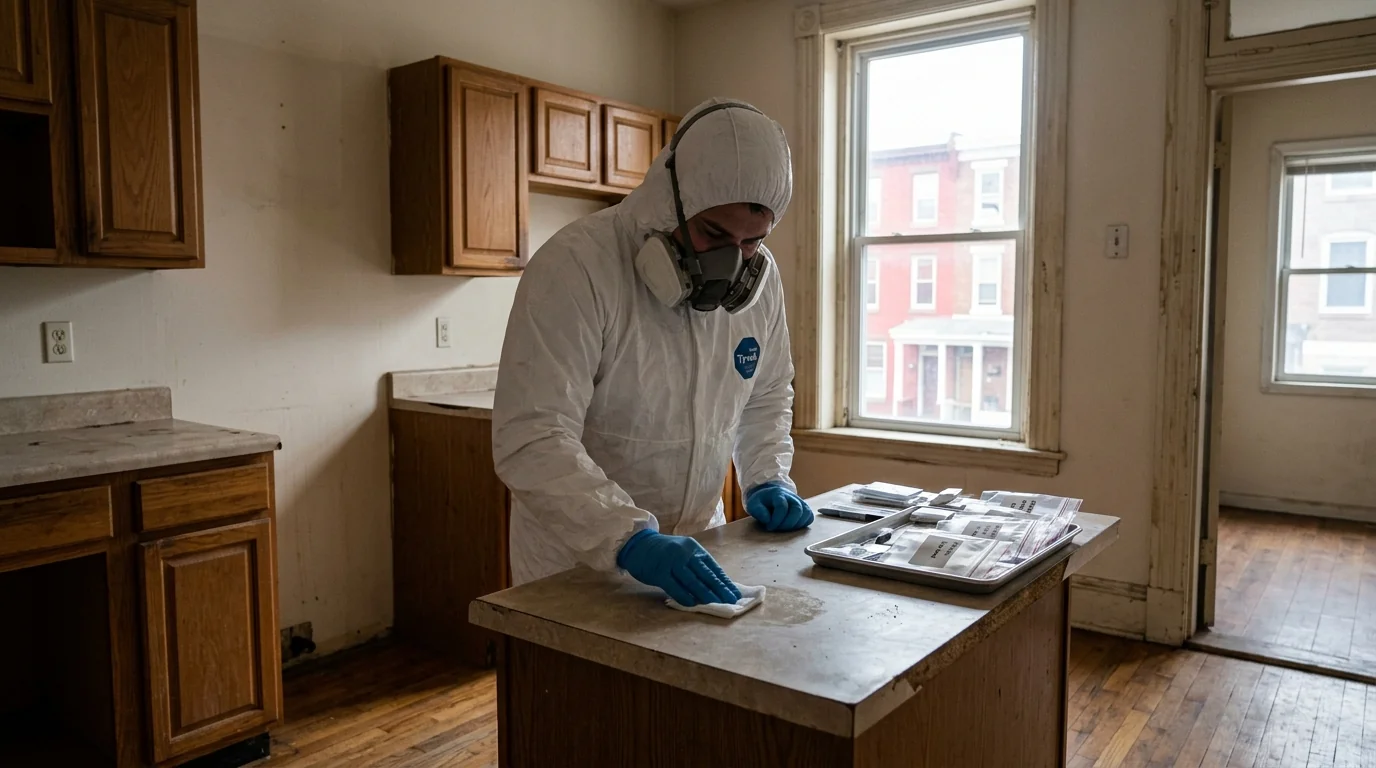
Testing shows whether fentanyl is present and roughly where. The usual method is wipe sampling. A technician wipes a measured area of a surface with a prepared pad, seals it, and sends it under chain of custody to an analytical lab that tests for fentanyl and related compounds. Results show which rooms and surfaces need attention, give you a baseline before cleanup, and provide a record after it.
Fentanyl test strips sold for drug checking are designed for testing a substance someone plans to use. They aren't meant for surface wipes, and a negative strip doesn't clear a room. When you arrange lab testing, ask what level the lab can detect, how many samples make sense for the size of the home, and how results before and after cleanup will be compared. For landlords and sellers, those lab reports are worth keeping in the property file.
How fentanyl decontamination is done safely
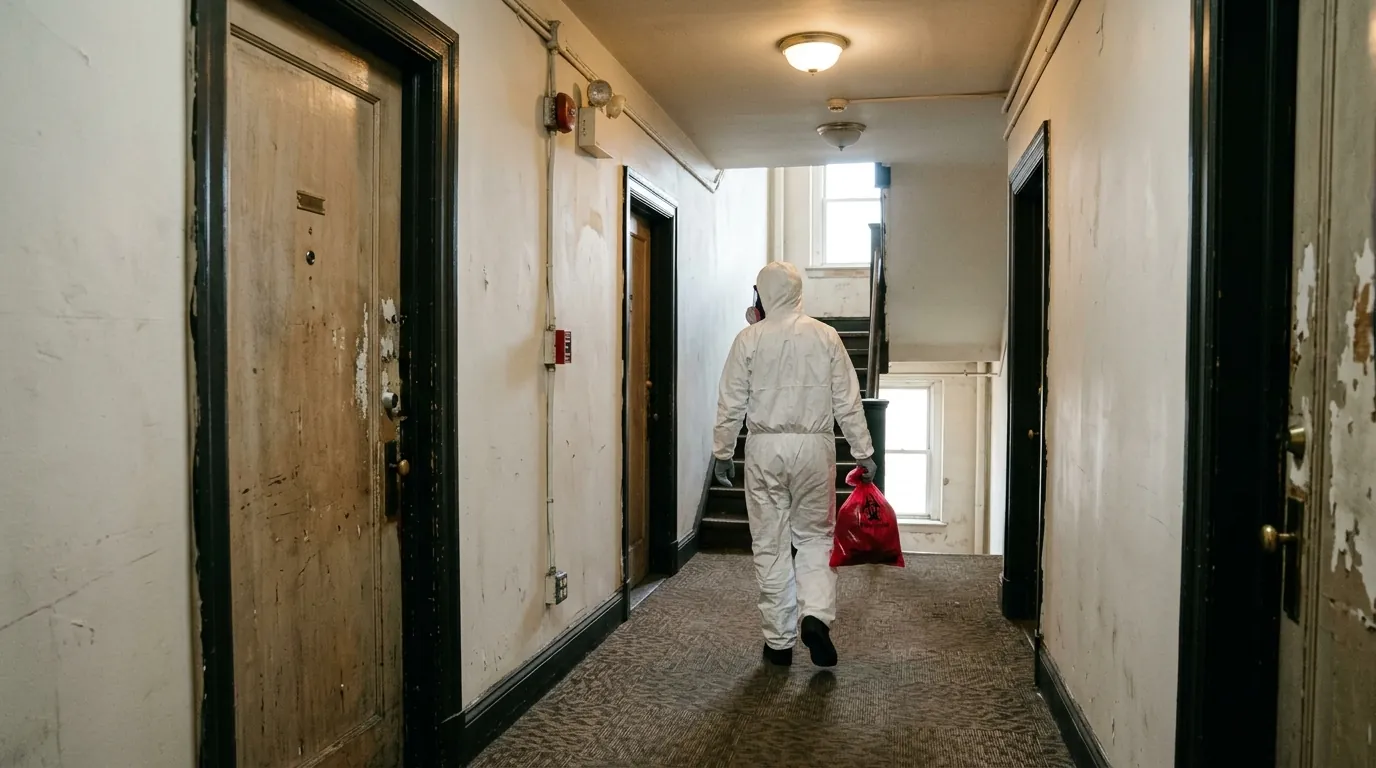
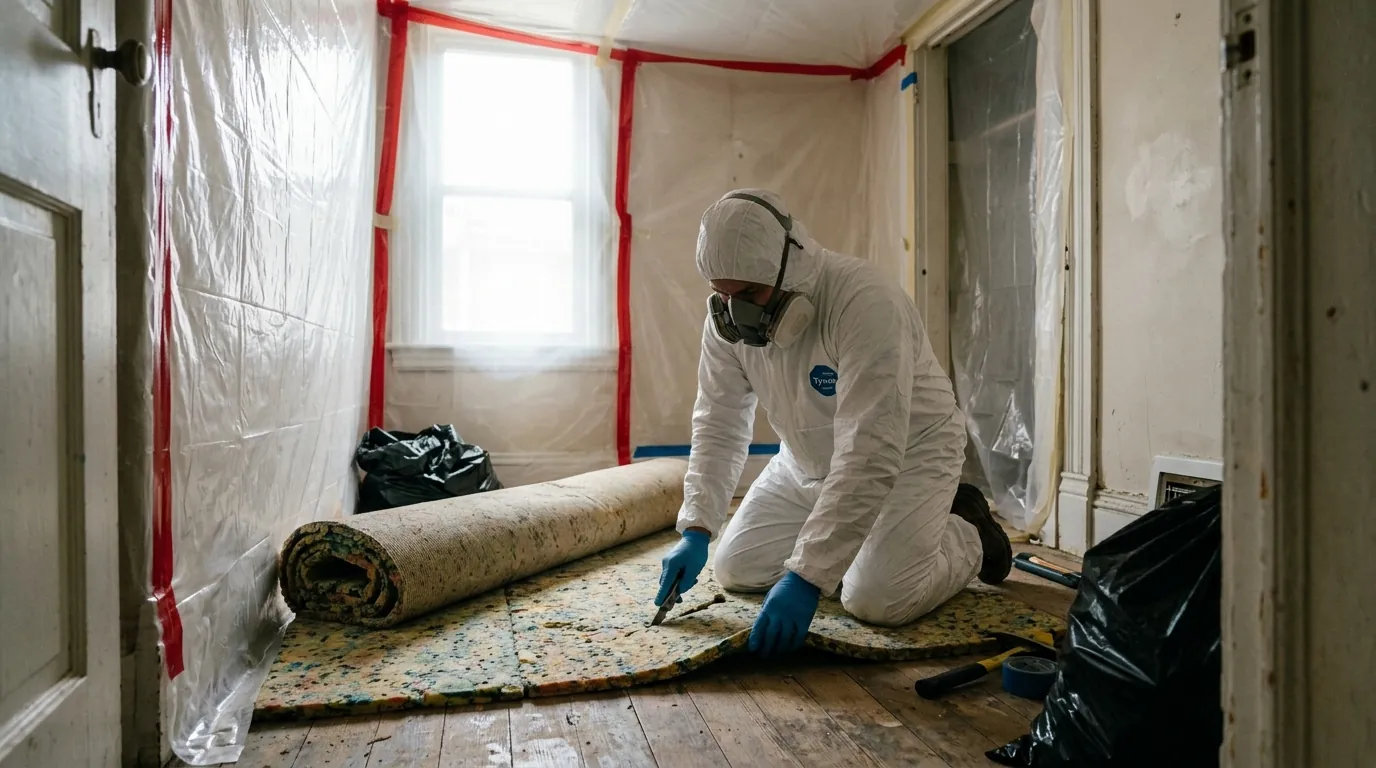
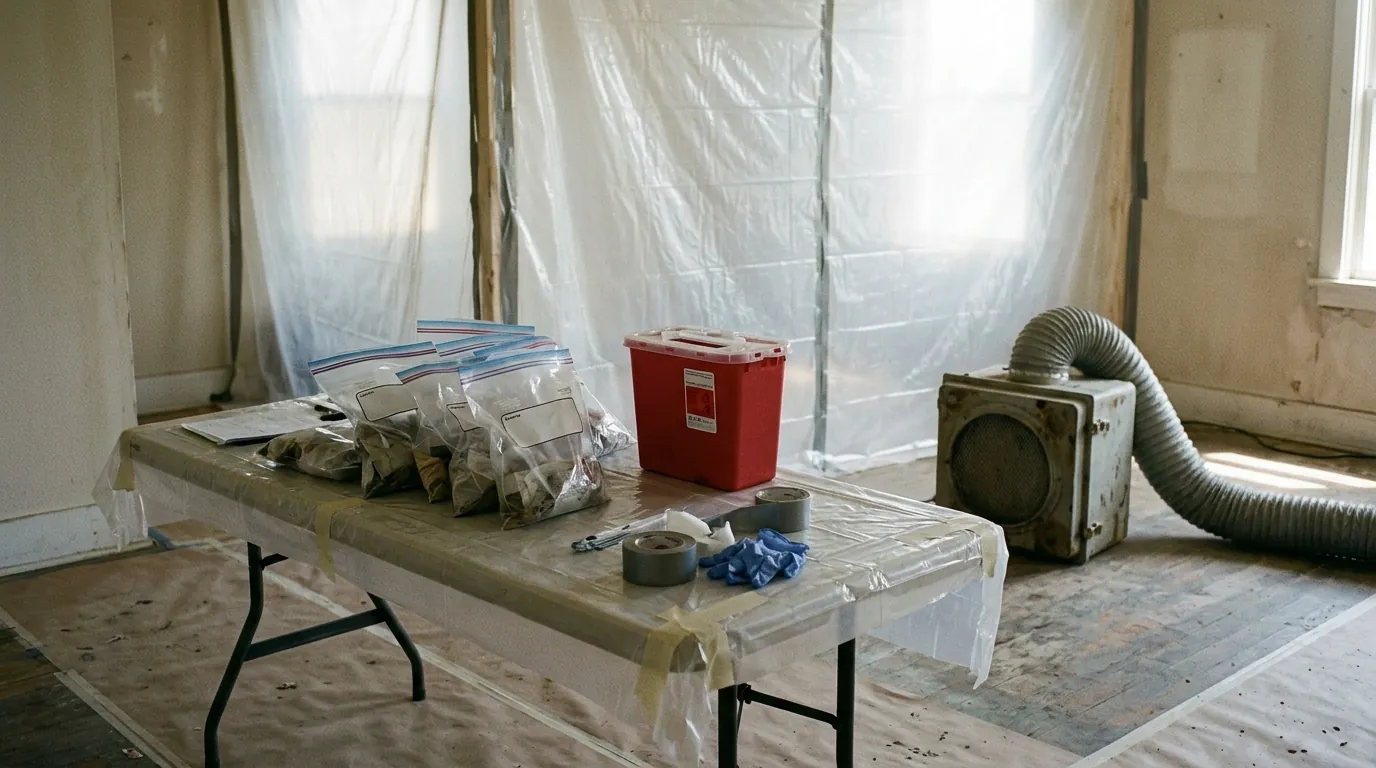
Cleaning residue is mostly about keeping it from going airborne and then removing it for good. Our technicians wear disposable suits, nitrile gloves and respirators. The work area is closed off with poly sheeting, and HEPA air scrubbers run throughout. Dry sweeping is never used. Loose debris is picked up by hand or with a HEPA vacuum, and surfaces are cleaned with wet methods and detergent, followed by a decontamination product given its full contact time.
Porous items that can't be cleaned reliably, such as stained carpet, couch cushions, mattresses and ceiling tiles near a smoking spot, are bagged and removed. Sharps go into rigid puncture-resistant containers. Heating and cooling returns and filters near the area get attention too, since fine particles collect there. After the work, follow-up wipe samples show whether the space is ready for children, pets and new tenants.
What landlords and new owners should do next
If you manage, or have just bought, a home with signs of drug use, start by keeping people out of the affected rooms. Don't let a general cleaning crew or painter in until the space has been assessed. Painting over residue traps it under a fresh coat, where later sanding or renovation can release it again.
Next, note what you found, when and where. Landlords should check the lease and the property policy, since some insurers exclude drug contamination and others cover parts of the cleanup. If you just closed on the property, talk with your real estate attorney about what the seller disclosed. When you are ready, call (267) 699-2329. We can assess the home, arrange testing, clean, and test again, so you have records to show the next tenant or buyer.
Ellsworth Bristow, Family Resources Editor, writes and updates our family guides from the questions callers ask our technicians every week. Last updated October 16, 2026.